REVIEW · DUBLIN
1916 Rebellion Walking Tour
Book on Viator →Operated by 1916 Rebellion Walking Tour · Bookable on Viator
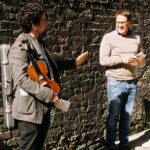
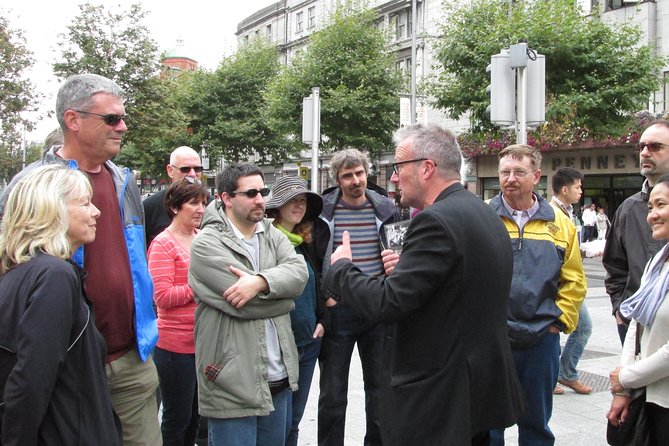
Dublin’s 1916 story starts with a pint. This walking tour makes Easter Week feel close-up, starting at the International Bar on Wicklow Street, where Lorcan Collins has run the 1916 tour since 1996. From there, you’ll connect the dots between famine-era hardship and the Rising, walking past the sites tied to planning, fighting, and aftermath.
What I love most is the way the guide builds a clear storyline (not just a list of dates) and then slows down for the human details at landmarks you can actually stand beside. My only heads-up is timing: the tour is sold as about 2 hours, but some groups may run closer to 3 hours depending on questions and pacing, and the max group size is 30.
In This Review
- Key highlights
- Starting at the International Bar on Wicklow Street
- Why the tour starts in the 1840s (and not 1916)
- City Hall and Dublin Castle: power, occupation, and control
- Stop at City Hall: the Irish Citizen Army
- Dublin Castle: the British administration in Ireland
- Four Courts and the bridge view over the Liffey
- O’Connell Monument and Jim Larkin: symbolism you can see
- The GPO General Post Office: where the Proclamation was read
- Moore Street and the GPO garrison’s last stand
- The Old Parliament area and Trinity College neighborhood views
- How the guides turn sites into a story you remember
- Timing, pace, and what to expect from a 2-hour walk
- Alcohol at the start: a nice option, not part of the price
- Value check: $27.81 for a guided Dublin history walk
- Should you book the 1916 Rebellion Walking Tour?
- FAQ
- How long is the 1916 Rebellion Walking Tour?
- Where does the tour start, and do you return to the meeting point?
- Is the tour offered in English?
- Are alcoholic drinks included in the ticket price?
- Can children join the tour?
- What happens if the weather is poor or I need to cancel?
Key highlights

- Start at the International Bar for context, introductions, and a Dublin-true backdrop
- 1840s to 1916 storyline so Easter Week doesn’t feel random
- Up-close stops with visible remnants, including bullet holes on monuments and pillars
- The GPO as the turning point, where the Proclamation was read
- Route varies by day, so you’re not locked into a rigid checklist
- Entertainment that fits the history, including singing at times
Starting at the International Bar on Wicklow Street
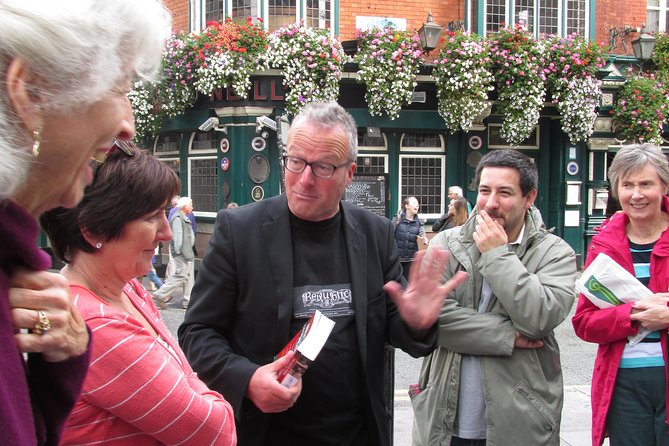
The meeting point is at 23 Wicklow St in Dublin (near public transport), and the tour begins at the International Bar, a classic Dublin pub setting. If you arrive early, you can grab a drink and use the intro literature provided by your guide to get your bearings before you start walking.
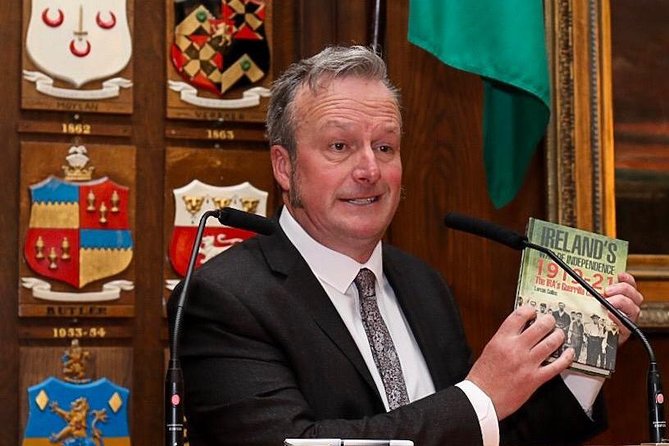
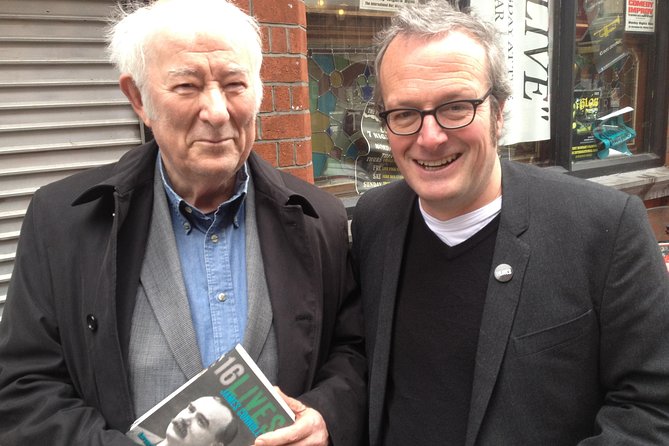
This first stop matters more than you might think. It’s not just a convenient start. It sets the tone: the 1916 Rising is treated as a lived story in a real city, told by someone who clearly cares about the subject—especially since Lorcan Collins has been guiding this tour for decades. It’s an easy way to step from vacation mode into story mode without feeling like a lecture.
Also, drinks aren’t included, but they are available to purchase. I like having the option because it keeps the experience flexible: you can go for the full pub vibe or keep it dry and just focus on the history.
You can also read our reviews of more walking tours in Dublin

Why the tour starts in the 1840s (and not 1916)
One of the smartest choices here is how the guide frames the lead-up. Instead of treating Easter 1916 as a sudden explosion, the tour begins with the Great Hunger / Irish Famine of the 1840s and moves forward toward the Rising. That timeline gives you cause and effect, not just headline moments.
You’ll spend your early time building context through the revolutionary period—meaning the political and social pressures start to make sense in your head. And because the guide invites questions right away, it’s easy to ask what you don’t know. If you’re new to Irish history, this structure is a big help. If you already know some of it, you’ll still pick up connections that make the later stops hit harder.
This is also where the tour feels like a conversation. In the best moments, you’re not just hearing facts—you’re hearing why people acted the way they did, and what shaped their choices.
City Hall and Dublin Castle: power, occupation, and control
After the intro, you move into the city’s political heart.
Stop at City Hall: the Irish Citizen Army
At City Hall, you’ll learn how the Irish Citizen Army became involved during Easter Week 1916. This stop is short, but it’s focused on the “who” behind the conflict—helping you understand that this wasn’t one single group acting in isolation. You’ll also get a clear explanation of how it fits into the wider story of Easter Week.
Dublin Castle: the British administration in Ireland
Next up is Dublin Castle, the center of British administration. Even if you’ve seen portrayals of it in film, standing near it with a guide gives you the practical view: where power sat, how it was managed, and why it became a target during the Rising and later struggles like the War of Independence.
The Castle stop is also a good “mental anchor.” By the time you reach it, you’ve already built the road leading to 1916, so the purpose of the location is obvious instead of abstract.


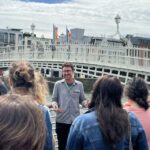
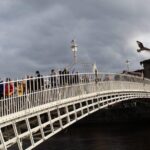
Four Courts and the bridge view over the Liffey
The Four Courts stop is one of the places where the guide handles logistics smartly. You won’t necessarily walk all the way up to the building because, rather than crowding around it, it’s best seen from a bridge over the River Liffey.
From there, you get the key idea: the Four Courts were occupied by revolutionaries during 1916, and later again in the lead-up to the Irish Civil War in 1922. That repetition is important, because it shows how the struggle didn’t end with the Rising. It evolved, fought over new fronts, and re-used old battlegrounds.
This is also where the guide’s “big picture, small details” approach pays off. Even if you’re not a history buff, you’ll get a clear explanation of the intricacies of the Civil War without needing prior background.
O’Connell Monument and Jim Larkin: symbolism you can see
This is where the tour becomes visually memorable.
At O’Connell Monument, you’ll pause to look at bullet holes tied to the Rising. The guide uses that visible damage to explain positions taken by the British and the Irish in 1916. Seeing physical marks that survived—still there for you to find—makes the conflict feel less like a chapter in a book and more like something that really happened in your streets.
Then you move to the Jim Larkin Statue. Here, the story expands beyond battlefield roles and into labor politics and community leadership. You’ll learn how “Big Jim” Larkin, connected to Liverpool, was a comrade of James Connolly and a friend to Dublin’s working class. It’s a useful reminder that major political movements are built with real people and real social networks, not only proclamations.
If you care about the human side of history—who supported whom, and why—these two stops deliver.
The GPO General Post Office: where the Proclamation was read
The An Post General Post Office (GPO) is the emotional and narrative center of the tour. This is where you’ll spend about 30 minutes, longer than most stops, because it’s the place where the Rising story unfolds in full.
The guide frames it as the HQ for the Revolutionaries in Dublin, and it’s also the location where P.H. Pearse read the Proclamation. That single moment is a big deal in Ireland’s national memory, and the tour treats the building that way.
What I find practical here is that you’ll understand the “why” before you walk past the “what.” By the time you arrive at the GPO, you already know the lead-up pressures, the political landscape, and the meaning of earlier sites. So the Proclamation doesn’t feel like a random speech—it feels like the climax of a long build.
Moore Street and the GPO garrison’s last stand
Depending on time, you may stop at Moore Street. When you do, it’s tied to where the GPO garrison made their last stand in Easter Week.
This stop often works well for people who like stories that end with consequence. You’ve just been at the symbolic HQ. Now the tour points you to the final stretch—where the situation changed from planning to survival. Even though the stop is shorter, it helps you feel the closing pressure of those days.
If your day is tight, you might miss Moore Street. But the guide’s ability to adjust the route is part of the point: the walk stays focused on the most important anchors.
The Old Parliament area and Trinity College neighborhood views
Another stop that depends on the route is the Bank of Ireland, often called the Old Parliament. The guide may also mention nearby Trinity College as part of the wider city context.
This is one of those stops where you’ll want to pay attention to how the guide links buildings to institutions—government, education, and power structures. Since the route varies, you might get slightly different commentary day to day, but the focus stays on how Dublin’s physical layout connects to its political history.
In general, I like this part of the tour because it reminds you that revolutions don’t happen in a vacuum. They play out across the same streets and institutions people pass every day.
How the guides turn sites into a story you remember
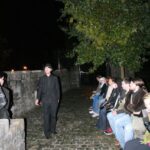
One reason this tour rates so highly is the delivery style. The guide isn’t just reciting dates; they guide you through a narrative arc with room for questions and follow-ups. Guides like Lorcan Collins are known for that blend of clarity and enthusiasm, and the energy tends to keep the group engaged.
You may also get entertainment woven into the history. In particular, singing of old rebel songs shows up at times, which works because it’s tied to the emotional tone of the events rather than added as a gimmick. Poems and storytelling moments also pop up, and they help the facts stick.
I also appreciate the social-history angles that sometimes come up—like the role of women in Irish history, depending on how the guide shapes the conversation. That kind of framing makes the Rising feel bigger than just male leaders and military moves.
Timing, pace, and what to expect from a 2-hour walk
The tour is planned for about 2 hours, and it’s designed to cover a lot of ground without feeling rushed. Still, give yourself a little buffer. Even on a well-run tour, questions, route swaps, and timing at each stop can push it closer to 3 hours.
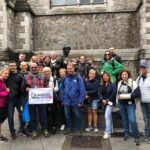
Group size caps at 30, which is usually manageable in a city walking context. What matters most is that the guide keeps an eye on the group so nobody gets left behind. If you need a slower pace or extra time at stops, it’s worth telling the guide early so they can adjust how they manage the flow.
Comfort-wise, treat this like a normal downtown walk: wear shoes you trust on sidewalks, and bring a light layer. You’ll be outside for a good chunk of the experience, and the tour requires good weather.
Alcohol at the start: a nice option, not part of the price
Alcoholic drinks are available to purchase, but they’re not included. That’s good value logic: you’re paying for a guided education, not for a drinking package.
Going early for a pint at the International Bar can add a relaxed Dublin feel before the facts start. Just remember that the tour itself is the main event, so keep an eye on the time and don’t let a long chat turn into a late start.
Value check: $27.81 for a guided Dublin history walk
At $27.81 per person, this tour sits in the “high value, low fuss” category for Dublin. You’re not paying for entry tickets at sites, either—each listed stop is shown as admission ticket free. So your money goes to the guide and the time you spend walking between key locations.
For me, the real value is the structure. You get context from the famine-era lead-up, then a series of stops that anchor the Rising in physical places: City Hall, Dublin Castle, Four Courts, O’Connell Monument, Jim Larkin’s statue, the GPO, and more depending on timing. That’s exactly how you make a history visit feel worth more than just reading about dates afterward.
If you only have a day or two in Dublin and you want the story in a single compact package, this price makes sense.
Should you book the 1916 Rebellion Walking Tour?
Book it if you want a clear, human storyline of the Rising without needing prior knowledge. The route is designed to connect the “why” (famine and growing pressures) to the “what” (Easter Week sites), and the guide’s question-friendly style helps you learn fast.
Skip it only if you dislike guided walking tours or you want a purely self-guided visit where you can linger on your own schedule. Also, if you’re timing-sensitive and need a hard 2-hour window, plan for a possible longer finish.
If you’re on the fence, here’s my simple rule: if you care about understanding Ireland’s modern history through the streets of Dublin, this tour is an efficient way to do it.
FAQ
How long is the 1916 Rebellion Walking Tour?
It runs for about 2 hours (approx.).
Where does the tour start, and do you return to the meeting point?
It starts at 23 Wicklow St, Dublin, D02 VH59, Ireland, and it ends back at the meeting point.
Is the tour offered in English?
Yes, it is offered in English.
Are alcoholic drinks included in the ticket price?
No. Alcoholic drinks are available for purchase, but they are not included.
Can children join the tour?
Yes, children must be accompanied by an adult.
What happens if the weather is poor or I need to cancel?
The tour requires good weather. If it’s canceled due to poor weather, you’ll be offered a different date or a full refund. Free cancellation is available up to 24 hours in advance for a full refund.