REVIEW · DUBLIN
Dublin: Sightseeing Walking Tour in German
Book on GetYourGuide →Operated by Pat Liddy's Walking Tours of Dublin · Bookable on GetYourGuide
A German tour that makes Dublin make sense. This small-group walk with a friendly German-speaking guide is one of my favorite ways to get your bearings fast: you cover major sights like Dublin Castle plus genuinely surprising side streets, all at an easy pace. One thing to consider up front: it’s built as an exterior tour, so you won’t count on going inside the big attractions during the walk.
You start on Dame Street near the Tree of Gold statue (Crann an Óir) and work your way through the former Viking and Medieval quarter, past City highlights on both sides of the River Liffey, then end around Trinity College with the famous Book of Kells in view. You’ll also get explanations that focus on the human stories behind places, not just dates and stonework.
At $34 per person for about 2.5 hours, this is good value if you like learning while moving and you’re happy trading interior ticket time for city-center context. If you want lots of museums or guided interior access, you may need a separate plan for that.
In This Review
- Key highlights you’ll feel on the walk
- How a German-language walking tour changes everything
- Starting at the Tree of Gold Statue on Dame Street
- Dublin Castle grounds & gardens: the big opening act
- Christ Church Cathedral exteriors and the medieval atmosphere
- Fishamble Street & Smock Alley: street-level surprises
- Temple Bar and Meeting House Square: the energy with a story
- Millennium Bridge and the River Liffey connection
- The Italian Quarter and St Mary’s Church turned café-bar
- Henry & Moore Streets: style, names, and context
- O’Connell Street: the main axis you’ll remember
- The General Post Office and the 1916 Rising connection
- O’Connell Monument and the politics of space
- Former Parliament House (Bank of Ireland): civic history in plain sight
- Finishing outside Trinity College and the Book of Kells area
- Small-group value: why $34 works for this format
- Who this tour suits best
- Quick practical expectations (so there are no surprises)
- Should you book it? My honest take
- FAQ
- What language is the tour conducted in?
- How long is the walking tour?
- Where does the tour start?
- Where does the tour end?
- Are there any indoor visits included?
- Is the tour price per person?
- What’s included in the ticket price?
- Is the tour wheelchair accessible?
Key highlights you’ll feel on the walk
- Small group, easy-going pace that keeps the walking comfortable and the stories clear
- German-language live guiding that makes the details actually stick
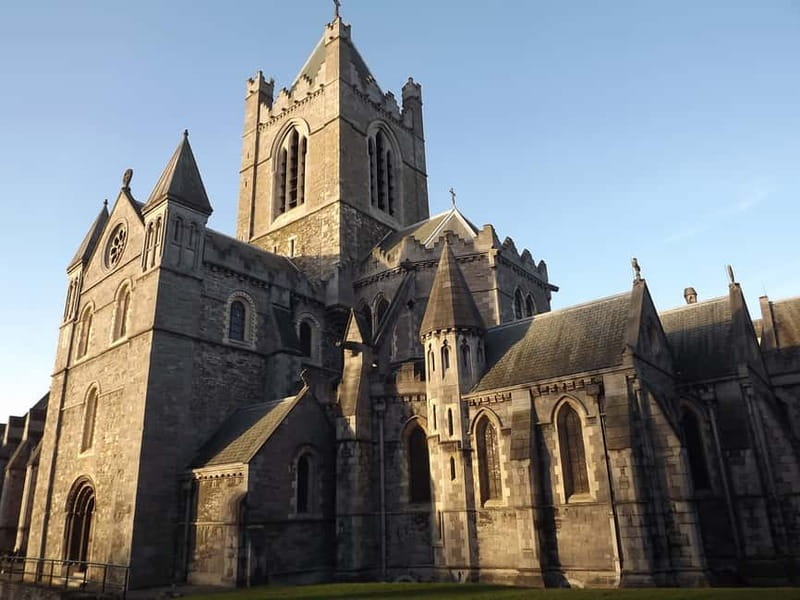
- Dublin Castle grounds & gardens plus Christ Church Cathedral exteriors for a strong first impression
- Temple Bar and the river crossing that connects the city on both sides of the Liffey
- Surprise stops like a former Lisbon tram turned café and a church that isn’t a church
- Finish near Trinity College so you can end close to the Book of Kells area
How a German-language walking tour changes everything
If you’re in Dublin and you can follow German, this tour is a big advantage. Instead of “bits and pieces” you have to piece together yourself, the guide gives the whole route as one flowing explanation. That matters in Dublin, where street signs, layers of history, and quick transitions between neighborhoods can feel like information overload.
The format is also refreshingly practical. You’re not rushing from one landmark to the next just for photos. The walk is designed to help you connect the dots between places you already know (like O’Connell Street and Trinity College) and places you likely wouldn’t find on your own.
A second thing I like: the guide’s approach is storytelling-first. You’re told why these spots matter and what happened there, including dramatic moments tied to major sites. When the tour passes the General Post Office, for example, it doesn’t just point out a building—it sets up the 1916 Rising connection and why the area looks the way it does today.
You can also read our reviews of more walking tours in Dublin


Starting at the Tree of Gold Statue on Dame Street
The meeting point is Central Plaza on Dame Street, at the corner of Dame Street & Fownes Street Upper, by the Tree of Gold statue (Crann an Óir). That location is helpful because Dame Street is one of those central lines you can navigate easily on foot or by public transport.
From the start, the tour frames the city’s “layers” idea. You begin near the former Viking and Medieval quarter, then you gradually work outward—so your brain can map Dublin in stages rather than all at once.
If you arrive early, take a quick look around before you join the group. Dame Street can be busy, and it’s easier to find the exact meeting spot when you’ve got a few minutes to orient yourself.
Dublin Castle grounds & gardens: the big opening act
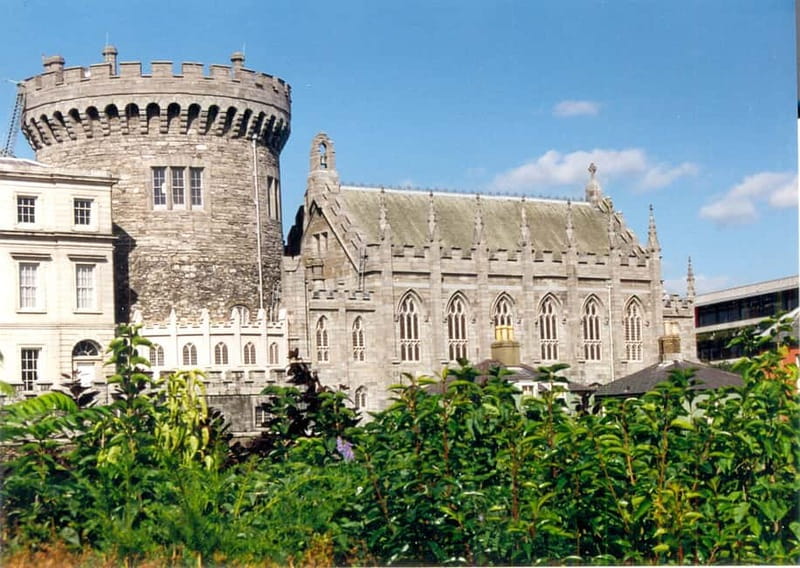
One of the first major sections takes you through the Dublin Castle grounds and gardens (externally). Even without entering, you get that feeling of stepping into official Dublin—stone, space, and a clear sense that this was a power center.
What makes this stop useful on a walking tour isn’t that it’s only “pretty.” It’s that the guide uses it as a starting point for the city’s timeline. You’re moving through areas that connect the medieval layout of the city with later development, and Dublin Castle works as a strong visual anchor.
A practical consideration: because visits are external, you’re mostly viewing from paths and public areas. If you’re hoping for inside access, plan to do that separately later.
Christ Church Cathedral exteriors and the medieval atmosphere
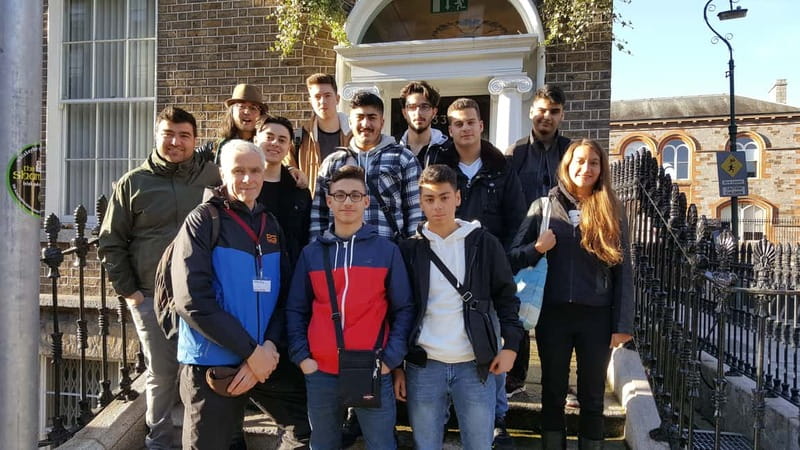
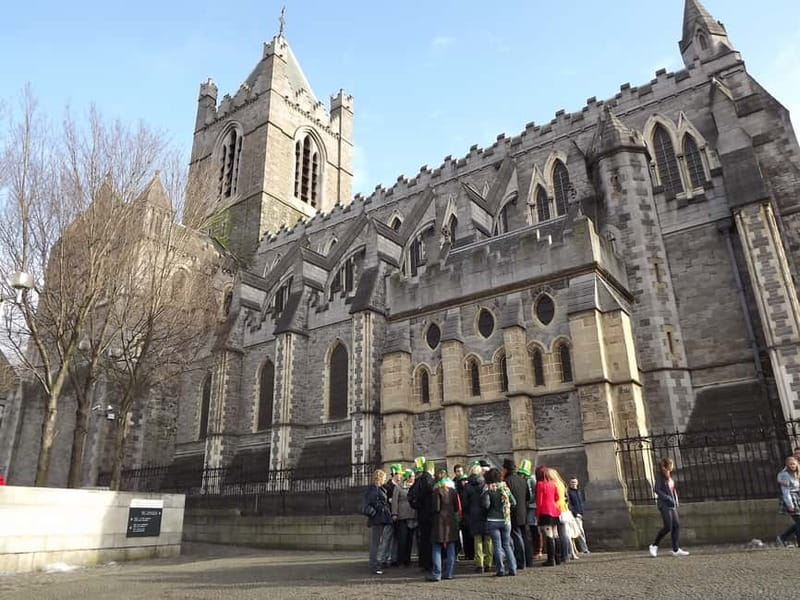
Next up is Christ Church Cathedral, again approached through exterior viewing. This is a classic Dublin sight, but on a tour like this it’s also a navigational tool: it helps you understand how the center of the city developed around landmarks, not just along modern traffic corridors.
The guide’s storytelling makes this more than a photo stop. You’ll get context that helps you see why streets and neighborhoods take the shape they do.
One tip from my planning style: if you’re bringing a camera, don’t try to grab every angle while walking. Wait for a moment when the group stops or slows—those are usually the best times to get stable shots without constantly asking people to pass.
Fishamble Street & Smock Alley: street-level surprises
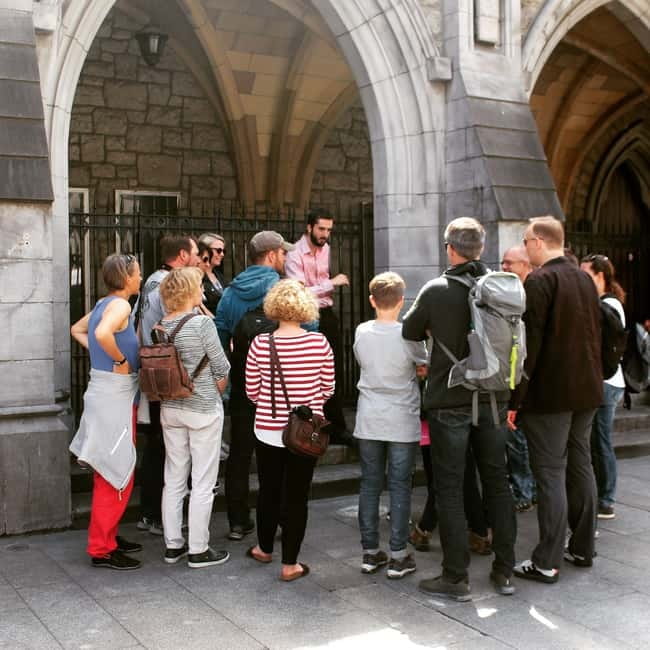
As the walk continues, you spend time in older-feeling streets like Fishamble Street and Smock Alley. This is where the tour starts to feel like Dublin rather than a sightseeing checklist.
The route includes stops tied to some fun “only-in-Dublin” details—things visitors often miss because they’re not obvious from a distance. The tour mentions a church that’s not a church, plus a former Lisbon tram now serving as a café. Those kinds of facts are exactly why I like guided walks: they turn random storefronts into context.
Expect the guide to point out what you’re looking at and then explain why it has that identity today. That’s the difference between seeing a street and understanding it.




Temple Bar and Meeting House Square: the energy with a story
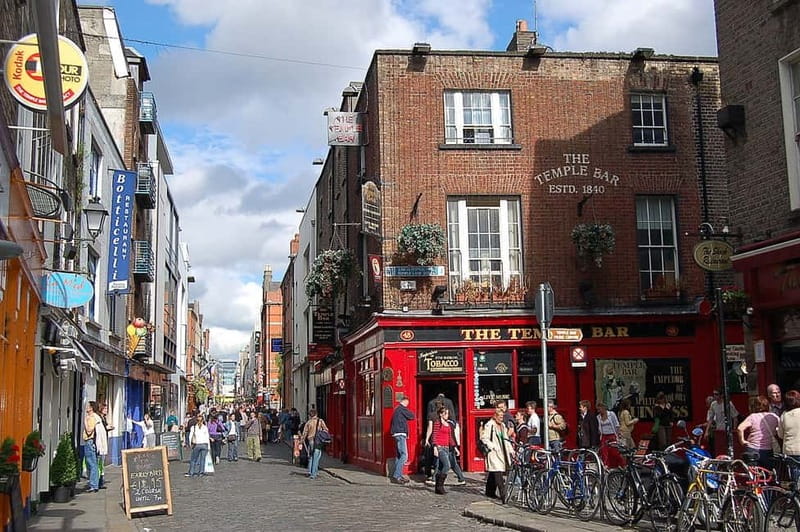
You’ll swing around through Temple Bar and pass Meeting House Square (in the Temple Bar area). This is one of those places where Dublin is performative—music, pubs, foot traffic—but it can also become background noise if you don’t have someone to frame it.
On this tour, Temple Bar isn’t treated like a theme park. It’s treated like part of the city’s urban story: what changed, how people used these streets, and how the city’s center shifted over time. That perspective makes your photos better too, because you’ll know which building matters and why.
Also, because this is an easy-going walk, you get time to actually hear the explanation rather than chasing it while you dodge crowds.
Millennium Bridge and the River Liffey connection
At some point you’ll cross toward the river area—Millennium Bridge and the River Liffey are part of the route. This section does a simple but powerful job: it helps you feel the geographic split of the city.
You’re walking from the older core toward the northside historic streets, so the river becomes a mental boundary. Once you see where that bridge sits in the route, it’s easier to understand where you are later if you decide to return on your own.
If you’re the type who likes a short break, this is a good stretch to slow down and look around. Even without formal “viewpoints,” bridges and river edges give you a natural pause in an otherwise continuous walk.
The Italian Quarter and St Mary’s Church turned café-bar
On the far side of the river journey, the tour heads into the Italian Quarter and then brings you to St Mary’s Church, which the tour notes is now a famous café/bar. This is another moment where the exterior-only format actually works in your favor.
Instead of relying on an interior visit, the guide helps you understand how a building’s identity can change while the exterior still tells part of the story. You’ll also get a sense of how Dublin neighborhoods stack different influences in the same walking radius.
This stop is a great moment to think about your next move. If you’d like a drink or a snack after the tour, this area can be a natural landing zone—just remember the walk schedule is timed to keep the whole route together.
Henry & Moore Streets: style, names, and context
Henry & Moore Streets appear on the walk. Even though these can look like “just streets” on a map, guided context makes them meaningful. The guide uses these stretches to keep the route moving while still giving you story fragments that connect to the bigger landmarks ahead.
I find this part of the tour useful if you get tired of hearing only big-ticket names. You still see the city, but you also learn how Dublin’s urban layout carries meaning beyond the top monuments.
O’Connell Street: the main axis you’ll remember
O’Connell Street is a key spine in the walk, and it gets attention for a reason: it’s one of the most recognizable stretches of central Dublin, and it links multiple historical layers into one long, walkable corridor.
When you’re on a guided route, landmarks like this stop being random. You can place them relative to earlier points—Dublin Castle direction, the river crossing, and the shift toward the political and civic core.
If you’re planning to explore after the tour, having this kind of “axis” in your mind makes everything simpler.
The General Post Office and the 1916 Rising connection
The route passes the General Post Office, and the guide specifically ties it to the 1916 Rising. The tour explains that the building housed the rebels’ headquarters and that the uprising led to destruction of the building and almost the entire street and surrounds.
That’s heavy context, but it’s delivered in a way that helps you understand what you’re seeing now. This is exactly the kind of moment where you don’t want to rush. If you’re listening, the story turns stone and street corners into a real timeline.
A practical thought: if you’re sensitive to strong historical content, just know this portion is part of the emotional weight of the tour.
O’Connell Monument and the politics of space
After the General Post Office, you’ll also pass the O’Connell Monument. The guide uses it as another reference point for how public memory shows up in Dublin’s streets.
This stop also helps you connect modern movement with historical meaning. You’ll likely notice how the monument sits within the road flow—Dublin’s way of putting history into everyday routes you can walk again later.
Former Parliament House (Bank of Ireland): civic history in plain sight
The tour includes the former Parliament House, now the Bank of Ireland. From the outside, this is a good “civic layer” stop: the guide can show you how power buildings in the past can end up with new roles in the present.
Even if you don’t know the building’s story before the walk, this kind of transition is something you’ll start spotting all over Dublin. The tour gives you a method for reading architecture without needing to be an expert.
Finishing outside Trinity College and the Book of Kells area
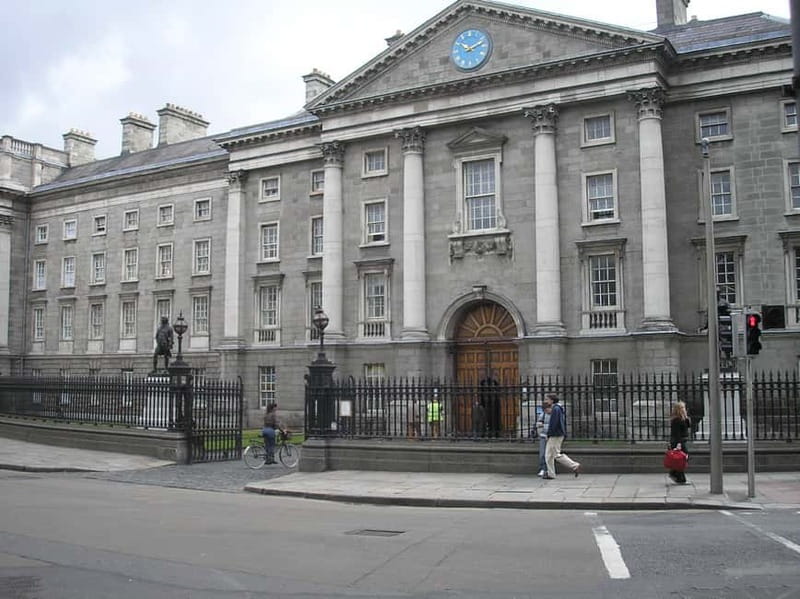
You end around Trinity College with its famed Book of Kells area. Even if your visit after the tour is self-guided, ending here is smart: you arrive at one of Dublin’s most famous cultural anchors right when you’re still oriented from the walk.
The activity also indicates that the tour ends back at the meeting point location, so you may find the final logistics bring you close to where you started. Either way, finishing near Trinity College is a strong cue for what to do next: if you want to go inside and see the Book of Kells, you’ll already know where you are.
If you time your day well, this ending point can also slot nicely into a late afternoon plan—grab a bite, then decide whether to add any indoor stops.
Small-group value: why $34 works for this format
At $34 per person for about 2.5 hours, you’re paying for three things: a trained guide, a German-language explanation, and a structured walking route that covers major sights plus side streets.
The “value” piece isn’t that every stop includes an entrance ticket. It’s that the guide stitches the city together. You move through a lot of recognizable landmarks—Dublin Castle grounds, City Hall area, O’Connell Street, the General Post Office, and Trinity College—then you add story-led moments like the da Vinci representation, a wobbly bridge, and the tale of a post-box that represents Ireland’s transition to independence.
If you’re the type who likes to understand the why behind what you’re looking at, this price makes sense. If you only want check-the-box sightseeing, you might prefer a cheaper self-guided option.
Who this tour suits best
This walking tour fits you best if:
- you want an introduction to central Dublin that connects both sides of the River Liffey
- you can follow German and want the details in your own language
- you enjoy learning through walking rather than standing in one place
- you like a guide who mixes big landmarks with street-level surprises
It’s also a good fit for first-time Dublin visitors, since it covers a lot of ground without turning into a sprint. If you’re traveling with a group of people who all want the same language-led experience, the small-group approach helps keep everything coordinated.
Quick practical expectations (so there are no surprises)
This tour is built as an easy-going walk with external visits. That means you should plan on viewing buildings, streets, and grounds from outside. The tour notes that opportunities will be available for visits like that after the tour, so treat the walk as the map and the story—then decide on any interiors afterward.
Also, the tour lists wheelchair accessible. If you need specific accommodations, it’s worth checking details when you book, since a walking schedule can still vary by the exact streets and pace.
Should you book it? My honest take
I’d book this tour if you want a clear, German-language introduction to central Dublin that blends big names with smart side streets. The pricing is reasonable for the time you get and the guide-led storytelling, and the format keeps you moving without feeling rushed.
Skip it if your main goal is inside access to major attractions. Since the tour is external-focused, you’ll still have plenty to see, but you may need to add separate tickets later if you’re after museum-style experiences.
If you’re deciding between languages or self-guided apps, this is the kind of guided walk that makes the city click. You’ll finish with better mental maps, stronger context, and a short list of places worth revisiting on your own.
FAQ
What language is the tour conducted in?
The live tour guide speaks German.
How long is the walking tour?
The tour lasts about 2.5 hours.
Where does the tour start?
It starts at the Tree of Gold statue (Crann an Óir), Central Plaza, Dame Street, Dublin 2 at the corner of Dame Street and Fownes Street Upper.
Where does the tour end?
The route finishes around Trinity College. The activity information also says it ends back at the meeting point.
Are there any indoor visits included?
All visits are external during the tour, and opportunities for such visits may be available after the tour.
Is the tour price per person?
Yes, the price is listed as $34 per person.
What’s included in the ticket price?
A professional, well-trained guide is included.
Is the tour wheelchair accessible?
Yes, the tour is listed as wheelchair accessible.