REVIEW · BUCHAREST
Bucharest: Communism and History Guided City Walking Tour
Book on GetYourGuide →Operated by I TRAVEL IN ROMANIA · Bookable on GetYourGuide
A walk through Bucharest comes with a second story. This one focuses on the communist era and how it shaped daily life, streets, and even what survived the 1980s demolitions. I love the clear timeline the guide builds and the way you get Parliament from the outside so you can really place it in context.
Two stops make this tour stick with you: the explanations around the Secret Police influence and the day-to-day survival details that make the past feel practical, not abstract. I also liked how the route mixes big landmarks with smaller corners, like a real sense of what people had to deal with on ordinary days.
The main downside is physical. You’ll be walking a lot, including a hill up to the meeting point, and it’s not suitable for people with back problems or wheelchair users.
In This Review
- Key Points If You Want the Best Value
- A Communist-Era Walking Route That Explains Why Bucharest Feels Different
- Meeting at Patriarchal Cathedral: Your First Clue About Power and Religion
- The Tour’s Rhythm: Short Stops With Meaning (Not Museum Fatigue)
- Watching Nationalisation Effects in a Nearby Neighborhood
- Palace of the Parliament: Understanding the Symbol From the Street
- Moved Buildings and Surviving Beauty: Antim Monastery’s Story
- The Break at a Local Café: Let the Story Land
- Alimentara Stop: The Human Side of Rations and Daily Well-Being
- Calea Victoriei: One of Bucharest’s Most Beautiful Stretches
- Secret Police Symbol Sites: Where Fear Became Architecture
- Caru’ cu bere and the City’s Layers: History Near Dinner
- The Lesser-Known Stops and the Final Turn Toward Revolution Square
- Guide Style: Storytelling That Feels Like a Walk With a Translator
- Price and Value: What $31 Buys You in Real Terms
- Who Should Book This Tour (and Who Might Skip It)
- Should You Book This Bucharest Communism and History Walking Tour?
- FAQ
- FAQ
- Where does the tour start?
- What’s the closest metro station to the meeting point?
- How long is the Bucharest Communism and History tour?
- What does the tour include?
- Do I get to go inside the House of People (Parliament)?
- Is there a break during the tour?
- What language is the tour guide?
- What should I bring?
- Will the tour run in bad weather?
- Is the tour suitable for wheelchair users?
Key Points If You Want the Best Value
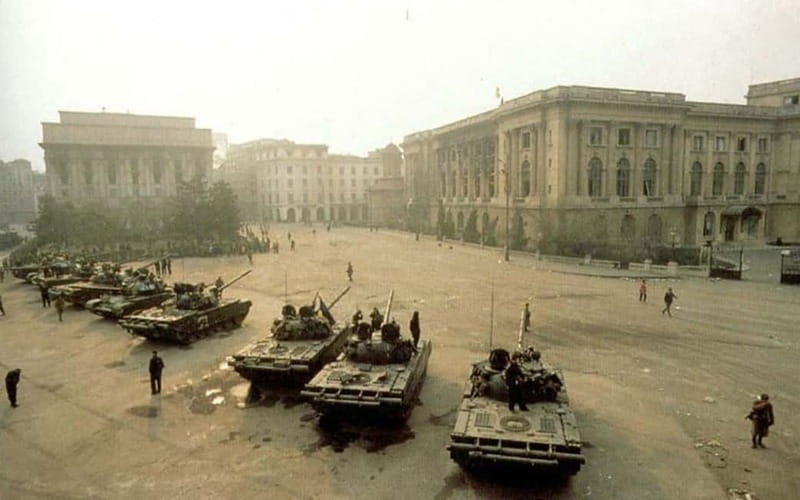
- Parliament Building, outside only: you’ll see it from the street and understand why it became such a symbol
- A full 1989 Revolution storyline: the tour ends at Revolution Square with the endgame explained
- Secret Police symbolism: you’ll learn how fear worked and where it left its mark
- Nationalisation and ration life: you get everyday examples, not just politics
- Comfort break built in: there’s a short café stop where you can reset
A Communist-Era Walking Route That Explains Why Bucharest Feels Different

Bucharest has charm, but it also has scars you can still see. This guided walk turns those scars into a story you can follow in a few hours. It’s designed to connect the dots between ideology, power, and the physical city—why certain buildings disappeared, why others had to move, and why people lived with constant pressure.
The tour is 3 hours and runs rain or shine, so plan on layers and comfortable shoes. You’ll cover about 15 objectives along the way, with a mix of walking, short guided segments, photo stops, and a mid-tour break.
If you’re in Bucharest for the first time, I think this is a smart move. You’ll get the context that makes the rest of the city feel less random and more meaningful.
You can also read our reviews of more walking tours in Bucharest

Meeting at Patriarchal Cathedral: Your First Clue About Power and Religion
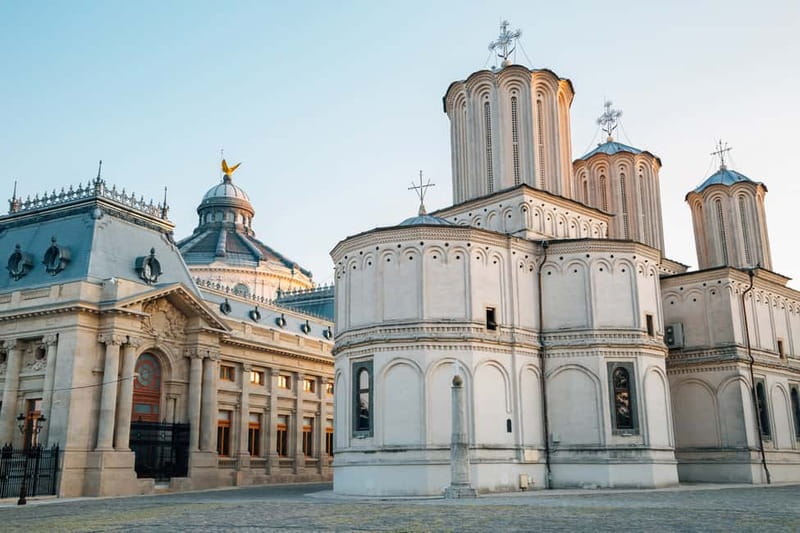
You meet in front of the Patriarchal Cathedral. From the closest metro station, Piata Unirii (Union Square), you’ll climb a hill leading up to the cathedral.
Why start here? Because the tour uses religion and public life as a doorway into communism’s early strategy in Romania. You’ll hear about historical events that helped set the stage for the communist regime. Even if you don’t consider yourself a history person, it helps to understand that communism wasn’t only about factories and laws—it was also about what institutions were allowed to exist, speak, and influence daily life.
Practical tip: start hydrating early. That hill can be tiring if you’re carrying a backpack and the day is warm.
The Tour’s Rhythm: Short Stops With Meaning (Not Museum Fatigue)
The route isn’t a single long lecture. It’s broken into multiple segments, including guided explanations and “pass by” moments where the guide points out details you’d otherwise miss.
Expect the pace to be steady, and for at least one built-in break. Many guides also keep answering questions along the way, and that’s a big part of what makes the tour feel personal rather than scripted.
The walking also gives you something rare: you’ll see how the city layout itself supports political power. Broad avenues, planned-looking sightlines, and big monuments all become easier to interpret once you’ve heard the communist-era intentions.
Watching Nationalisation Effects in a Nearby Neighborhood
After the cathedral, the tour moves toward a nearby neighborhood where you’ll see the results of nationalisation. In plain terms, that means ownership, jobs, and everyday life got reorganized by the state.
This stop matters because it turns a political word into something concrete. You start connecting why people’s routines changed, why private space felt less secure, and how the state became a constant presence in both the economic and social fabric.
If you’re worried this will turn into pure theory, relax. This tour leans on everyday examples—how people lived, what they struggled with, and what it felt like to navigate a system where you didn’t fully control your own life.
Palace of the Parliament: Understanding the Symbol From the Street
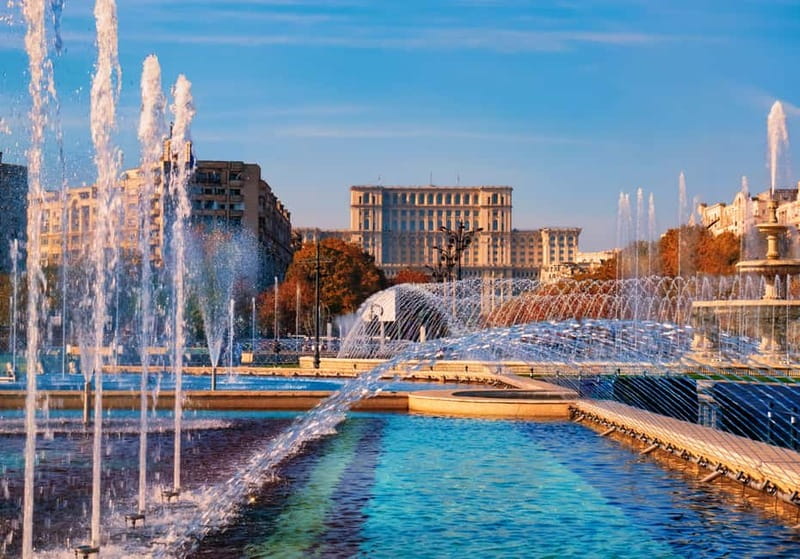
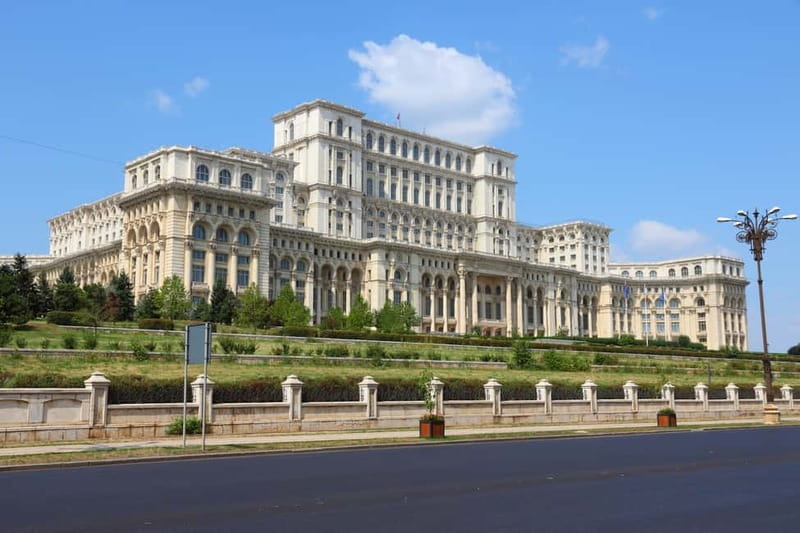
Then comes the big headline: House of People, today’s Palace of the Parliament. You’ll see it outside only, with a photo stop and guided context.
The guide frames it as more than architecture. You’ll hear about the construction and why it became a symbol of megalomania linked to Nicolae Ceausescu. This is where the “communism impact” theme becomes visual: you can understand how the regime used scale, money, and intimidation to project authority.
A personal tip: spend a few extra seconds looking from where the guide positions you. This building is hard to “get” from postcards. From the street, you can better sense its size and how it dominates nearby views.
Moved Buildings and Surviving Beauty: Antim Monastery’s Story
Next, you’ll reach Antim Monastery. One of the most interesting parts here is the idea that some buildings were moved in order to be saved from destruction.
That’s a powerful contrast in the communist-era narrative. The regime is often associated with demolition, expansion, and control. Yet here you see survival—someone decided this place mattered enough to relocate rather than erase.
The monastery stop also gives your brain a break from the political weight. It adds texture: you’re not only hearing about policy; you’re standing in a cultural space that still functions as part of the city today.
The Break at a Local Café: Let the Story Land
About halfway through, you’ll have a short café break (15 minutes). What you order is on your own expense, but the timing is helpful—you’ll have a moment to recharge and use the restroom if needed.
One thing I really like about this tour structure is that it doesn’t rush you. After several stops about repression and control, you get a chance to reset before heading back out.
Also, watch how you feel after the break. Many people walk faster earlier in the tour and then slow down once the narrative becomes heavier. That’s normal.
Alimentara Stop: The Human Side of Rations and Daily Well-Being
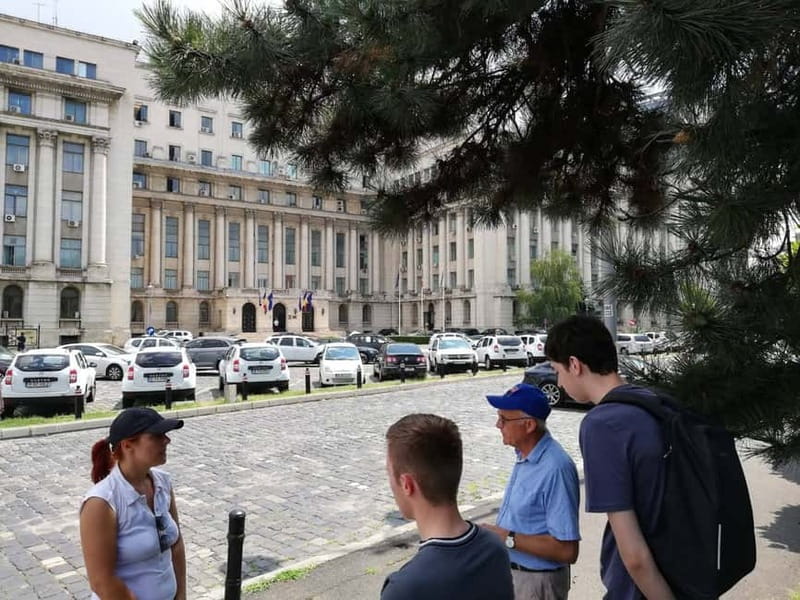
The route includes a moment near an old Alimentara (grocery store). This is where the tour focuses on day-to-day life and well-being under communism.
Instead of giving you a long list of laws, the guide translates the system into lived experience. You’ll learn about rationing pressures and the difficulty of feeding a family under strict rules.
This part also helps you connect communism to your own instincts as a traveler: you’ve all seen shortages in other places, but hearing how it worked in Romania makes it feel real.
And yes, there’s a snack. You’ll receive a communist-type snack during the tour. In the feedback I saw, guides have brought items like a rum-flavored biscuit, which is a clever way to make ration-era constraints feel snack-sized instead of abstract.
Calea Victoriei: One of Bucharest’s Most Beautiful Stretches
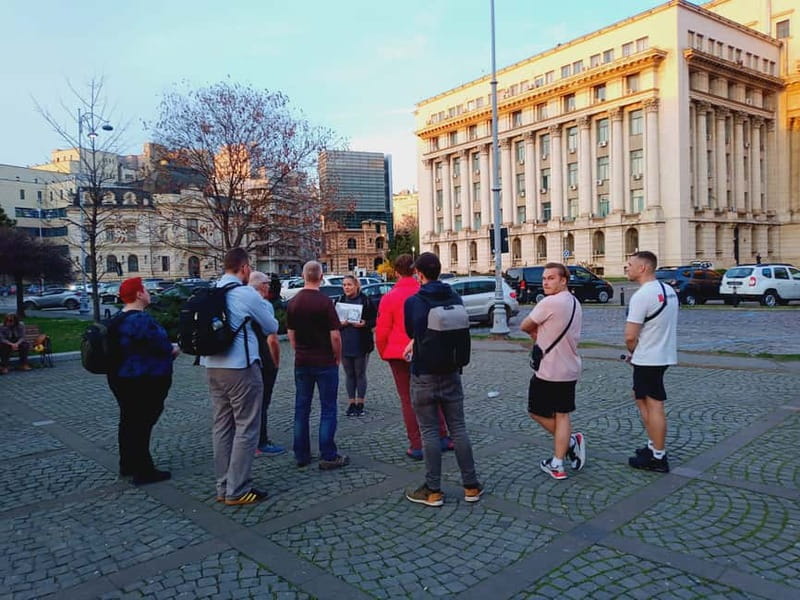
After that, the tour moves along Calea Victoriei Boulevard, described as one of the city’s most beautiful streets. You’ll walk a short segment at a normal pace and get context for the area beyond its visual appeal.
What makes this section useful is the contrast. You’re on an elegant boulevard, but the tour keeps pointing back to communist symbols and what those symbols represented in daily life.
It’s an effective way to show how political messaging can live inside “ordinary” city beauty.
Secret Police Symbol Sites: Where Fear Became Architecture
One of the most intense sections of the walk is when you’ll see communist symbols tied to the Secret Police—including what used to be a center connected with torturing people.
This is not a vague “they were bad” segment. The guide explains the influence of the Secret Police and how fear shaped behavior.
I recommend going into this part with your questions ready. The best moments on this tour come when the guide can answer why certain buildings or symbols were used, and how people understood those signals at the time.
A good tour won’t make you numb. It should help you understand cause and effect—how authoritarian control changes what people say, do, and even think about tomorrow.
Caru’ cu bere and the City’s Layers: History Near Dinner
The route includes Caru’ cu bere with a guided component. This is one of the places that lets you hold two truths at once: Bucharest has a lively side today, and the city has long been a social stage.
Placing Caru’ cu bere inside a communist-history walk works because it shows continuity. People still ate, met, and built community, even while the state controlled so much behind the scenes.
If you’re planning where to eat later, this is a useful stop. Even without a full restaurant break here, it gives you a mental landmark for your evening plans.
The Lesser-Known Stops and the Final Turn Toward Revolution Square
The tour continues with additional short guided stops and “pass by” segments, including a less-publicized stop near the end of the route. These sections are where the city’s smaller details start to matter—street-level signs, symbolism on buildings, and the way the timeline keeps tightening.
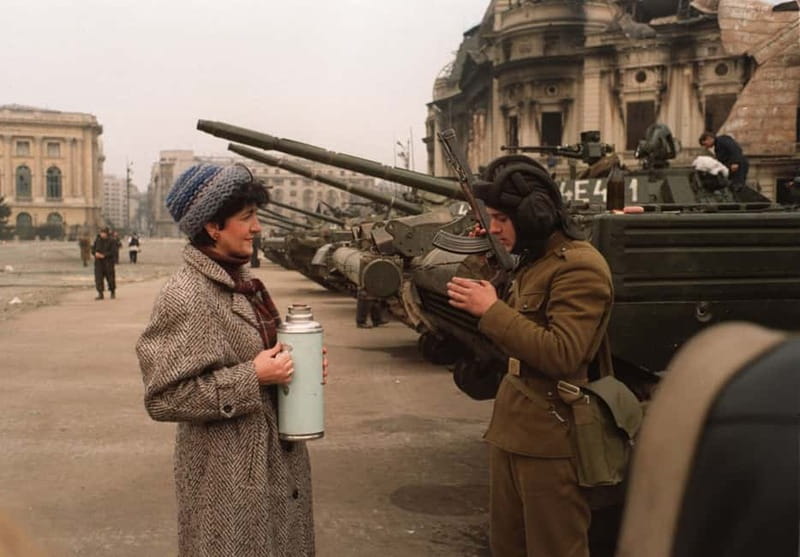
Then you’ll finish at Revolution Square, with a guided story about the end of the communist regime in 1989 and the start of democracy.
This ending matters because it gives you closure and perspective. You’ll leave with a clearer sense of what was at stake, why people risked everything, and how that turning point changed the country’s future.
Guide Style: Storytelling That Feels Like a Walk With a Translator
The biggest reason this tour seems to earn near-perfect feedback is the way guides tell the story. In the names that come up again and again—Andreea, Daniela, Mihai, Octavian, Ion, John, Vasil—there’s a pattern: strong English, clear explanations, and personal detail that makes events feel immediate.
A few examples from the tour’s feedback that can help you choose the right time:
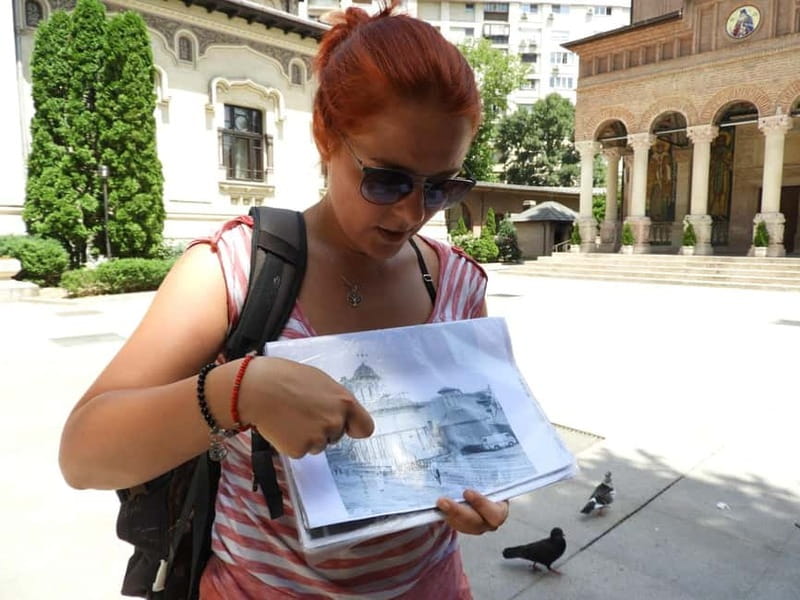
- Some guides use visual aids to connect facts with what you’re seeing on the street.
- Guides often answer questions with real context, including family experiences and daily survival under rationing.
- Weather doesn’t get ignored. One guide example involved bringing extra umbrellas when it rained, which is a simple detail that makes the tour feel cared for.
If you like history that doesn’t stop at dates—if you want it tied to places—you’ll probably enjoy this approach.
Price and Value: What $31 Buys You in Real Terms
At $31 per person for a 3-hour walking tour, you’re paying for three things: expert framing, a guided route that hits key sites, and the time-saving factor of not having to research each landmark yourself.
A big advantage is that the tour is built around the city layout. Instead of hopping between multiple museums, you get about 15 meaningful stops in one continuous walk. You also only see the Parliament building outside, which keeps it focused on interpretation rather than ticket-based sightseeing.
Also, the tour includes a communist-type snack, which helps the story feel tactile, not just academic. The café break is on you, but the reset time is part of the experience.
If you’re trying to understand Bucharest fast—especially before you start wandering alone—this price looks reasonable for the amount of context you’ll carry with you the rest of the trip.
Who Should Book This Tour (and Who Might Skip It)
This tour is a great fit if you:
- want Bucharest context fast (especially early in your visit)
- enjoy history tied to real places, not just timelines
- like walking tours with strong storytelling and Q&A
You might skip it if you:
- have back problems or need wheelchair access (the walk and hill make it unsuitable)
- want a lighter, purely scenic city experience with no heavy political themes
Should You Book This Bucharest Communism and History Walking Tour?
If you want to understand why Bucharest looks the way it does—and why the city still carries meaning from 20th-century politics—this is a strong choice. The route hits big symbols like the Parliament building and ends with the 1989 Revolution in a clear way. At the same time, it doesn’t forget the human scale: daily life, ration pressures, and the way the Secret Police changed what people dared to do.
Book it early in your trip if you can. You’ll see the rest of the city with better “why” vision.
FAQ
FAQ
Where does the tour start?
You meet in front of the Patriarchal Cathedral.
What’s the closest metro station to the meeting point?
The closest metro station is Piata Unirii (Union Square). You’ll need to climb the hill up to the cathedral.
How long is the Bucharest Communism and History tour?
The tour lasts 3 hours.
What does the tour include?
It includes a 3-hour guided walking tour, around 15 objectives, and a communist type of snack.
Do I get to go inside the House of People (Parliament)?
No. You will see it from the outside only.
Is there a break during the tour?
Yes, there is a short local café break time of about 15 minutes. What you order is not included.
What language is the tour guide?
The tour is in English.
What should I bring?
Comfortable shoes are strongly recommended.
Will the tour run in bad weather?
It takes place rain or shine, but it may be cancelled or rescheduled if extreme conditions make it unsafe.
Is the tour suitable for wheelchair users?
No. It is not suitable for wheelchair users, and it’s also noted as not suitable for people with back problems.