Dublin’s past walks right beside you. This 2-hour, city-center walk strings 1,000 years of Dublin from Viking beginnings to Georgian boulevards and Victorian slums, led by an accredited English guide. You’ll hit the big landmarks and also get a few street-level surprises along the way.
I love how the tour uses famous stops like Dublin Castle and Christchurch Cathedral to turn dates into characters. You’ll hear stories tied to writers and rebels, rock stars and rogues, and the city’s rise, fall, and rise again—so Dublin feels like a living place, not a textbook. I also really like the practical side: the guide shares tips on where to eat, drink, find live music, and even what souvenirs to look for.
One possible drawback: even though the tour is listed at 2 hours, at least one group report said it ran close to 3 hours with no scheduled break for food or the loo. If you’re sensitive to timing, plan with that in mind.
In This Review
- Key things I’d bet on from this tour
- The pace: a tight 2-hour story that still covers 1,000+ years
- Meeting outside The Old Storehouse Pub and tracking the green umbrella
- Where the tour really shines: connecting famous sights to real characters
- Dublin Castle: the stop where the city’s timeline clicks
- Christchurch Cathedral: history that feels human, not just old
- Temple Bar and Smock Alley Theatre: culture stops that add texture
- Viking Dublin and Medieval Dublin: how the guide uses the streets, not just plaques
- The River Liffey, Ha’penny Bridge, and O’Connell Bridge: crossing points for understanding
- GPO and Trinity College: finishing with famous anchors and modern Dublin’s flavor
- Why the guide’s humor and storytelling show up again and again
- Price and what $27 gets you for a 2-hour Dublin lesson
- Who should book this Dublin highlights and lesser-known corners walk
- Should you book this tour?
- FAQ
- FAQ
- How long is the Dublin walking tour?
- Where does the tour start and how do I find it?
- What major sights does the walk include?
- Is the tour guided and what language is used?
- What is included in the price?
- What is not included?
- Is there free cancellation?
Key things I’d bet on from this tour
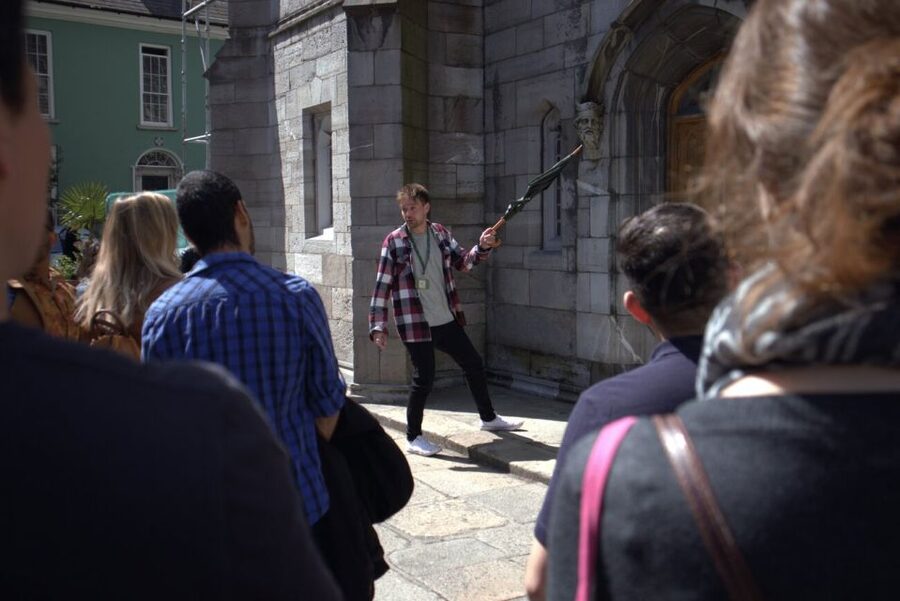
- Accredited English guiding: you get a real guide with a story to tell, not a random wander playlist.
- Big timeline, not just big buildings: Viking Dublin, medieval streets, Georgian boulevards, and Victorian slums are part of the walk’s arc.
- Landmarks plus lesser-known corners: you’ll see the must-sees and then hear about smaller streets and details that help it click.
- Humor shows up in the reviews: guides like Ian, Keith, Alan, Dave, Kieran, and Helena are repeatedly praised for wit and jokes.
- Local follow-up tips: food, drink, live music, souvenir ideas, and what areas to avoid all come up.
The pace: a tight 2-hour story that still covers 1,000+ years
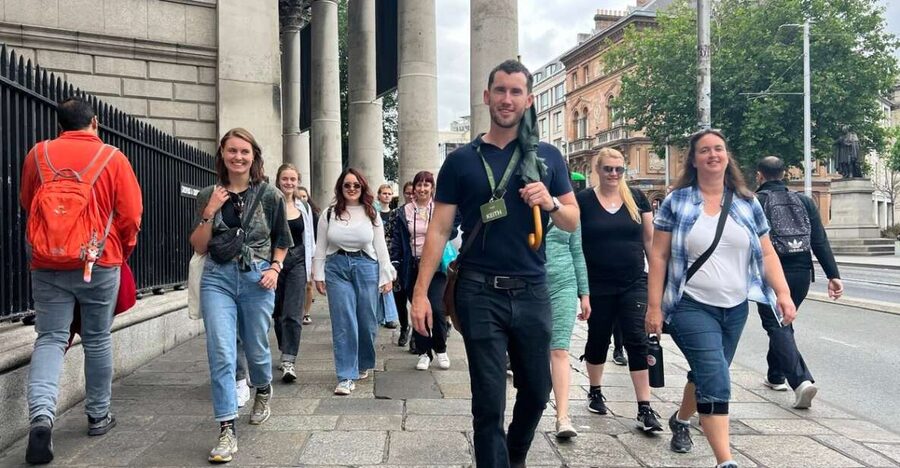
This tour is built for orientation. You start in Dublin’s center and walk through the city as if it’s turning pages. The promise is not just to point at landmarks, but to connect each stop to a chapter: Viking origins, medieval lanes, later Georgian streets, and the more troubled Victorian side. That’s a lot for two hours, which is why the tour style matters.
I like that the guide doesn’t treat history as one straight line. You get the sense that Dublin changes, loses things, and rebuilds—its rise, fall, and rise again. And because the tour includes side characters like writers, rebels, rock stars, and rogues, you end up remembering people and events instead of memorizing dates.
The flip side is time. Because the route is designed to pack in a full sweep of eras, you should expect a steady walk. The only clear warning from real feedback is that at least one run went nearly 3 hours without a set break. If you’re the type who needs a planned stop to reset, bring what you need before you start and pace yourself.
You can also read our reviews of more walking tours in Dublin



Meeting outside The Old Storehouse Pub and tracking the green umbrella
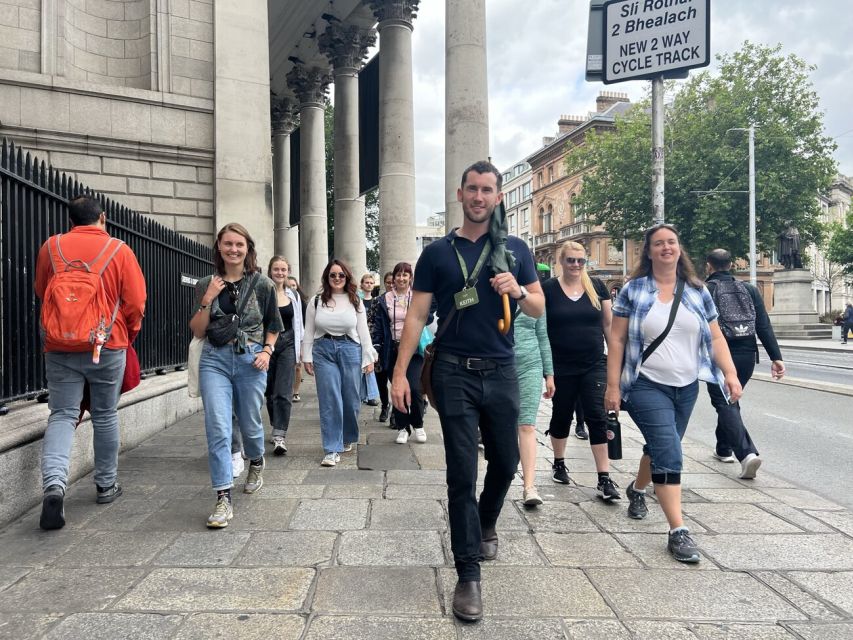
You meet outside The Old Storehouse pub. Look for the green umbrella. Aim to arrive no later than ten minutes before the scheduled start so you can get everyone together and start on time.
Because this is a walking tour through central streets, think about comfort more than fashion. Wear shoes you can handle for a couple hours on uneven sidewalk and curb edges. Bring a light layer if the weather is changeable—Dublin can shift fast, and you’ll be outdoors the whole time.
The good news: the tour loops back to the same meeting point at the end. So you’re not stuck figuring out transit right after. You’ll finish where you began, which makes it easy to go straight to a pub meal or an evening stop.
Where the tour really shines: connecting famous sights to real characters
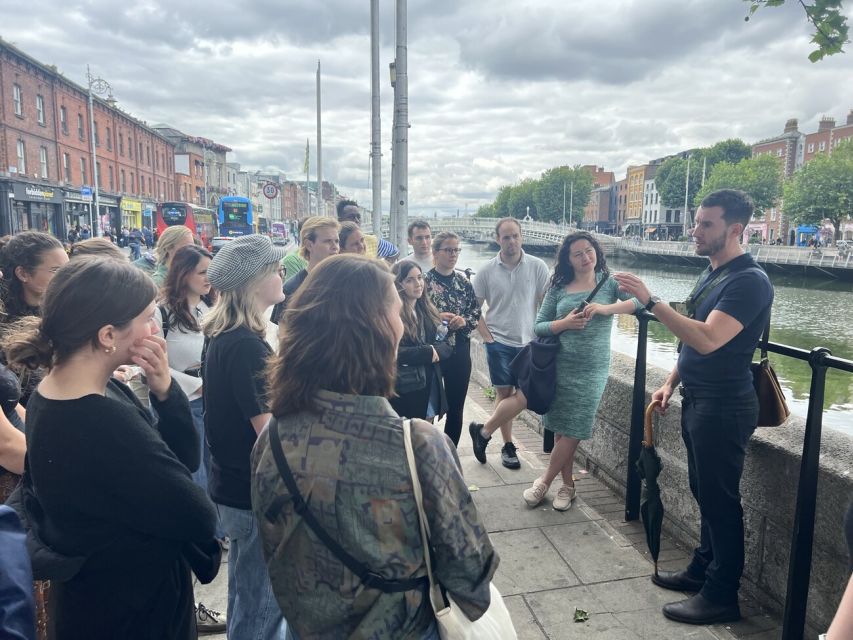
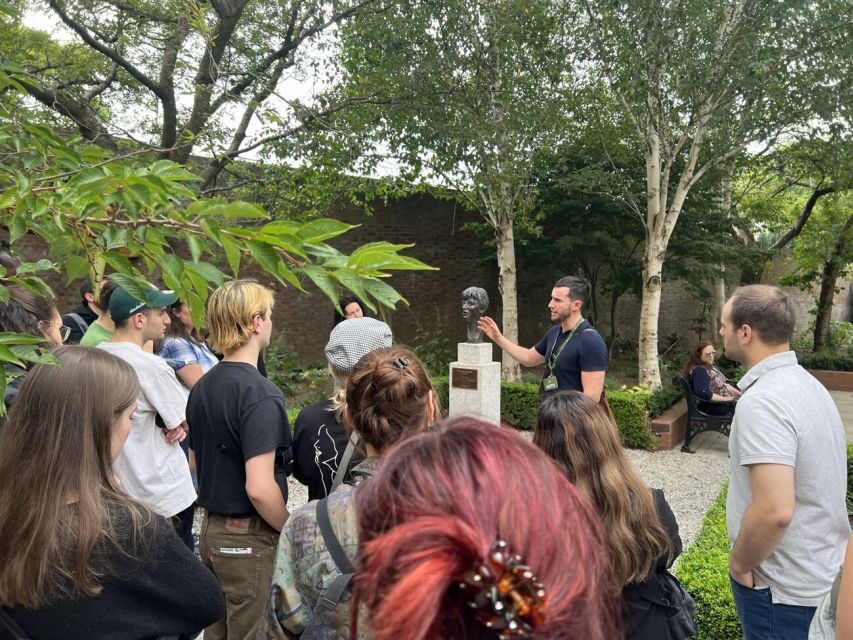
This is one of those tours where the guide’s performance changes everything. The review highlights are consistent: the best tours here sound like good storytelling with humor, and the guide keeps the group moving while still making the city feel personal.
Several guides get named directly, and the praise pattern is similar:
- Ian gets credit for being knowledgeable, witty, and funny.
- Keith is praised for a large volume of history plus jokes and warmth.
- Alan is called out for being organized, friendly, and entertaining.
- Dave is described as funny, kind, and especially good for first-timers.
- Kieran and Helena show up as strong storytellers with a lively tone.
That tone matters because Dublin’s story is complicated. The tour leans into that complexity without turning it heavy. You’re not just learning what happened; you’re learning what the city was like when it happened—who had power, who challenged it, and how the atmosphere shifted by era.
Dublin Castle: the stop where the city’s timeline clicks
Dublin Castle is one of the anchor points on the route. What makes this stop useful is how it’s used as a pivot in the story. The guide doesn’t treat it like a photo op. Instead, it’s a landmark that helps you frame the early and medieval feel of central Dublin, then connect forward into later chapters.
If you’re new to Dublin, this is the kind of first anchor that helps you stop feeling lost. After the Castle, you can start noticing how street shapes and building clusters create a sense of layers. Even if you only remember a handful of facts, you’ll walk away with a cleaner mental map.
Potential drawback? This is a walking tour of the city center, so you won’t have unlimited time standing still at every landmark. If you’re the type who likes long museum-style pacing, you may feel you want more time at each stop. Still, for a quick “what am I looking at” session, the structure works.
Christchurch Cathedral: history that feels human, not just old
Christchurch Cathedral is another signature stop. Like Dublin Castle, it’s used to frame one part of the city’s broader arc. The guide’s job here is to connect architecture and location to what Dublin was becoming at different points in time.
I like cathedral stops on walking tours because they make you look up. You can’t just speed past them. They slow your eyes down. And once you’re slowed, the guide has a chance to turn broad themes—like the movement from early settlement to medieval streets—into something you can picture.
The best part is how the tour keeps bouncing between eras. So you’re not stuck thinking only one time period. You start with the early chapters, then you move forward, and Christchurch becomes more than a building. It becomes a signpost that says: this city has been shaped by many waves of change.






Temple Bar and Smock Alley Theatre: culture stops that add texture
Temple Bar and Smock Alley Theatre round out the cultural side of the tour. The listing doesn’t promise a deep-dive into any one venue, but it does include them as part of the path through Dublin’s evolving identity.
Here’s why I think these stops are valuable: the tour isn’t only about ruling power and medieval streets. It also nods to the writers, rebels, and creative people who give Dublin its personality. Places like theatre-focused landmarks help you feel that mix of history and everyday life.
If you’re planning nights out, these are also practical stops. They’re the kind of landmarks that help you understand where you might want to spend time after the walk. More than once, guides are praised for handing out follow-up ideas for where to eat, drink, and catch live music—so these points help your decision-making once you’re back on your own.
Viking Dublin and Medieval Dublin: how the guide uses the streets, not just plaques
The tour specifically calls out Viking Dublin and Medieval Dublin as themes you’ll walk through. That’s important. It means the guide isn’t just tossing facts at you from one signboard.
Instead, the story is tied to the city’s layout: moving through medieval streets, seeing how the city’s oldest roots shaped what came later, and then watching the narrative shift into later eras like Georgian boulevards and Victorian slums. That “walk through the ages” structure is what turns a central-city route into a coherent experience.
I also like that the tour leans into characters—writers, rebels, and other notorious figures—because Viking and medieval eras can feel abstract if you treat them like a timeline only. Put a few memorable people into the picture and the whole thing becomes easier to remember.
The River Liffey, Ha’penny Bridge, and O’Connell Bridge: crossing points for understanding
The tour includes the River Liffey, Ha’penny Bridge, and O’Connell Bridge. These stops do more than give you a classic photo angle. They help you feel how Dublin’s center is organized around movement and connection.
Bridges are perfect for this kind of storytelling. They’re naturally about linking two sides, and the tour uses that idea to keep the city feeling like one whole system instead of scattered sights. When you hear the guide’s story about Dublin’s changes, crossing a bridge makes it easier to picture how the city grew and shifted.
Practical note: bridges are open. If it’s windy or rainy, you’ll feel it. Bring a layer and keep your phone secured. But if the weather is kind, these bridge moments are also where the walking tour starts to feel more like sightseeing.
GPO and Trinity College: finishing with famous anchors and modern Dublin’s flavor
Later in the walk, you’ll reach the GPO and Trinity College. These are big, recognizable names, which is great for first-timers. You leave knowing what the city’s most famous landmarks are, and you know how the guide threaded them into Dublin’s longer story.
I like that the tour explicitly includes the city’s rise, fall, and rise again. That theme helps these final stops feel less like random big sites and more like milestones. You can stand in front of a landmark and understand why it matters to Dublin’s identity, even if you only catch a few key ideas.
Trinity College also gives you an easy “from here, what next?” moment. Once your head is full of eras and characters, you’re better equipped to explore on your own. You’ll also have heard plenty of ideas for what to do after the tour—food, drink, live music, and souvenir picks—which makes the ending feel like a handoff, not a stop-and-start.
Why the guide’s humor and storytelling show up again and again
The most praised element across the feedback is the guide’s ability to keep energy high without sacrificing clarity. People repeatedly mention humor, wit, and a sense of pride in Ireland. Names that come up often include Ian, Keith, Alan, Dave, Kieran, Helena, James, Gemma, Karl, Emily, and Chris.
What you should take from that, as a traveler, is simple: you’re not buying a silent walking route. You’re buying an ongoing narrative. If you enjoy hearing history as stories—who did what, why it mattered, and how Dublin’s personality formed—you’ll likely love this format.
The other helpful pattern: several reviews mention the guide going above and beyond with practical recommendations. That’s a big deal for value. A tour that teaches you where to go after the tour saves you time and guesswork. It also helps you avoid wasting evening hours.
Price and what $27 gets you for a 2-hour Dublin lesson
At $27 per person, this is priced like a solid budget-to-mid option for a guided walking tour. Two hours is long enough for a real storyline, but short enough to keep it flexible. You’re not committing to an all-day schedule, and you can still plan an evening out right after.
For the money, you get:
- a local guide
- a city-center walking tour
- exploration of the history and culture behind what you’re seeing
- tips and recommendations for making the most of your Ireland trip
What that means in plain terms: you’re paying for both orientation and direction. The orientation is the walking narrative—Viking origins through medieval streets to later eras. The direction is the after-walk help: where to eat, drink, find live music, and shop for souvenirs, plus what to avoid.
The only caution tied to value is the pacing issue. If the walk runs closer to three hours and you needed a break, you might feel the bargain isn’t quite as neat. But if you’re okay with a steady walk and you go in prepared, the price-to-time ratio still looks fair.
Who should book this Dublin highlights and lesser-known corners walk
This tour fits best if you:
- want a fast orientation to central Dublin with a timeline you can actually remember
- like history told through characters and stories, not just dates
- want practical advice for tonight’s plan—food, drinks, live music, and souvenirs
- appreciate a guide with a sense of humor
I’d be slightly more careful if you:
- need frequent breaks or you struggle with longer stretches of walking
- prefer a slower, self-paced sightseeing style where you can linger at one building for ages
If you’re traveling solo or as a couple, the format works well because it helps you connect landmarks into a coherent narrative. If you’re with kids, it can still work, but only if everyone can handle the walking pace and the idea of listening for a couple hours.
Should you book this tour?
Yes—if you want Dublin made simple and memorable in one afternoon, this is a strong pick. The standout strength is how the guide turns the city into a story, and the reviews repeatedly point to humor and lively storytelling. You also get practical recommendations that make the tour feel like part of your trip plan, not just a standalone activity.
My best advice before you book: wear good shoes and plan to be outside for the full walk without assuming a scheduled break. If you can handle that, you’ll come away with a clearer sense of Dublin’s past and a better idea of what to do next.
FAQ
FAQ
How long is the Dublin walking tour?
The tour duration is listed as 2 hours (check availability to see starting times).
Where does the tour start and how do I find it?
Meet outside The Old Storehouse pub and look for the green umbrella. The tour ends back at the meeting point.
What major sights does the walk include?
The tour mentions landmarks and areas such as Temple Bar, Dublin Castle, Christchurch Cathedral, Viking Dublin, Medieval Dublin, Smock Alley Theatre, the River Liffey, Ha’penny Bridge, O’Connell Bridge, the GPO, and Trinity College.
Is the tour guided and what language is used?
Yes, it includes a live tour guide who speaks English.
What is included in the price?
Included are a local guide, a walking tour of Dublin City Centre, exploration of the history and culture of Ireland, and tips and recommendations to help you make the most of your trip.
What is not included?
Hotel pickup and drop-off, plus food and drinks, are not included.
Is there free cancellation?
Yes. Free cancellation is available up to 24 hours in advance for a full refund.