REVIEW · NEW ORLEANS
New Orleans French Quarter and Voodoo History Walking Tour
Book on Viator →Operated by French Quarter Phantoms · Bookable on Viator
Voodoo stories meet French Quarter streets. This walk turns famous landmarks into a guided lesson on Congo Square and Marie Laveau’s world, with added context on local architecture, food, music, and culture. You’ll move through the French Quarter in a tight 1 hour 45 minutes, ending at Jackson Square with the streets still ringing in your ears.
I like the delivery here: the group is kept small (up to 20), the pacing is comfortable, and the guide style leans into storytelling so the details actually stick. One consideration: the voodoo angle may feel lighter than you expect for some people, and on at least one tour run, a guide’s modern political framing bothered a listener looking for a strictly historical focus.
In This Review
- Quick hits before you go
- Price and logistics: what $21 buys you
- A practical pacing tip
- Starting at Voodoo Lounge: setting the tone in the right place
- Congo Square: voodoo roots tied to the slave trade and Indigenous peoples
- What to watch for at this stop
- Marie Laveau’s former residence: the safe-house idea
- Drawback to consider
- Bourbon Street and the Old French Opera House: naming, fame, and mixed feelings
- How this stop helps your future walks
- Preservation Hall: music as a living tradition
- Admission-free, story-forward
- Royal Street: Supreme Court energy, Huey P. Long, and court history
- Why Royal Street is a good mid-tour anchor
- Voodoo Authentica: a modern cultural center and collection stop
- What you can get from this stop
- Jackson Square: St. Louis Cathedral, the Cabildo, artists, and tarot readers
- Small practical tip
- Guides and storytelling style: who you might get and how to benefit
- A fair note on expectations
- Is this the right fit for you?
- Should you book this French Quarter and Voodoo history walking tour?
- FAQ
- How long is the New Orleans French Quarter and Voodoo History Walking Tour?
- What does the tour cost?
- Where does the tour start and where does it end?
- What time does the tour begin?
- Is the tour in English, and do I need paper tickets?
- Is any admission included during the walk?
- What if the weather is bad?
Quick hits before you go
- A small-group walk (max 20 people) that keeps the route easy to follow
- Marie Laveau’s former home stop, with admission included for that specific site
- Multiple music-and-culture landmarks, including Preservation Hall
- Politics on foot at Royal Street, tied to major Louisiana figures and court history
- Voodoo Authentica stop, a dedicated voodoo cultural center and collection
- Jackson Square at the end, where the sights, artists, and tarot readers set the mood
Price and logistics: what $21 buys you
For $21, you’re buying two things: guided context and time. In about 1 hour 45 minutes, you cover a dense slice of the French Quarter while stopping long enough to understand what you’re looking at, not just pass it. That matters in New Orleans, where the streets look like set pieces, but the meaning comes from the human stories attached to them.
The tour runs in English and uses a mobile ticket, which helps if you don’t want to fuss with paper. You meet at Voodoo Lounge, 718 N Rampart St at 11:00 am, then end at Jackson Square. The route is built for walking, and it helps that it’s near public transportation.
You can also read our reviews of more walking tours in New Orleans


A practical pacing tip
One of the most consistent positives in the tour feedback is how the guide manages the walk on hot days—keeping people oriented, staying group-centered, and being thoughtful about shade. If you run sensitive to heat, plan on bringing water and wear sun protection, but the overall structure is meant to keep the experience comfortable.
Starting at Voodoo Lounge: setting the tone in the right place
Meeting at Voodoo Lounge on North Rampart Street gives the tour a clear theme from the start. Instead of jumping straight into legends, you begin with voodoo as part of the city’s lived history—interwoven with slavery, Indigenous presence, and cultural survival.
I like that the tour doesn’t treat voodoo like a circus act. It’s presented as a framework that shaped community life, provided protection and shelter in hard times, and carried forward in New Orleans culture even when the outside world misunderstood it.
Congo Square: voodoo roots tied to the slave trade and Indigenous peoples
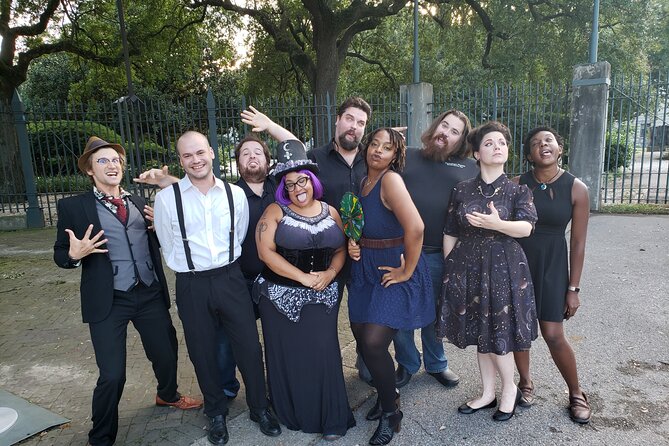
Your first stop is Congo Square, and the story begins where it belongs: with the early history of voodoo connected to the slave trade and Indigenous peoples of New Orleans. This is not just about spooky vibes. You get a human historical foundation for why these traditions formed, how they traveled, and how they survived.
Congo Square also works as a mental warm-up. You’re in an open area that helps your brain switch from sightseeing mode into listening mode. If you’ve heard voodoo described only in myth, this stop gives you a grounded starting point—without erasing the supernatural language people still use to talk about belief.
What to watch for at this stop
Listen for the guide’s emphasis on the overlap of cultures. The real takeaway is how New Orleans history isn’t one single thread—it’s multiple strands tangled together by circumstance, trade, and community.
You can also read our reviews of more historical tours in New Orleans


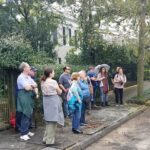
Marie Laveau’s former residence: the safe-house idea
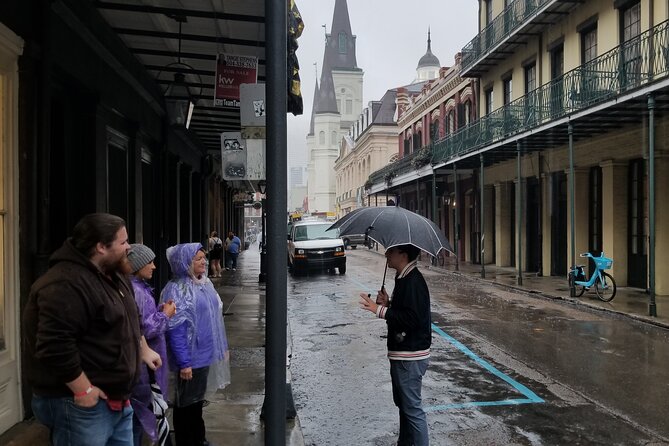
Next comes the site of Marie Laveau’s former home, the one connected to her voodoo work and the idea of a safe house for people in need. The tour frames it as shelter that extended beyond one person’s myth—mentioning orphans and Choctaw vendors finding refuge there.
This is the stop I’d prioritize if you want the tour to feel meaningful. The lesson isn’t only who Marie Laveau was. It’s how her home functioned in practical ways for people who needed protection, help, and a place to exist.
Drawback to consider
If you’re expecting a long, highly detailed voodoo lecture, this specific stop may feel brief. It’s scheduled as a short stop, and the tour keeps moving to cover a full sweep of landmarks.
Still, it’s a powerful anchor. Even if you only catch the main points, you’ll leave with a better sense of voodoo as something embedded in community survival—not only spectacle.
Bourbon Street and the Old French Opera House: naming, fame, and mixed feelings
Then the tour shifts into the part of the French Quarter most people think they already know: Bourbon Street. You’ll hear about how it got its name, why it became famous, and why local attitudes can be complicated—especially when a street becomes known for one thing, but the city is built on many other layers.
Along the way, you also learn about the Old French Opera House. This matters because it reminds you that entertainment in New Orleans wasn’t invented by nightlife. There were earlier eras of culture, performance, and public life that shaped the quarter’s identity.
How this stop helps your future walks
After this, when you look at Bourbon Street, you’ll probably notice more than just bars and crowds. You’ll start spotting how streets earn their reputations over time—and how culture shifts while the neighborhood’s core personality stays.
Preservation Hall: music as a living tradition
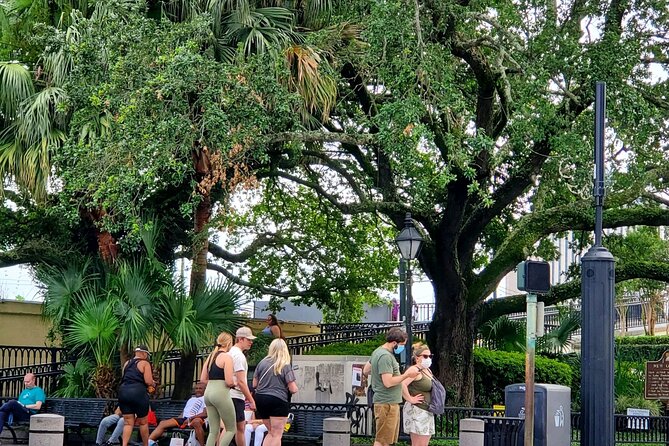
A major highlight on this route is Preservation Hall, one of America’s best-known music venues. Here the guide connects the dots between the musicians, the hall’s history, and the work Preservation Hall does to protect and preserve New Orleans music traditions.
The value of this stop is that it gives you a clear reason to care about the music beyond the fact that New Orleans is famous for it. You learn how institutions and people actively defend a sound and a community, instead of letting it get diluted into something generic.
Admission-free, story-forward
This is also a smart inclusion because it’s free to see as part of the walk. You get context without adding extra ticket pressure. If you’re trying to keep the trip budget-friendly, this helps.
Royal Street: Supreme Court energy, Huey P. Long, and court history
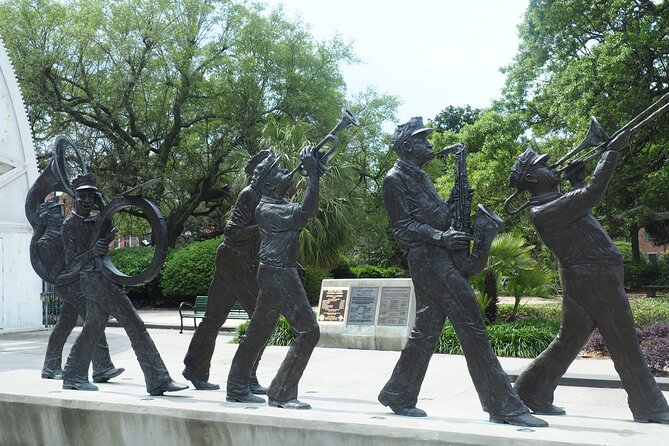
Next is Royal Street, with stops that connect the quarter to power and law. You’ll see the State Supreme Court building and hear about Louisiana political figures such as Huey P. Long and Edwin Edwards. The tour also touches Plessy vs. Ferguson, giving context to how legal decisions shaped real lives.
This is a different flavor than the voodoo stops—and that contrast is part of why the tour works. New Orleans is not only myth and music. It’s also policy, struggle, and systems that people navigated every day.
Why Royal Street is a good mid-tour anchor
Royal Street helps re-balance the mood after the emotional weight of earlier stops. You shift from personal stories to public power, which keeps your understanding from becoming one-note.
Voodoo Authentica: a modern cultural center and collection stop
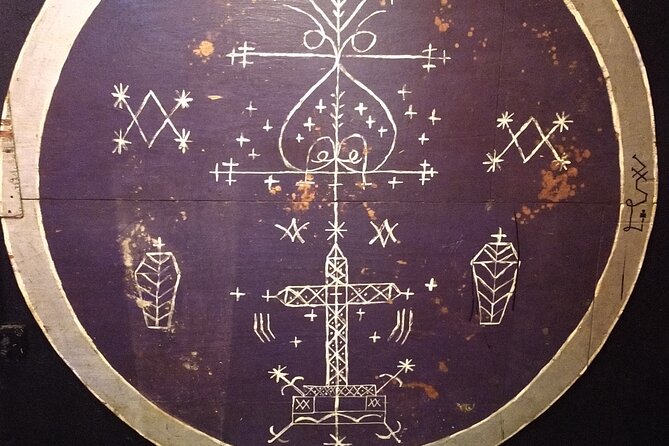
Then you reach Voodoo Authentica, a Voodoo Cultural Center and Collection. This is where the tour adds a contemporary layer: voodoo not only as past belief, but as a tradition with artifacts, interpretation, and a place dedicated to education.
For me, this is one of the best stops for readers who want something more tangible than street legends. A collection setting tends to slow people down. You’re in a space designed for looking and learning, so the ideas stick.
What you can get from this stop
Even if you’re skeptical, you can treat it like cultural history: how people present, explain, and preserve traditions. And if you’re interested in the spiritual side, it gives you a chance to see how the subject is organized outside the shock-and-scare version you might hear elsewhere.
Jackson Square: St. Louis Cathedral, the Cabildo, artists, and tarot readers
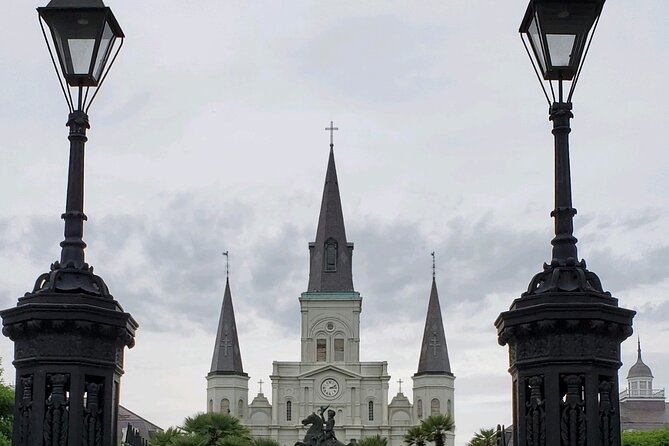
The final stop is Jackson Square, and it’s a feast for the senses. You’ll look at St. Louis Cathedral and the Cabildo, while the square’s street life unfolds around you—artists, musicians, and tarot card readers. The guide ties what you see to layers of history, so you’re not just admiring a view. You’re understanding how the square became a focal point.
Jackson Square is also a good end point because it feels like the French Quarter’s public front room. After 90 minutes, you’re ready for a slower moment—watch people draw, listen to music, and take photos with meaning attached.
Small practical tip
Take a few minutes here even if you’re tempted to move on. Let the story land. It’s the kind of ending that makes the walk feel complete.
Guides and storytelling style: who you might get and how to benefit
One reason this tour often lands so high is how different guides bring the material to life. Names you may hear associated with standout tours include Erin, Pepe, Wolfy, Angela, Robert, Bobby, Nika, and Lukas. The common thread is speed of recall, humor, and the ability to answer questions without shutting people down.
If you like a tour that feels like a conversation, you’ll likely enjoy this format. Some guides even manage group needs on the fly—keeping people oriented, watching the heat, and making sure you’re not stuck without water or a bathroom break when you need one.
A fair note on expectations
This isn’t billed as a long, purely academic voodoo course. Some people want more voodoo detail; others love the broader blend of architecture, food, culture, and music. The best move is to decide what you want most. If you want a fast, story-driven tour that uses voodoo as a thread through the city, you’re in the right place. If you want deep voodoo-only treatment, you might prefer a different format.
Is this the right fit for you?
This tour is ideal if you want a high-signal intro to the French Quarter in under two hours. It’s great for solo visitors who don’t want to study the city map alone, and it works well for couples or families who like stories that connect landmarks to people.
It’s also a good choice for travelers who care about music culture. Preservation Hall is included for a reason, and the guide’s framing helps you understand why the city protects its sound.
Should you book this French Quarter and Voodoo history walking tour?
I’d book it if you want an organized walk where the guide makes the French Quarter readable—voodoo roots, Marie Laveau’s legacy, Bourbon Street context, Preservation Hall music culture, politics on Royal Street, and a finish at Jackson Square where you can breathe it all in. At $21 for a 1 hour 45 minutes route with an included admission stop at Marie Laveau’s site, it’s strong value compared with many add-on tours.
Skip or choose carefully if you need a very long, purely voodoo-focused experience, or if you strongly prefer that a guide keeps modern political commentary out of the conversation. If that’s you, it may still work—just know the story style can include broader framing, not only legends.
FAQ
How long is the New Orleans French Quarter and Voodoo History Walking Tour?
It runs for about 1 hour 45 minutes.
What does the tour cost?
The price is $21.00 per person.
Where does the tour start and where does it end?
It starts at Voodoo Lounge, 718 N Rampart St, New Orleans and ends at Jackson Square.
What time does the tour begin?
The start time is 11:00 am.
Is the tour in English, and do I need paper tickets?
It’s offered in English, and you’ll use a mobile ticket.
Is any admission included during the walk?
Admission is listed as included for the stop at the original spot of Marie Laveau’s home. Other stops on the route are listed as free to visit during the tour.
What if the weather is bad?
The experience requires good weather. If it’s canceled due to poor weather, you’ll be offered a different date or a full refund.