Warwick at night turns every doorway into a clue. This walk is a story-led tour through grim legends, real crimes, and theatrical storytelling across the town centre, with stops like Lord Leycester, Castle Hill, and the gaol cell on Barrack Street. I especially like how the guide connects each landmark to a specific incident, and how the $15.28 price feels fair for a full 90-minute town-centre show. One thing to consider: it’s a lot of standing and walking, and the delivery can be quite theatrical, so it may not match everyone’s taste.
The format is simple: meet in Warwick’s historic core, follow the guide on foot, and end back in the market square near Old Shire Hall and the County Courts. The group is capped at 30, and the tour runs in English with a mobile ticket, which makes it easy to plan and show up.
In This Review
- Key highlights to know before you go
- Warwick at Night: what the Dark History walk is really like
- Meeting point on High Street and how the 90 minutes flow
- Lord Leycester: one of Warwick’s oldest buildings and a murder near it
- Warwick Castle coach house and stables: a daring heist story
- The Oken Tea Rooms: Thomas Oken’s wealth and what followed his death
- Castle Hill: Piers Gaveston, Kind Edward II’s circle, and Fulke Greville’s downfall
- Mill Street and Caesar’s Tower: Moll Bloxham and the hellhound legend
- Collegiate Church of St Mary’s: Warwick’s tallest building and famous burials
- Old Shire Hall: county courts, trials, and executions
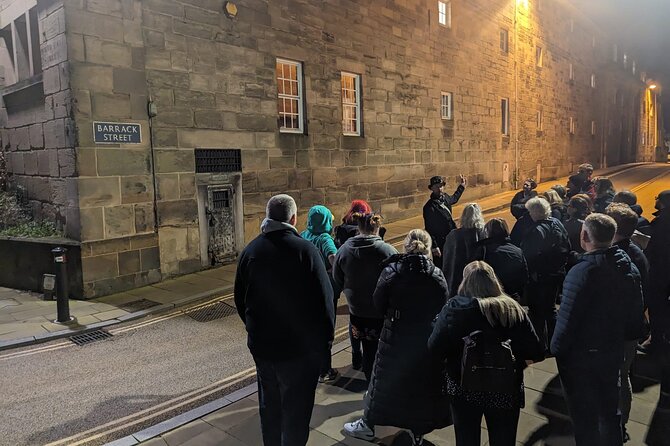
- Barrack Street: the last gaol cell and the scaffold spot
- Heron Sculpture Fountain finale: murder, insanity, and witchcraft
- Price and practical value for a 90-minute night walk
- Who should book this dark history walking tour (and who should skip)
- Should you book this tour?
- FAQ
- FAQ
- How long is the Dark History Walking Tour in Warwick?
- How much does the tour cost?
- Is the tour offered in English?
- Where do I meet for the tour?
- Where does the tour end?
- Do I need admission tickets for the stops?
- Is a mobile ticket used?
- Are service animals allowed?
- What’s the group size limit?
- What is the cancellation policy?
Key highlights to know before you go
- A 90-minute night walk built around short, story-rich stops in central Warwick
- Warwick’s most famous trouble spots: Castle Hill, Mill Street, St Mary’s, and the old county courts area
- Guided storytelling with performance energy, including humour mixed into dark subjects
- Free-access stops marked as admission ticket free, so you’re paying mainly for the tour itself
- A strong fit for people who like history-as-story, not history-as-lecture
Warwick at Night: what the Dark History walk is really like
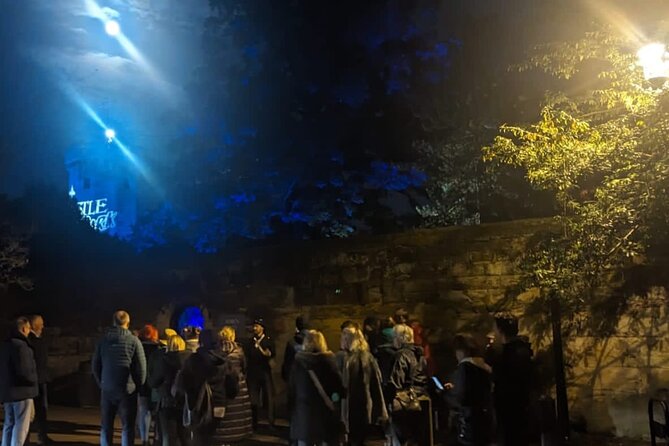
This is not a museum visit. It’s a town-centre walk where the streets become part of the plot. You’ll hear ghost stories, murder stories, and courtroom stories, then watch the buildings you pass in daylight take on a darker meaning after dark.
What I like is the pacing. You get a sequence of compact stories tied to specific corners, lanes, and landmarks, so you’re not stuck in one place for ages. And the guide’s style matters here: the humour and props can make heavy topics easier to take, which helps the tour keep moving without becoming grim in the wrong way.
If you’re the type who wants strictly factual recitation with no acting, you might find the performance style a little much. One person left after about 30 minutes because it wasn’t their taste, which tells you to trust your preferences.
Meeting point on High Street and how the 90 minutes flow
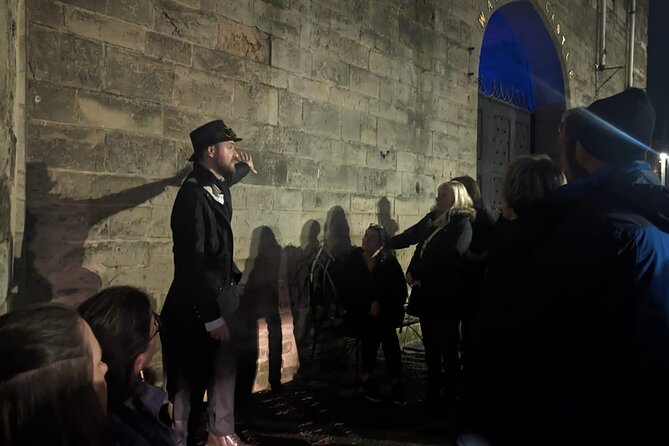
You’ll start at 60 High St, Warwick (CV34 4BH) and finish at Heron Sculpture Fountain, Market Place (CV34 4TH). The experience runs about 1 hour 30 minutes, and it’s designed for people to stay together as the guide moves from site to site.
You should plan for night walking on real pavement and some time looking up at buildings. Even though the tour is short by day-trips standards, it still feels like a proper walk with frequent stopping. If mobility is an issue, bring that up in your planning and consider whether a standing-heavy evening tour works for you.
Lord Leycester: one of Warwick’s oldest buildings and a murder near it
The tour kicks off at The Lord Leycester, one of Warwick’s older buildings. Here, you get the first ghost story, plus a darker local event that links what you see now with what happened nearby in the past.
This stop works well because it sets the tone. You’re not just hearing generic spooky talk; you’re learning how particular places earned their reputations. It’s also a nice way to start without needing to travel far from the centre—quick start, immediate atmosphere.
Warwick Castle coach house and stables: a daring heist story
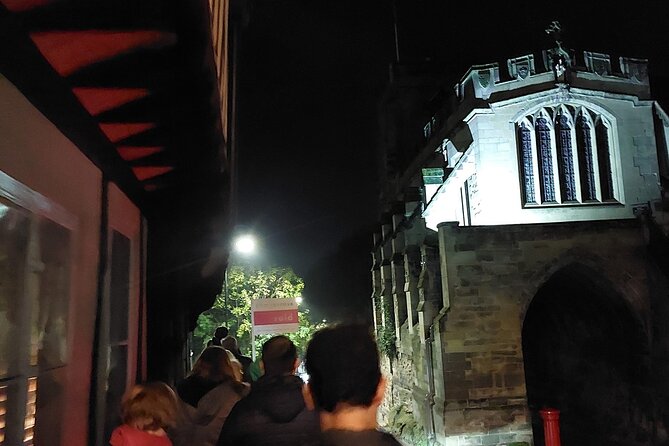
From there, you head to Warwick Castle, focusing on a story tied to the coach house and stables. You’ll hear about a daring heist and how that kind of episode fits into the larger story of how Warwick Castle became the impressive historic landmark it is today.
Why I think this segment is valuable: it widens the definition of “dark history.” Yes, there’s crime and danger, but there’s also the idea that castles were social hubs—meaning drama could happen next to everyday routines like travel, horses, and storage.
The Oken Tea Rooms: Thomas Oken’s wealth and what followed his death
Next you’ll stop at the Oken Tea Rooms, where you’ll learn about Thomas Oken, an Elizabethan merchant who left his wealth to the town of Warwick. That’s a real civic-minded detail, and it helps the story feel grounded, even when it turns spooky.
Then the tour shifts to the night of Oken’s death and the eerie happenings tied to what people believed came after. This is one of those moments where the tour uses the setting to explain local belief—why people connected a person’s end to the rumours that lingered.
Castle Hill: Piers Gaveston, Kind Edward II’s circle, and Fulke Greville’s downfall
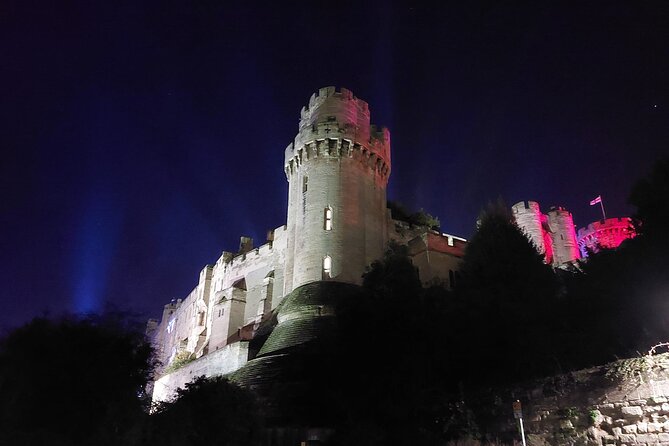
Castle Hill is where the tour leans hard into named characters. You’ll hear about Piers Gaveston, a controversial noble who was best friends with Kind Edward II. His actions lead to his sentencing and killing in Warwick, and you’ll connect that to the gravity of the hill and the castle’s presence over the town.
Then the story moves to Fulke Greville, the owner who helped shape Warwick Castle into the magnificent building you recognize. But Greville’s tight-fisted nature comes into the story too, along with the tragic circumstances around his death.
Practical note: Castle Hill is dramatic terrain, and at night it can feel steeper than it does in daylight. Take your time on the walk, and if you’re with kids, keep expectations realistic: this is intense storytelling, not a gentle bedtime tale.
Mill Street and Caesar’s Tower: Moll Bloxham and the hellhound legend
On Mill Street, you’ll walk one of the town’s oldest and most impressive stretches, with a section that’s built for photos as you approach Caesar’s Tower. That’s your scenic breather, but the tour doesn’t stay light for long.
At the foot of Caesar’s Tower, the guide tells the most infamous Warwick legend: Moll Bloxham, the hellhound of Warwick. This is classic town-lore material—less about a single dated event and more about how Warwick turned fear into folklore.
I like this stop because it shows how dark history isn’t always a document trail. Sometimes it’s a story people keep alive because it explains a vibe: danger, punishment, and the feeling that the town has a memory.
Collegiate Church of St Mary’s: Warwick’s tallest building and famous burials
You’ll also visit the Collegiate Church of St Mary’s, described on the tour as Warwick’s tallest building. Expect a story about which famous faces from history are buried there, and what that says about Warwick’s place in England’s wider story.
This is a good change of pace. After murders, scaffolds, and gaol legends, a church setting gives the tour a more solemn, reflective energy. It’s still dramatic, but it’s slower and more about remembrance than shock.
Old Shire Hall: county courts, trials, and executions
At the Old Shire Hall, you’ll stand outside the old Warwickshire County Courts area. This is where the tour moves into procedure and punishment: you’ll learn about how the worst criminals were tried, jailed, and executed, and you’ll hear about the strangest case ever heard there.
If you’re the kind of person who likes context, this part delivers. Instead of just naming crimes, you’ll get a sense of how the court worked and how judgement played out in real life. It also makes the later gaol and scaffold stories feel less like isolated legends and more like a continuous chain.
Barrack Street: the last gaol cell and the scaffold spot
On Barrack Street, the tour points you to what’s described as the last remaining gaol cell in Warwick. You’ll hear about one murderous criminal who spent their final moments in Warwick before being executed.
Then there’s a short walk to the spot where the execution scaffold once stood. Here the guide tells the story of a terrible family who were hanged by the neck, and what astonishing actions happened afterward.
This is the most emotionally heavy area of the walk. If you get queasy with grim details, you might want to pace yourself and take breaks. Also, because this is a short “move and listen” transition, stay aware of footing—night tours are best enjoyed when your attention stays on both story and pavement.
Heron Sculpture Fountain finale: murder, insanity, and witchcraft
The tour ends at Heron Sculpture Fountain in the market square area. The final story is described as involving murder, insanity, and witchcraft, tied to a cruel crime and a shocking trial.
I like this ending approach because it doesn’t leave you with just one kind of darkness. You start with ghosts and street stories, move through courts and executions, and finish with the kind of case where fear and belief can take over the facts. Then you’re free to continue the night however you like—nearby pubs and restaurants are the obvious next step.
Price and practical value for a 90-minute night walk
At $15.28 per person for about 1 hour 30 minutes, this tour is priced like a smart city activity: a single ticket, a tight route, and a pay-off that happens quickly. The stops are marked as admission ticket free, so you’re mostly paying for the guide’s storytelling rather than additional entry fees at each location.
One more practical value: it’s booked on average about 6 days in advance, so it’s clearly in demand. That usually means you should secure your spot early, especially if you’re visiting during peak travel weeks.
Who should book this dark history walking tour (and who should skip)
This is a great pick if you like history told through people, not just dates. Named characters like Piers Gaveston, Fulke Greville, and Thomas Oken give you hooks to remember, and the route strings them together into a single evening.
It’s also ideal if you enjoy a guide who uses performance energy. Many people respond to the delivery style, including humour, and the guide can be very engaging. One small caution from the experience: some people find the theatrical angle too much, and at least one person left early because it didn’t work for them.
It may be less ideal for:
- Anyone with mobility limits, since there’s a fair bit of walking and standing
- Young children, since the topics can be intense for little ones
- Anyone who strongly dislikes acted storytelling and wants a quieter lecture
Should you book this tour?
Yes, if you want an evening in Warwick that feels like a living mystery. I think it’s one of the best ways to see the town centre differently, because you’ll learn why the buildings matter and how the stories earned their reputation.
I’d hold off if you’re mobility-limited or if theatrical presentation turns you off. This tour is built for atmosphere and pacing, so if you prefer straight history with minimal acting, you’ll likely want something else.
FAQ
FAQ
How long is the Dark History Walking Tour in Warwick?
It runs for about 1 hour 30 minutes.
How much does the tour cost?
The price is $15.28 per person.
Is the tour offered in English?
Yes, it’s offered in English.
Where do I meet for the tour?
Meet at 60 High St, Warwick CV34 4BH, UK.
Where does the tour end?
It ends at Heron Sculpture Fountain, 1 Market Pl, Warwick CV34 4TH, UK.
Do I need admission tickets for the stops?
The stops listed show admission ticket free, so you’re not paying separate entry fees for each location.
Is a mobile ticket used?
Yes, you receive a mobile ticket.
Are service animals allowed?
Yes, service animals are allowed.
What’s the group size limit?
The tour has a maximum of 30 travelers.
What is the cancellation policy?
You can cancel for a full refund up to 24 hours in advance. Free cancellation is available up to that cutoff.