REVIEW · PORTO
Experience Porto’s Charm: 3-Hour Guided Walking Tour
Book on Viator →Operated by Bluedragon Porto City · Bookable on Viator
Porto hits different when someone gives you the backstory. This 3-hour walk threads UNESCO-listed sights with Roman origins, Moorish tilework, and big-photo stops like Clerigos Tower and Dom Luis I.
I love how the tour covers the city in a tight loop: old center first, then the river and Gaia side, so you finish with a clear sense of where everything sits. The second thing I really like is the human scale—max 15 travelers and real live commentary, with guides such as João, Diogo, Maria, and Ana noted for clear English and lively storytelling.
One consideration: it’s a walking tour in a hilly city. You’ll want comfortable shoes and a rain plan, since the tour runs in wet weather.
In This Review
- Key things you’ll enjoy most
- First steps in Porto’s historic center (and why it matters)
- Roman to Moorish to later battles: the city’s “why” in plain language
- Porto Cathedral, Santa Clara, and photo planning without overdoing it
- Sao Bento Station tiles: the stop that upgrades your whole trip
- Markets and the coffee detour: seeing everyday Porto
- Clerigos Tower and Lello Bookstore: architecture and pop-culture crossovers
- Aliados Avenue, Liberdade Square, and the rhythm of local streets
- Dom Luis I bridge: the Eiffel touch, the Douro views, and rabelo boats
- Gaia and the Port story: from grapes to fortified wine
- Ribeira Square finale: where you’ll likely want to linger
- Price and value: what you really get for $35.07
- Guides make the difference (and the tour clearly leans into that)
- Who this tour suits best
- Should you book Porto’s Charm walking tour?
- FAQ
- How long is the Porto walking tour?
- Is the tour offered in English?
- How much walking is involved?
- Where does the tour start and end?
- Are entrance fees included?
- Does the tour operate in bad weather?
- What is the group size?
- Is free cancellation available?
Key things you’ll enjoy most
- Old-town orientation with actual context, not just dates—Roman to Moorish to later conflicts
- Photo-friendly hits like Porto Cathedral, Clerigos Tower, and the Dom Luis I viewpoint
- Sao Bento Station’s tile panels built into the walk, so you can see why it’s famous
- Gaia by the river, with Port cellars and a look at the working side of the Douro
- Small-group feel (up to 15) and plenty of chances to ask questions
- Rain-ready touring, with guides who adapt route choices when weather turns
First steps in Porto’s historic center (and why it matters)
Your tour starts in central Porto at Bluedragon City Tours, Rua de Alexandre Herculano 251. It’s close enough to public transport that you don’t feel stranded, and you’ll get a general briefing before you move out. Also, do yourself a favor: arrive about 15 minutes early so you can meet your guide without that last-minute stress.
From there, you begin inside the UNESCO World Heritage-listed historic center. This isn’t just a stamp-collection route. You get a guided thread that ties neighborhoods together—what you’re looking at today was shaped by who controlled the city back then, who fought over it, and who rebuilt after damage.
The tour’s best value is that it acts like an orientation lesson. After 3 hours, you’re not just tired-you’ve-gone-sightseeing tired. You’re able to return tomorrow (or later) with purpose: which streets to explore longer, where to slow down, and which views you’ll want again.
You can also read our reviews of more walking tours in Porto


Roman to Moorish to later battles: the city’s “why” in plain language
Porto’s origins get explained in a way that actually helps you read the city. You’ll hear that it began as a Roman outpost, later came under Moorish rule, and was heavily damaged in the 19th century by French forces. That sounds like a history lecture until you connect it to what you see on the ground: walls, churches, and architectural layers.
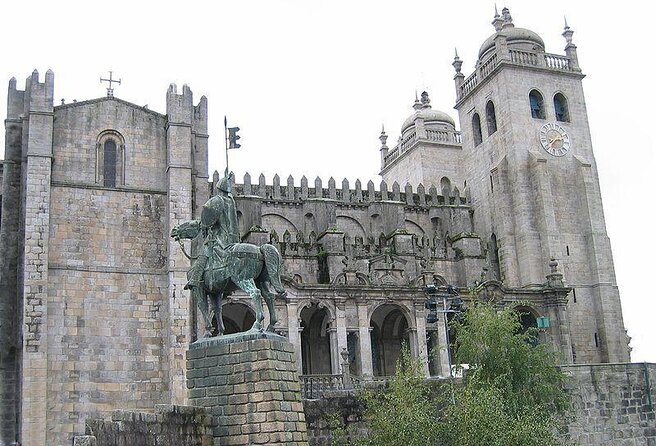
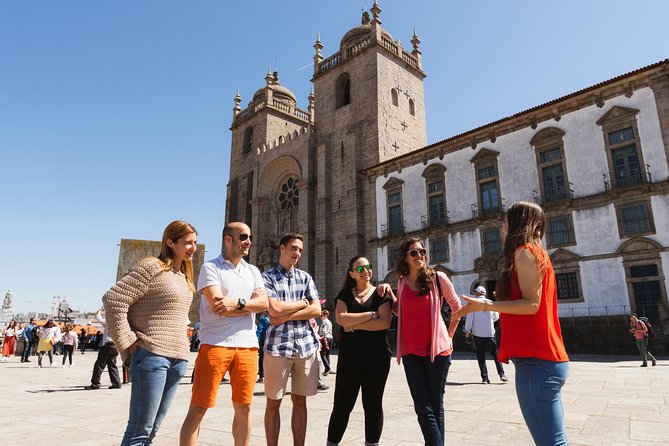
As you walk, you’ll spot Romanesque walls and then move toward Porto Cathedral. Even if you skip entrance inside (the tour does not include entry fees), just standing in the right location with the guide’s context helps. You start noticing why buildings feel different from each other—where the older shapes and later styles meet.
A big part of the route also includes Moorish-and-influence details you’d otherwise miss. The guide points out colorful Moorish tiles decorating building walls. It’s the kind of visual clue that turns into a souvenir you carry in your eyes, not your bag.
Porto Cathedral, Santa Clara, and photo planning without overdoing it
One of the tour’s smart moves is how it balances big landmarks with “look up” moments. Porto Cathedral is one of the oldest monuments in Portugal, and you’ll see it in the heart of the historic area. Admission is not included, so the tour focuses on the exterior experience and the story around it.
You’ll also pass the Church of Santa Clara and learn how classic Baroque architecture shows up as you keep walking. Again, the value is interpretation. Without that guidance, you might just clock it as another church exterior. With it, you start to understand how and when styles were adopted, and how that shaped what you see around you.
Photo tip: plan for a couple of short stops where you can pose in front of major backdrops like the cathedral area and Clerigos Tower. This tour is built for that. You’re not stuck doing 40-minute museum detours, and you’re not rushing through everything either.
Sao Bento Station tiles: the stop that upgrades your whole trip
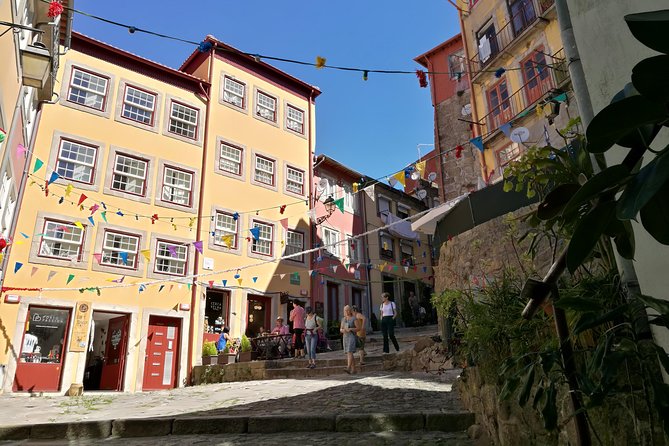
If you only remember one “why is this famous?” moment, make it Sao Bento Railway Station. The station links the Minho and Douro Valley lines, and the building includes French architectural traces designed by Portuguese architect José Marques da Silva. It opened on October 5, 1916.
But the real reason people stop is the tile panels—this is one of those places where a quick look becomes a long look if you understand what you’re seeing. The tour gives you enough time to appreciate the work without turning the day into a transit-day chore. Admission is free, which is a bonus.
This is also a practical stop because it helps you orient. Once you’ve seen the station, you can better picture how people move in and out of Porto and how neighborhoods connect.
Markets and the coffee detour: seeing everyday Porto
The route includes Mercado do Bolhao, a neoclassical market building where you’ll get a feel for what local shopping looks like. The market is organized by product areas—fish, meat, vegetables, fruits, and flowers—so you can quickly grasp the layout even if you don’t go inside deeply.
Then there’s Cafe Majestic nearby, one of Porto’s iconic coffee spots. The tour doesn’t include entrance fees, so think of it as a “see it from the right angle” moment plus a chance to reset. Many people want the look of Majestic without paying the tourist markup inside it, and the tour’s design reflects that. You’ll make it past the big-name spots while still keeping your day moving.
In the reviews tied to this experience, guests often call out the pacing and that the cafe stop feels like a helpful break—not a time sink. You get the energy back to keep walking.
You can also read our reviews of more guided tours in Porto


Clerigos Tower and Lello Bookstore: architecture and pop-culture crossovers
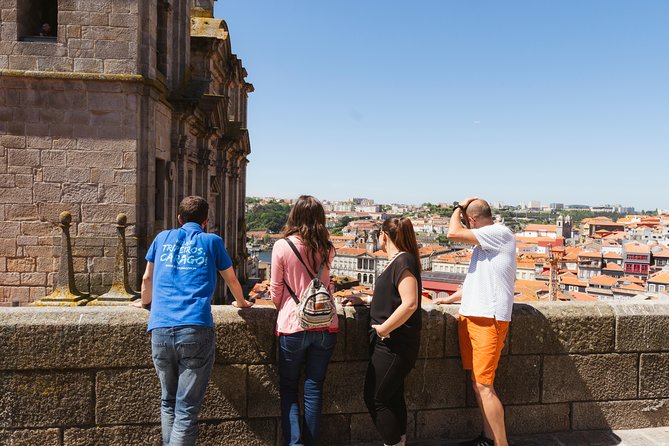
Torre dos Clerigos is one of Porto’s trademarks, and you’ll see the 18th-century church and tower as Baroque architecture in action. It’s designed by Nicolau Nasoni, and the buildings have been part of the National Monuments since 1910. Admission is not included, so you’ll get the guided context and the exterior experience.
Then you’ll pass by Lello & Irmão Bookstore. This place is often mentioned as one of the most beautiful bookstores in the world, and there’s a famous story connecting the stairways to the inspiration behind the Hogwarts staircases. J.K. Rowling lived in Porto, and that detail is part of the tour’s explanation.
What I like about including Lello is that it gives you a cultural connection beyond “pretty facade.” It shows how Porto fits into a broader web of art, literature, and visitor curiosity. Even if you don’t plan to enter the store, seeing it on the walk with guidance makes it feel more grounded.
Aliados Avenue, Liberdade Square, and the rhythm of local streets
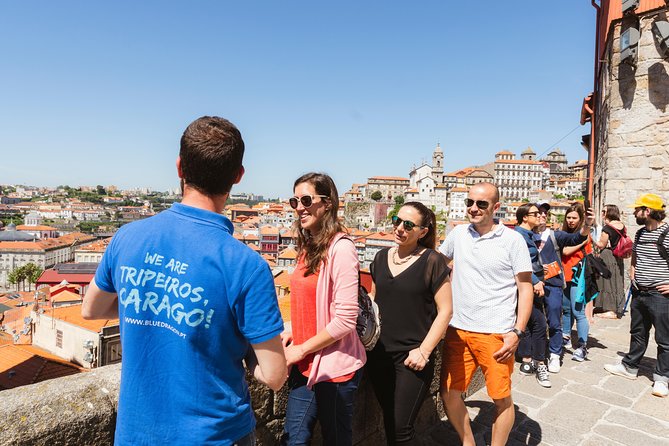
After you cover the older layers around the cathedral and church areas, the route shifts toward the city’s “everyday pulse.” You’ll walk along Aliados Avenue to Liberdade Square and listen to the chirp of locals. This is a nice change of pace because it lets you breathe between heavy-hitter monuments.
The route also includes a stop at the monument to King Peter IV of Portugal, known as The Liberator and the first ruler of Brazil. This is the kind of moment where architecture becomes a reading tool: the city honors certain figures because their actions changed what came next.
If you’re traveling as a couple, solo, or with friends who want both history and ambiance, this portion tends to land well. You get meaning without feeling like you’re stuck in one spot for too long.
Dom Luis I bridge: the Eiffel touch, the Douro views, and rabelo boats
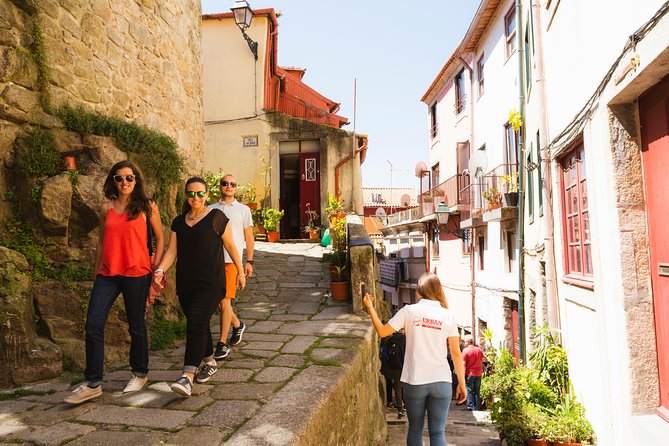
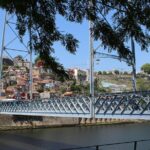
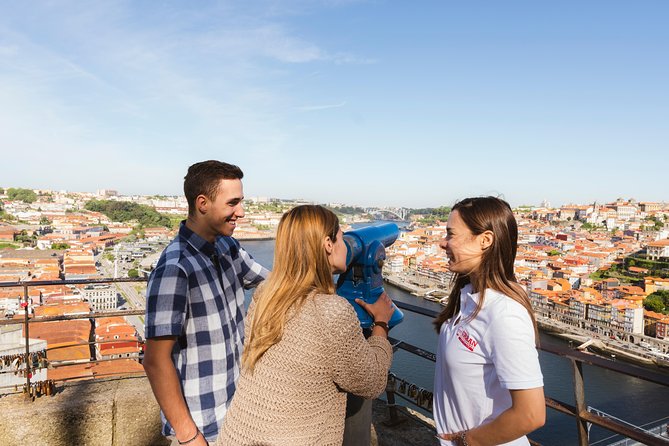
Now you hit the big reveal: Ponte de Dom Luis I. It’s a double-decker iron bridge built between 1881 and 1888, linking Porto and Gaia. The guide explains that it was designed with an Eiffel-era influence—created by a protege of Gustave Eiffel who added an Eiffel touch.
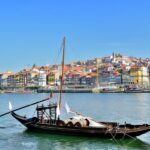
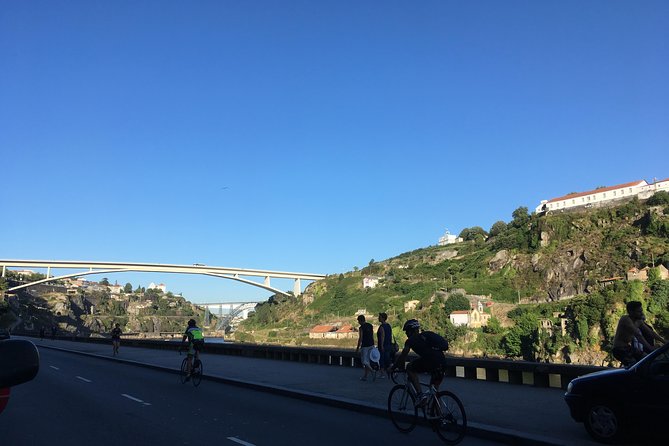
This is where your photos usually get upgraded from nice to memorable. The Douro River views from the bridge area are the payoff for walking uphill earlier. You’ll also look out over rabelo boats—traditional wooden vessels that once transported grapes to the Port cellars.
A practical note: bring a phone camera strap or keep your balance focused. Bridges look smooth, but wind and crowds can make you feel less steady than you expect.
Gaia and the Port story: from grapes to fortified wine
After the bridge, the tour moves along the Cais de Gaia side. This stretch is lined with cellars, and you’ll learn how Port—fortified wine—is made. Even if you don’t go into a cellar during the tour (entrance isn’t included), you’ll leave understanding what you’re looking at and why the warehouses line the river.
This part of Porto can feel like the city’s working engine. It connects the views to a real industry, not just a decorative waterfront. If you already plan to taste Port later, this tour helps you sound like you know what you’re talking about when you’re choosing styles.
Ribeira Square finale: where you’ll likely want to linger
The walking tour ends in Ribeira Square. Ribeira is one of the oldest areas of Porto, located along the river and integrated into the UNESCO site. It’s packed with restaurants and bars, so it’s a natural place to call the tour done and then keep exploring on your own.
This ending is smart because it gives you a “home base feeling” fast. If you’re staying in Porto for a few days, you’ll likely come back to Ribeira. Starting here at the end means you finish with energy for dinner rather than only energy for bed.
Price and value: what you really get for $35.07
At $35.07 per person for about 3 hours, this tour is priced like an efficient, high-impact orientation experience. You’re paying for live English commentary, a real local guide, and a structured route that hits key landmarks without charging you entrance fees you might skip anyway.
The included insurance matters too: company liability and personal injury insurance are part of the package. You also get a mobile ticket and a briefing before you start, which reduces friction on the day.
Where you should adjust expectations: entrance fees are not included. So if you want indoor time at the Cathedral, Sao Bento (though tiles are the main point), or other sights, you’ll handle those separately. The tour keeps you focused on guided exteriors and viewpoints so you still get through the full loop.
Guides make the difference (and the tour clearly leans into that)
A lot of walking tours say they have great guides. This one actually gets praised for guide quality. Names that show up in feedback include João, Diogo, Maria, Ana, Ramon, Igor, Fatima, and Lia. The common threads: guides answer questions, explain clearly in English, and adjust to weather and group pace.
If you’re the type who likes stories that connect buildings to people, you’ll likely appreciate the way guides bring up not only big events, but also rivalries and the way those rivalries show up in architecture. One guest even highlighted how the guide handled pouring rain with route choices and indoor shortcuts—exactly the kind of practical skill that keeps the day fun.
Who this tour suits best
This is ideal if you:
- Want a first-day overview so you can plan the rest of your Porto days
- Like your history practical, connected to what you see on the street
- Prefer walking over jumping between taxis
- Want a small-group feel rather than a big bus crowd
You should consider another option if you:
- Struggle with hilly walking. The route includes climbs that many people mention, and the tour calls for comfortable shoes.
- Need lots of long indoor museum time. This tour is more about sights outside and viewpoint moments.
Should you book Porto’s Charm walking tour?
Yes, if your goal is a smart introduction that covers Porto’s key sights in a way that helps you understand what you’re looking at. The route makes sense: UNESCO center first, a tile-and-market stop that feels local, Clerigos and Lello for iconic visuals and stories, then the bridge and Gaia for Port and river views, finishing in Ribeira where your evening plans naturally continue.
If you’re worried about rain or hills, don’t cancel out of fear. The tour runs in rain, and guides are set up to handle it—just wear the right shoes and bring a light waterproof layer.
FAQ
How long is the Porto walking tour?
It runs about 3 hours.
Is the tour offered in English?
Yes. English is one of the available languages.
How much walking is involved?
There is a small amount of walking, but you should still expect hills and some climbs. Comfortable shoes are recommended.
Where does the tour start and end?
It starts at Bluedragon City Tours, Rua de Alexandre Herculano 251, 4000-053 Porto. It ends at Bluedragon City ToursR. de Alexandre Herculano 251, 4000-053 Porto (as listed) / Ribeira Square is also listed as the finish area in the tour description.
Are entrance fees included?
No. Entrance fees are not included.
Does the tour operate in bad weather?
Yes, it operates in the rain. You should check conditions and dress accordingly.
What is the group size?
The tour has a maximum of 15 travelers.
Is free cancellation available?
Yes. You can cancel up to 24 hours in advance for a full refund.