REVIEW · SEOUL
Best Walking Tour to Gyeongbok Palace Bukchon Hanok Village
Book on Viator →Operated by Korealinx Corporation · Bookable on Viator
Royal Seoul feels close-up. This 3-hour small-group walk pairs Gyeongbokgung Palace with Bukchon Hanok Village, so the past looks real, not textbook-only. I like how it gives you a clear story from the Joseon Dynasty to modern Seoul street life, without making you sift through facts on your own.
Two things I really value: you get entrance fees included, so your stops actually add up, and you move at a human pace with a guide who handles questions as you go. One consideration: you’ll be on your feet for a steady walk, and Bukchon includes steps and uphill lanes, so it’s not the best pick if walking is difficult for you.
In This Review
- Key highlights you’ll care about
- Royal Seoul in Three Hours: Gyeongbokgung to Bukchon
- Meeting at Taepyeongno and the King Sejong setup
- Gyeongbokgung Palace: guard changing and court layout basics
- National Folk Museum of Korea: over 98,000 artifacts, explained simply
- Walking between palaces toward Bukchon’s traditional lanes
- Bukchon Hanok Village: houses, angles, and a little uphill effort
- Pace, weather, and what to wear (so you don’t hate the walk)
- Price and what you actually get for $88
- Who this Seoul walk fits best (and who should skip it)
- Should you book Best Walking Tour to Gyeongbok Palace and Bukchon Hanok Village?
- FAQ
- What is the duration of the tour?
- How many people are in the group?
- Is a mobile ticket included?
- Are entrance fees included?
- Where does the tour start and end?
- Is the tour suitable for first-time visitors?
- Do I need moderate fitness?
- Can I cancel for a full refund?
Key highlights you’ll care about
- Small group size (max 8) means easier question time and more personal pacing
- Royal guard changing at Gyeongbokgung Palace gives you the most iconic scene early
- National Folk Museum of Korea stop features over 98,000 artifacts worth of context
- Mobile ticket keeps check-in simple
- Bukchon Hanok Village viewpoints and lanes connect palace power to everyday homes
- Starts near Taepyeongno 2-ga and ends in Insadong, so your afternoon has an easy target
Royal Seoul in Three Hours: Gyeongbokgung to Bukchon
This tour is built for people who want an efficient first taste of Seoul’s “why.” You start in the palace area, where royal architecture and ceremony explain how power was staged, then you shift north into Bukchon, where traditional homes show what everyday life looked like when that palace world was running the show.
The big win is how the guide ties the places together. You don’t just see buildings; you learn what those buildings were for, how they were used, and what the layout meant. And you get it in about 3 hours, which is perfect if your time in Seoul is tight but you still want more than a quick photo stop.
You can also read our reviews of more walking tours in Seoul



Meeting at Taepyeongno and the King Sejong setup
You’ll meet at 24-1 Taepyeongno 2(i)-ga, Jung District and get moving from the center of things. Early on, the tour includes an orientation-style stop labeled The past and the present, plus a King Sejong Statue moment.
Why that matters: King Sejong is a useful entry point because his era sits inside the larger Joseon story. When you understand a leader like him in simple terms first, the palace details later land faster. It’s not a long detour, but it helps you connect names and meanings instead of just collecting random sights.
Gyeongbokgung Palace: guard changing and court layout basics
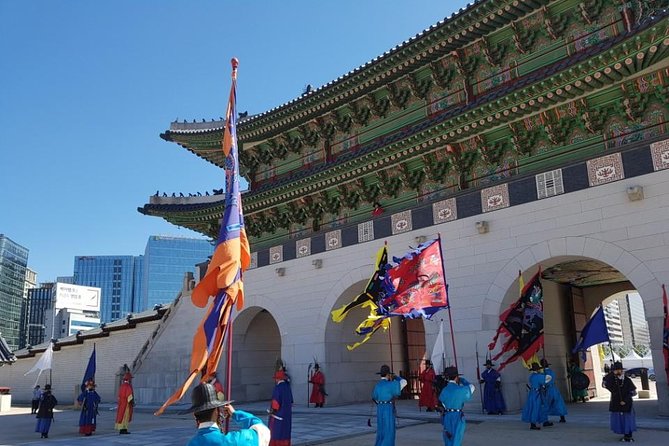
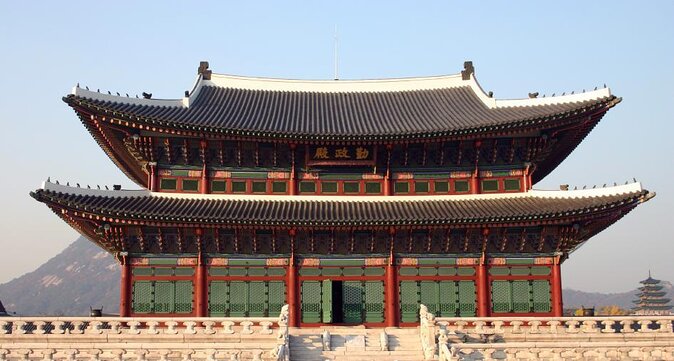
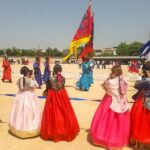
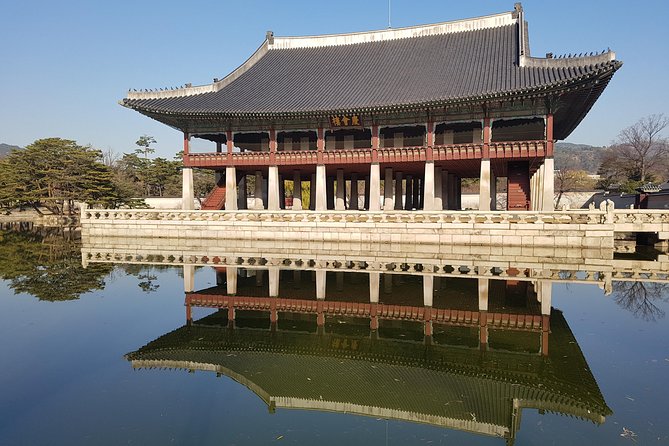
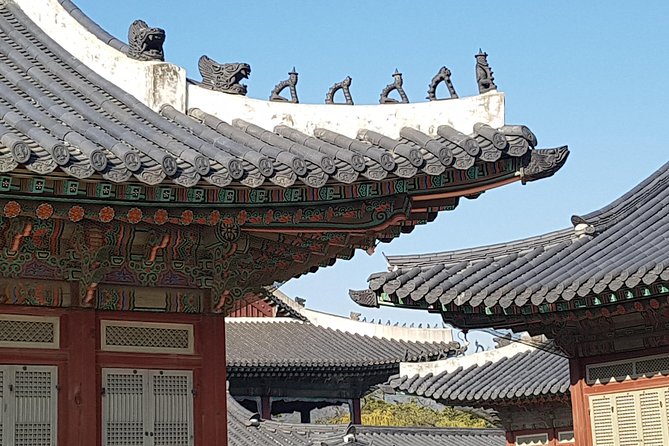
Gyeongbokgung Palace is the star stop, with about 1 hour on site and your admission included. You’ll see the royal guard changing ceremony, which is one of those moments that turns a “palace visit” into a real performance you can follow even if your Korean history background is light.
Here’s what you should watch for while you’re there:
- How the main buildings are positioned and why the route through the palace matters
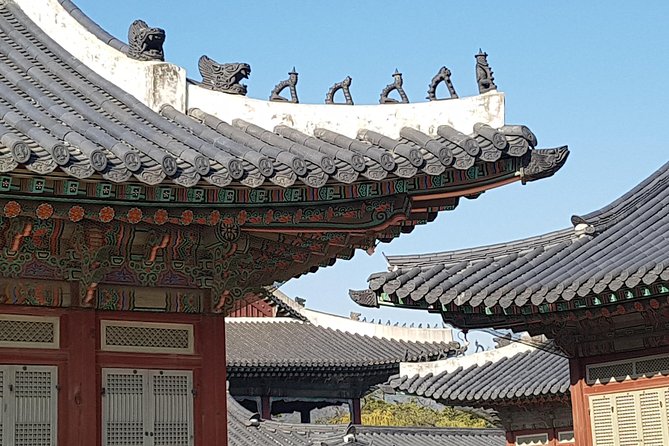
- Construction and design details the guide points out, so you can notice more than walls and roofs
- The pace of ceremony vs. everyday movement, so you understand what felt formal and what felt practical
One more practical tip: the ceremony timing can make crowds form quickly. If you like photos, arrive with comfortable patience—line-of-sight can change fast, and the guide will help you figure out where to stand without stressing everyone out.
Also, a theme that comes up with guides like Jay Kim and Stella in past groups is their ability to make palace architecture readable. It’s not just facts; it’s “what you’re looking at and why it was designed that way.”
National Folk Museum of Korea: over 98,000 artifacts, explained simply
After the palace sights, the tour includes a visit to the National Folk Museum of Korea. The highlight number here is over 98,000 artifacts, which can sound overwhelming on paper.
On this walk, it stays manageable because the museum visit is framed as a human story: what people wore, how they lived, and how customs fit into the bigger Joseon timeline you just started building at the palace. Instead of treating the museum like a warehouse of objects, you get guidance on what to notice and how those items connect back to the palace world.
This is also a good moment to slow down and reset your attention. If you’ve been seeing lots of stone and wood exteriors, the museum gives you a different kind of evidence—things made for everyday use—so the history starts to feel like regular life, not distant royalty.
Walking between palaces toward Bukchon’s traditional lanes
The route shifts from Gyeongbokgung Palace area toward the Bukchon side, with a walking segment that goes between the Gyeongbokgung and Changdeokgung zones. That walk is where the guide’s storytelling really helps you.
You’ll hear Joseon Dynasty history tied directly to what you’re passing in real time: how the geography and city layout supported court and community life, and how modern Seoul layers on top of the older plan.
One reason I like this structure: it keeps the tour from feeling like a museum-hopping checklist. You get a continuous “cause and effect” experience—palace → artifacts → neighborhood lanes—so everything clicks together.

Bukchon Hanok Village: houses, angles, and a little uphill effort
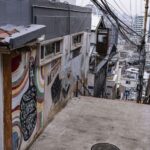
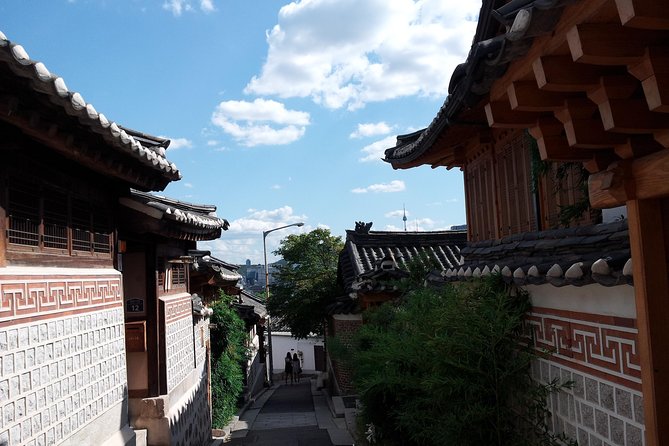
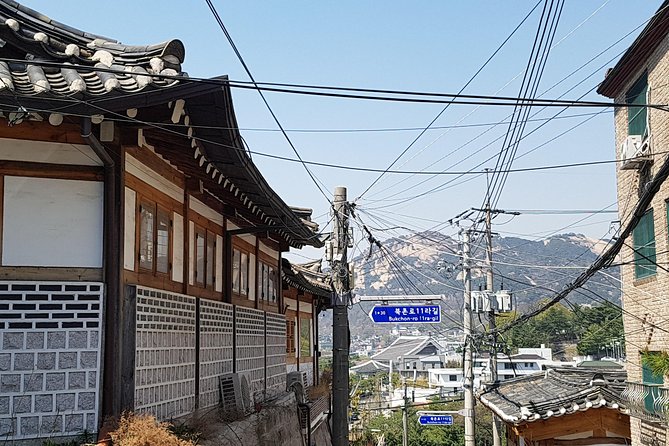
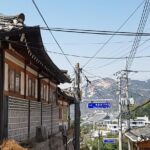
Bukchon Hanok Village is the second main stop, about 30 minutes. Here, you get “hidden looks” inside traditional houses and learn about Korean lifestyles from the past—through the lens of what you can actually see on the street.
This is the part where your comfort matters most. Bukchon includes steps and uphill lanes, and one clear note from past participants: wear shoes you can move in without thinking. If you’re the type who feels every stair step, bring a cautious attitude and expect to take it slower than you would in a flat downtown stroll.
What you should do during these 30 minutes:
- Look for what’s different between hanok homes—courtyards, roof lines, and the way spaces are arranged
- Take photos, but also pause and watch how the neighborhood feels when it’s not staged for tourists
- Ask the guide what locals would notice first, since that’s usually where the best explanations land
Guides like Joe, Jack, and Paul are often praised for going beyond standard talking points. People mention extra explanation that helps you see Bukchon not as a postcard zone, but as a living reminder of how people adapted to geography, climate, and social structure.
Pace, weather, and what to wear (so you don’t hate the walk)
This is a walking tour with moderate physical fitness required. It’s not marketed as a leisurely shuffle, and the Bukchon uphill is real.
My practical advice:
- Wear comfortable shoes with grip. You’ll likely encounter uneven stones and curbs.
- Dress for the weather. This experience requires good weather, and if it’s canceled because of poor conditions, you should expect a different date offer or a refund.
- Bring water if you run hot. The pace can build, especially in warm months.
Also note the tour has a maximum size of 8 travelers. That small-group setup helps, because the guide can slow down for photos, answer questions without rushing, and keep everyone together without turning it into a sprint.
Price and what you actually get for $88
At $88 per person, this isn’t the cheapest option in Seoul, but it’s priced like a guided experience with real value baked in. The core reasons it feels fair:
- Admission fees are included, which matters because palaces and museums can add up quickly
- You get a guided story, not just directions—your time is spent understanding what you’re seeing
- The group stays small (max 8), which usually improves the quality of Q&A and pacing
- The route packs major sights into a 3-hour window, useful when you want one strong day highlight
Where the price can feel less worth it is if you already know Korean history well and prefer self-guided wandering. In that case, you might feel like you’re paying mostly for narration.
But if you’re new to the Joseon story, or you want your first palace-and-neighborhood experience to feel organized and meaningful, the included entries and guide-led flow make the math work.
Who this Seoul walk fits best (and who should skip it)
This tour is a strong match if:
- You’re visiting Seoul for the first time and want a structured intro
- You like history with context—palace ceremony plus how people lived
- You want a manageable time commitment at about 3 hours
- You prefer small groups where your questions don’t get swallowed by the crowd
You may want a different option if:
- You have walking difficulty on steps and uphills. Bukchon’s terrain is part of the design of the experience.
- You’d rather do long free time. The stops are time-boxed, and you won’t have hours to roam independently inside the palace complex.
A small but telling detail from past groups: one parent noted their child wasn’t bored, which usually means the guide’s approach stays lively and clear, not lecture-heavy.
Should you book Best Walking Tour to Gyeongbok Palace and Bukchon Hanok Village?
If you want a high-impact, first-day-friendly plan that connects royal Seoul to traditional neighborhood life, I’d book this. The biggest advantages are the included admission stops, the palace + museum pairing, and the small-group format that keeps the walking tour from feeling generic.
My call hinges on one thing: your comfort level with stairs and uphill terrain. If that part is okay for you, you’ll likely come away with a much clearer mental map of Seoul than you started with. And if you’re the type who loves a guide who answers questions (including curious kids and tough history questions), this tour’s style is built for you.
FAQ
What is the duration of the tour?
The tour lasts about 3 hours.
How many people are in the group?
The tour has a maximum group size of 8 travelers.
Is a mobile ticket included?
Yes, the tour uses a mobile ticket.
Are entrance fees included?
Admission fees are included as part of the tour.
Where does the tour start and end?
It starts at 24-1 Taepyeongno 2(i)-ga, Jung District, Seoul, and ends in the Insadong area at 75-5 Insa-dong, Jongno District.
Is the tour suitable for first-time visitors?
Yes, it’s designed as a great introduction for first-time visitors to Seoul.
Do I need moderate fitness?
Yes. It requires a moderate physical fitness level and is not recommended if you have difficulty walking on steps and uphills.
Can I cancel for a full refund?
Yes. You can cancel for a full refund if you cancel at least 24 hours before the experience’s start time. Free cancellation is offered, and the timing is based on local time.