REVIEW · PARIS
Montmartre District Walking Tour in Paris
Book on Viator →Operated by SANDEMANS Tours - Paris · Bookable on Viator
Montmartre packs big stories into two hours. This walking tour threads together the cabarets, studios, and street art that shaped Paris, with stops that connect real artists like Van Gogh and Picasso to the streets you’ll walk today. You’ll also hit pop-culture landmarks tied to movies and music, so it feels like a neighborhood tour with a brain.
I especially like the storytelling at each stop—you’re not just taking photos, you’re getting the why behind the walls. I also love the Sacré-Cœur viewpoint timing, because the walk climbs you up in time for that classic panoramic payoff.
One thing to plan for: there are steep hills and it’s a crowd-friendly itinerary, so bring comfortable shoes and arrive a few minutes early so you’re not playing catch-up with the group.
In This Review
- Key points you’ll care about before you go
- Montmartre at 5:00 pm: when the streets feel most Paris
- From Sandemans Pl. Blanche to Moulin Rouge: your tour’s first “wow” moment
- Place du Tertre: where artists’ studios meet the real street
- Au Lapin Agile: cabaret life and Picasso’s unusual bargain
- Sacré-Cœur climb and the real payoff: views plus architecture
- Place Dalida and the Montmartre of identity and music
- Vigne du Clos Montmartre: Paris’ last working vineyard
- Café des Deux Moulins and Amélie: a pop-culture stop that still feels local
- La Maison Rose and Pigalle: art-adjacent streets with a darker edge
- What you get for $31.44: solid value if you want context, not just photos
- Guides can make the climb worth it: who tends to lead this walk
- Pace, hills, and hearing: how to set yourself up for a great time
- Who this Montmartre walk is best for
- Should you book this Montmartre District Walking Tour?
- FAQ
- Where does the Montmartre walking tour start and end?
- What time does the tour begin?
- How long is the tour?
- Is the tour offered in English?
- Do I need to buy tickets or pay for admissions at the stops?
- Are children allowed on the tour?
- What is the cancellation refund window?
Key points you’ll care about before you go
- A 5:00 pm Montmartre start that keeps you out of the harshest daytime glare
- Moulin Rouge at the neighborhood edge with the cabaret story behind the headlines
- Artists in the streets as you pass by areas tied to Van Gogh and Picasso
- Au Lapin Agile, a cabaret bar linked to Picasso’s trading culture (art for food)
- Sacré-Cœur finish with big views plus architecture context, not just skyline bragging
- Capped group size (up to 35), usually a good balance for hearing your guide while you walk
Montmartre at 5:00 pm: when the streets feel most Paris
Montmartre changes personality depending on the hour. Starting in the late afternoon means the streets and viewpoints feel less like a checklist and more like a stroll you’d actually take on your own.
The pacing also matters here. The tour runs about 2 hours, but it can stretch closer to 2.5 hours depending on your guide and group flow. That’s a big deal because Montmartre is not flat. Plan for ups, downs, and a few moments where you’ll want to stop and look longer than the schedule allows.
You can also read our reviews of more walking tours in Paris



From Sandemans Pl. Blanche to Moulin Rouge: your tour’s first “wow” moment
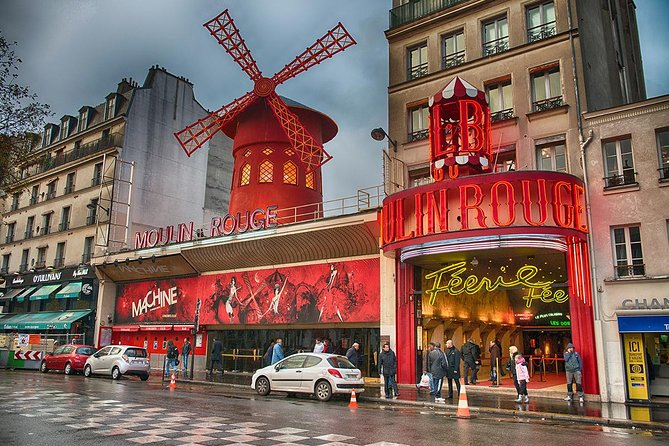
You start at Sandemans New Paris Tour Montmartre, 5 Pl. Blanche, 75009. Your walk begins right at the border of Montmartre with the Moulin Rouge—that iconic cabaret you recognize instantly, even if you’ve never set foot in this neighborhood.
What makes this first stop work is the context. Instead of treating Moulin Rouge like a photo backdrop, your guide explains how it was created, how it found early success, and which moments made it stick in the Paris story. The best part: you get that background before you move deeper into Montmartre, so everything else lands with more meaning.
Even better for your time: this is a quick stop with no extra admission ticket needed as part of the tour plan.
Place du Tertre: where artists’ studios meet the real street
Next comes Place du Tertre, the famous square associated with portraitists, painters, and caricaturists. This is where Montmartre’s art reputation is loud and visible, with street-level creativity happening right in front of you.
From here, the tour shifts into the “why these names keep showing up” mode. You’ll pass by spots connected with Picasso’s studio and Van Gogh’s house, plus the broader pull that brought artists like Monet and Toulouse-Lautrec to Montmartre. You’ll also hear how the area drew later-celebrity artists over time, so the neighborhood doesn’t feel like one isolated era.
One practical note: Place du Tertre can be busy, so keep your camera ready but don’t miss your guide’s explanation while people flow around you.
Au Lapin Agile: cabaret life and Picasso’s unusual bargain
Then you head to Au Lapin Agile, a cabaret bar tied to the Montmartre art scene. This stop is famous because it’s not just about who partied here—it’s about the exchange culture around art.
The story you’ll hear is that Picasso often traded paintings for food at this kind of place. That detail is small, but it changes how you see the neighborhood. It helps you understand Montmartre as a lived-in creative ecosystem, not a theme park of famous facades.
Again, it’s a short and easy stop in the tour rhythm, with no admission-ticket pressure.
Sacré-Cœur climb and the real payoff: views plus architecture

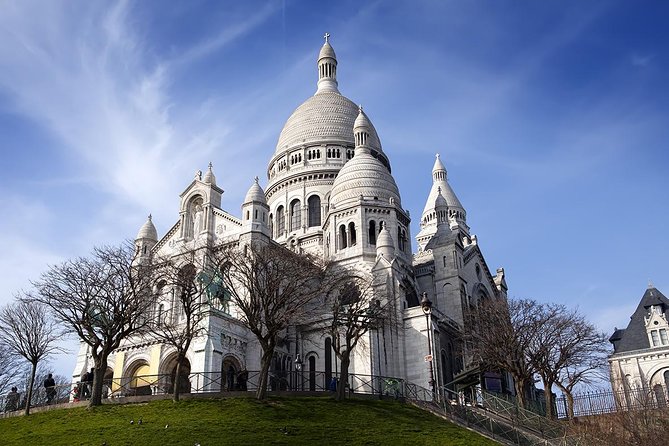
After the cabaret stops, you start walking up toward Basilique du Sacré-Cœur de Montmartre. This is a Roman Catholic church, and your guide fills in the history and architecture behind the look everyone knows.
The other reason this stop is worth your legs: the highest view of Paris. The tour ends here, at 35 Rue du Chevalier de la Barre, 75018, so you’ll finish at the moment when your brain and camera both want to slow down.
Make no mistake: Sacré-Cœur sits above the neighborhood. You’ll be climbing on foot, and several guides’ fans specifically highlight that the walk includes plenty of uphill. If you’re even slightly unsure about your stamina, wear supportive shoes and plan to pace yourself on the way up.





Place Dalida and the Montmartre of identity and music
You’ll also pass la Place Dalida, dedicated to one of Paris’ most famous gay icons. This stop keeps the tour from feeling like it’s only about painters and famous men in berets.
It’s also a reminder that Montmartre’s creative gravity isn’t limited to canvas and studios. Music, identity, and public life belong here too. If you like your tours to reflect how neighborhoods really evolve, you’ll appreciate this added angle.
Vigne du Clos Montmartre: Paris’ last working vineyard
Next is Vigne du Clos Montmartre, described as Paris’ last authentic vineyard. This isn’t a generic photo stop. It’s a contrast with everything around it: grapes growing on the hill while the city’s art reputation swirls down below.
The value here is simple: you’re walking through a district that keeps layering eras. You go from cabarets and street art to a living piece of agriculture still associated with Montmartre’s identity.
Expect another short stop, built into the tour flow rather than turning into a long detour.
Café des Deux Moulins and Amélie: a pop-culture stop that still feels local
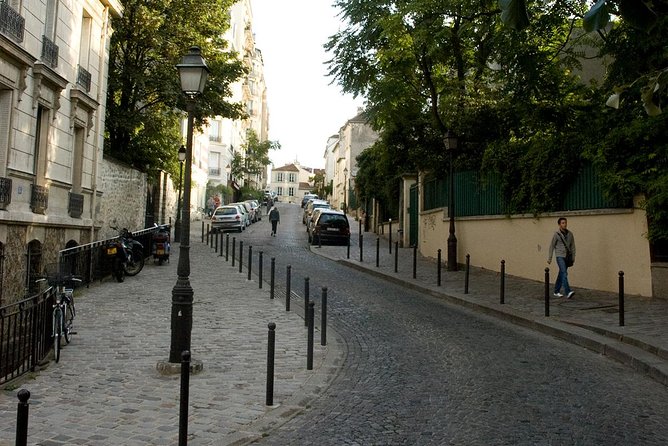
Then you get to Café des Deux Moulins, the café tied to the movie Amélie. Yes, this is a recognizable name. But what makes it worthwhile on this route is how it’s woven into the bigger Montmartre story instead of standing alone as a souvenir stop.
A café stop also gives you a mental reset. Even if you don’t go inside, this is one of those moments where the neighborhood’s mood clicks: small streets, side conversations, people lingering at the edge of the tourist flow.
No food is included on the tour, so if you want a drink or snack, you’ll pay on your own nearby. But the stop itself is built for viewing and photos.
La Maison Rose and Pigalle: art-adjacent streets with a darker edge
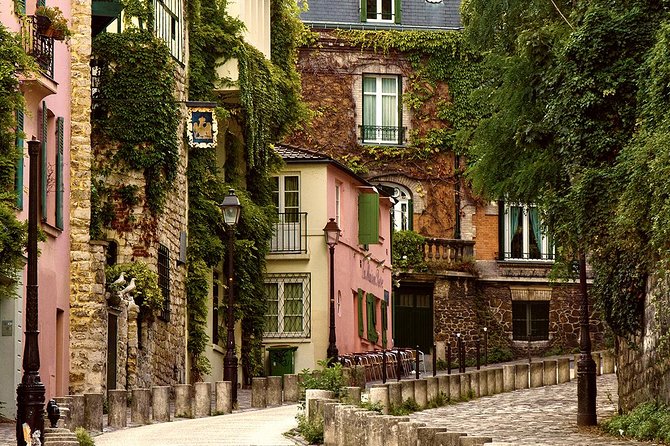
You’ll also see La Maison Rose, often called the Pink House, located behind Sacré-Cœur. It’s a famous local spot tied to artists who frequented the area, including Picasso.
This stop feels particularly good after the vineyard and café moment. You’re moving from one kind of Montmartre atmosphere to another, and the neighborhood starts to feel like a network rather than a single “top sights” loop.
Finally, you pass through Place Pigalle, where the tour points you toward the area’s red light district reputation. This is useful context. Montmartre’s story isn’t only about art that hangs in museums—it also includes the human side of the city that people tiptoe around.
If you’re walking with kids or you prefer a calmer route, you’ll still be fine, but you should know the tour does acknowledge Pigalle’s adult history in a straightforward way.
What you get for $31.44: solid value if you want context, not just photos
At $31.44 per person, this is priced like a very “Paris” kind of deal: you pay for time with a local guide and in-depth storytelling, while the sights themselves are accessible without added ticket costs in the tour plan.
The value comes from two things:
- You’re combining multiple Montmartre landmarks (cabarets, artist-linked sites, viewpoints, and neighborhood squares) into one continuous route.
- You get a guide to connect names and places—Van Gogh, Toulouse-Lautrec, Monet, Picasso—to the streets where their reputations took shape.
You’re not paying extra for museum entrances here, and you’re not stuck with an overly long itinerary. At around 2 hours (sometimes closer to 2.5), it’s a manageable commitment when your Paris schedule is crowded.
Also, this tour is often booked in advance (about two months ahead on average). If you want a particular date, don’t wait for the last moment.
Guides can make the climb worth it: who tends to lead this walk
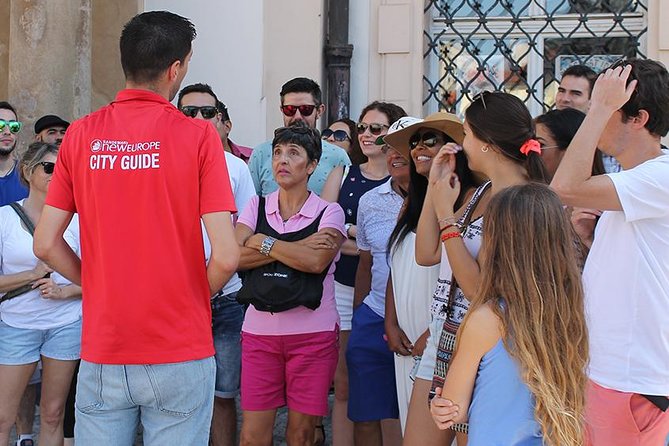
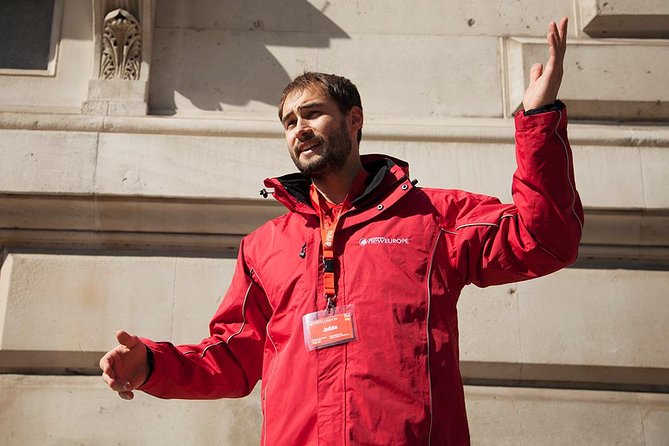
This is a local-guide experience through SANDEMANS Tours – Paris, and the guides are described as independent professionals who partner with the company. What matters to you: the guide approach seems to vary, and that’s why people strongly mention the best ones by name.
In particular, guides like Alberto, Dawie, Thom, Daiwa, Javi, Harry (and Harry Keaton), Maria, Sebastian, Francois, and Daniel are repeatedly linked with animated storytelling and keeping the group engaged through the uphill sections.
If you’re picky about hearing your guide, prioritize a time when crowds are manageable and arrive early at the meeting point. A few latecomer moments can throw off the group rhythm in a busy area.
Pace, hills, and hearing: how to set yourself up for a great time
Let’s talk reality. This is a walking tour in Montmartre, so:
- You’ll do steep uphill stretches.
- You’ll be around crowds near major sights.
- Your ability to hear your guide depends on where the group lands at that moment.
The tour caps at 35 people, which is usually a good size. Still, when you mix that with traffic noise and a busy square, it can get hard to hear. The best way to help yourself: stand where you can see your guide and keep moving with the group instead of drifting.
For comfort, wear shoes made for uneven pavement and slopes. The tour itself recommends comfortable walking shoes, and the vibe of the route supports that advice.
Also, since this ends at Sacré-Cœur, you’ll have an easy built-in “reward stop” at the viewpoint before you continue on your own.
Who this Montmartre walk is best for
This tour is a great match if you:
- Want an organized overview of Montmartre that connects art legends to real locations
- Like neighborhood context, not just standing in front of big sights
- Enjoy short stops that keep you moving without rushing you past everything
It may be less ideal if you:
- Have limited mobility or hate uphill walking (the route climbs to Sacré-Cœur)
- Need quiet, zero-crowd conditions most of the time
- Arrive late and expect the group to wait in busy areas
Should you book this Montmartre District Walking Tour?
I’d book it if you want Montmartre with context and you’re okay with a hillside walk. For $31.44, you get a tight route that hits Moulin Rouge, artist-linked stops, cabaret culture at Au Lapin Agile, and ends with Sacré-Cœur views—all without a bunch of extra ticketing or meal planning.
Skip it only if your priority is a low-effort, flat stroll. Montmartre’s charm includes its hills, and this tour leans into that.
If you do book, show up early, wear good shoes, and come ready to listen. This is the kind of walk where the stories change the way you look at the same streets.
FAQ
Where does the Montmartre walking tour start and end?
It starts at Sandemans New Paris Tour Montmartre, 5 Pl. Blanche, 75009 Paris and ends at Basilique du Sacré-Cœur de Montmartre, 35 Rue du Chevalier de la Barre, 75018 Paris.
What time does the tour begin?
The start time is 5:00 pm.
How long is the tour?
It’s listed as about 2 hours, and it may vary depending on the guide and group, sometimes running closer to 2.5 hours.
Is the tour offered in English?
Yes. The tour is offered in English.
Do I need to buy tickets or pay for admissions at the stops?
The tour plan lists the stops with admission ticket free, and it does not include food or drinks. You should still budget for anything you choose to buy on your own.
Are children allowed on the tour?
Yes. Children up to 13 years old join for free, and you may be asked for valid ID.
What is the cancellation refund window?
You can cancel for a full refund up to 24 hours before the experience starts.