REVIEW · LONDON
Medieval History Walking Tour from The Tower of London
Book on Viator →Operated by London : Medieval History Walking Tour from The Tower · Bookable on Viator
London’s medieval clues start at the Tower. This 2-hour walk strings together the Tower of London, London Bridge, Borough Market, cathedrals, and St Paul’s so the city’s centuries feel connected, not random.
I love the pace: short, focused stops that still pack in key stories. I also love the guide setup—many people call out Mick by name for being animated, patient with questions, and great at turning landmarks into scenes from the past.
One possible drawback: you’re spending only about 10 minutes per stop, so you’ll see a lot, but you may not go deep into interiors. If you want full museum-style time inside places like the Tower of London, HMS Belfast, or St Paul’s, you’ll likely need to plan that separately.
In This Review
- Key highlights at a glance
- A 2-hour medieval route that makes London feel logical
- Value for $25: what you’re really buying
- Tower Hill meeting point and ending at St Paul’s Cathedral
- Stop 1: Tower of London—900+ years, from William onward
- Stop 2: Tower Bridge—how engineering became a symbol
- Stop 3: HMS Belfast—World War II history with D-Day gravity
- Stop 4: London Bridge—43 AD origins to civil war and fire
- Stop 5: Borough Market—900 years of food history
- Stop 6: Southwark Cathedral—1420-saved-in-time and Bloody Mary trials
- Stop 7: Golden Hinde at St Mary Overie—Drake’s 1577 voyage and controversy
- Stop 8: Winchester Palace ruins—kings, queens, and the Liberty of the Clink
- Stop 9: Shakespeare’s Globe Theatre—rebuilt after a cannon fire
- Stop 10: The Thames River—30 million years, plus the nasty stuff
- Stop 11: Millennium Bridge—views toward St Paul’s
- Stop 12: St Paul’s Cathedral—Wren’s masterpiece and centuries of worship
- What makes the guide experience the real star
- Practical tips so your 2-hour walk actually feels great
- Who this tour suits best
- Should you book this medieval walking tour?
- FAQ
- FAQ
- How long is the Medieval History Walking Tour from the Tower of London?
- How much does the tour cost?
- Where do I meet, and where does the tour end?
- What time does the tour start?
- What language is the tour offered in?
- Is admission included for all stops?
- How big are the groups?
- Is there a mobile ticket?
- What is the cancellation window?
Key highlights at a glance
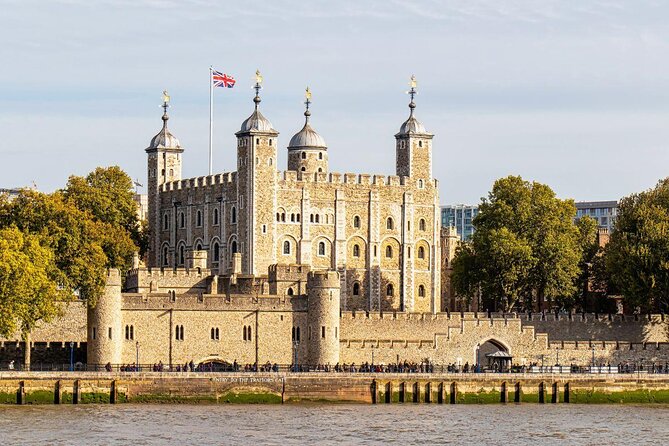
- Tower of London opener with William the Conqueror-era context, plus the Tower’s long record of dramatic events
- Tower Bridge crossing and the story of how this landmark was built
- HMS Belfast and D-Day connections—history told through a real World War II battleship
- Borough Market + Southwark Cathedral to show medieval London beyond palaces and power
- Thames history through time (yes, down to the unpleasant bits) before finishing near St Paul’s
- Max group size of 20 for a more personal feel in a city that moves fast
A 2-hour medieval route that makes London feel logical
This tour is built for people who want a clean way to understand London’s medieval past without getting lost in dates. You start at the Tower area and walk west along the Thames and its close-by neighborhoods, with each stop acting like a chapter heading.
The best part is how the guide links places. You’re not just looking at famous buildings; you’re learning why they mattered, and how events in one place affected another nearby site later on.
You can also read our reviews of more walking tours in London



Value for $25: what you’re really buying
At $25 per person for about 2 hours, you’re mostly paying for interpretation: a guide who can explain what you’re seeing in plain language. If you’re the type who reads plaques and still wants someone to say why it matters, this price makes sense.
What you should expect: you’ll cover major sights plus a few story-rich stops that many first-timers walk past. Also, not every stop includes admission, so your total day cost can vary depending on whether you add entry tickets on the side.
If you want the cheapest way to “see London history,” this isn’t a free-for-all—some highlights cost extra to enter. But for a guided overview that covers Tower-to-St Paul’s in one organized pass, it’s strong value.
Tower Hill meeting point and ending at St Paul’s Cathedral
You meet at Tower Hill, London EC3N 4DJ and finish by St Paul’s Cathedral, St Paul’s Churchyard, London EC4M 8AD. That matters because it avoids the common problem of tours ending somewhere annoying for transport.
Ending near St Paul’s is handy: you’ve got lots of onward options nearby—bus routes, taxis, and access to the Underground (the central red line). And since this is a walking-first experience, having a clear end point helps you avoid decision fatigue when you’re tired.
Also, the tour uses a mobile ticket, so you’re not hunting paper confirmations in your bag.
Stop 1: Tower of London—900+ years, from William onward
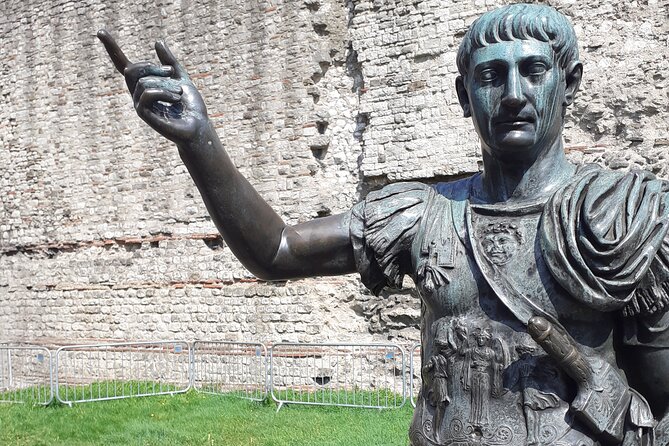
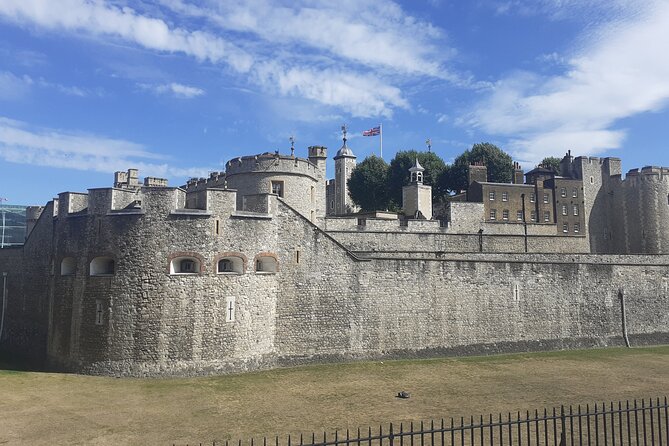
Your first landmark is the Tower of London, originally built in 1078. The guide’s goal here isn’t to make you memorize dates. It’s to show how a single fortress can shape power, fear, and politics across centuries.
This is the part of London where you can feel the weight of history in the stones. Even if you don’t go inside, the stories connect the Tower’s reputation—royal control, punishment, intrigue—to the rest of your walk.
Timing note: the stop is about 10 minutes, and admission is not included. If you want to enter the Tower of London, think of this as your high-impact introduction that tells you where to focus your attention.
Stop 2: Tower Bridge—how engineering became a symbol
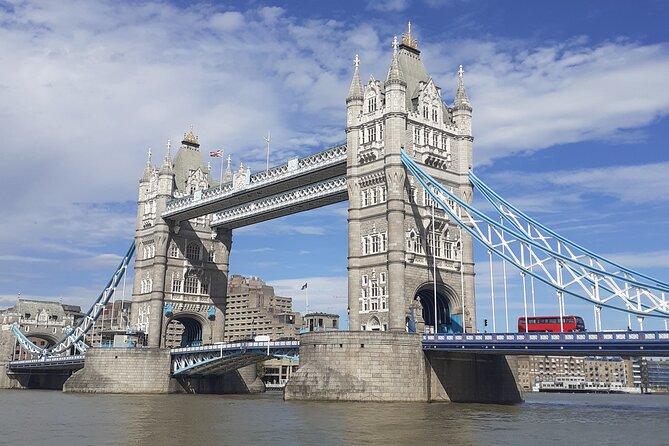
Next you reach Tower Bridge. You’ll learn how it was built, and why it became such an enduring London icon across modern times.
Tower Bridge is a great transition point. It moves you from medieval fortress thinking into a later era of public works, city image, and Thames engineering.
Again, admission isn’t included at this stop. If you want indoor exhibits, you’ll need separate tickets. If you’re happy with the exterior and the story, you’ll still get the value of why it exists.
You can also read our reviews of more historical tours in London




Stop 3: HMS Belfast—World War II history with D-Day gravity
After the bridges and the city’s medieval footprint, the tour lands on HMS Belfast, the famous WWII battleship. You’ll hear how it saw action in various conflicts and how it took part in the D-Day landings.
This stop is a smart pivot. You’re still in the same river-and-docks geography, but the story shifts from medieval power struggles to twentieth-century military force.
You’ll likely be outside viewing the ship’s presence and role, since admission isn’t included. That said, it’s still a big emotional change from the earlier sites—and that contrast helps the overall tour feel memorable.
Stop 4: London Bridge—43 AD origins to civil war and fire
Then you move to London Bridge, where the timeline stretches far back. You’ll hear about its beginnings around 43 AD, then progress through medieval times, including the 1212 Great Fire of Southwark.
The stop also ties in the English Civil War of the 1640s and carries the story forward to modern day. This is one of the stops where the “walking storyline” really works, because you can’t see London Bridge’s age with your eyes alone—you need interpretation.
Admission is marked as free for this stop, so the learning is the payoff.
Stop 5: Borough Market—900 years of food history
Next comes Borough Market, described as a 900-year-old site beneath early Victorian railway arches. This stop is less about power and more about everyday life—who ate, who traded, and how the river-side area supported the city.
It’s also a nice reset from dark-and-dramatic fortress stories. Borough Market gives you a practical feel for London as a working place, not just a stage for rulers.
Admission is free for the stop, and even if you don’t plan to buy snacks, you can use this moment to grab water before the walk continues.
Stop 6: Southwark Cathedral—1420-saved-in-time and Bloody Mary trials
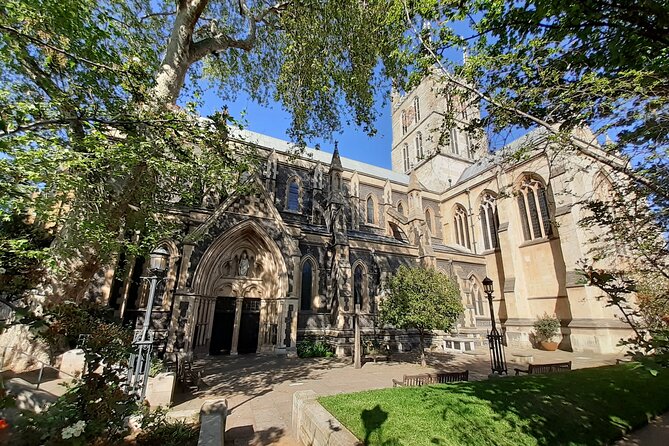
At Southwark Cathedral, you’ll learn that it has stood exactly as you see it since 1420. There was a worship site here since 606, and that continuity matters when you’re thinking about medieval London as a long-running living place, not a single “period.”
This stop includes a specific, uncomfortable chapter: in the 1550s, the cathedral was used for heresy trials by Bloody Mary—Mary I, daughter of Henry VIII. That’s dark subject matter, but it’s also a real example of how religion and justice could collide in public spaces.
Admission for this stop is free, so you’re paying for the story, not a ticket.
Stop 7: Golden Hinde at St Mary Overie—Drake’s 1577 voyage and controversy
You then reach the Golden Hinde at St. Mary Overie dock. Here the focus shifts to maritime exploration with Sir Francis Drake and his famous 1577 round-the-world voyage.
The tour also mentions controversy—so you’re not getting only the heroic version of exploration. You’ll hear that history has arguments, and famous voyages can be interpreted differently depending on who’s telling the story.
Admission isn’t included. Still, this stop is a great reminder that London’s medieval story isn’t only land-based. The river and docks always mattered.
Stop 8: Winchester Palace ruins—kings, queens, and the Liberty of the Clink
At Winchester Palace, you’ll see ruins of a 12th-century palace. It was once one of medieval London’s important buildings, and the tour explains its political role—hosting different kings and queens across time.
This stop also gets very specific about place: it’s linked to the Liberty of the Clink and features the country’s oldest prison. That’s the kind of detail you don’t get from a casual glance at stone fragments.
Admission is listed as free for this stop, which is excellent. The ruins don’t demand a ticket, but they do demand a guide—because without the context, it’s easy to miss how significant the site really was.
Stop 9: Shakespeare’s Globe Theatre—rebuilt after a cannon fire
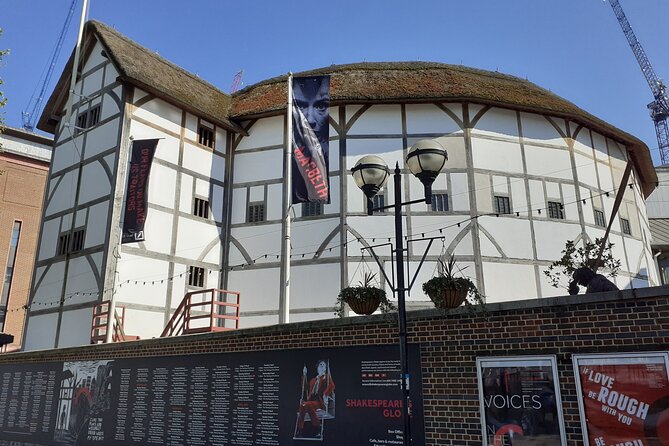
Next is Shakespeare’s Globe Theatre by the Thames, opposite St Paul’s. You’ll hear it was painstakingly rebuilt after a cannon-related fire in 1613.
Even though this is post-medieval, it fits the tour’s theme: London’s past keeps rebuilding itself. The Globe also gives you a sensory shift. Theatre is story-making in a literal way, which pairs nicely with a walking tour full of storytelling.
Admission isn’t included at this stop. But you’ll still get the visual and the context—how a cultural icon survived damage and came back.
Stop 10: The Thames River—30 million years, plus the nasty stuff
Then you take the story to the Thames River itself, where the tour claims 30-million-year history and talks about the unpleasant realities of the river from around the 11th century through Victorian times.
That’s a surprising stop, and it’s one I’d call out as a “hidden value” moment. The Thames isn’t only a postcard river. It’s also a record of what cities were willing to put into the water—and what that did to people.
Admission is free here. Even if you’re not a “river person,” you’ll likely come away with a more grounded view of why London’s neighborhoods evolved around the water.
Stop 11: Millennium Bridge—views toward St Paul’s
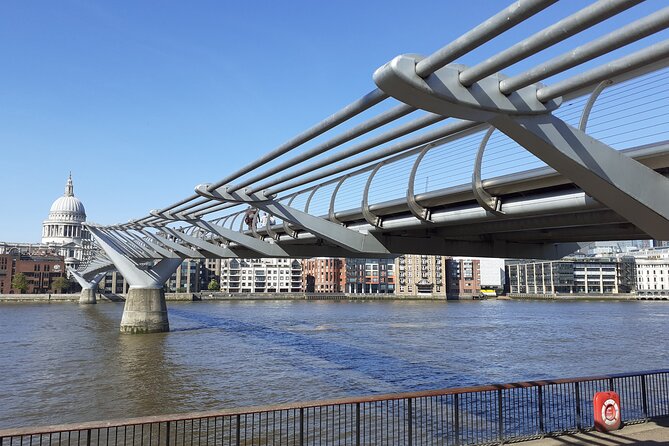
Next you cross again on the Millennium Bridge. This is about walking the river line and getting views toward St Paul’s as you head to the finish.
It’s also a nice way to reset your brain. After the Thames history and heavy topics, the bridge gives you space to look and orient.
Admission is free for this stop, and it’s a practical breather.
Stop 12: St Paul’s Cathedral—Wren’s masterpiece and centuries of worship
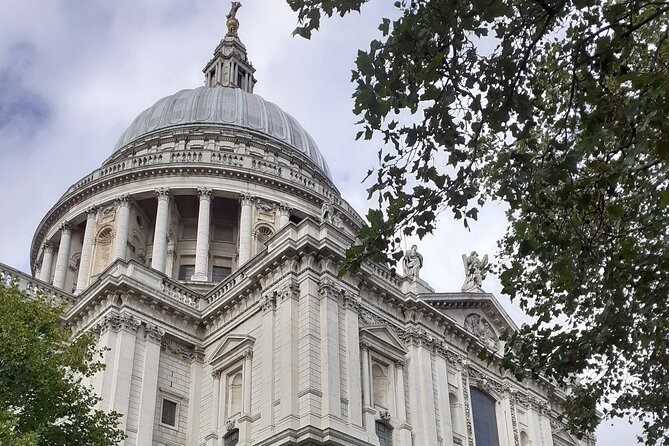
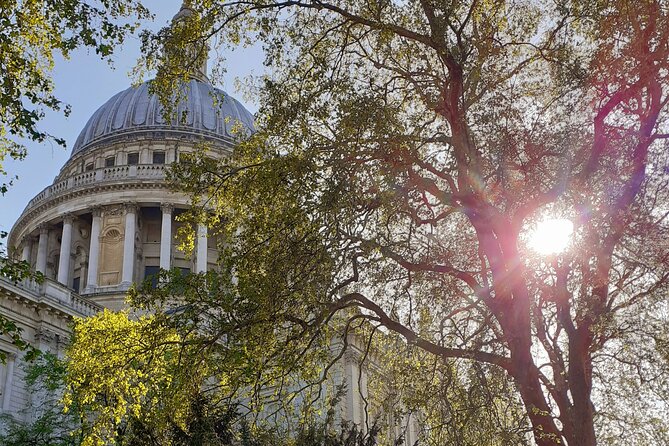
Finally, you reach St Paul’s Cathedral, designed by Sir Christopher Wren and built atop Ludgate Hill, with the cathedral’s main presence dating back to the 1670s. The tour also notes that worship on the site existed since the 7th century, so this isn’t just one era—it’s layers.
Even if you don’t go inside (admission isn’t included at this stop), St Paul’s works as a strong ending point. It gives you a big, clear visual to anchor all the earlier stories, from medieval foundations to later rebuilds and power.
Admission isn’t included, so if you want to step into the cathedral itself, you’ll need to decide on extra ticket time.
What makes the guide experience the real star
The loudest recurring theme from the people who take this walk is the guide. Names like Mick (and sometimes Michael or Nick depending on the day) show up as standout narrators: engaging, humorous, and able to answer questions far beyond the main stops.
That matters because a tour like this lives and dies on interpretation. You can see a lot of London landmarks without a guide, but you won’t naturally connect William the Conqueror-era power to later Thames life, or explain why Winchester Palace links to the Clink.
In fact, the guide style seems to include practical care too. There’s a consistent emphasis on clear communication and adjusting to the group’s pace—helpful if you want an experience that feels welcoming, not rushed.
Practical tips so your 2-hour walk actually feels great
- Wear comfortable shoes. This is a walking tour, and “10 minutes here” adds up fast once you add street crossings and crowd flow.
- Bring a rain plan. People have taken it in bad weather and still enjoyed the stories. A compact umbrella or waterproof layer keeps you focused on the guide instead of the discomfort.
- Use the short stops strategically. If you’re the type who likes photos, pick one or two moments per stop rather than trying to document everything.
- Have one question ready. Ask how a stop connects to what you saw earlier. The guide’s ability to connect dots is clearly part of the appeal.
- If you care about interiors, plan extra time. The tour is structured for seeing and learning; it’s not set up for full museum-length visits.
Who this tour suits best
This tour is ideal if you’re:
- a history buff who wants London’s medieval story in a walkable sequence
- short on time but still want a strong overview from Tower Hill to St Paul’s
- the kind of traveler who likes answers on the spot—about people, politics, and how locations relate
If you want long, quiet time inside specific attractions only, this might feel too fast. But if your goal is to understand London’s medieval spine and get oriented fast, it’s a smart choice.
Should you book this medieval walking tour?
If you want a guided way to understand medieval London—and you like your history explained through real landmarks—this is a very easy yes. The route is compact but varied, from the Tower of London to St Paul’s, and the guide performance is the main reason people rave about it.
Book it if you can handle a brisk pace and want stories at each stop rather than long entries. Consider extra time on your own only for the places you most want to enter, since several major sites require separate admission.
If that sounds like your style, you’ll leave with a city that feels connected instead of a pile of famous buildings.
FAQ
FAQ
How long is the Medieval History Walking Tour from the Tower of London?
The tour lasts about 2 hours.
How much does the tour cost?
It costs $25.00 per person.
Where do I meet, and where does the tour end?
You start at Tower Hill (London EC3N 4DJ) and finish at St Paul’s Cathedral area (St Paul’s Churchyard, London EC4M 8AD).
What time does the tour start?
The start time listed is 2:00 pm.
What language is the tour offered in?
The tour is offered in English.
Is admission included for all stops?
No. Admission is marked as not included for some stops (including the Tower of London, Tower Bridge, HMS Belfast, Golden Hinde, Shakespeare’s Globe, and St Paul’s). Other stops are listed as free (including London Bridge, Borough Market, Southwark Cathedral, Winchester Palace, the Thames River, and Millennium Bridge).
How big are the groups?
The maximum group size is 20 travelers.
Is there a mobile ticket?
Yes, the tour uses a mobile ticket.
What is the cancellation window?
Free cancellation is available up to 24 hours in advance for a full refund.