REVIEW · LONDON
London: Best Landmarks Walking Tour
Book on GetYourGuide →Operated by Vox City Walks · Bookable on GetYourGuide
Big Ben looks different when you walk beside it. I love the live guide commentary and the way this tour strings together London’s top landmarks in a manageable 2 hours. You’ll also get a complimentary mobile app to keep exploring after the walk. One thing to consider: you see most sights from the street, and attraction tickets are not included.
Starting at Trafalgar Square, you get quick orientation and then move through royal ground, Parliament-area landmarks, and the West End’s theater streets before ending up in Soho. It’s a very efficient first-day plan, especially if you want context without spending time lining up.
Because the route is concentrated in central London, the walk can feel long if you’re not used to city pacing. Wear good shoes, and you’ll be happy you did.
In This Review
- Key highlights at a glance
- Why this 2-hour London landmarks walk works
- Where you meet and how the tour moves
- Trafalgar Square: the perfect launchpad
- Nelson’s Column: what to notice when you look up
- Big Ben and the Houses of Parliament: more than a skyline photo
- Parliament Square and the Supreme Court: the “serious” London stops
- Westminster Abbey and royal route energy
- St James’s Park, St James’s Palace, and the Mall
- Buckingham Palace: your street-level payoff
- Whitehall landmarks and Churchill War Rooms area
- Regent Street, Burlington Arcade, Piccadilly Circus: city life hits
- West End to the theater zone: passing famous names
- Soho finale: where the guide’s recommendations become useful
- The complimentary sightseeing app: keep the momentum going
- Photo ops, questions, and pacing: what to watch for
- Who this tour is best for
- Should you book this London Best Landmarks Walking Tour?
Key highlights at a glance
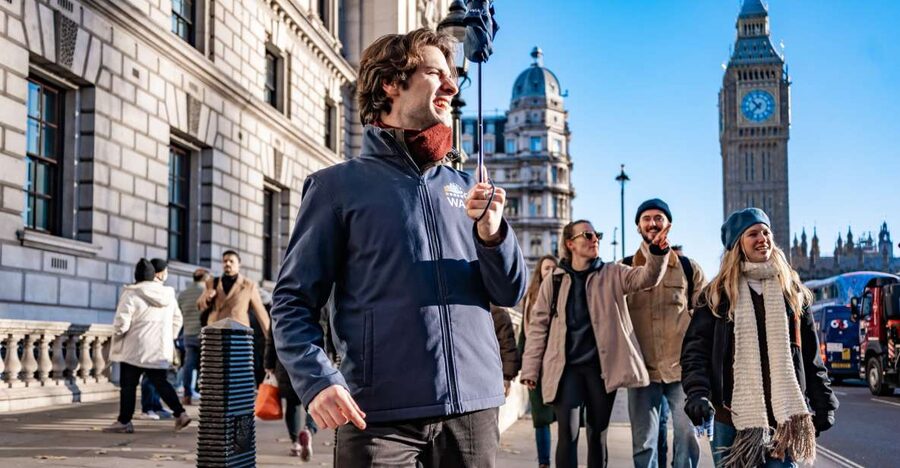
- Trafalgar Square start, easy meeting point: North West corner top of the steps, near the National Gallery entrance, with a blue-umbrella guide.
- Big Ben and Parliament with on-the-street context: You learn what you’re actually looking at, not just where it is.
- Royal loop from Westminster to Buckingham: Westminster Abbey, St James’s Park, and Buckingham Palace all make appearances.
- West End theater streets to Piccadilly Circus: You pass historic theater names along the way.
- Soho finale for food and nightlife ideas: Your guide steers you toward bars and eats once you’re off-tour.
- Free self-guided app to extend the day: Scan the QR code on your voucher and keep walking on your own.
Why this 2-hour London landmarks walk works
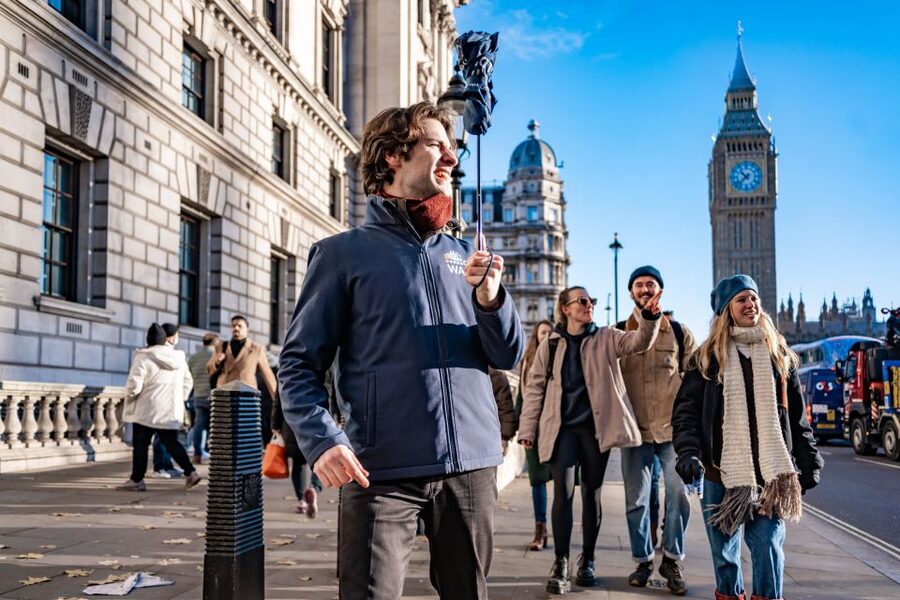
London is huge. Even central London can feel like it takes forever to “get the hang of it.” This tour solves that problem by giving you a tight loop of famous sights that are close enough to walk, but varied enough to feel like more than just postcards.
The biggest win is the way a good guide turns stone and statues into stories you can remember. In the reviews, guides like Jess, Lou, Sebastian, Matt, and Ollie are repeatedly praised for fun facts, humor, and answering questions without rushing people. That mix matters because landmark tours can go two ways: either you get facts with no flavor, or you get enthusiasm with no structure. This one aims for both.
The second big win is value. At about $20 per person for a 2-hour guided walk (with the app included), you’re paying for direction and interpretation, not ticketed entry. If you’re the type who wants to spend money on experiences once you know what you’re looking at, this is a smart way to start.
You can also read our reviews of more walking tours in London



Where you meet and how the tour moves
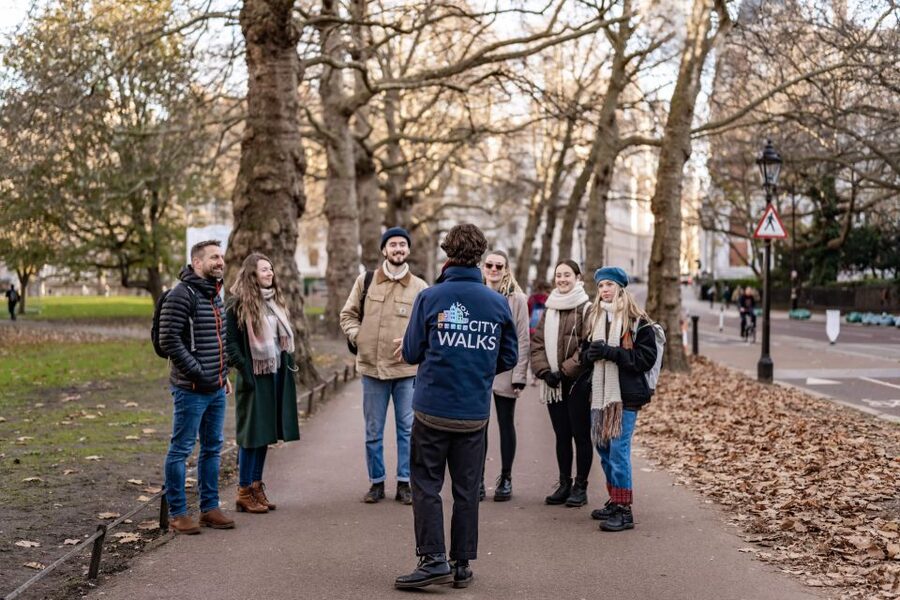
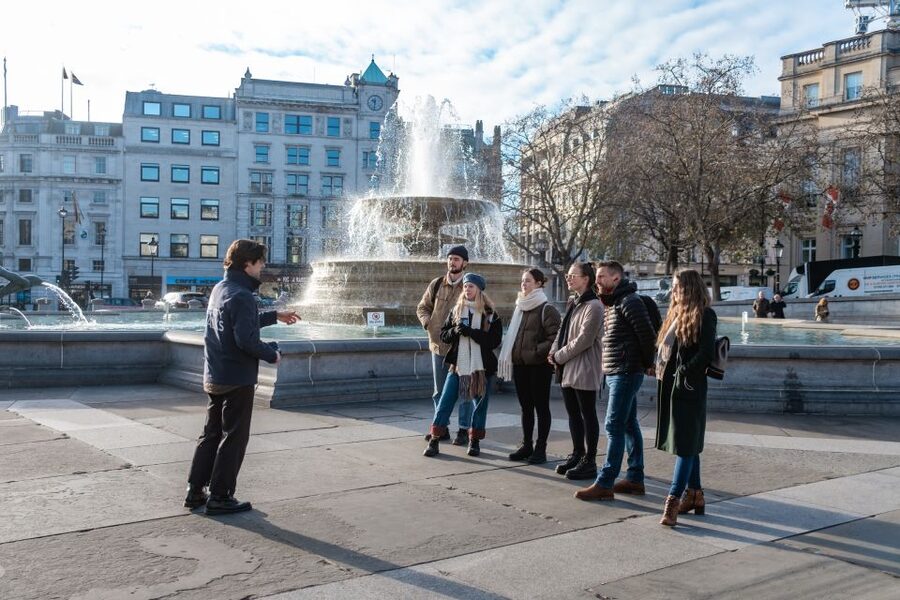
You’ll begin at 5 Trafalgar Square, at the North West corner at the top of the steps. The meeting spot is right by a large white cube statue on the 4th Plinth, opposite Canada House, and close to the National Gallery entrance. Look for your Vox City Walks guide holding a blue umbrella.
The tour runs for about 2 hours and stays mostly outdoors. That means you’ll be on your feet for the whole experience, with brief moments to stop, look up, and photograph. In other words: it’s not a sit-down lecture, and it’s not a slow stroll either. If you’re comfortable walking central London streets, you’ll be fine.
Trafalgar Square: the perfect launchpad
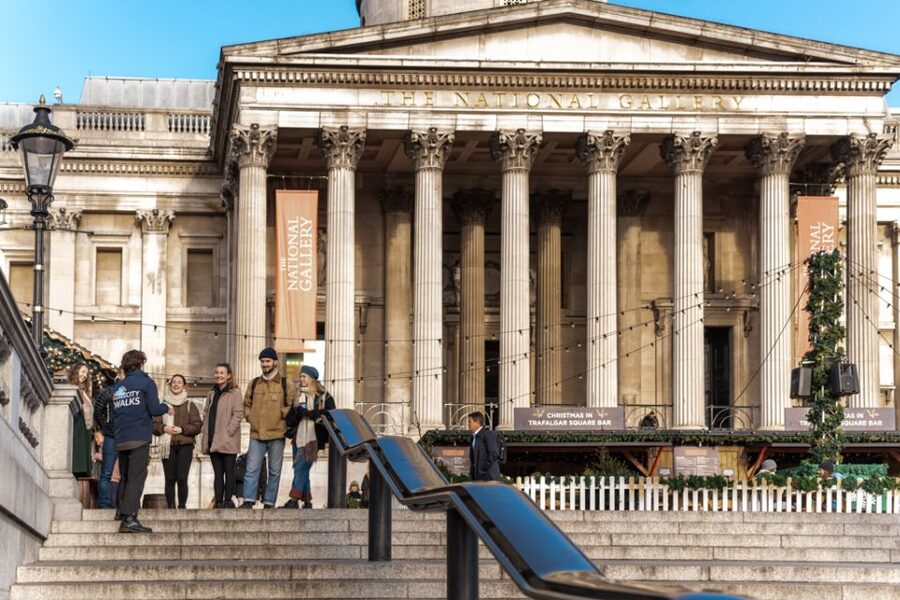
Most first-time London days start with Trafalgar Square because it’s central, iconic, and full of movement. Here, it also acts like a visual anchor. You’re not just standing in one spot admiring a column—you’re getting oriented for the landmarks ahead.
From the start, you’re set up to understand how the city’s “big picture” lines up: the square’s major monuments, the route toward the National Gallery area, and the sense of what’s nearby and walkable. You’ll also spot Nelson’s Column soon after, which helps the tour feel connected rather than scattered.
If you like taking photos, Trafalgar Square is good for quick family-friendly shots and simple wide views before you head into narrower streets later.
Nelson’s Column: what to notice when you look up
Nelson’s Column is one of those London landmarks people photograph without thinking much about what makes it significant. On this tour, you get the context—enough to make the column feel like part of a bigger story rather than a tall statue you pass once and forget.
Even if you already know the basics, the guide commentary is what turns it into a memorable stop. Think: why it’s here, what it symbolizes, and how it fits the ceremonial feel of the surrounding area.
Big Ben and the Houses of Parliament: more than a skyline photo
Next comes the area around Big Ben and the Houses of Parliament. This is where London’s political center comes into focus. From the street, you’ll see the scale and design of the buildings, and you’ll learn how the area has functioned over time.
The key value here is that you’re guided to notice the details that matter—how the complex of buildings works, what you’re looking at when you spot the famous clock presence, and why this part of London feels different from shopping streets or theater blocks.
Practical note: this is a busy section of central London, so plan for crowds at major viewpoints. The tour’s advantage is you’re moving with a plan, not hunting around on your own.






Parliament Square and the Supreme Court: the “serious” London stops
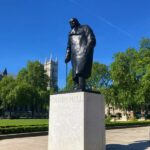
From the Parliament core, the walk continues past Parliament Square and toward the Supreme Court. These stops help balance the royal theater of earlier sights with a different side of the city—governance and law.
This is the kind of area where the architecture can be striking, but it can also feel vague if you don’t have a narrative. The guide fills that gap with short explanations that make the surroundings easier to place. You’ll finish this part feeling like you understand the logic of the district rather than just the headlines.
If you’re interested in how cities organize power, this segment is one of the more grounding pieces of the tour.
Westminster Abbey and royal route energy
Then you move into Westminster territory with a stop at Westminster Abbey. This is one of London’s most storied spaces, and you don’t need to enter to get something valuable from it. What you’re looking for is the link between the exterior and the historical role the building has played.
In reviews, guides are praised for storytelling about the royal family and coronations, so you can expect commentary that connects Westminster Abbey to the monarchy’s most famous ceremonies. That helps you read the area like a timeline: the political center and the monarchy’s grand public moments sitting close together.
St James’s Park, St James’s Palace, and the Mall
After Westminster, the walk continues through the royal belt: St James’s Park, then St James’s Palace, and onward to The Mall.
This is a nice change of pace because it’s less about one “single wow” building and more about moving through spaces that feel deliberately arranged. St James’s Park gives you that classic London green-and-stone contrast, and the surrounding palace areas help you understand why this part of central London is so ceremonial.
On The Mall, you get the sense of a processional route. Even without ticketed entry, the layout teaches you where royal pageantry would travel and why these roads have the reputation they do.
Buckingham Palace: your street-level payoff
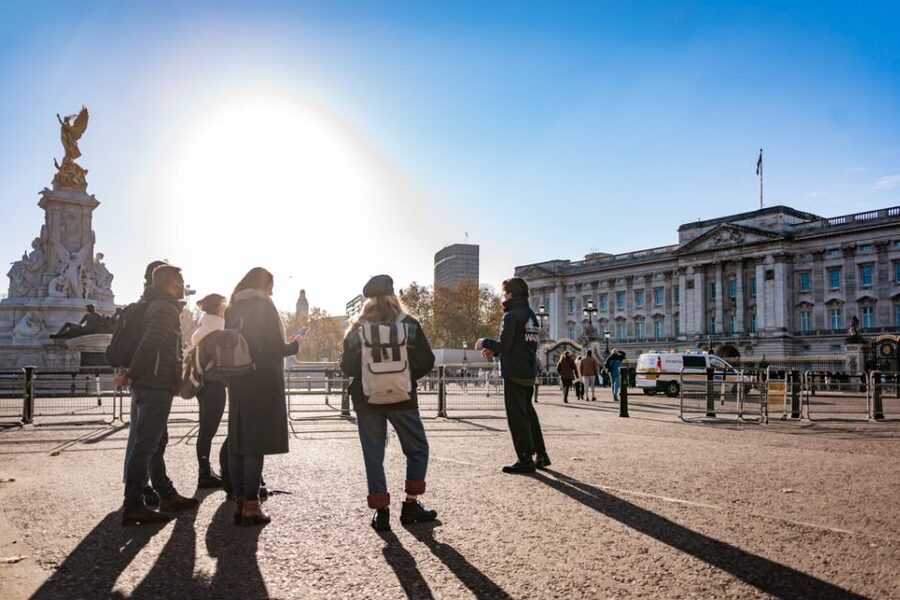
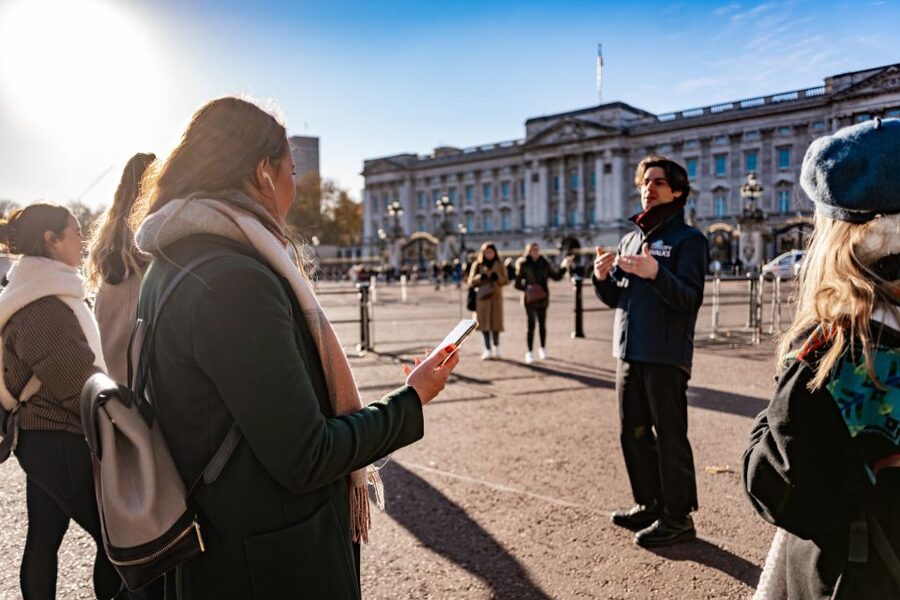
Eventually, you reach Buckingham Palace. This stop is often why people book this kind of tour—because seeing the palace from the street feels instantly real, even if you’ve only seen it in photos.
Here’s what makes it work on a walk like this: you don’t just arrive at the palace cold. You’ve already passed Westminster and built a mental map of the monarchy’s London footprint. The guide commentary ties it together, so the palace stop doesn’t feel like a single photo moment—it feels like a culmination.
Tip: take a few pictures, but also watch the street flow. Buckingham area energy changes fast through the day, so you’ll see more than just one still view.
Whitehall landmarks and Churchill War Rooms area
From Buckingham, the route continues toward Horse Guards Parade at Whitehall and the Churchill War Rooms area. These are different flavors of London history—military leadership and national decision-making—set into a part of town that looks like it was built for official Britain.
Even if you don’t go inside (tickets aren’t included), the outdoor views plus commentary make this area more meaningful. This is where a guide’s ability to keep explanations focused really matters. You want short, clear context that helps you understand what the setting represents.
If you’re the type who plans later visits, this stop also helps you decide whether you want to add an indoor attraction afterward.
Regent Street, Burlington Arcade, Piccadilly Circus: city life hits
Next, the tour pivots into shopping and showbiz London with Regent Street, Burlington Arcade, and Piccadilly Circus.
This section is about contrast. You’ve spent time with monarchy and government-heavy architecture. Now you get bright energy, big signage, and the reality that London is not only historic—it’s actively living, buying, eating, and performing.
In reviews, the guides are praised for injecting cheeky fun facts and keeping the walk engaging while passing these familiar blocks. That’s especially important here because without commentary, this kind of area can blur together.
West End to the theater zone: passing famous names
From Piccadilly, you move through West End territory, passing historic theater names like Piccadilly, Sondheim, and Apollo. You’re not trying to cover every show in the city. You’re getting a feel for the theater geography and the kind of street-level history that made this district famous.
If you’re wondering how to choose what to see, this part helps. At minimum, you’ll leave with a clearer mental map of where theaters cluster and where you might want to spend evening time later.
Soho finale: where the guide’s recommendations become useful
The walk finishes with Soho, and this is where your guide’s local suggestions matter most. The tour is structured around landmarks, but Soho is where it becomes practical: you’ll get ideas for bars, eateries, and clubs, based on what’s happening and what fits your vibe.
This is also a good time to ask questions. After you’ve seen royal buildings, Parliament, and the theater streets, your interests usually sharpen. You’ll know if you want something quieter, something classic, or something late-night.
And since the tour doesn’t include attraction tickets, your Soho time is often a chance to make the day feel complete with a meal or drink.
The complimentary sightseeing app: keep the momentum going
A standout bonus is that your ticket includes a complimentary sightseeing mobile app. You use your own phone, scan the QR code on your voucher, and you get access to a selection of self-guided walking routes.
This is valuable because it lets you turn one good morning or afternoon into a longer exploration without over-planning on day one. The guided walk gets you oriented. Then the app helps you choose what to do next based on where you want to go while you’re in the area.
It’s also a smart way to manage time: if you’re tired, you can pick shorter routes; if you’re still energized, you can build on what you just learned.
Photo ops, questions, and pacing: what to watch for
Based on the consistent feedback, what people remember most is the guide’s personality and ability to keep the group moving while staying responsive. Several reviews mention guides who stayed patient with questions and kept the mood light without turning the tour into a comedy routine.
Also, if you care about photos, this kind of tour is easier than wandering alone because the guide naturally directs you to good spots and helps you time shots. One review even mentioned the guide helping with photos and directing people at the end—small touches like that add up.
Pacing is also worth noting. Because it’s about 2 hours, you’re not stuck for a half-day. You can still make dinner plans afterward, which is a major reason this works well for a first visit.
Who this tour is best for
This is a great fit if you:
- want a first-day London overview without ticket lines
- enjoy history but prefer it told in a human, street-friendly way
- want a route that goes from landmarks to theater streets to nightlife area
- like being outdoors and walking at a reasonable pace
It’s also a decent option for families with kids who can handle walking. One review specifically highlighted that the tour gave an overall idea of famous sites without requiring interior visits, which can be a relief when you’re coordinating energy and attention spans.
If you’re the kind of traveler who only wants “in” access—palaces inside, abbey inside, and ticketed attractions—you’ll likely find the outdoor-only format a bit limiting. But if you’re strategic, you can use this as your orientation layer, then book the indoor sites afterward.
Should you book this London Best Landmarks Walking Tour?
I think you should book it if you want maximum orientation for your time and you value a guide who makes famous places feel understandable. At $20 with a live English guide and a free app add-on, it’s a practical way to build context fast and then branch out on your own.
I’d skip or reconsider if you’re only interested in ticketed entry experiences, or if you don’t like crowds and standing at major viewpoints. This tour is designed for seeing, walking, and learning from the street—not for long indoor visits.
If you’re doing London for the first time, start here. Then use the app and your new mental map to choose your next stops with confidence.