REVIEW · LONDON
London: Medieval History Walking Tour from The Tower
Book on GetYourGuide →Operated by The Sights of London Tour · Bookable on GetYourGuide
London’s medieval edge starts at Tower Hill. This 2-hour Thames walk stitches together centuries of power and daily life with a live historian guide, starting at the Tower of London.
I love that you get real context for what you’re seeing, not just a list of sights. I also like the fast, focused route—Tower Bridge, HMS Belfast, markets, churches, Shakespeare, and St Paul’s in one smooth stretch.
One thing to plan for: it’s a real walk in all weather, so comfortable shoes matter, and you’ll spend time standing and moving rather than sitting.
In This Review
- Key highlights at a glance
- Entering Medieval London from Tower Hill
- The Tower of London and what you’ll understand beyond the walls
- Crossing Tower Bridge for the engineering story, not just photos
- HMS Belfast and the wartime thread running through the river
- London Bridge, Borough Market, and Southwark Cathedral
- The Golden Hinde and Winchester Palace: ships, power, and pageantry
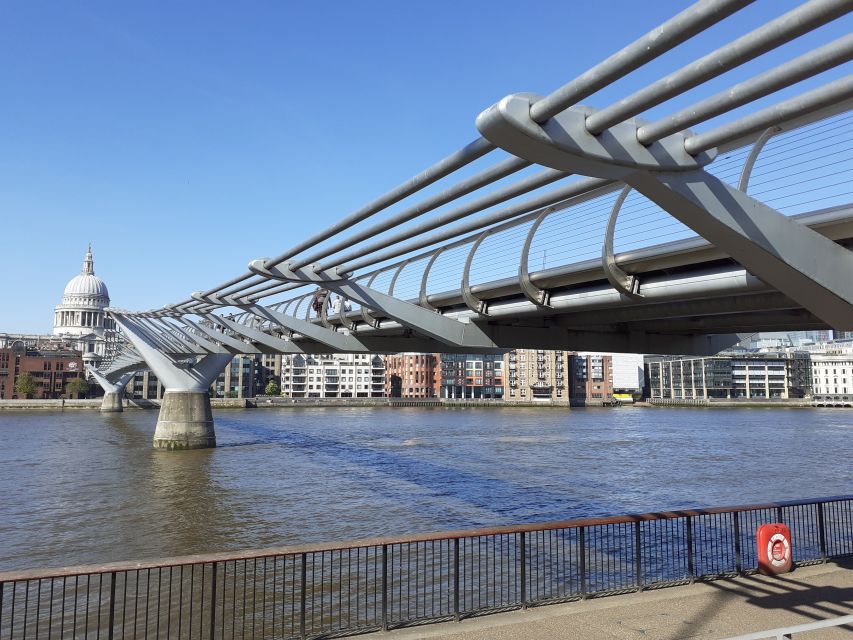
- Shakespeare’s Globe, the Thames, and Millennium Bridge views
- St Paul’s Cathedral at the end: a strong closing image
- Price and value for a $24, 2-hour London history sprint
- Who this tour is best for
- Should you book this medieval history walking tour?
- FAQ
- How long is the London Medieval History Walking Tour from The Tower?
- Where do I meet the guide?
- What should I wear or bring?
- Does the tour run in rain?
- Is the tour wheelchair accessible?
- How much does the tour cost?
- Can I get a refund if I need to cancel?
Key highlights at a glance
- Tower Hill start: You begin where the medieval city feeling is strongest, right by the Tower of London tube area.
- Tower of London 1000-year story: You’ll pass the complex and get the long arc of its purpose.
- Tower Bridge build details: Expect the engineering story as you cross.
- HMS Belfast and D-Day connections: A wartime thread runs through the medieval riverscape.
- Southwark + Borough Market stops: You see the Thames side of food, faith, and commerce.
- Shakespeare’s Globe and St Paul’s: Drama and religion, side by side with medieval foundations.
Entering Medieval London from Tower Hill
This tour is built around one simple idea: the Thames is a timeline. You start at Tower Hill, right near the tube station’s western exit, with the meeting point described outside the western exit of Tower Hill station near Trinity Square and the Citizen M Hotel area, next to the Tower Hill Tram burger van. Your guide holds a flagpole so you can spot them without guesswork.
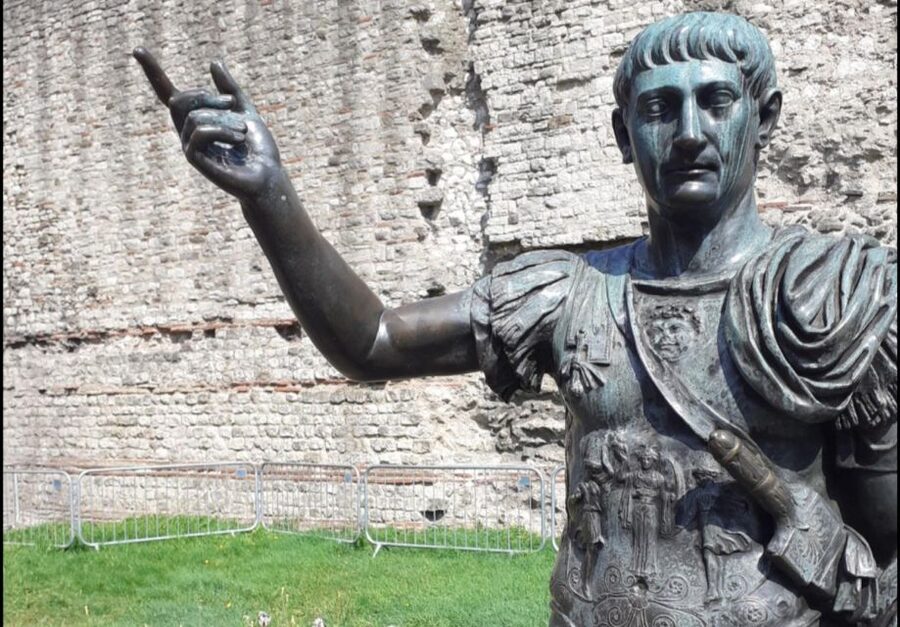
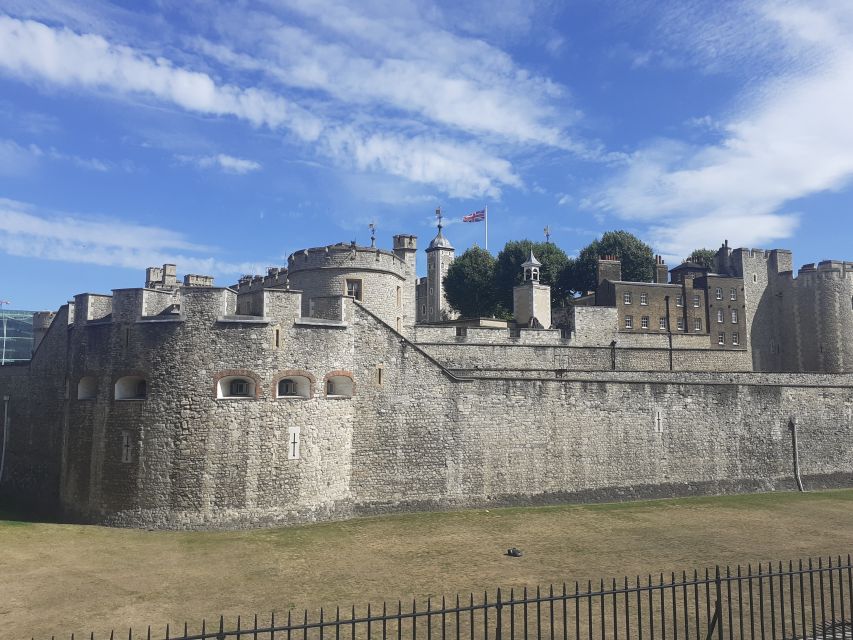
The experience kicks off with the Tower of London. You don’t just look at the famous fortress from the outside and call it a day. You’re guided through its 1000-year history, which helps you understand why it kept reappearing in stories of English politics, punishment, and control. Even when you’re passing big landmarks, the guide’s job is to give you the “why it mattered” behind the walls and towers.
Practical note: this is a 2-hour walk, so it moves at a steady pace. If you want your London to feel like a story you can follow—rather than a checklist—this is a good match.
You can also read our reviews of more walking tours in London



The Tower of London and what you’ll understand beyond the walls
The Tower of London stop is a cornerstone on this route. Since you’re there early, it works like a foundation. Once you get the big picture of the Tower’s role over centuries, every later stop on the Thames side starts to click.
What I like here is the way the guide connects the Tower to bigger themes: shifting power, religion, and the everyday realities of living in a city shaped by the river. You’ll hear more than dates and names. You’ll get the cause-and-effect story—how institutions and people shaped one another.
The main limitation is also simple: you won’t have hours inside the Tower the way you would on a dedicated ticket + museum day. This is built as a walking tour that uses the Tower as an anchor point, then carries you across London’s riverfront to keep the narrative moving.
Crossing Tower Bridge for the engineering story, not just photos
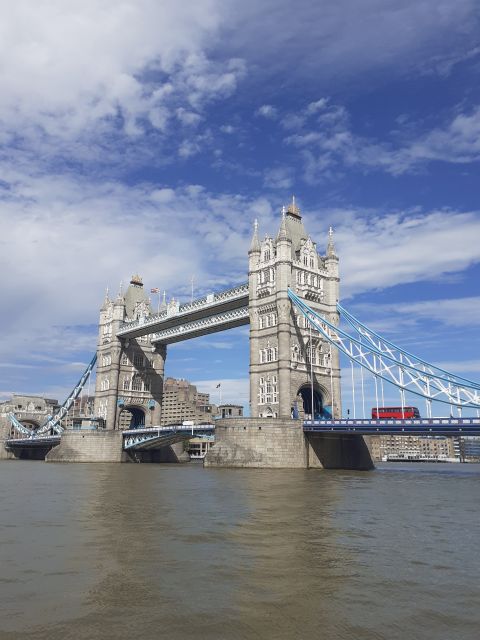
Next comes Tower Bridge, one of those places you already recognize—yet the tour’s angle is different. You’ll learn how it was built and why it’s such a landmark of its own era. Walking over it changes the perspective: you can look down and across at the river as a working system, not just a backdrop for iconic views.
This matters because it keeps the tour grounded in real London mechanics. The Thames isn’t only dramatic; it’s practical—ships, movement, trade, and defense. Tower Bridge is the physical reminder of that practical side, bridging two shores while still respecting the reality of a busy river.
If you’re hoping for a long, slow bridge moment, plan on it being a guided stop rather than a full wandering session. Still, for most people, that’s exactly the right pace: you get the why, you cross, and you continue.
HMS Belfast and the wartime thread running through the river
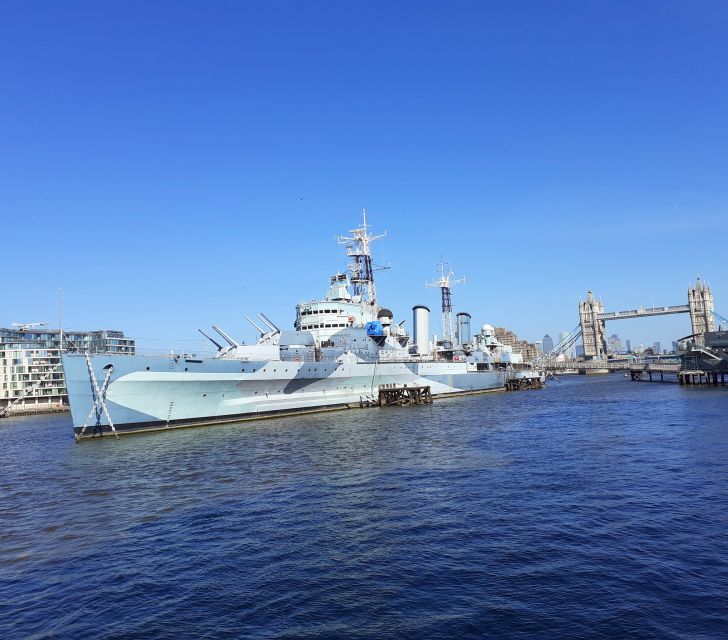
As you keep walking, the tour shifts gears in a smart way. HMS Belfast is one of the best examples of “London has layers.” This ship participated in the D-Day landings of WWII, which adds a modern war chapter to the medieval-feeling setting around the river.
This stop is valuable because it prevents the tour from becoming a medieval-only lecture. The Thames-side story includes conflict after conflict, and HMS Belfast is where that comes into focus fast. You’ll also get a guided museum-style look, which gives you something to ground the conversation—so you can see the objects and settings that connect to the historical claims.
A small consideration: museum steps and indoor time can vary by weather and how the guide structures the stop. Since the tour runs in all weathers, bring layers so you stay comfortable and don’t rush through the ship section just to get warm.
London Bridge, Borough Market, and Southwark Cathedral
After HMS Belfast, the route continues through central river country toward some stops that feel more lived-in and less postcard. London Bridge is part of that flow—another anchor point that helps the story of the city feel continuous rather than fragmented.
Then you hit Borough Market. This is where you’ll feel the Thames side as commerce and everyday life. The tour frames it as part of the river’s long commercial role, not just a place to snack. If you’re trying to understand how London feeds itself and why this area keeps mattering, this is one of the best “walk-and-understand” stops on the itinerary.
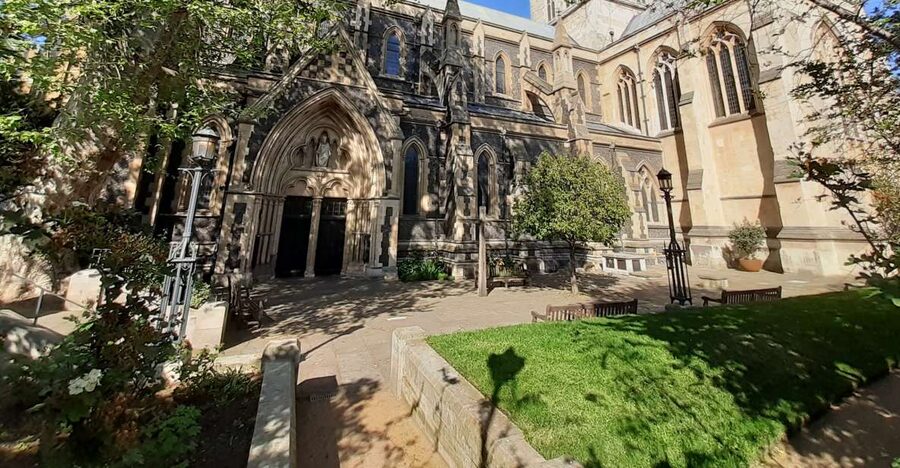
Right after the market comes Southwark Cathedral, described as 15th-century. The cathedral stop adds the religious and political layer back into the picture, with the Thames region acting as the stage where spiritual authority and civic power meet.
The drawback here is crowd density. Borough Market can be busy, and Southwark areas can get congested. The good news: the tour format keeps you moving and gives you context so you’re not stuck staring at your surroundings without knowing what to look for.
You can also read our reviews of more historical tours in London




The Golden Hinde and Winchester Palace: ships, power, and pageantry
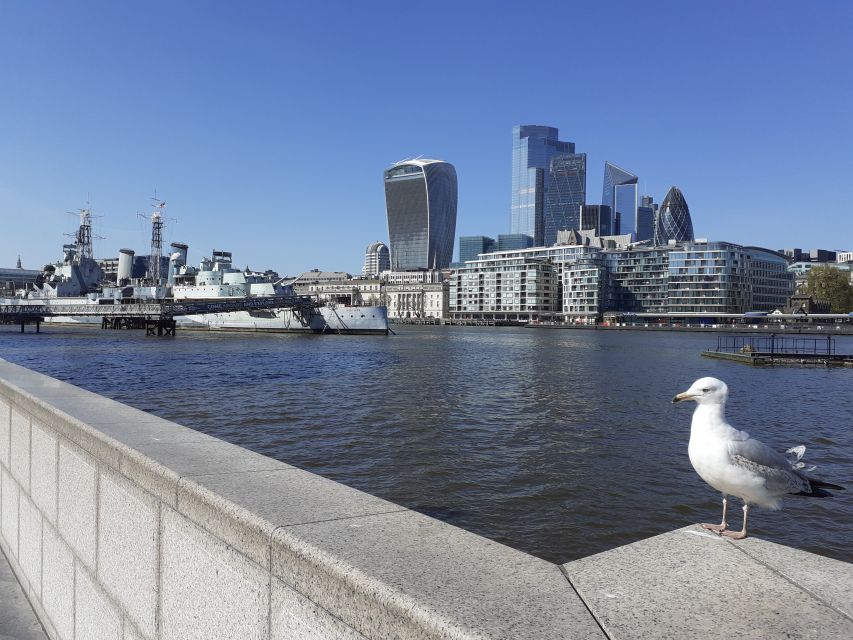
One of the more fun switches in tone is The Golden Hinde. It’s presented as an exact replica tied to Sir Francis Drake’s ship. This stop is a great break from stones-and-statues history because it highlights exploration and maritime identity—especially important on the Thames, where ships shaped London’s reach.
Next up is Winchester Palace, a 12th-century site. This stop shifts back into medieval governance. Winchester Palace helps you understand that the riverfront wasn’t only about trade and defense. It was also about authority—people using buildings and proximity to power to shape how the city worked.
Put together, these two stops are a useful reminder: medieval London wasn’t one kind of history. It included navigation and ambition, yes, but also the institutions that organized society and helped decide what people could do.
If you’re the type who loves when a tour connects emotions to history—like awe when you see a ship reference, then seriousness when you hit the palace context—this part of the walk delivers.
Shakespeare’s Globe, the Thames, and Millennium Bridge views
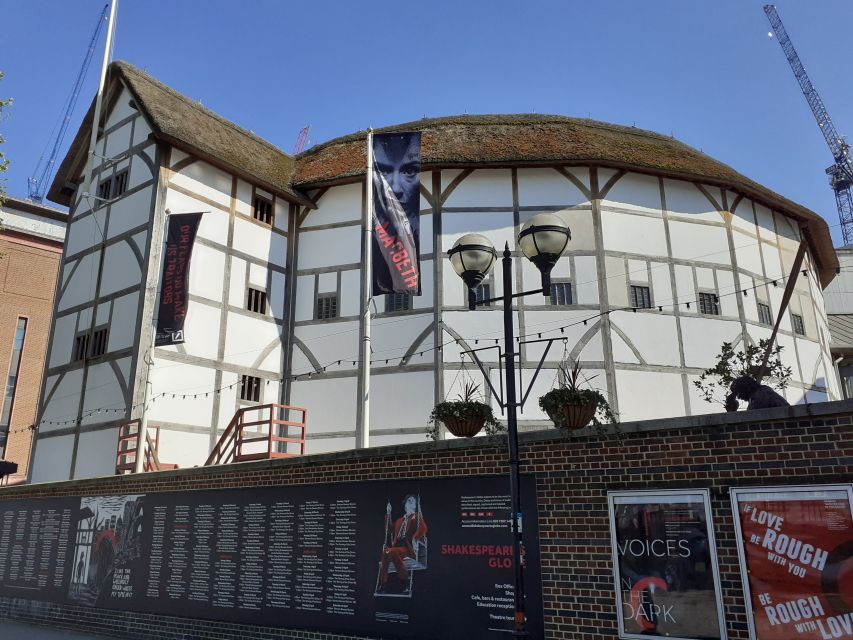
The tour then walks in Shakespeare’s footsteps and brings you to Shakespeare’s Globe theatre. This is where literature becomes geography. You’re not just watching a play; you’re learning why the Globe belongs where it does, and how the theatre fits into the human side of the riverfront.
Then you transition back to the River Thames itself. You’ll get guided context along the water and across viewpoints that help you connect what you’ve heard so far—Tower and wars, markets and cathedrals—with how the river physically shaped movement.
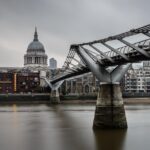
A standout practical touch: the tour includes Millennium Bridge. Even though it’s modern, it works like a visual comma in the story. You can look at the river in a “then and now” way without feeling like you’re pulled away from the medieval theme.
One consideration: if it’s cold or rainy, the Thames sections can feel long in open air. Pack accordingly, and you’ll enjoy it more rather than rushing through for shelter.
St Paul’s Cathedral at the end: a strong closing image
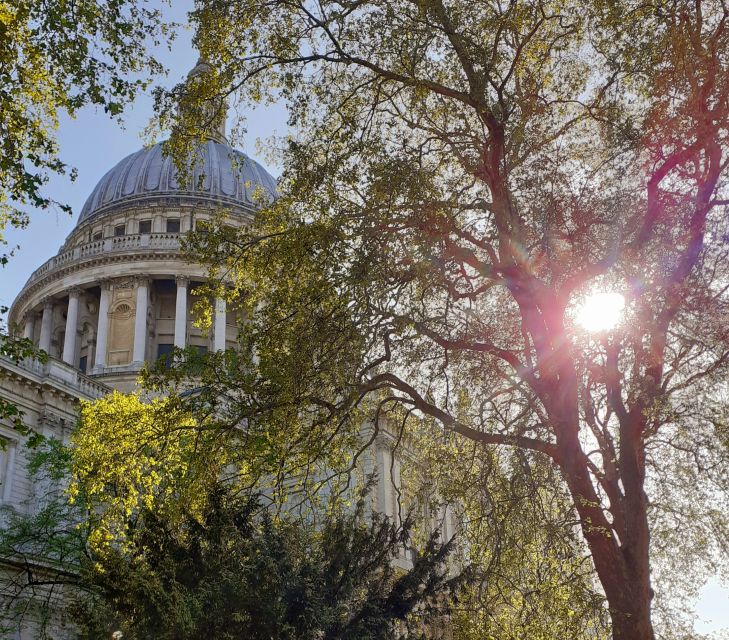
The finish is at St Paul’s Cathedral, which makes sense. After everything—medieval fortification, bridge engineering, shipyard courage, markets and religion, palace power, theatre life—ending at St Paul’s gives you a grand vertical finale.
“Majesty” is the obvious word, but the real value is understanding why it’s placed here in the story of the city. You’re not ending with a random landmark. You’re ending at a point that helps you sense London as a capital of religion and ceremony, shaped by the same river that carried commerce and conflict.
Finish location is listed as EC4M 8AD, so you get a clear end point to re-orient yourself and plan the next step—dinner, museum time, or a longer wander around the dome area.
Price and value for a $24, 2-hour London history sprint
At $24 per person for a 2-hour guided walk, the value is mostly about efficiency. You’re paying for a guide who connects many big-ticket landmarks into one coherent route—especially when the tour includes stops people often treat separately.
You also get a guide-led experience at places like HMS Belfast and Southwark Cathedral rather than only exterior photo moments. That matters because your questions won’t stall. If you want more explanation, the format supports it.
Is it perfect for everyone? Not quite. If you want to slow down for lots of independent exploring at each stop, you might feel the time pressure. But if you want to see a lot, understand a lot, and set yourself up for follow-up visits later, it’s strong value.
Who this tour is best for
This is a good fit if you:
- Care about medieval London but also want the story to include later layers like WWII.
- Prefer guided interpretation over audio-only sightseeing.
- Like asking questions and getting answers that connect buildings to politics, religion, and daily life themes.
It’s less ideal if you:
- Struggle with two hours on foot in unpredictable weather.
- Want a museum-heavy, sit-down day with lots of time inside every venue.
Good to know: the tour is listed as wheelchair accessible, and it runs in all weathers, rain or shine. Plan clothing and footwear for real walking conditions.
Should you book this medieval history walking tour?
If your London plan includes the Tower and you want the Thames route to make sense, I’d book it. The biggest reason is the combination: you start at the Tower of London, cross Tower Bridge, connect to HMS Belfast, then move into markets, a cathedral, Drake’s ship replica, Winchester Palace, Shakespeare’s Globe, and end at St Paul’s. That’s a lot of London history packed into 2 hours, and the guided storytelling approach is built for clarity and flow.
My advice: wear comfortable shoes, bring weather layers, and come with curiosity. If you do that, you’ll finish the walk with a much better sense of how London’s riverfront has carried power, faith, trade, and drama across centuries.
FAQ
How long is the London Medieval History Walking Tour from The Tower?
The tour duration is 2 hours.
Where do I meet the guide?
Meet outside the western exit of Tower Hill tube station, near Trinity Square and the Citizen M Hotel, by the Tower Hill Tram burger van. The guide holds a flagpole with a flag flying from it.
What should I wear or bring?
Bring comfortable shoes and weather-appropriate clothing.
Does the tour run in rain?
Yes. The tour takes place in all weathers, rain or shine.
Is the tour wheelchair accessible?
Yes, it’s listed as wheelchair accessible.
How much does the tour cost?
The price is listed as $24 per person.
Can I get a refund if I need to cancel?
The tour offers free cancellation up to 24 hours in advance for a full refund.