REVIEW · PHILADELPHIA
Philadelphia: History, Highlights & Revolution Walking Tour
Book on GetYourGuide →Operated by WeVenture · Bookable on GetYourGuide
You’ll walk the Revolution, step by step. In just 2.5 hours, you’ll connect Independence Hall to Old City streets and end in the middle of the action, with a guide who turns the usual facts into something you can picture.
I love that the tour hits the heavy-hitters in order, so the story of the fledgling US government makes sense instead of feeling like random sightseeing. I also like the Museum of the American Revolution stop, with a live demonstration built around George Washington’s wartime experience.
One possible drawback: you cover a lot of ground fast, so if you want long, slow time inside one building, you’ll still need a return trip.
In This Review
- Key things that make this tour worth your time
- Getting oriented at Signer’s Garden
- Independence Mall and Independence National Historical Park
- Independence Hall: the Declaration, the Constitution, and the timeline you need
- Congress Hall and the Old City streets that keep the story human
- Liberty Bell photo stop: iconic symbol, quick and effective
- Carpenters’ Hall: politics meets the people behind the trade
- Museum of the American Revolution: the George Washington tent demonstration
- Elfreth’s Alley: stepping into a living street
- Betsy Ross House and Franklin’s grave: home-front creativity and legacy
- North 6th Street to Market Street: the city’s everyday geography
- Price and value: why $41 can make sense here
- Who should book this tour
- Should you book this Philadelphia Revolution walking tour?
- FAQ
- Where do I meet the guide?
- How long is the tour?
- What is included at the Museum of the American Revolution?
- Is the tour wheelchair accessible?
- What language is the tour offered in?
- Is parking easy nearby?
- Does the tour include any fees or donations?
Key things that make this tour worth your time
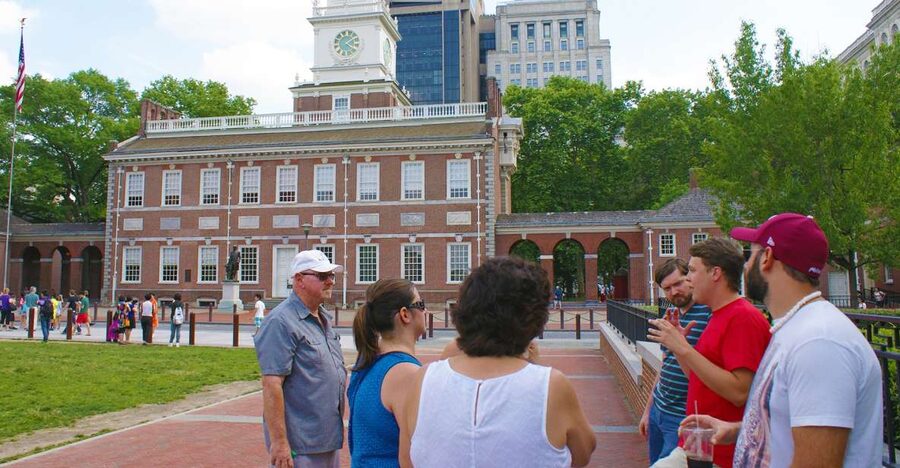
- Signer’s Garden start gives you the right frame for what you’re about to see
- Independence Hall and Congress Hall are explained as a system, not isolated monuments
- Liberty Bell is a photo stop that keeps the tour moving at a good pace
- Museum of the American Revolution live demo adds a hands-on feeling to the visit
- Elfreth’s Alley and Betsy Ross House shift the focus from politics to daily life
- Franklin’s grave and nearby streets tie the Revolution to real people beyond the headlines
Getting oriented at Signer’s Garden
The tour kicks off at the Signer Statue in Signer’s Garden, which is a smart start point. You’re not just beginning at a landmark—you’re beginning with the idea of signatures, agreements, and the people behind the paperwork.
This is also where you’ll learn how the guide plans to stitch the day together. That matters, because Philadelphia’s Revolutionary-era sites can feel like a scatter of famous buildings unless someone gives you the thread.
If you’re driving, don’t wing it. Old City has parking lots and decks, but street or metered parking usually isn’t a good fit for a 2.5-hour outing, since the time limits are often shorter than your tour window.
You can also read our reviews of more walking tours in Philadelphia



Independence Mall and Independence National Historical Park
From there, you’ll move into the broader Independence National Historical Park area, with stops that place the Revolution in a real setting. Instead of treating the past like museum glass, the walk helps you see how the government center sits inside the city.
You’ll also get a sense of the geography of power: where people gathered, where decisions were made, and why the buildings around Independence Hall look the way they do. The tour’s pacing is built for walking, so you’ll spend your time listening at the moments that make the buildings make sense.
This portion is a great warm-up if you’re new to US founding history. The guide uses the architecture and layout to explain what happened where, and why certain places became symbols in the first place.
Independence Hall: the Declaration, the Constitution, and the timeline you need
Independence Hall is the obvious stop, but the value here is how the guide connects the dots. You’ll hear the story of the Declaration of Independence and the US Constitution being created here, and you’ll get a clearer timeline of what changed and what stayed the same.
A strong guide will also point out that the founding wasn’t just a single moment. It was a series of debates, compromises, and power struggles—people arguing over what a new country should actually look like.
One practical note: since this is a walking tour with multiple major stops, you’ll get guided context rather than a long self-paced museum day. If Independence Hall is your number one priority, plan to return later for deeper independent time.
Congress Hall and the Old City streets that keep the story human
Next you’ll head toward Congress Hall, where the tour broadens the view from founding documents to governance in practice. It’s one thing to read about leaders and laws. It’s another to stand near the places where meetings happened and where decisions had to move from idea into action.
Then you’ll shift into Old City sightseeing—an area where the Revolution doesn’t feel like a separate chapter. The streets and buildings help you see how the founding era fit into a real neighborhood.
This stop is also a good reminder that history isn’t only inside famous walls. It’s carried by the streets and the everyday rhythm of a city. That’s exactly the kind of perspective that makes a short tour feel worth it.
Liberty Bell photo stop: iconic symbol, quick and effective
You’ll reach the Liberty Bell with a designated photo stop. Even if you’ve seen pictures for years, standing near it still gives you that electric, symbolic feeling.
The key is how the guide uses the stop. You’re not only looking at a bell. You’re hearing how freedom became a message Americans carried forward, and how symbols can do work that speeches can’t.
Because it’s a photo stop, your time here is intentionally brief. That’s not a downside—it’s a pacing strategy. You’ll spend more minutes where the guide can explain, and less time waiting around for the line or the slow drift of a standalone visit.
Carpenters’ Hall: politics meets the people behind the trade
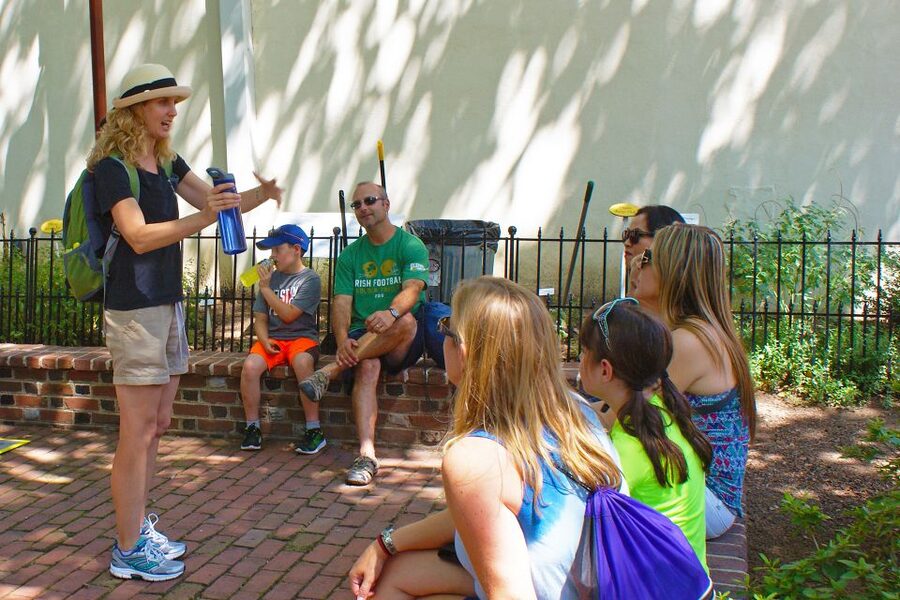
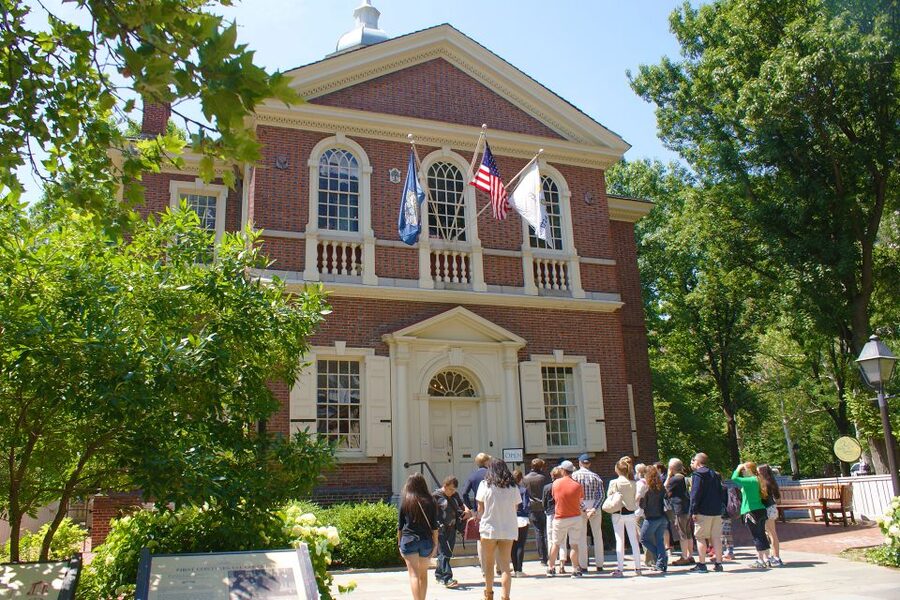
At Carpenters’ Hall, the tour adds a layer that many history tours miss: how economic life and organized building trades fit into political change. It’s a reminder that revolutions aren’t built only by speeches and declarations. They’re also built by networks of work, skill, and local leadership.
You’ll get guided interpretation of why this kind of venue mattered, and how the Revolution relied on coordination beyond the most famous names. If you like history that connects ideas to real systems—work, money, organizing—this is one of the more satisfying stops.
Museum of the American Revolution: the George Washington tent demonstration
The tour’s centerpiece for many people is the Museum of the American Revolution. You’ll go in with guided context and watch a live demonstration connected to the tent George Washington lived in during the war.
That tent detail is powerful because it makes the Revolution feel practical. Instead of only thinking about strategy and politics, you’re asked to picture the physical conditions of campaigning—shelter, survival, and the daily reality of leading during wartime.
You’ll also receive discounted admission into the museum that you can redeem after the tour. That’s a smart move because it gives you a choice: you can take the guided overview now, then return later to explore more at your own pace, when you’ve had time to absorb what you just learned.
Elfreth’s Alley: stepping into a living street
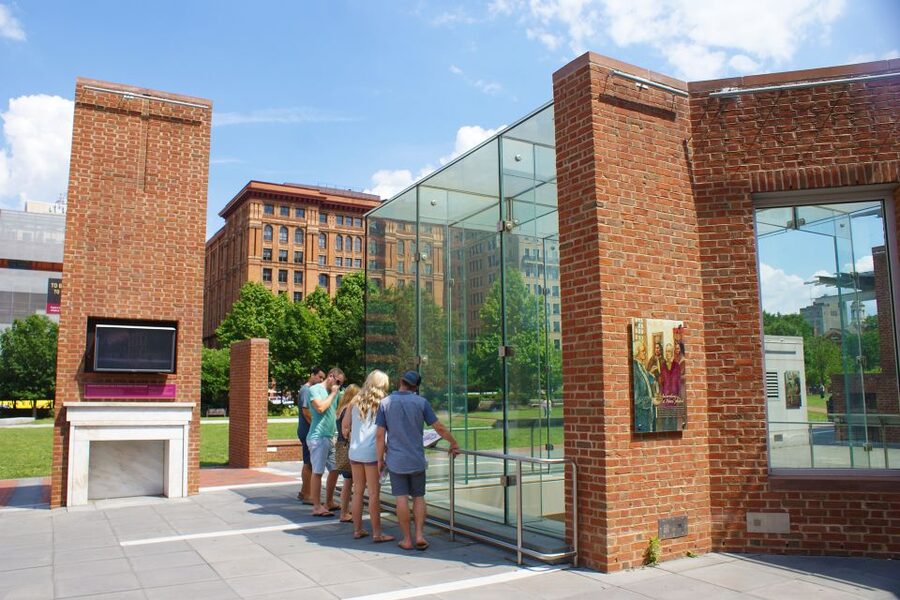
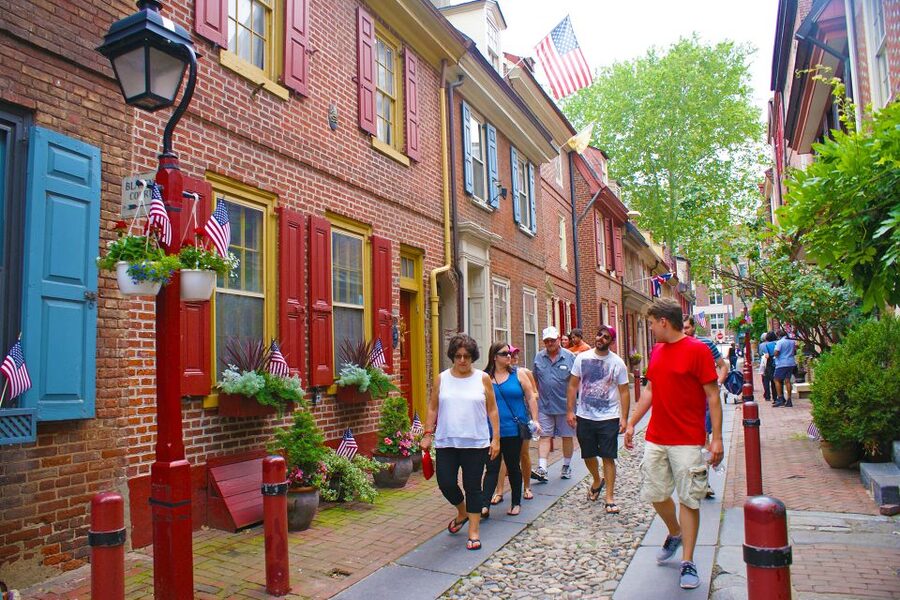
Next comes Elfreth’s Alley, often noted as the nation’s oldest continuously inhabited residential street. On this tour, it’s not just a pretty photo moment. The guide uses the setting to shift your focus from revolution-era leaders to the people who lived through the same city and the same changes.
Walking there helps you understand something subtle: the founding didn’t happen in a bubble. It unfolded beside neighbors going about their lives. The houses and street feel connect you to the idea that history is built on ordinary routines, too.
If you enjoy old streets and architecture, this is a highlight. If you don’t care about architecture, it still works because it changes the story you’ve been hearing.
Betsy Ross House and Franklin’s grave: home-front creativity and legacy
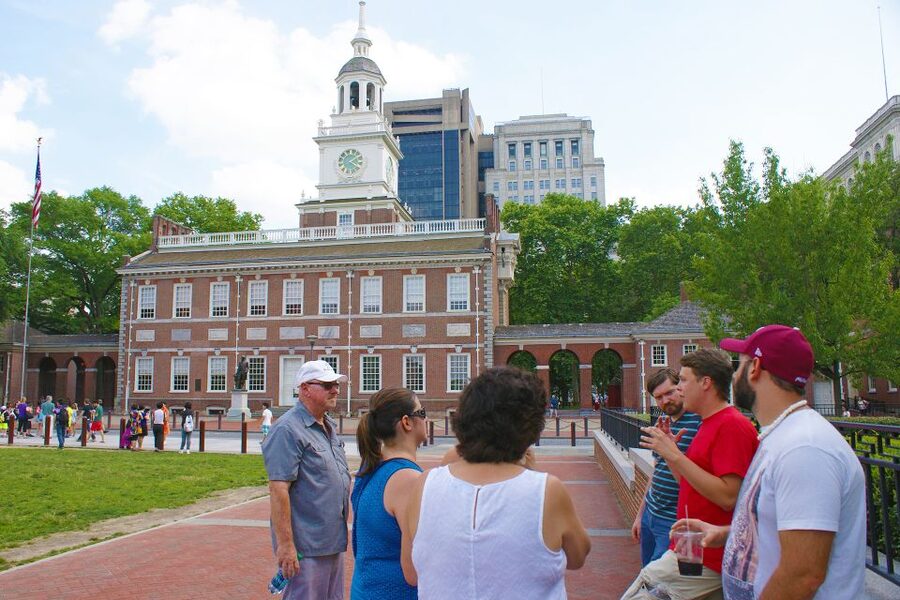
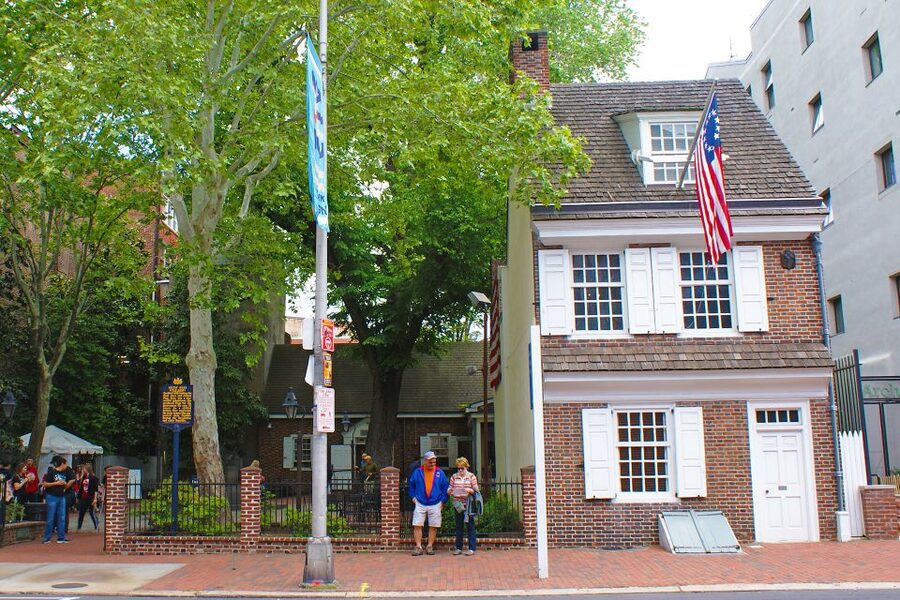
The tour then reaches the Betsy Ross House, where you’ll learn about Betsy Ross, the upholsterer credited with creating the first American flag. The point isn’t just attribution. It’s what that story represents: how symbols of the new nation were made, carried, and believed in.
After that, you’ll pass by Benjamin Franklin’s grave for a photo stop and guided context. Franklin is often reduced to a few famous lines or inventions, but a good guide brings you back to the broader idea of Franklin as a mover—someone linking ideas, politics, communication, and scientific thinking.
If you care about how people helped the Revolution succeed through skills rather than only through official titles, this pairing works well. One stop shows how a symbol becomes real. The other shows how influence spreads through networks.
North 6th Street to Market Street: the city’s everyday geography
The tour wraps up with a guided walk through the area around North 6th Street and Market Street. This part can feel less dramatic than Independence Hall, but that’s exactly why it matters.
By the end, you’ve spent a morning focused on founding buildings and Revolutionary-era icons. Then you’re reminded that Philadelphia isn’t a set. It’s a working city. Understanding where the Revolutionary district sits inside the current street grid helps you orient for future self-guided exploring.
You finish in Old City, which is practical. It’s a good place to grab food, continue on foot, or pop into a museum later with less guesswork.
Price and value: why $41 can make sense here
At $41 per person for about 2.5 hours, this tour is priced like an experience that mixes guided interpretation with at least one paid component. What makes it feel like good value is what you actually get for the money:
- a local guide who tells the story in sequence
- a demonstration at the Museum of the American Revolution
- discounted museum admission for after the tour
- a donation to a local community organization
- a national park service fee included
In other words, you’re not paying just for walking and basic commentary. You’re paying for a story-led route that includes a specific museum moment. If your time is tight and you want a clean overview plus a reason to return to the museum, this price is easier to justify.
Who should book this tour
This works best for you if:
- you have only half a day in Philadelphia and want the big Revolutionary themes in the right order
- you like guides who answer questions and explain why buildings and street layouts matter
- you want the classic sights without spending your whole trip bouncing between separate tickets
It’s also a good pick for history novices. The tour is designed to make the founding understandable, not to test you on dates and names.
If you’re a history buff, you’ll still get value from the way the guide connects sites and adds context that helps the timeline click. And for people who care about representation in historical storytelling, this tour’s approach is notable for including African American history related to the American Revolution as part of the overall narrative.
Should you book this Philadelphia Revolution walking tour?
I’d book it if you want a fast, well-paced way to see the Independence-area highlights and walk away with a clearer story than you started with. The George Washington tent demonstration at the Museum of the American Revolution plus the discounted ticket afterward is a smart combo when your schedule is limited.
Skip it only if you want a slow, museum-heavy day with long inside time. This is a walking-and-talking experience built to move from site to site and make connections. For that goal, it fits well.
FAQ
Where do I meet the guide?
Meet your guide at the Signer Statue in Signer’s Garden.
How long is the tour?
The tour lasts about 2.5 hours.
What is included at the Museum of the American Revolution?
You’ll get a guided visit and watch a live demonstration, including the tent George Washington lived in during the war. You’ll also receive discounted admission you can redeem after the tour.
Is the tour wheelchair accessible?
Yes, the tour is wheelchair accessible.
What language is the tour offered in?
The tour is offered in English.
Is parking easy nearby?
Parking can take extra time in Old City. Street or metered parking isn’t recommended because the maximum time allowed is 2 hours, which is less than the tour duration. Use nearby parking lots or decks instead.
Does the tour include any fees or donations?
Yes. The tour includes a national park service fee and a donation to a local community organization.