REVIEW · LONDON
Sir Winston Churchill Private Walking Tour & War Rooms
Book on Viator →Operated by Ye Olde England Tours · Bookable on Viator
Churchill’s London is full of clues. This private, guided walk strings together West End glamour, Mayfair restraint, and Whitehall power, then finishes with a proper look at the underground bunker where Britain planned during the Blitz. If you like history you can see instead of just read, this route is built for you.
I like the private setup because the guide can steer the day toward what you care about most. I also really appreciate that entry to the Churchill War Rooms is included, so your afternoon ends in the one place you can’t really replicate on your own.
One consideration: the sights stack up fast. You’ll move between lots of short stops, so wear comfortable shoes and don’t plan to linger long at every corner.
In This Review
- Key things to know before you go
- From Piccadilly’s Criterion Theatre to Churchill’s West End Beat
- Piccadilly Circus to Savile Row: where London’s showy face meets wartime symbolism
- Henry Poole & Co: why the best stories aren’t always inside
- Burlington Arcade and old-school tailors: a Mayfair detour with real payoff
- Spencer House, hatters, and cigar culture: the small stops that add character
- St. James’s Palace to the WWII Royal Remembrance: power, ceremony, and purpose
- Whitehall’s walking corridor: Monty and Churchill, Downing Street viewpoints, and the cost of leadership
- Admiralty Arch to Horse Guards Parade: where Churchill worked and where the drama happened
- The Cenotaph, Churchill’s statue, and Parliament Square: the emotional finish line before the bunker
- Churchill War Rooms: your included underground visit and the audio setup
- Price and value at $263.90 per person for 4 hours
- Pace, shop access, and what to do if you want more time
- Who this Churchill private walk suits best
- Should you book this Churchill Private Walking Tour and War Rooms Visit?
- FAQ
- How long is the Churchill Private Walking Tour & War Rooms?
- Is entry to the Churchill War Rooms included?
- Where does the tour start and end?
- Do they offer hotel pickup?
- Is this a private tour?
- Are any shops on the route sometimes closed?
Key things to know before you go
- Private means your pace is yours: this is only your group, not a crowded pack.
- War Rooms admission is built into the schedule: you’re not hunting tickets or timing on your own.
- The route mixes London “style” streets with WWII planning: Piccadilly to Whitehall is a clever contrast.
- Several stops are views-in-place: some shops and historic interiors aren’t included, so expect mostly storefront, monuments, and exteriors.
- Shop access can vary by day: Turnbull & Asser and James J. Fox & Robert Lewis have closures on Sundays and some public holidays.
- Audio/video guidance runs the War Rooms experience: one common tip is to be ready for a mildly clunky setup.
From Piccadilly’s Criterion Theatre to Churchill’s West End Beat
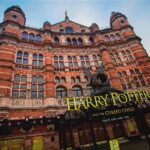
Your tour starts at the Criterion Theatre area on Piccadilly, a very easy landmark to meet near. This matters because the day is built on walking, not jumping around by taxi. Once you’re on the move, the guide sets a rhythm that helps you connect streets you’ve seen a hundred times with the people and decisions that happened behind them.
This opening stretch also helps you get oriented fast. You’re placed right in the West End pulse, then gradually pulled toward the political core. It’s the kind of start that makes you feel like London suddenly has a plot.
You can also read our reviews of more walking tours in London



Piccadilly Circus to Savile Row: where London’s showy face meets wartime symbolism
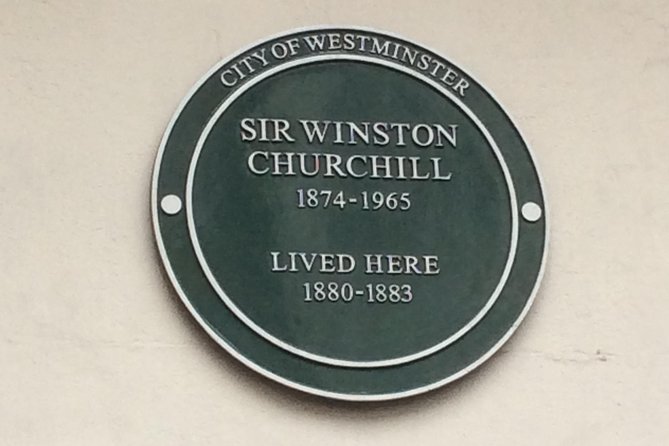
The first big stop is Piccadilly Circus, where the West End energy is impossible to ignore. From here, you don’t just look at famous landmarks; you get the stories that explain why certain places kept showing up in national life, even during crisis.
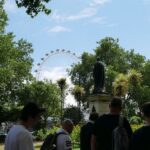
Right after, you’ll spend a moment at the Statue of Eros (also called Anteros). It’s small enough to treat like a quick photo stop, but the guide uses it to talk about what Londoners were celebrating and enduring when the mood turned dark. Then you move along Regent Street—The Mile of Style—where the street’s confidence sits right next to the era that demanded sacrifice.
Next comes Savile Row, the tailoring street that practically brands itself as British tradition. You’ll see it with WWII context in mind, not just as a shopping destination. This is one of the fun tricks of the tour: it uses everyday elegance to show how wartime Britain still cared about identity, status, and morale.
Henry Poole & Co: why the best stories aren’t always inside
Henry Poole & Co on Savile Row is a short stop with a Churchill-flavored angle, but the entrance isn’t included. In practice, this means you’ll likely focus on exterior details and what the guide wants you to notice before moving on. If you’re the type who enjoys window-shopping as a history lesson, it works well.
Savile Row is also a great place to ask questions, because the guide can tie the clothing culture to Churchill’s public image and the broader idea of wartime Britain holding onto normalcy where possible.
Burlington Arcade and old-school tailors: a Mayfair detour with real payoff
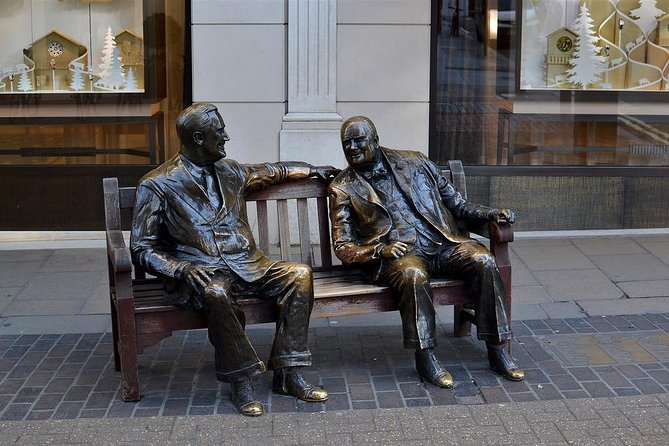
One of the included moments is at the Churchill and Roosevelt Allies Sculpture. You’ll have time to line up a photo between the wartime allies, which is a nice change from only looking at plaques and memorials. It’s brief, but it gives your day a visual anchor.
Then you’ll head into Burlington Arcade, where the tour’s Churchill theme turns into a lived-in London vibe. Because this stop includes admission, you get inside that covered, high-end arcade atmosphere instead of only seeing it from outside. It’s a calm pocket in a loud city, and it’s a useful contrast after the street-level crowds around Piccadilly and Regent Street.
After that, you’ll stop at Turnbull & Asser, another classic name tied to tailoring. The tour mentions a surviving Siren suit that Churchill wore during WWII, but there’s an important practical note: the shop is closed on Sundays and some public holidays. Even if access is limited, the exterior context and what the guide points out still fit the theme of Churchill’s public image.
Spencer House, hatters, and cigar culture: the small stops that add character
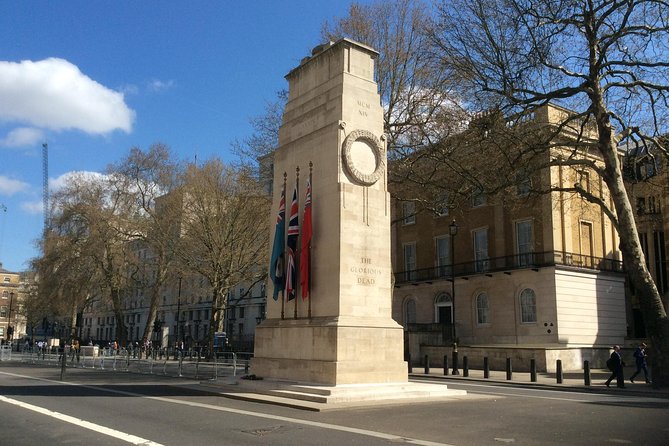
You’ll then reach Spencer House, Churchill’s childhood home. The tour doesn’t include admission here, so plan on an exterior or view-from-the-route experience. Still, it helps you shift from “Churchill as statesman” to “Churchill as person,” which makes the War Rooms hit harder later.
After that, Lock & Co. Hatters is a quick hit at one of London’s oldest hat shops. You’re not there for a long shopping break; you’re there for the idea that even small objects and rituals shaped the public world Churchill occupied. There’s also a fun film-history overlap mentioned for hats supplied to people connected to British pop culture.
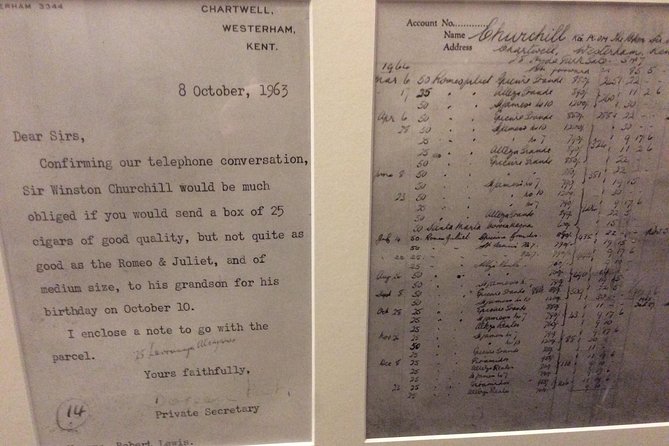
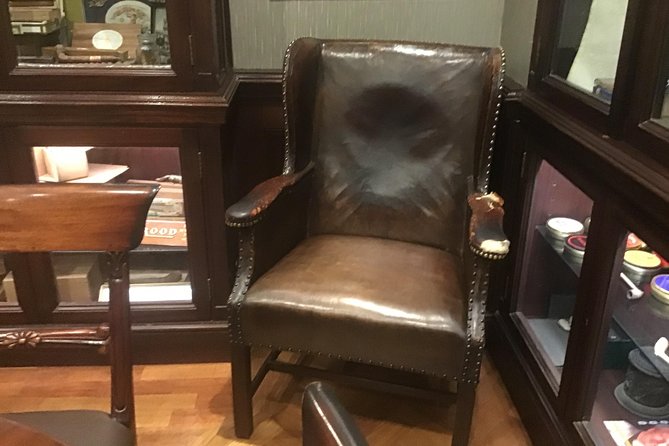
Next is James J. Fox & Robert Lewis, a plush stop where Churchill’s cigar buying is the hook. If the shop room is open, you may even be able to sit on a Churchill smoking chair and view cigar-related memorabilia. On Sundays and some public holidays, it may be closed, so keep your expectations flexible.
This mid-route cluster of shops and doorways is where the tour earns its “private” advantage. Instead of being rushed through “more landmarks,” you get brief, pointed stops that explain why those places mattered.
You can also read our reviews of more private tours in London


St. James’s Palace to the WWII Royal Remembrance: power, ceremony, and purpose
As you shift toward the royal side, St. James’s Palace appears on the route. The guide uses it to frame the senior royal palace world that sits just above Buckingham Palace in status. Even if you’re not a royal-history fanatic, it works because it gives you a map of where influence actually gathered.
Then you’ll reach the King George VI & Queen Elizabeth Memorial. This is an included stop, and it’s the kind of monument that rewards you for slowing your eyes down for a moment. The bronze tells a lot about wartime London and leadership, and it sets up the next theme: how the country commemorated those in charge.
After that comes Charles De Gaulle Statue, also a short stop. The tour’s angle here isn’t just that it exists; it’s why the statue is in that place and what Churchill thought about him. It’s a reminder that alliances were complex, and the public memorial record is part of that story.
Whitehall’s walking corridor: Monty and Churchill, Downing Street viewpoints, and the cost of leadership
The route continues through Reform Club, another place tied to Churchill’s life. Like several stops here, it’s not presented as an entry ticket experience. You get the feeling of what it is from the outside and what it represented socially and politically.
Then you’ll come to Carlton House Terrace, where you’ll see monuments related to the Battle of Britain and even the mention of a single “Nazi” memorial in Britain. That’s exactly the kind of uncomfortable-but-important detail that makes this tour more than scenic walking. It’s a stark reminder that wartime narratives weren’t only fought at sea and in the sky.
Sir Keith Park Memorial follows, focused on the credit Churchill gave him for winning the Battle of Britain. This kind of stop is what I love about a guide-driven walk: you don’t just see names; you connect them to decisions and results.
You’ll also encounter Giro the German Ambassador’s Dog, marked as an included stop. The tour uses it to tell the story behind another “Nazi” memorial element. It’s brief but memorable, and it breaks up the mood without losing the seriousness.
The tour keeps momentum with Duke Of York Column. It’s a classic London sight, but the guide’s story gives it meaning: the movement of people on a hillside. Next, The Mall appears—London’s ceremonial road with a WWII remnant and a military site feel.
Admiralty Arch to Horse Guards Parade: where Churchill worked and where the drama happened
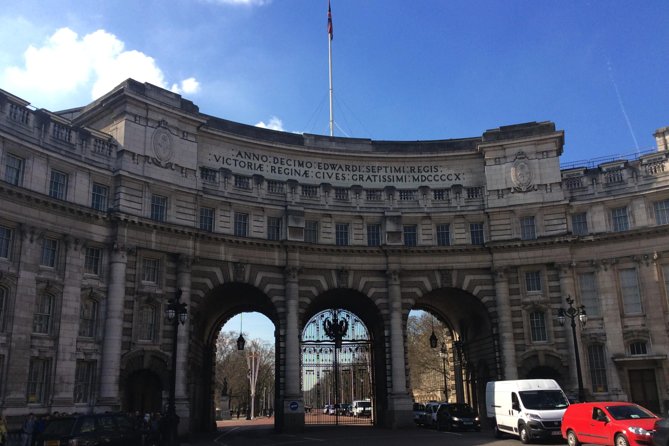
One of the most practical payoff moments is Admiralty Arch. You’ll see the offices where Churchill worked during WW1. This is a “zoom out” stop: you’re no longer only tracking WWII; you’re tracing the longer arc of his involvement in government and war planning.
Then comes Horse Guards Parade at Whitehall. This one is included, which is a nice bonus, and it’s used to explain what the site was for and why Churchill reportedly hated it. It’s the kind of personal-political detail that makes you rethink familiar landmarks.
You’ll also stop at the Women of World War II Memorial. The guide focuses on the Womens Cenotaph and explains the meanings behind carvings on the memorial. This is one of the stops that tends to land well emotionally, because it expands the story beyond the men with the loudest headlines.
Finally, you reach 10 Downing Street for an outside viewpoint. The stop is short, but it anchors the whole theme: Churchill wasn’t just a figure in history books; he was in the exact machine room of leadership.
The Cenotaph, Churchill’s statue, and Parliament Square: the emotional finish line before the bunker
The cenotaph is next, the primary monument to remember the fallen from the Great War onward. It’s included as an exterior stop, and you’ll feel why the name and location matter in London’s memory culture. You don’t need a speech here; the guide’s context is enough to turn “a landmark” into a shared experience.
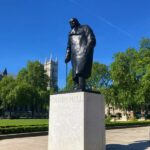
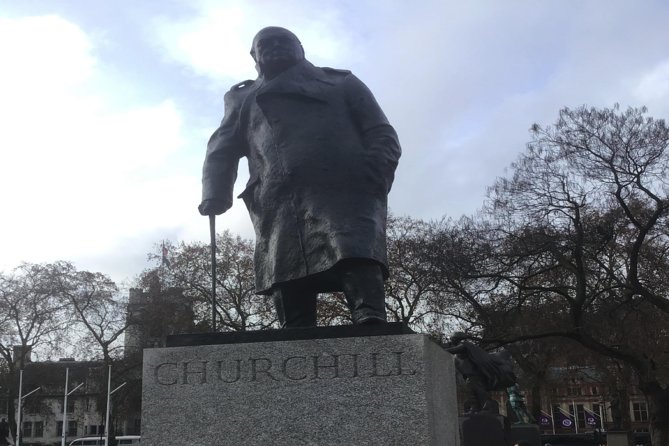
Then there’s a Winston Churchill Statue photo stop, again short but useful. It’s a moment to reset your brain before walking into the War Rooms, and it also helps you remember faces and symbolism as you go underground.
After that, Parliament Square shows up with a political-democracy lesson built in. You’ll also see the church where Winston and Clemmie got married, as noted on the route. Then you’ll reach Houses of Parliament for an outside view. After that, Saint Margaret’s Church on Parliament Square also appears as a separate outside stop, specifically tied to the marriage.
By this stage, you’ll likely start noticing a pattern: the tour keeps weaving personal life, public ceremony, and wartime sacrifice into one continuous thread. That’s why the War Rooms ending works.
Churchill War Rooms: your included underground visit and the audio setup
Your tour ends at Churchill War Rooms on King Charles St, outside the main site entrance. The War Rooms visit itself is included, and your entry slot is generally between 12:45 and 1:45 pm, depending on your hotel location and walking speed.
The biggest practical tip: plan the rest of your day around the War Rooms time, not before it. You’ll get about an hour underground, where the setting is perfectly preserved to recreate how the war was run from below while London was above under threat.
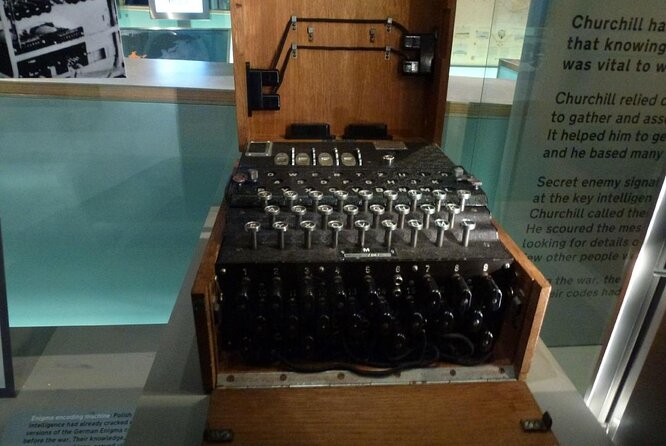
The War Rooms experience uses audio/video guides, and one thing I’d flag from the experience people described is that the self-guided headset or iPhone-style setup can feel a bit clunky or not terribly intuitive. That’s not a reason to skip it, but it is a reason to arrive with patience. If you like to move at your own pace, you’ll still be able to do that, as long as you’re not expecting everything to be plug-and-play.
This is also where the tour’s pacing makes sense. Because you’ve spent the day seeing the symbolic surface world—palaces, memorials, offices—you’re ready to understand why the underground space mattered so much.
Price and value at $263.90 per person for 4 hours
At $263.90 per person for about four hours, this isn’t a bargain-basement deal. But the math shifts when you consider what’s included: a private local guide, hotel pickup, and entry tickets to the Churchill War Rooms.
If you’re comparing options, the true value here is the combo of interpretation plus access. You’re not just paying for a museum ticket, and you’re not just paying for a walking guide either. You’re paying for a single day that connects streets you can see immediately with the decision-making space you can only visit via scheduled admission.
Also, the private format is worth something if you’re traveling as a family, a small group of friends, or couples who don’t want to wait while a larger group shuffles along. Several guides connected their storytelling to your questions, and you’ll likely feel that flexibility in how the walk flows.
Pace, shop access, and what to do if you want more time
This tour is built on many short stops. That can feel efficient in a good way, but it does mean you won’t have long, unstructured time in every place. If you’re the kind of person who wants to read every plaque slowly, you’ll probably want to do extra self-guided time afterward.
Shop-related stops depend on the day. Turnbull & Asser and James J. Fox & Robert Lewis have closures on Sundays and some public holidays. If one of those is shut, the guide can still connect the stop to Churchill’s life and styling, but you won’t get the same interior look.
One smart strategy: if you’re hoping to shop at any of the stores, set that expectation for before or after your tour rather than during it. This keeps your War Rooms entry smooth, which is the anchor event.
Who this Churchill private walk suits best
This fits best if you want Churchill in context: how London’s neighborhoods, ceremonies, and institutions tied into wartime leadership. It’s also a great choice if you like architecture and street-level details, not just famous statues.
I’d also recommend it for first-time visitors who want a tour that doubles as a fast primer on central London geography. And if you’re traveling with a teen, you’ll likely appreciate the way the guide answers questions and keeps the day from turning into a lecture.
Should you book this Churchill Private Walking Tour and War Rooms Visit?
Yes, if you want a structured day with a guide who can turn street corners into a coherent story, and you care about seeing the War Rooms without the hassle of planning it separately. The included War Rooms ticket is the big reason to choose this format over a DIY walk.
Skip it or consider a different style if you hate short stops and prefer slow museum time with fewer transitions. This is a walking day with many named landmarks, and the schedule is the point. If that pace matches your travel style, you’ll get a memorable mix of Churchill’s London on the surface and his wartime command below.
FAQ
How long is the Churchill Private Walking Tour & War Rooms?
The tour runs about 4 hours, including an approximately 1-hour visit inside the Churchill War Rooms.
Is entry to the Churchill War Rooms included?
Yes, entry to the Churchill War Rooms is included as part of the tour.
Where does the tour start and end?
It starts outside the Criterion Theatre at 218-223 Piccadilly, London W1J 9HR, and ends just outside the Churchill War Rooms at King Charles St, London SW1A 2AQ.
Do they offer hotel pickup?
Yes. Pickup is offered, and the tour can also meet you outside the Criterion Theatre at Piccadilly Circus if you prefer.
Is this a private tour?
Yes. It’s a private tour/activity, and only your group participates.
Are any shops on the route sometimes closed?
Yes. Turnbull & Asser and James J. Fox & Robert Lewis are noted as closed on Sundays and some public holidays, so interior access may vary by day.