REVIEW · VERONA
Verona Highlights Walking Tour in Small-group
Book on Viator →Operated by Ways · Bookable on Viator
Verona’s past walks right beside you. In just about 2 hours, this small-group walk threads together Roman remains, medieval Verona, and the city’s famous legends without rushing you through like a cattle line.
Two things I really like: you get local context that turns big sights into clear stories, and you cover a tight set of “must-see” places in a laid-back pace. One thing to keep in mind: several stops involve sites that charge admission, so you’ll want to budget a little extra cash on the day.
In This Review
- Quick take: what makes this Verona tour a smart first move
- Piazza Bra to the past: how the 2-hour format works
- Castelvecchio and Scaligero Bridge: medieval Verona with a 20th-century story
- The Arch of Gavi: Roman roads, Roman families, and why it got moved
- Arena di Verona: AD 30 engineering that still hosts opera
- Juliet’s House courtyard plus Romeo’s house exterior: legend, access, and what you’ll actually see
- The piazzas that keep Verona readable: Piazza Bra, Erbe, Signori, and the Scaligeri arches
- Piazza Bra: the big public room
- Arche Scaligere: the Scaligeri cemetery arches
- Piazza delle Erbe: Roman forum energy with Scaligeri symbolism
- Piazza dei Signori: power, Dante, and the nickname Piazza Dante
- Why a guide helps more than a map in Verona
- Tickets, walking comfort, and pacing tips for a smoother day
- Should you book this Verona Highlights Walking Tour?
- FAQ
- Where does the Verona Highlights Walking Tour start?
- How long is the tour?
- Is the tour offered in English?
- Are admission tickets included for the Arena and Juliet’s House?
- How many people are in the group?
- Can I cancel for a full refund?
Quick take: what makes this Verona tour a smart first move
- Small groups (max 16): easier questions, easier pacing, less waiting around.
- Piazza Bra start and finish: you’re close to cafes, transit, and your next plan.
- Arena di Verona focus: Roman engineering, plus how it still powers opera today.
- Shakespeare stops, handled thoughtfully: Juliet’s courtyard plus Romeo’s house from the outside only.
- Multiple eras in one walk: Roman, late-medieval, Scaligeri power, and Renaissance-era name-dropping.
Piazza Bra to the past: how the 2-hour format works
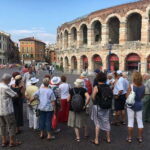
This is a 2-hour walking tour based right in central Verona, meeting at Piazza Bra and ending there too. That matters more than it sounds. You get the orientation benefits of a guided loop without burning time crossing town, and you can drop back into the area for lunch right after.
The group size stays small—up to 16 people—and the tour runs rain or shine. With weather in mind, I’d plan for wet pavement and keep your pace steady. Most travelers can join, but the route includes areas that may be harder if you have reduced mobility, so it’s worth thinking about your own comfort with uneven ground and old-stone surfaces.
Language is English, and you’ll receive a mobile ticket. Also, it’s one of those tours that tends to book up: the average booking window is about 28 days in advance, so if you’re traveling in a busy season, don’t wait until the last minute.
In the real world, what you’ll appreciate is how your guide links each stop to what came before it. You’re not just ticking boxes. You’re learning how Verona’s power shifted—Romans, then medieval rulers—while the city’s center stayed in roughly the same place.
You can also read our reviews of more walking tours in Verona

Castelvecchio and Scaligero Bridge: medieval Verona with a 20th-century story
Your walk starts in the old center and quickly moves into the medieval zone around Castelvecchio. The highlight here is the Castelvecchio area, the late-medieval castle that ties into the defensive layout of the Adige river.
A key connector stop is the Scaligero Bridge. This bridge links the castle to the Adige’s left bank, and the story hits a real historical nerve: it was nearly destroyed in a bombing and was later rebuilt to look exactly like the original. That detail makes the structure feel more than scenic. It becomes a symbol of recovery and how communities value their past.
Then you spend time at Castelvecchio itself, described as a medieval castle in its own right. From street level you’ll get the feeling of why this fortress-shaped architecture mattered. It’s not just pretty stone. It’s Verona deciding what to protect, where to stand, and how to control movement.
What to watch for during this stretch: the way the river shapes the city and the way the walk connects fortifications to public spaces later on. If you’re the type who likes to understand city geography, this section gives you a framework you can reuse the rest of your trip.
The Arch of Gavi: Roman roads, Roman families, and why it got moved

After the castle area, the tour shifts toward the Roman layer of Verona. One of the featured stops is the Arco di Gavi (the Roman arch tied to the gens Gavia). It’s described as an elegant 1st-century AD construction, tied to the glory of the Gavia family.
There’s an added bonus if your guide shares the story of how the arch relates to old roads. One of the guides’ themes on this route is that Verona wasn’t isolated. It sat on important connections—so when you look at a Roman arch like this, you should imagine it in a larger system, not as a random decoration.
If you’re curious about urban archaeology, you’ll also get a sense of how later rulers treated Roman remains. Even when stones were altered or repositioned, people kept coming back to those markers to point to identity and lineage.
Practical tip: this part of the walk is a good time to ask your guide what to photograph from street level versus what needs closer access. If you want the best angles, a quick question early can save you time later when crowds thin out (or thicken up).
Arena di Verona: AD 30 engineering that still hosts opera
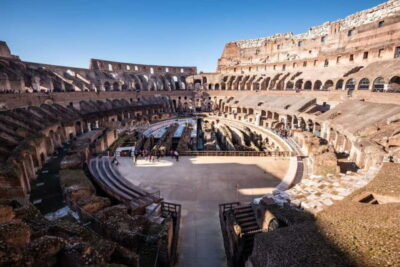
Now for the big one: Arena di Verona.
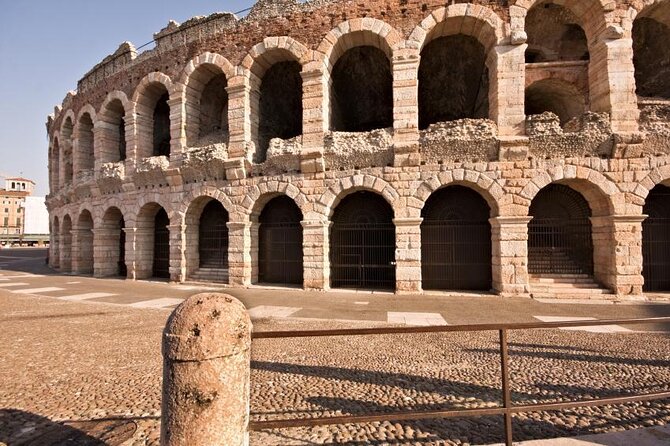
The arena was built by the Romans in the 1st century AD, in the Augustan period. It’s described as very well preserved for something built roughly 2,000 years ago. The numbers are hard to ignore: it once could hold up to 30,000 people.
What I like about the way the tour handles this stop is the mix of technical and modern. Yes, you’ll learn about the arena’s Roman purpose and how it stayed standing through centuries of use and preservation efforts. But you also hear how the same structure became a working venue again—hosting concerts and serving as the main stage for the Verona Arena Festival, a summertime opera event that attracts classical music fans.
Your guide can help you look at the arena differently. Instead of seeing it as a landmark from the outside, you understand it as a designed machine that still does its job. That makes photos feel less like postcards and more like documentation.
Two practical things to plan:
- Admission ticket not included for this stop, so check your budget for entry if you want to go inside.
- Take a moment at the boundary between outside streets and the arena itself. That’s where you’ll start noticing how the scale works.
If you love history but hate feeling stuck with boring lecturing, this is usually the sweet spot. The arena naturally invites stories. And opera stories, even if you’re not an opera person, are just fun.
Juliet’s House courtyard plus Romeo’s house exterior: legend, access, and what you’ll actually see
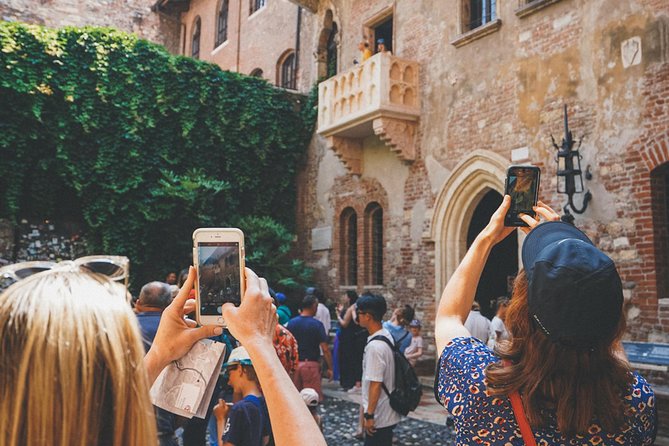
Next is Casa di Giulietta (Juliet’s House). The tour focuses on the courtyard linked to the Capuleti family—where the Shakespeare tragedy places Juliet. Expect time for photos, but also expect the guide to point out that Shakespeare is one layer on top of a real city that existed long before the play.
One important planning note: the tour specifically says that from December 6, 2025 to January 6, 2026, Juliet’s Balcony access is not included as usual. During that window, city administration has decided access is possible only with a ticket. You can ask for information on how to purchase, but the tour won’t purchase it for you.
After Juliet’s House, you’ll move toward the legendary link for Romeo. Romeo’s house is described as a medieval palace in central Verona tied to the Montecchi family legend. The key detail is access: it’s private and inhabited, so you only see it from the outside.
This is one of those moments where managing expectations makes the experience better. You’re not touring a museum interior here. You’re seeing how a legend anchors itself to physical addresses in the city center.


The piazzas that keep Verona readable: Piazza Bra, Erbe, Signori, and the Scaligeri arches
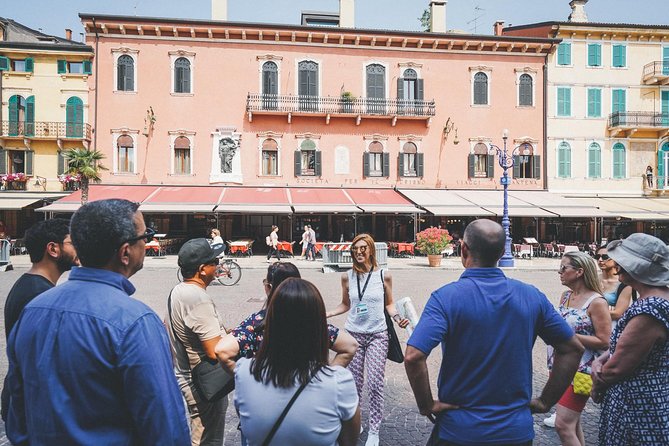
Once you’re back out in the squares, the tour leans into what makes Verona easy to navigate. You get time at several major piazzas that feel like different versions of the same city.
Piazza Bra: the big public room
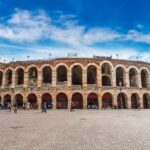
You’ll reach Piazza Bra, the largest piazza in Verona. It’s lined with cafés and restaurants and framed by charming buildings. It’s a great “breather stop”—a place to sit, re-check your bearings, and decide what you want to do next.
Arche Scaligere: the Scaligeri cemetery arches
Then comes Arche Scaligere, the Scaligeri cemetery area. The tour highlights sarcophagi and especially the three arches built for Cangrande I, Mastino II, and Cangrande IIs (named in the description). These stone monuments make medieval power feel real and specific, not vague.
Piazza delle Erbe: Roman forum energy with Scaligeri symbolism
At Piazza delle Erbe, you’re standing over what was once the Forum and center of city life during Roman times. The square’s center monuments symbolize rulers of Verona, with the most famous being the fountain built during Scaligeri rule.
If you want a quick test of whether a tour is adding value: notice how quickly your guide helps you connect the fountain and the statues to who ruled and why it still matters.
Piazza dei Signori: power, Dante, and the nickname Piazza Dante
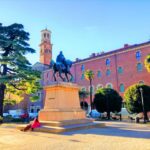
Finally, you’ll visit Piazza dei Signori, described as the former center of power. It’s dominated by a large statue of Dante Alighieri, and that’s what gives the square its nickname, Piazza Dante.
Even if you don’t know much about Dante, this stop works because it shows how later cultural figures get placed onto older spaces. Verona layers its identities the way a good book adds chapters.
Why a guide helps more than a map in Verona
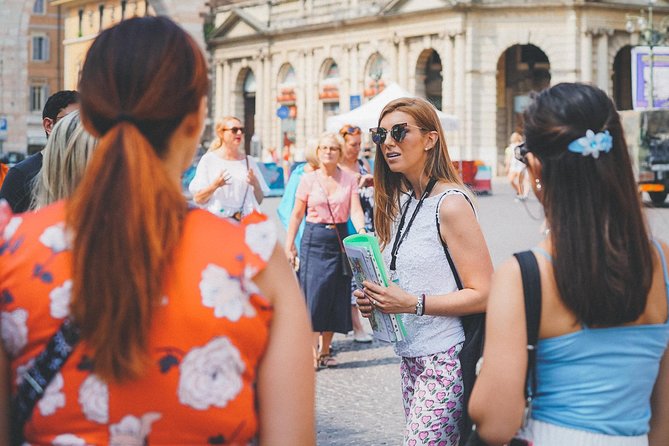
Verona can feel simple at first. Streets are close. Signs are clear. It’s tempting to think you can wander your way through.
But the guide’s job here isn’t just facts. It’s connections—helping you understand why the Roman arena sits where it does, why medieval castles and bridges matter in the river layout, and why the squares keep pulling civic life into the same few areas.
That’s where I’d spend the most energy: asking questions. This tour specifically invites you to ask things as you explore. If you want to go further later, you’re better off leaving with a few clear ideas, not just a checklist of selfies.
There’s also something to be said for having different guides bring the story to life. This tour’s route has been led by guides such as Isabella, Frank, Priscilla, Maria, Deb, and Francesco, and the common thread you’ll likely feel is strong storytelling and practical tips that make the walk more than a passive watch.
And yes, sometimes guides point out small bits of history in everyday spots—like Roman fragments visible in places you would never think to look at on your own. That’s the kind of payoff you can’t get from the plain route on your phone.
Tickets, walking comfort, and pacing tips for a smoother day
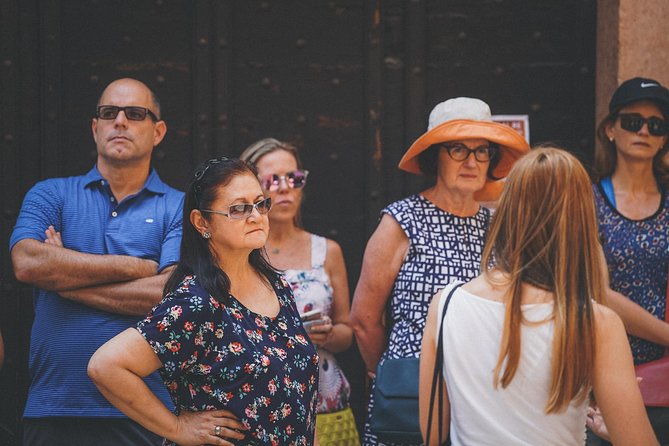
A couple practical notes to keep this easy.
First, plan for admission tickets not included for key sights. The tour calls out admission not included for the arena, and it’s common that entry into the Juliet-related sights also involves paid access depending on what you choose to see. If you’d rather minimize friction, budget ahead.
Second, expect walking. The tour isn’t described as difficult, but one of the themes is that you should be comfortable moving with a group. If you’re trying to manage limited time in Verona, this is exactly why the route works.
Third, wear practical shoes. Old streets and square stone can be slippery in rain, and the tour runs rain or shine. Bring a light rain layer if you tend to get cold.
Finally, use the 2-hour window strategically. Don’t try to cram a museum sprint that same day. This is your orientation and storytelling dose. Afterward, you can return on your own with sharper questions.
Should you book this Verona Highlights Walking Tour?
Yes—if your priority is a fast, focused introduction to Verona’s main layers. For the price of $42.33 per person and about 2 hours with a local guide, you’re paying for more than walking. You’re paying for historical context that helps you see the city as a living timeline instead of separate stops.
Book it especially if:
- It’s your first time in Verona and you want a clean overview.
- You like legends like Romeo and Juliet but also want the Roman and medieval ground beneath them.
- You’re short on time and want your day to start with direction.
Skip or adjust expectations if:
- You want purely indoor museum-style stops. This is mostly an outdoor, street-level experience with a courtyard focus and an arena stop that may require separate entry.
- You’re traveling in the December 6, 2025 to January 6, 2026 window and your heart is set on Juliet’s Balcony—access works differently in that period.
FAQ
Where does the Verona Highlights Walking Tour start?
It starts at Piazza Bra, Verona VR, Italy.
How long is the tour?
The tour is about 2 hours.
Is the tour offered in English?
Yes, the tour is offered in English.
Are admission tickets included for the Arena and Juliet’s House?
No. The tour notes that admission tickets are not included for certain stops (including the Arena). You may need to pay entry fees separately.
How many people are in the group?
The tour has a maximum group size of 16 travelers.
Can I cancel for a full refund?
Yes. You can cancel up to 24 hours in advance for a full refund.
If you want, tell me your travel dates and whether you care most about the Arena inside or Juliet’s Balcony, and I’ll help you decide what to pair this with next in Verona.