REVIEW · AVIGNON
Avignon: City Walking Tour with Popes Palace Entry
Book on GetYourGuide →Operated by A La Francaise Tourisme - Provence · Bookable on GetYourGuide
Avignon starts with stone and wine. I love how this guided walk sets the stage for the Pope’s Palace visit, and I really like the finish with Côtes du Rhône wine near the palace. The one drawback is practical: expect paved streets plus a set of steps up to the palace, so bring comfortable sneakers.
You’ll meet outside Provence Réservation – A la Française and spend about three and a half hours getting your bearings, with an English-only guide taking you through the city’s medieval core. You’ll also get skip-the-line palace entry, so you spend your energy looking up at Gothic walls instead of waiting.
In This Review
- Key Things You’ll Notice on This Avignon Tour
- Starting Outside Provence Réservation: How the Tour Sets the Pace
- City Walls and Rocher des Doms: The Rhône-View That Puts Avignon in Context
- Place de l’Horloge and the Painted Windows: Details You’d Miss on Your Own
- Entering the Palais des Papes: Europe’s Largest Gothic Palace, With a Guide Inside
- How the Palace Time Works: Pacing, Room Explanations, and Picture-Friendly Stops
- The Côtes du Rhône Wine Finale: A Provençal Reset Near the Palace
- How Much Is $81 Worth for Avignon’s Walk + Palace Entry?
- Who This Tour Suits (and Who Might Prefer Something Else)
- Should You Book This Avignon Walk with Pope’s Palace Entry?
- FAQ
- How long is the Avignon walking tour with Pope’s Palace entry?
- What language is the tour in?
- What’s included in the price?
- Where do I meet the guide?
- Is the Pope’s Palace ticket included, and do we skip lines?
- What should I wear or bring for the walk?
- Is there a minimum group size?
- Who can’t join this tour?
Key Things You’ll Notice on This Avignon Tour
- Fortified walls to Rocher des Doms: you’ll get a proper Rhône-side perspective before you hit the big-ticket monument
- Place de l’Horloge details: painted windows and the clock-tower area come with explanations that make you slow down
- Papal Palace entry included: you walk into the Palais des Papes with the ticket already handled
- Room-by-room storytelling: guides like Nicholas and Jeremy are praised for making the rooms and stories click
- Côtes du Rhône wine finish: a simple toast right near the Pope’s Palace keeps the day from feeling rushed
Starting Outside Provence Réservation: How the Tour Sets the Pace
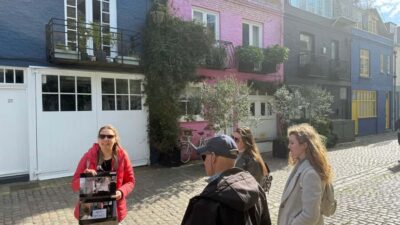
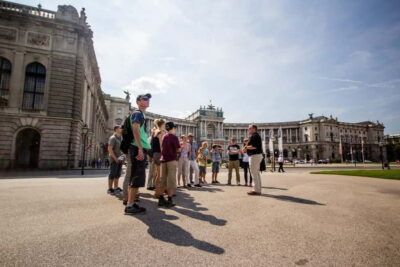
Meet your guide outside Provence Réservation – A la Française. That matters, because Avignon’s center is compact and easy to wander past without noticing. With a group, you move with purpose.
The rhythm of the tour is also smart. You start with about an hour of walking, then you shift to a deeper, guided palace visit. In plain terms: you don’t just show up and stare at stone—you get the why behind it first, then you see the rooms with context.
Most of the best parts of this tour are about transitions. Your guide helps you connect what you’re looking at—city walls, views, civic buildings—to what happened here in the early 14th century when the papacy set up in Avignon. If you like to leave a place understanding it a bit more than you arrived, this format fits.
One more small thing: it’s a minimum of 4 participants for it to run. When it does, the group is usually small enough that you can hear the guide and ask questions without feeling lost in a crowd.
You can also read our reviews of more walking tours in Avignon


City Walls and Rocher des Doms: The Rhône-View That Puts Avignon in Context
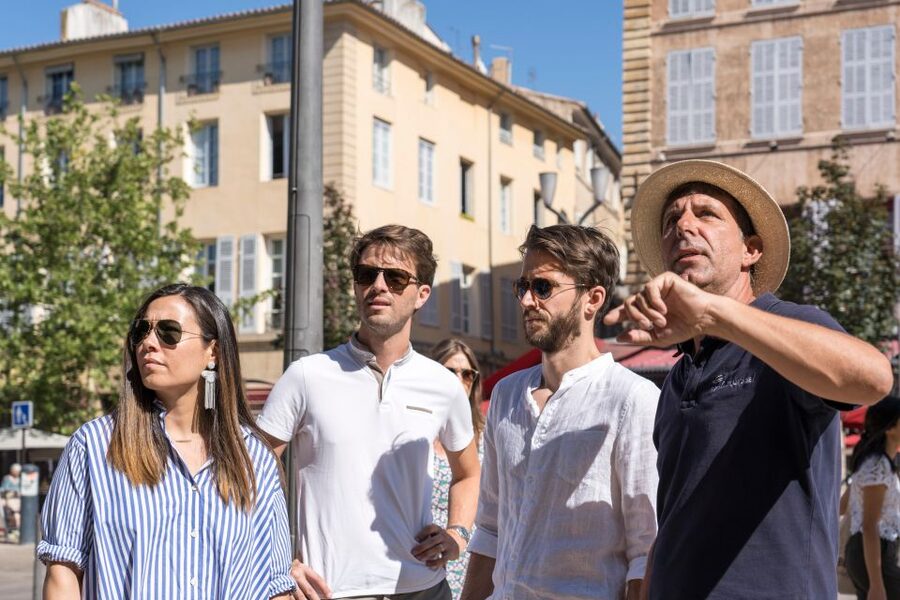
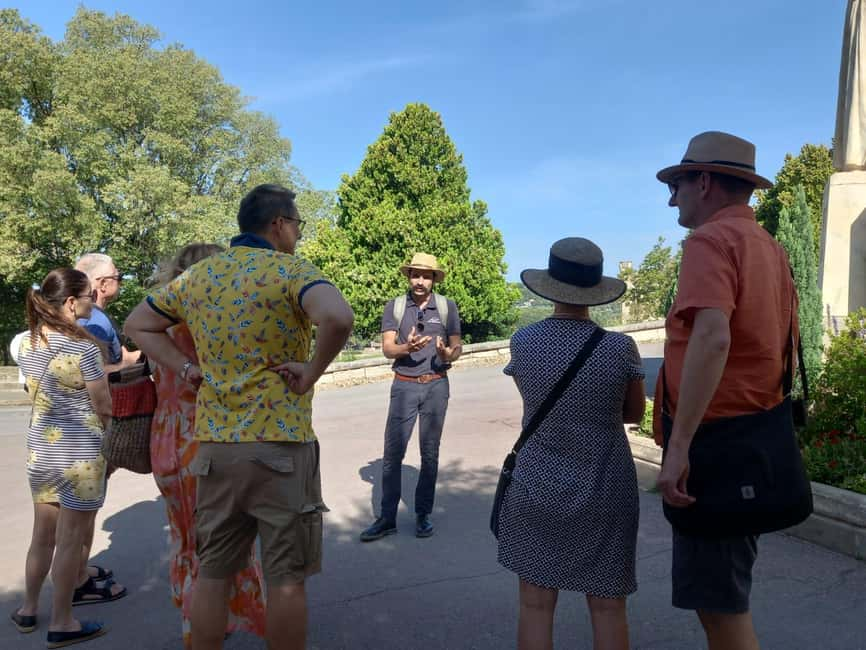
The walking portion starts with the feel of medieval Avignon. You’ll move along fortified city walls and then head toward the Rocher des Doms garden area. This is one of those moments that feels like a break, even though you’re still walking.
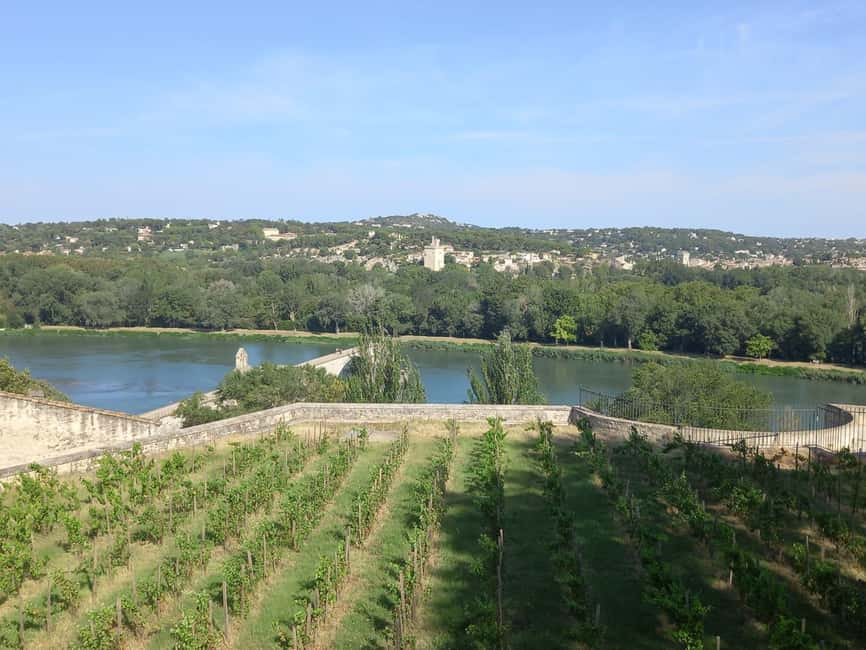
Why you’ll like it: the viewpoint helps you understand Avignon’s layout along the Rhône River. That river-facing shape is a big part of the city’s identity. Once you’ve seen that line—river, city, palace area—you start noticing the “logic” of where things sit.
Rocher des Doms also gives you a moment to look without a screen in your hand. Avignon is famous for being walkable, but it’s still easy to miss the geography when you’re just following streets. Here, you get a guide-led orientation so your later palace visit lands harder.
Practical note: this part is still mostly on paved streets. You don’t need hiking boots for the first section. You do need comfortable shoes, because your day is built around walking and a stair climb later.
Place de l’Horloge and the Painted Windows: Details You’d Miss on Your Own
After the garden and viewpoint, you’ll head into Avignon’s historic center. The guide steers you through cobbled streets to Place de l’Horloge, a key square for getting the city’s rhythm.
The most memorable stop here is the painted windows. It’s the kind of thing that looks decorative until someone explains what you’re actually looking at. Your guide points out the secrets behind the windows, plus the town hall area with its clock tower and the nearby theatre.
This is where a good guide earns their keep. Avignon isn’t a “one big monument” city. It’s a web of landmarks, symbols, and power statements. Civic buildings, squares, and even a theatre sit in that story. If your goal is to understand Avignon as a functioning medieval city—not just a photo stop—this segment helps you build that mental map.
Also, this walking portion gives you a smoother transition into the palace. By the time you’re finished in the square area, the Pope’s Palace stops being abstract. It starts feeling like the center of gravity for the papacy in Avignon.
Entering the Palais des Papes: Europe’s Largest Gothic Palace, With a Guide Inside
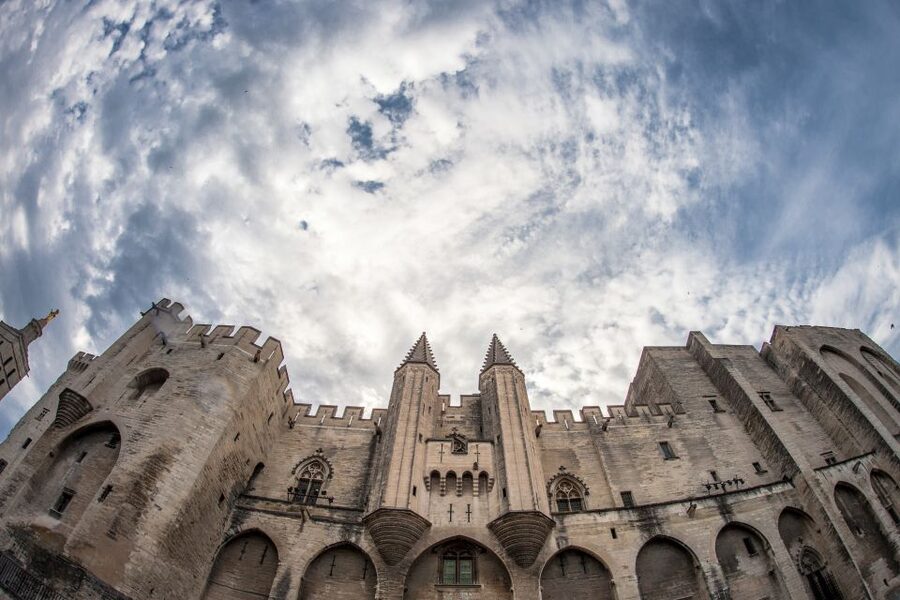
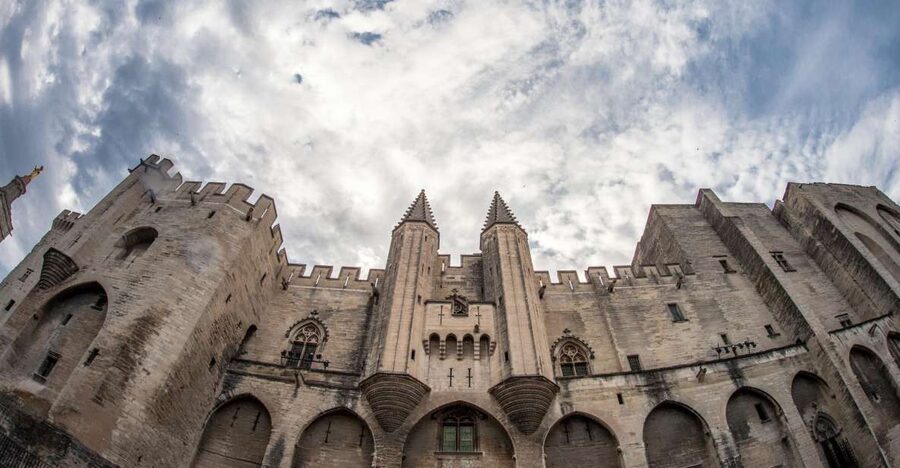
Then you climb into the main event: the Papal Palace visit with entrance ticket included. This is the largest Gothic palace in Europe, and the scale can feel unreal when you’re standing in front of it. Having the ticket sorted in advance helps too, because you’re not losing time in lines before the real work begins.
The guide’s job here is to make a massive building feel navigable. Reviews highlight a consistent theme: guides explain step-by-step, and they connect what you’re seeing to how power and church politics worked during the papacy era in Avignon. Names that come up often include Emile, Nicholas, Sylvia, and Jeremy.
One thing I’d keep in mind: the palace is big, and you’re seeing selected rooms during the guided visit. That’s usually a good thing. You don’t want a tour that turns into a blurry “march through everything” situation. Instead, you want the rooms you visit to have meaning, and the guide’s explanations are what turn the architecture into a story.
Expect to learn about why the papacy moved to Avignon from Rome, plus the complicated situation involving two popes, both of which are specifically called out by people who did this tour. Those details don’t just add facts. They change how you interpret the spaces—especially the administrative and ceremonial parts of the palace.
And yes, you’ll be taking photos. The best angles are often tied to what you’re standing in front of, not just the palace overall. A guide helps you notice the right corners and wall details before you drift into autopilot.
How the Palace Time Works: Pacing, Room Explanations, and Picture-Friendly Stops
This tour isn’t only about entry. It’s about how the guided time is used once you’re inside.
You’ll spend about two hours on the palace guided tour. In that span, you should get both structure and breathing room. Several guides—like Matilda and Matilde in feedback—are praised for giving enough time in the rooms so you can look around, take photos, and still keep moving with purpose.
That balance is important. I’ve done palace visits where the guide races, and the result is you remember the size, not the meaning. Here, the emphasis stays on explanations that match the rooms, with enough pauses that you don’t feel bullied by the schedule.
There’s also a practical reality: the palace visit includes lots of stone surfaces and long sightlines, which can make it easy to get lost if you’re not sure what you’re looking at. The best guides on this tour provide “walkthrough” clarity—what each space was for, how the papacy operated, and why the architecture was built that way.
Not every palace stop will feel equally detailed for every person. One review noted that the palace segment can feel limited for some people, and that a guest might want a bit more depth or additional time. If you’re the type who loves reading every inscription and staring at every corner, plan to add personal time after the guided portion to keep the palace from feeling cut short.
The Côtes du Rhône Wine Finale: A Provençal Reset Near the Palace
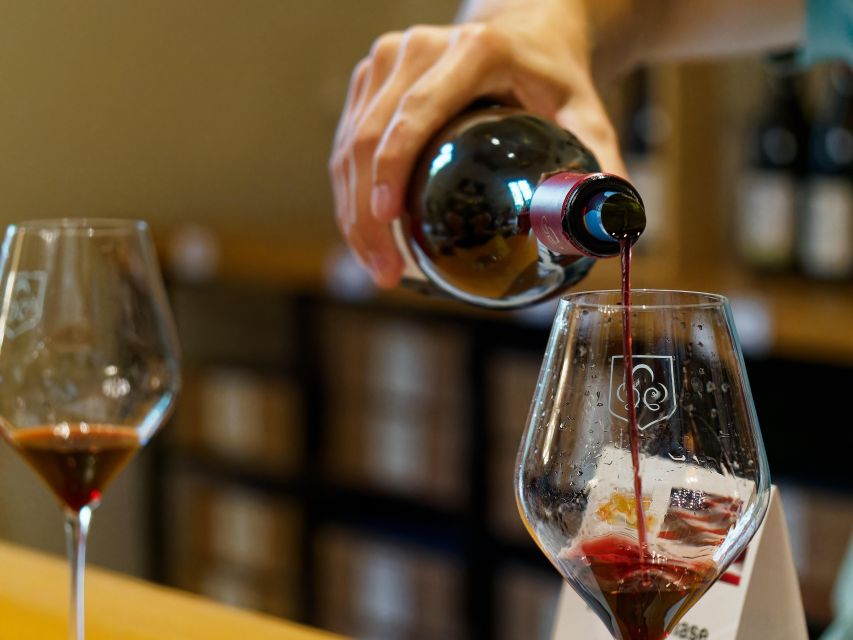
After the palace, you end with a glass of Côtes du Rhône wine at a local place close to the Pope’s Palace. This isn’t a fancy production. It’s more like a built-in decompression moment.
I like this part because it closes the story in a very Avignon way. The palace is serious medieval power in stone. Then you get a glass of local Rhône wine and a chance to reset your senses before you head back to explore on your own. It also gives you a natural point to ask the guide for recommendations while everyone’s relaxed.
People mention the wine as a genuinely enjoyable finish, and a few notes suggest some guides also share local production context or extra suggestions for where to eat or what to drink next. If you want a simple ending that doesn’t feel like a hard sell, this format fits.
One small consideration: a wine stop won’t be a top priority for everyone. If you don’t drink, you might still enjoy the conversation and setting, but the “wine tasting” aspect could feel unnecessary. The good news is it’s only one glass, so it doesn’t take over your schedule.
How Much Is $81 Worth for Avignon’s Walk + Palace Entry?
Let’s talk value, not just price. At $81 per person for about 210 minutes, you’re paying for three things: a guided orientation walk, an included Pope’s Palace entry ticket, and a planned ending with wine.
If you tried to do it alone, you’d still need to solve the same problems: where to start, what to see in the old center, how the papacy story connects to the spaces, and how to time your visit so you’re not wasting time. The tour handles most of that.
The skip-the-line element is another part of the value equation. Even when lines move, it’s time you could be spending understanding the building. When the ticket is already included and managed for your group, the palace visit starts sooner and with less hassle.
Is it expensive? It’s not a budget walk. But for a major monument like the Palais des Papes—plus a guide who explains the rooms and the city’s medieval logic—the price can feel fair. The strongest argument for the cost is the guided context. Without it, a palace can become a big, impressive shell. With it, the palace turns into a lived story.
If you’re traveling with limited time in Avignon and you want a high concentration of meaning in one morning or afternoon block, this is a practical use of time.
Who This Tour Suits (and Who Might Prefer Something Else)
This tour is best for adults and families old enough to handle walking and stairs. It’s also specifically noted as not suitable for children under 4, and it isn’t designed for people with mobility impairments. If you fit that range, you’ll likely enjoy the pace.
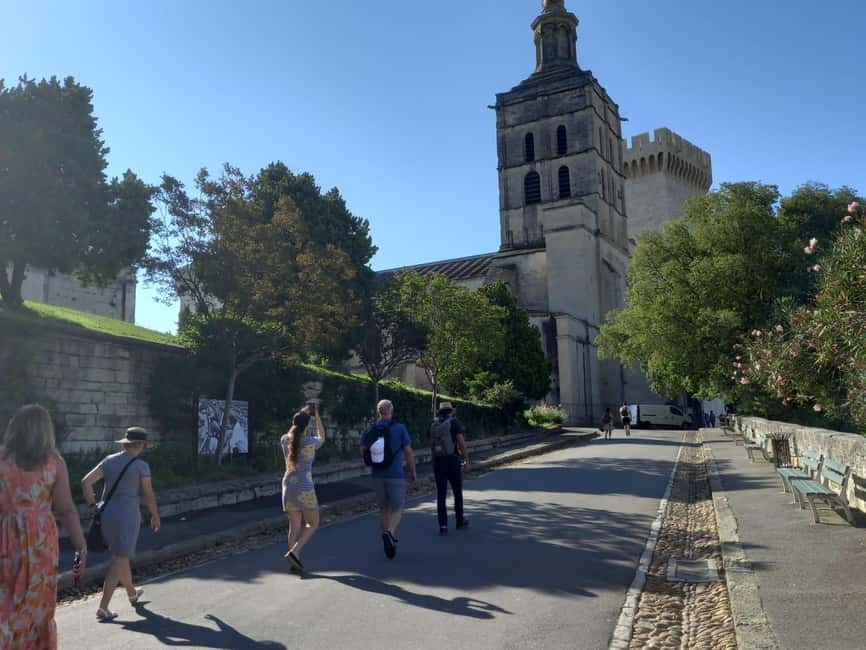
The walking includes paved streets and a stair climb up to the Pope’s Palace. That means you’ll want shoes with grip and support. Bring sunglasses and sunscreen too—Avignon can get bright, and you’ll be outside for the walking portion.
You also should come prepared for a low-friction day. Pets aren’t allowed, smoking isn’t allowed, and you shouldn’t bring oversize luggage or large bags. Open-toed shoes aren’t allowed either. In other words: pack like you’re going to walk a lot, not like you’re going to lounge.
If you enjoy architecture, church history, and city storytelling, you’ll like this. The biggest draw is how the guide connects the medieval city to the papacy story and then uses that story to make the Palais des Papes feel understandable.
If you prefer total freedom to wander for hours without a schedule, this might feel structured. In that case, you could still visit the palace, but you’d lose the guided connective tissue. Consider adding your own time outside the tour window so you can wander where you want.
Should You Book This Avignon Walk with Pope’s Palace Entry?
I’d book this tour if you want the fastest path to understanding Avignon’s “why.” The walk gives you the city layout and key squares, and the palace segment turns a huge Gothic building into an intelligible story. The included ticket and skip-the-line value are real, not marketing fluff.
Also, the end wine moment is a nice touch. It keeps the day from ending abruptly. You’ll leave with a better sense of Avignon, not just better photos.
Skip it only if you don’t want a structured visit, you’re very sensitive to stairs, or you’d rather spend your time roaming without guidance. For most people who want a smart, one-block immersion in Avignon’s main historical engine, this is a solid pick.
FAQ
How long is the Avignon walking tour with Pope’s Palace entry?
The total duration is 210 minutes, which includes the walking portion, the guided visit to the Pope’s Palace, and the wine at the end.
What language is the tour in?
The tour is provided only in English.
What’s included in the price?
Your guide is included, as well as an entry ticket to the Pope’s Palace. A glass of Côtes du Rhône wine is also included at the end of the tour.
Where do I meet the guide?
Meet outside Provence Réservation – A la Française.
Is the Pope’s Palace ticket included, and do we skip lines?
Yes. The Pope’s Palace entry ticket is included, and you skip the ticket line.
What should I wear or bring for the walk?
Wear comfortable shoes since the route includes paved streets and steps to reach the Pope’s Palace. Bring water, sunglasses, sunscreen, and a sun hat.
Is there a minimum group size?
Yes. A minimum of 4 participants is required for the walking tour to operate.
Who can’t join this tour?
It isn’t suitable for children under 4 years old, and it’s not suitable for people with mobility impairments.