
REVIEW · ATHENS
Acropolis and Parthenon Guided Walking Tour
Book on Viator →Operated by Athens Walks Tour Company · Bookable on Viator
The Acropolis hits like a giant time machine. This guided version gives you a licensed guide, practical listening gear, and a tight route that zooms in on the Parthenon and the top monuments on the hill.
I love the small-group pace (max 20) and the way guides such as Stelios, Anna, and Vangelis bring Athens to life with stories tied to what you’re looking at. Expect frequent stops to look closely and soak in big views of the city, especially in late-day light.
One thing to consider: you’ll tackle 200 steps and uneven ground, and your final cost depends on whether you select the option that includes Acropolis admission tickets.
In This Review
- Key things worth knowing before you go
- Two hours on Acropolis Hill: why this tour is good value
- Meeting at Porinou 5: the start matters more than you think
- What you should be ready for before you step onto the hill
- Stop 1 at the Acropolis: get your bearings fast
- Stop 2 and the Parthenon: where the “wow” becomes “I get it”
- Theatre of Dionysus: drama, power, and an older kind of audience
- Herodes Atticus Odeon: the stone shell that once held sound
- Erectheion: the myth-on-stone stop you’ll remember later
- Temple of Athena Nike: small scale, big symbolism
- Propylaea Gates and the walk down toward Areopagus Hill
- The guides make it: how the best moments happen
- Tickets and costs: how to avoid paying twice by accident
- Who should book this Acropolis and Parthenon tour
- Should you book the Acropolis and Parthenon guided walking tour?
- FAQ
- How long is the Acropolis and Parthenon guided walking tour?
- Is the tour led in English?
- Are entrance tickets included?
- How much walking and how many steps are involved?
- Will I need to use an audio headset?
- Where do I meet the tour?
- What should children bring for discounted entry?
- Is free cancellation available?
Key things worth knowing before you go
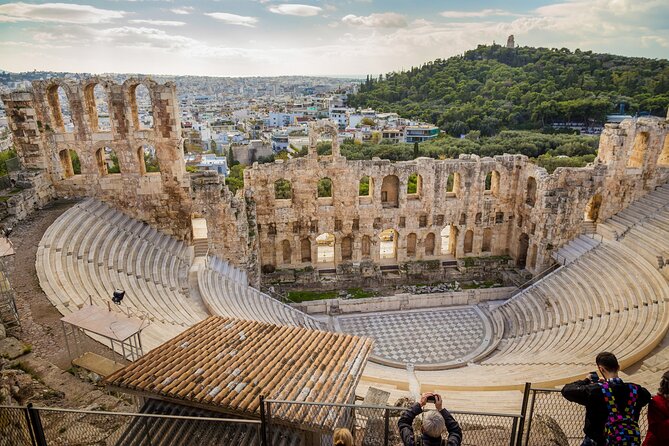
- Licensed guide on a UNESCO hill: You get interpretation from a guide who knows how to point out what matters on the rock.
- Whisper-style audio headsets (for groups larger than 5): Makes a huge difference when lots of people are talking at once.
- Max 20 people per guide: You’re not shoved into a giant line of bodies.
- A stop-and-look route: You don’t just pass by the monuments; you slow down at Parthenon, Erechtheion, and the Temple of Athena Nike.
- Walking uphill/downhill with stairs: Plan for uneven surfaces and about one mile of hiking plus roughly 200 steps both ways.
- Entrance tickets may be separate: The tour price is best when you pick the option that includes Acropolis entry.
Two hours on Acropolis Hill: why this tour is good value

For many first-timers, Athens can feel like a choose-your-own-adventure—except the main destination is a steep, crowded hill. This tour solves that by stitching together the big sights into a logical walk and handing you a guide who explains what you’re actually seeing as you go.
The price you pay, $41.12 per person (about two hours), becomes much easier to judge once you look at what’s included. You’re paying for a licensed guide, small-group pacing, and an audio system for better listening in larger groups. If you also choose the option that includes Acropolis entrance tickets, your tour cost wraps in the site fee, which is often the part that catches people off guard.
If you choose the option without entrance tickets, you’ll need to book them online yourself as soon as you can. The site can sell out days in advance, so treating your tickets as a last-minute task is a gamble.
You can also read our reviews of more walking tours in Athens



Meeting at Porinou 5: the start matters more than you think
You meet at Porinou 5, Athina 117 42, Greece, then the tour ends at Areopagus Hill, Theorias 21, Athina 105 55, Greece. That end point is helpful because it’s in the same general area as other classic sights, so you can keep exploring without immediately doubling back.
There’s a professional meeting point near the Acropolis area with WiFi available close by, and it’s near public transportation. That matters on travel days when you’re trying to sync schedules, find the right street, and avoid losing time once you’re already in Athens.
What you should be ready for before you step onto the hill

This is not a sit-down museum tour. The tour includes about one mile of walking uphill/downhill on uneven surfaces and around 200 steps both ways. You’ll want flat, comfortable shoes because the ground can be rough and the pace can’t be perfectly gentle.
Bring the right kind of bag. Large backpacks and oversized purses aren’t allowed inside the site, so keep it simple. Also think about weather: the tour runs on the “good weather” side of things, and people have mentioned needing a poncho in rain. Even if you don’t get drenched, a light layer can help if it’s cool when you start.
If you’re traveling with kids, they must be accompanied by an adult. For discounted entry, persons under 18 need passports, and EU citizens under 25 should have passports as well (or a photo copy on a mobile device).
Stop 1 at the Acropolis: get your bearings fast
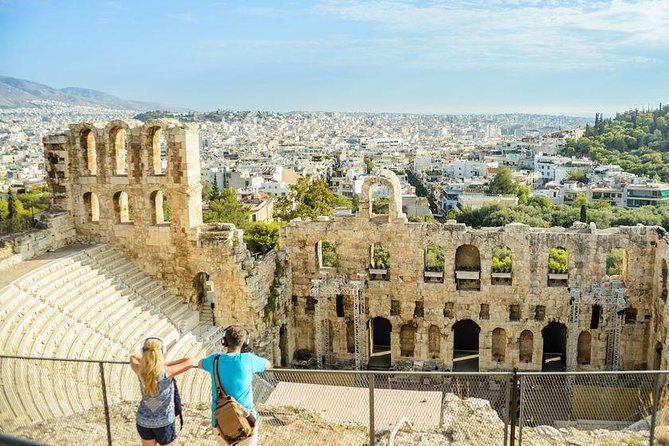
You begin at the Acropolis itself, where the guide sets the tone for everything else. This part is where you should expect the biggest payoff from a guided walk, because it’s hard to look at a jumble of columns and carvings and know what’s what without a map in your head.
On this walk, you’re pointed toward major monuments that include the Parthenon, Erechtheion, Herodes Atticus Odeon, the Ancient Theater of Dionysus, the Propylaia Gates, and the Temple of Athena Nike. The guide’s job here is to connect those names to the physical layout, so later you’re not just taking photos—you’re placing each sight in context.
If you want a practical tip: listen closely in the first 20 minutes. By the time you reach the Parthenon, you’ll understand what to look for and why it’s placed there.
Stop 2 and the Parthenon: where the “wow” becomes “I get it”

The Parthenon is the headline, but the real win is learning how to see it. This stop is built for close watching, not just a quick glance. You’ll spend about 30 minutes here, which is long enough to notice that the Parthenon isn’t just a building—it’s a system of proportions, placement, and symbolism tied to Athens.
Many visitors come expecting a single iconic view. With a guide, you start paying attention to details like how the structure reads from different angles and how it fits the rest of the hill’s design. That’s why people describe these tours as more than a sightseeing loop: the explanation changes what your eyes catch.
A small heads-up on timing and crowds: even with a guide and coordinated visits, Acropolis areas can get packed. If you’re picky about photos without crowds in the frame, consider choosing a less busy time of day when you book.
You can also read our reviews of more guided tours in Athens




Theatre of Dionysus: drama, power, and an older kind of audience

Next you move toward the Ancient Theater of Dionysus. This stop is shorter (about 15 minutes), but it’s one of the best places to understand how Greeks gathered around ideas.
A theater like this isn’t just entertainment. It’s a public space—one where community life, storytelling, and civic culture meet in the same physical location. Your guide will help you read the seating shape and the location so you understand why the theatre mattered to the city, not only why it looks impressive today.
This is also a good moment to slow down your pace. Uneven ground plus viewing angles can make you rush unless you have someone prompting you to stop and look.
Herodes Atticus Odeon: the stone shell that once held sound
From the theater area, the tour continues to Herodes Atticus Odeon. The stop is about 15 minutes with admission included. Even if you’re not a theater nerd, this is a strong photo point and a smart place to connect Athens’ monuments to everyday life.
What I like here is the way the guide can connect form and function. With the right framing, you start thinking about how a space would have worked for crowds, voices, and performances long before modern sound systems.
If your group is larger, the whisper-style audio helps keep the guide’s explanation clear while you’re standing in place.
Erectheion: the myth-on-stone stop you’ll remember later

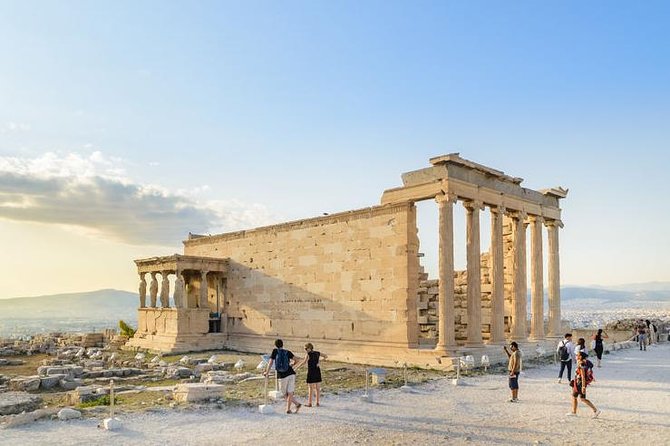
The tour then goes to the Erechtheion (spelled Erectheion in some descriptions). This is another about 15-minute stop, with admission included. It’s the kind of sight where a guide can prevent your brain from treating it like just another set of ruins.
What you want here is interpretation: why the building’s features matter, and how it fits the religious and cultural landscape of the Acropolis. Even if you only catch a few key ideas, it makes the next monument—Temple of Athena Nike—feel like part of a bigger story.
One practical idea: take your time looking from slightly different angles. The guide will steer you toward the viewpoints that usually make the most sense.
Temple of Athena Nike: small scale, big symbolism
Temple of Athena Nike is one of the sites that tends to make people smile because it’s compact compared with the Parthenon, but it carries serious meaning. You’ll have about 15 minutes here, with admission included.
This stop is a great example of what “guided” changes. Without context, you may see a temple remnant. With a guide, you understand why a temple like this was placed and how it related to civic pride and devotion.
It’s also an excellent place to pause and enjoy the view. This part of the route is often timed so you can benefit from late afternoon light, which can make stone colors look different and help you see texture better.
Propylaea Gates and the walk down toward Areopagus Hill
Finally, you pass through the Propylaea Gates area. This last stretch includes about 15 minutes at Propylaea, then the walk ends at Areopagus Hill.
Propylaea is basically the gate framework that helps you understand movement: how people would enter, exit, and stage their approach to the most important spaces. Even though you’re not standing in the original conditions, the guide can make the “flow” of the hill click in your head.
By the end, you’re near Areopagus Hill, which makes it easier to keep your day going with other nearby sights. Many people like that the tour doesn’t just dump you back at the start.
The guides make it: how the best moments happen
This tour is only as good as the guidance you receive, and the standout theme in feedback is clear: guides work hard to keep the group engaged.
You’ll hear stories and get prompted questions from the guide. Some guides are described as funny and interactive, and some are noted for including everyone in the group. Names that show up in feedback include Stelios, Anna (described with crazy pink hair), Vangelis, Demos, Petros, John, and Elizabeth. The styles vary, but the common thread is pacing with frequent “stop and look” moments.
If you’re traveling with kids, Demos is specifically mentioned as making the experience child-friendly and engaging, which is worth keeping in mind when you’re deciding whether to hire a guide or go solo.
Tickets and costs: how to avoid paying twice by accident
The tour description includes both scenarios: with entrance tickets and without entrance tickets. The Acropolis entry ticket is listed at €30 per adult, and the Acropolis Museum entry ticket is listed at €20 per adult if that option applies to your booking.
Here’s the practical way to think about it:
- If you pick the option that includes tickets, your $41.12 per person is easier to justify because admission is folded in.
- If you pick the option without tickets, treat the online booking as part of your planning. Tickets can be sold out days in advance.
Also, note that admission ticket availability can change depending on age. Under 18 and certain younger EU travelers may be eligible for discounted entry with a passport.
Who should book this Acropolis and Parthenon tour
Book this if you:
- Want a guided route that helps you connect monument names to what you see.
- Prefer a small group (max 20) and the clarity of audio headsets when groups get larger.
- Like classical Athens but don’t want to guess your way through the ruins.
- Are comfortable with stairs and uneven ground.
Skip it (or at least think hard) if you:
- Struggle with steps and uneven terrain due to the included 200 steps and rough surfaces.
- Want total freedom to wander without a timed route.
- Are likely to get frustrated by crowds on a popular hill, especially for close-up photos.
Should you book the Acropolis and Parthenon guided walking tour?
I think this is a strong pick for most first-timers because the hill is hard to “read” on your own, and the guide makes the difference. The combination of licensed guidance, small-group size, and audio headsets adds up to better value than a solo visit if you care about understanding what you’re looking at.
If you’re booking, choose comfortable shoes, plan for stairs, and double-check whether you selected the option that includes admission tickets. Do that, and you’ll finish the tour feeling like the Parthenon and its neighbors are more than famous ruins on a postcard.
FAQ
How long is the Acropolis and Parthenon guided walking tour?
It runs for about 2 hours.
Is the tour led in English?
Yes, the tour is offered in English.
Are entrance tickets included?
Entrance fees are included only if you pick the option with entrance tickets. Without that option, you’ll need to book tickets online.
How much walking and how many steps are involved?
The tour includes about one mile of walking uphill/downhill on uneven surfaces and around 200 steps (both ways).
Will I need to use an audio headset?
If the group is larger than 5, you use a whisper tour guide system for better listening.
Where do I meet the tour?
The meeting point is Porinou 5, Athina 117 42, Greece. The tour ends at Areopagus Hill, Theorias 21, Athina 105 55, Greece.
What should children bring for discounted entry?
Children under 18 need their passports to ensure age for discounted entrance tickets. A photocopy on a mobile device can work too.
Is free cancellation available?
Yes. You can cancel for a full refund up to 24 hours before the experience’s start time. If you cancel less than 24 hours before, the amount paid is not refunded.
If you tell me your travel month and whether you’re traveling with kids or anyone who has mobility limits, I can help you pick the best approach (ticket option, time of day, and what to wear).