REVIEW · ATHENS
Athens Acropolis and Parthenon Walking Tour
Book on Viator →Operated by Athens Walking Tours · Bookable on Viator
The Acropolis feels close when you walk it. This 2-hour Athens tour takes you from the lower slopes up to the Parthenon, with a licensed guide explaining what you’re seeing and why it mattered to ancient Athens, including stops tied to drama, medicine, victory, and Roman-era monuments. You also get earsets so the stories don’t get lost in the crowd.
Two things I’d put near the top: first, the guide-led route makes the complex site way easier to understand, from the grand gateway of the Propylaea to the caryatid porch at the Erechtheion. Second, the small-group feel (up to 24 people) and the headset system help you keep moving without missing the important details.
One drawback to consider: the climb is steep and the ground is uneven, and on bad-sound days (wind or headset glitches) you can lose bits of the narration. Also note there’s no toilet once you’re on the site, so plan a quick stop before you go in.
In This Review
- Key highlights to know before you go
- A smart way to see the Acropolis and Parthenon in two hours
- Price and what you really get for the money
- Meeting point, timing, and why arriving early matters
- The walk up: Propylaea and the first big “okay, I get it” moment
- Theatre of Dionysus: where drama began (and why you should care)
- Asclepios sanctuary and Odeon of Herodes Atticus: peace, then grandeur
- Philopappos Hill and the view-game: where to pause for photos
- Temple of Athena Nike and the Parthenon approach: focus on details
- Erechtheion: the caryatids that make architecture feel human
- Parthenon time: the iconic finish, explained in context
- Earsets, guide styles, and how to make the audio work for you
- Bring these basics, or you’ll feel it later
- What you take home: map and guide magazine
- Should you book the Acropolis and Parthenon Walking Tour?
- FAQ
- How long is the Athens Acropolis and Parthenon Walking Tour?
- Is the Acropolis entrance ticket included in the price?
- What is the group size limit?
- Where do I meet the guide?
- Is the tour offered in English?
- Are earsets provided?
- Is a baby stroller allowed?
- What happens if the weather is bad?
- What’s the cancellation policy?
Key highlights to know before you go
- Licensed guide, not a self-guided wander: you’ll connect myths and monuments into a story you can actually follow
- Earsets for clearer commentary: designed for big-group hearing, and they generally work well
- Classic Acropolis stops with context: Theatre of Dionysus, Asclepios sanctuary, Odeon of Herodes Atticus, Athena Nike, Erechtheion, Parthenon
- Skip ticket lines if you choose the admission option: useful when security and queues are heavy
- Athens map + guide magazine included: great for turning this one outing into several neighborhoods
A smart way to see the Acropolis and Parthenon in two hours
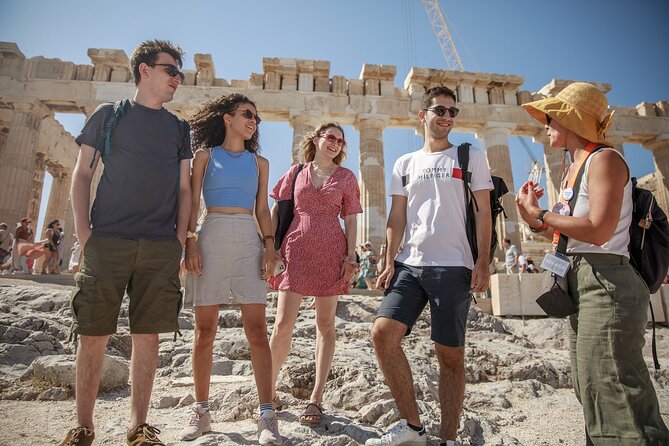
If your Athens time is tight, this tour is built for speed-with-meaning. The Acropolis hill can feel like a maze of stone if you’re just looking around. With a guide, you start picking out the patterns: where ceremonies happened, how theater was born here, and why temples weren’t only religious sites but also political statements.
I like that you’re not stuck in one single viewpoint. The route moves you through multiple landmarks, so the Parthenon isn’t just a photo stop. You’ll get the backstory while you’re standing in the right spot, with enough time at key monuments to look, not just walk past.
The other win is pacing. You’re on the move, but stops are short and frequent. That matters on the Acropolis because the real challenge is physical—uphill stairs, uneven ground, and heat. A steady rhythm keeps the experience from turning into a sprint.
You can also read our reviews of more walking tours in Athens



Price and what you really get for the money
The tour price is $41.12 per person for about two hours. That base cost covers the licensed guide, earsets, and the included handouts (Athens map and guide magazine). It also helps with “skip the lines” when you select the option that includes admissions.
Here’s the big value decision: entrance tickets are not automatically included. If you choose the upgrade that includes admissions, you’ll avoid ticket-office lines for the Acropolis and museum access, and your guide handles the pre-arranged ticket process. If you choose the option without admission, you’ll need to provide cash to the guide at meeting time so they can distribute the pre-paid setup, and you must still purchase your own valid entrance ticket via the provided link within the time window.
If you’re weighing options, think like this:
- If you hate queues and want the smoothest entry, choose the admission upgrade.
- If you’re already comfortable handling tickets yourself and you want to control that part, the lower base price can work.
Either way, the cost is competitive for what you get: an organized route plus headset-guided interpretation on one of Europe’s most visited sites.
Meeting point, timing, and why arriving early matters
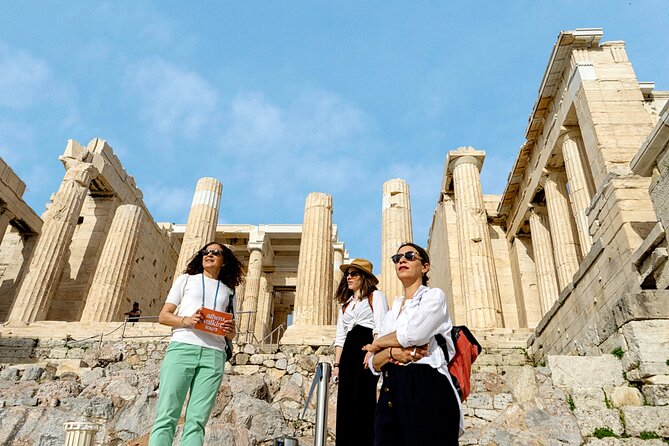
You meet at a yogurt bar near the base of the Acropolis at a set time you choose. The meeting address listed is LUKUMAΔΕΣ, Dionysiou Areopagitou 3 in Athens. The tour ends up at the Acropolis area (the listing shows the Acropoli/Acropolis Athens area as the endpoint).
Two practical timing notes matter here:
- Entry is time-specific. The Acropolis has strict entry times, and the tour can’t wait for late arrivals.
- Security can take time. Expect airport-style screening, especially in peak season, with waits up to 30+ minutes.
So yes, you should aim to arrive early. Not because you’ll be lingering at the start. It’s because you’re buying yourself less stress before you start climbing.
The group size is also capped at 24 travelers, so you’re not swallowed by a giant herd. Still, it’s a working crowd. Comfortable shoes and a hat aren’t optional.
The walk up: Propylaea and the first big “okay, I get it” moment

The tour starts with a guided look at the Acropolis itself, then climbs into a series of connected stops. Your first meaningful impression is how quickly the hilltop changes everything. You start with views and walls, then you hit the monumental architecture that feels like it was designed to impress visitors arriving from below.
One of the first star moments is the Propylaea, the grand marble gateway. In plain terms: it’s the “you have entered a special world” entrance. The guide’s job here is to explain how this gateway sets the tone for what comes next—almost like a stage set before the performance begins.
Even if you’ve seen images of the Acropolis a hundred times, standing near the gateway helps you understand proportions. That’s what turns the Parthenon from a distant landmark into something you can read.
Theatre of Dionysus: where drama began (and why you should care)
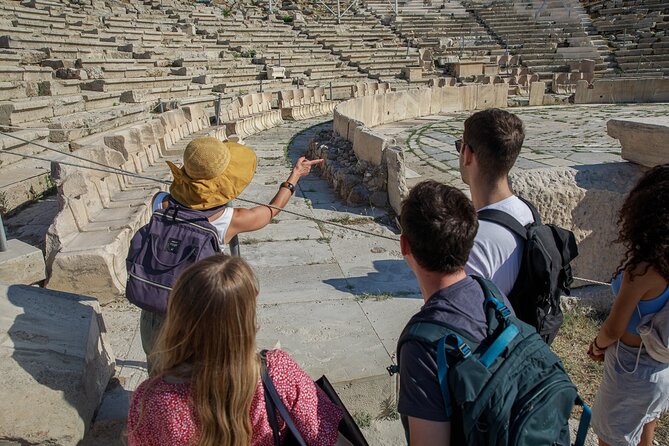
Next comes the Theatre of Dionysus, often called the birthplace of theater. This is one of those stops where the stone doesn’t look like much until you realize what happened here: plays by Aeschylus, Sophocles, and Euripides were tied to this tradition.
What I like about having a guide here is simple. If you don’t know the context, the theater can read as just another set of ancient seats. With the narration, it becomes a cultural landmark. You start to picture crowds, performances, and the social life of Athens—how entertainment and public identity were intertwined.
Also, this stop is a good “reset” during the climb. It’s still on the hill, but it’s less about struggling upward and more about letting the ideas land while you look across the space.






Asclepios sanctuary and Odeon of Herodes Atticus: peace, then grandeur
The route includes the Temple of Asclepios, also known as a sanctuary for medicine. This stop works because it adds a different side of ancient Athens: not only politics and temples, but healing and hope. It’s described as a peaceful haven where people sought cures and expressed gratitude for restored health.
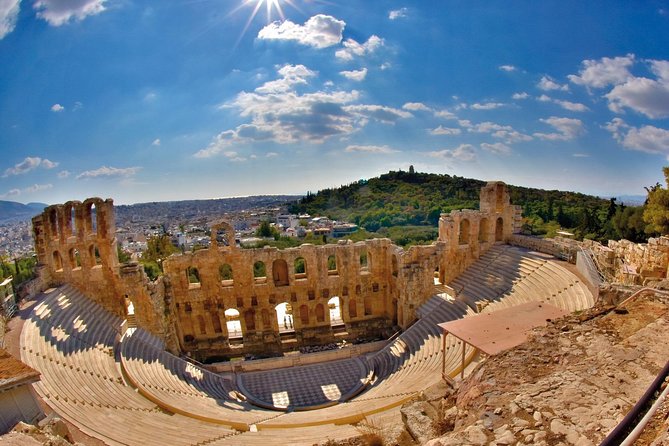
Then you move to the Odeon of Herodes Atticus, a stone theater built in 161 AD that still hosts performances today. Even if you never see a show there, the continuity is impressive. The guide’s commentary typically helps you connect the ancient theater idea to what you might experience in modern Athens—same venue energy, different era.
If you’re traveling during festival season, you’ll probably notice how often Athens still borrows the physical language of antiquity.
Philopappos Hill and the view-game: where to pause for photos
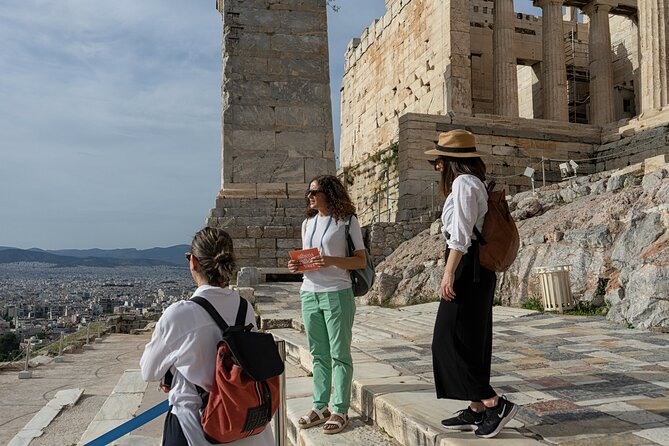
The itinerary makes time for Philopappos Hill, sometimes called the Hill of the Muses. The tour calls out the monument of Philopappos as a tribute to a Roman benefactor. This is your built-in pause moment.
Use it for two things:
- Get your photos without rushing.
- Catch your breath. The walking adds up, even though the tour is only about two hours.
View-wise, this is one of those stops where the hilltop makes sense as a system. You can often better understand why the Acropolis was such a dominant statement of power once you see the wider city below.
Temple of Athena Nike and the Parthenon approach: focus on details
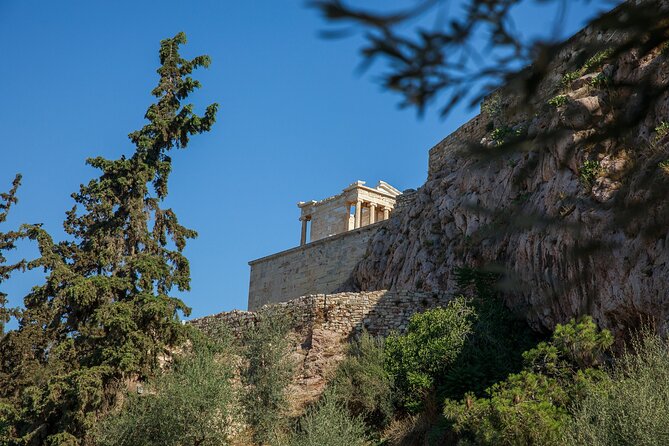
At the Temple of Athena Nike, you’re at the southwestern edge of the Acropolis. This temple is tied to Athena as the goddess of victory. Even when it’s not your first thought when you think of the Acropolis, it’s worth the time because it adds a sharper theme: victory, ceremony, and civic pride.
Then you’ll pass through Propylaea again on the sequence into the deeper temple area, which helps reinforce the layout. If you’re the type who likes a mental map, this helps you build one fast.
By the time you’re nearing the Parthenon, you’re not just looking at a famous building. You’re recognizing how the site is arranged to guide movement and attention.
Erechtheion: the caryatids that make architecture feel human
The Erechtheion is where the Acropolis shifts from big political statements to art that feels oddly personal. The standout is the Caryatid Porch, with six female columns (statues) supporting the structure.
A guide really helps here because it’s easy to assume you’re just looking at a pretty façade. The explanation ties it to its function and its meaning, plus why this temple design is remembered.
If you care about symbolism, this stop is a strong one. It’s not only about structure; it’s about representation.
Parthenon time: the iconic finish, explained in context
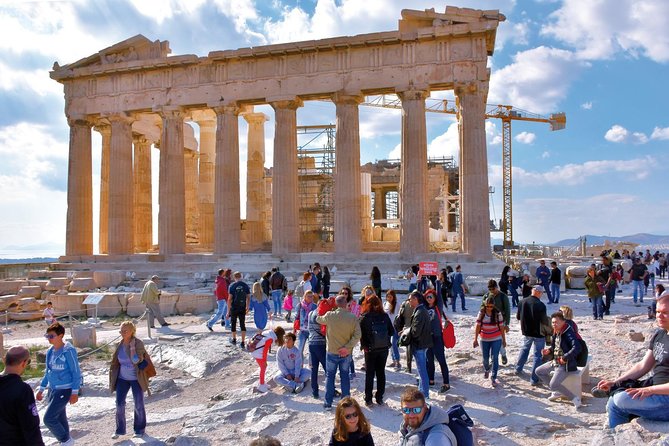
Finally, you reach the Parthenon, dedicated to Athena Parthenos. The tour frames it as the masterpiece of the Acropolis and a symbol of classical Greek civilization. That’s a lot of weight for one building, but standing there gives you a reality check: this isn’t just “famous.” It’s engineered to feel perfect.
You’ll typically get time at the Parthenon (the schedule lists about 25 minutes). That’s enough to look at the lines, notice how the building changes with your angle, and let the guide connect it back to the earlier theme stops—drama, medicine, victory, architecture, and civic identity.
The best part of guided viewing is that you’re not doing guesswork. You’re learning what each element is trying to say.
Earsets, guide styles, and how to make the audio work for you
The tour includes earsets, and the idea is clear: personal listening so you hear the guide over crowds and through the movement between sights. Many people love this setup, especially when big groups get noisy.
Still, audio depends on conditions. If it’s windy, or if the headset connection acts up, it can be harder to catch every sentence. So do yourself a favor:
- Keep your headset secure and avoid tugging it while moving.
- If you lose sound for a minute, tell the guide right away so they can help.
On guide style, you’ll see a pattern in the positive feedback: guides mix storytelling with Q&A and will point out the best angles for photos. Names that come up in the guide feedback include Alexia, Andrea, Elena, Dora, Victor, Phillipa, Hermes, and Annie. Across these guides, the common theme is clear explanations and a friendly, interactive pace.
Also, if you don’t want too much talk about modern politics, you can steer it back to monuments and myths. The guide can usually adjust your focus if you ask.
Bring these basics, or you’ll feel it later
Even with earsets and a guide, the Acropolis is physical. The tour is best for people with moderate fitness. You’ll be walking uphill on uneven surfaces.
Bring:
- Comfortable walking shoes
- Water (the tour specifically recommends it)
- Sun protection like sunscreen and a hat
One review point you should take seriously: once you’re in, there aren’t toilets on the site. Plan ahead. If you need a restroom, do it before you enter the archaeological area.
Baby strollers aren’t allowed on the Acropolis site, and there’s no cloakroom at the side entrance the tour uses. If you’re traveling with a small one, plan a baby pouch instead of a stroller.
What you take home: map and guide magazine
At the end, you leave with an Athens guide magazine and an Athens map. This sounds like a throwaway, but it’s actually useful when you’re trying to build a realistic day plan after the Acropolis.
Use the map to:
- find nearby neighborhoods for a post-tour walk
- spot where other viewpoints and museums are relative to your hotel
- connect dinner plans without wasting time crossing the city blindly
A good tour can give you the “what.” The map helps you decide the “where next.”
Should you book the Acropolis and Parthenon Walking Tour?
I’d book it if:
- you want an organized route that makes the Acropolis easier to understand
- you’re short on time and want the highlights in about two hours
- you like asking questions and getting answers on-site
- you plan to upgrade for admission if you hate ticket queues
I’d think twice if:
- you’re sensitive to audio issues in wind or crowds and rely on hearing every word
- you struggle with steep uphill walks and uneven ground
- you need frequent restroom access during your visit (there aren’t toilets once you’re on site)
For most people, the value is in the guide-led clarity plus the earsets. The Acropolis is famous for a reason. This tour helps you see why, without turning the day into a frantic scavenger hunt.
FAQ
How long is the Athens Acropolis and Parthenon Walking Tour?
The tour lasts about 2 hours.
Is the Acropolis entrance ticket included in the price?
Entrance fees are not included unless you choose the tour option that includes an admission ticket. If you do not choose admission, you’ll need to handle ticket payment as directed for joining the tour.
What is the group size limit?
This tour has a maximum of 24 travelers.
Where do I meet the guide?
The meeting point is at LUKUMAΔΕΣ, Dionysiou Areopagitou 3, Athens 117 42, Greece.
Is the tour offered in English?
Yes, it is offered in English.
Are earsets provided?
Yes. Earsets/headsets are provided so you can hear the guide clearly.
Is a baby stroller allowed?
Baby strollers are not allowed on the Acropolis archaeological site, and there is no cloakroom at the side entrance used.
What happens if the weather is bad?
This experience requires good weather. If it’s canceled due to poor weather, you’ll be offered a different date or a full refund.
What’s the cancellation policy?
You can cancel for free up to 24 hours in advance for a full refund. If you cancel less than 24 hours before the start time, the amount you paid is not refunded.