REVIEW · ROME
Trastevere and Rome’s Jewish Ghetto Half-Day Walking Tour
Book on Viator →Operated by Nicom Tours · Bookable on Viator
Rome has two lives here at once. This Trastevere and Jewish Ghetto half-day walk stitches ancient ruins and living neighborhood streets into one smooth route, starting at Largo di Torre Argentina and ending in Campo de’ Fiori. I love the way the guide connects what you see to what happened there, from Caesar’s assassination area to the layered medieval and Renaissance fabric overhead. I also love the practical pacing with headsets and a small group (max 15), so you actually catch the details without craning your neck. One drawback to plan for: the interior stop at Santa Maria in Trastevere depends on church schedule, so timing can shift a bit.
You’ll start with ruins below street level, then move into the quieter alleys and crossing views of the Tiber before the energy ramps up again in Trastevere. The tour is firmly in the “walk and learn” style, not a sit-down lecture, with time to ask questions as you go—just know you’ll cover steady ground for about three hours. Headsets help a lot if you’re near groups of chatter in the squares.
In This Review
- Key points to know before you go
- Trastevere + the Jewish Ghetto: why this pairing makes sense
- Meeting at Largo di Torre Argentina (and how to avoid first-walk stress)
- Area Sacra di Largo Argentina to Piazza Mattei: ruins, marble, and Caesar’s shadow
- Isola Tiberina and the Tiber crossing: the views plus the context
- Trastevere’s Santa Maria in Trastevere: the big interior payoff
- Ponte Sisto to Campo de’ Fiori: finishing strong in Rome’s most social square
- Price and value: what $66.38 buys you
- Guides and pacing: why the personality matters on this route
- Who should book this walking tour (and who should choose differently)
- Practical tips for a smoother evening walk in Trastevere and the Ghetto
- Should you book this Trastevere and Jewish Ghetto tour?
Key points to know before you go
- Largo di Torre Argentina at Caesar’s assassination area sets the historical tone right away
- Piazza Mattei and Fontana delle Tartarughe add a gorgeous, story-filled break in the middle of the ghetto route
- Isola Tiberina crossing gives classic Roman bridge and skyline views while you learn about the area
- Santa Maria in Trastevere interior (when open) is a major payoff, but it’s schedule-dependent
- Small group (max 15) + headsets keeps this comfortable and easy to follow
- Ends at Campo de’ Fiori so you finish where you can keep exploring or grab dinner
Trastevere + the Jewish Ghetto: why this pairing makes sense
I like this tour because it doesn’t treat Rome like a museum line. It treats it like a city you can still walk through. You’ll connect the Jewish Ghetto area—one of the oldest Jewish quarters—to the atmosphere of Trastevere, a quarter that feels distinctly Roman after dark.
The big win is the contrast. Starting near Largo di Torre Argentina puts you at a dramatic point in Roman history, with ancient remains and a sense of scale you don’t get when you only visit the big headline sites. Then you shift into narrower streets and neighborhood rhythms, where daily life still plays out right beside historic landmarks.
If you want a tour that helps you understand what you’re seeing, this works. The guide is built for storytelling that links archaeology, culture, and architecture across many eras. You’ll also get question time as you walk, which is where the experience turns from facts into real comprehension.
You can also read our reviews of more walking tours in Rome



Meeting at Largo di Torre Argentina (and how to avoid first-walk stress)
Your tour starts at Largo di Torre Argentina, near the ancient ruins tied to Julius Caesar’s assassination. It’s a smart meeting choice because it’s central, dramatic, and historically loaded. The guide starts you off before you move—so you’re not wandering with no context for the first 20 minutes.
This kind of walking tour benefits from arriving a bit early. The meeting point is a real public square area, and it can be easy to lose time if you show up right on the dot. Since there’s no luggage storage, plan to travel light.
Also, bring shoes you’re comfortable in for uneven sidewalks and frequent turns. One of the travel notes tied to this tour mentioned footwear, and the safest move is simple: sturdy, grippy shoes. You’re walking through mixed pedestrian zones where a good footing choice matters more than you think.
Area Sacra di Largo Argentina to Piazza Mattei: ruins, marble, and Caesar’s shadow
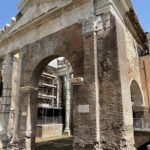
Stop one centers on the Area Sacra di Largo Argentina, and the vibe is instantly serious. This is where the story starts: you’ll learn about the square, the ancient remains, and why this place matters in Roman history. Even if you’ve heard the Caesar basics before, this kind of guided orientation helps it click in your brain.
From there, you enter the route through Piazza Mattei, a key entry point into the ghetto area. You’ll stop at Fontana delle Tartarughe, known for its three types of colored marble and a more romantic past than you might expect from a fountain sitting in a busy square. It’s a short pause, but it’s also a “slow down and look” moment—useful when you’re about to be walking past structures that are easy to miss on your own.
A helpful part of this segment is how the guide explains the layering of the city. You’ll notice how remnants from ancient Rome sit below today’s street level, while later architecture—medieval, Renaissance, and Baroque—wraps the top of the story. That contrast is exactly why a guided walk beats a fast self-tour.
Admission tickets aren’t listed as included for this segment, so you’re relying on the tour itself for the value: context, pacing, and clear explanations.
Isola Tiberina and the Tiber crossing: the views plus the context
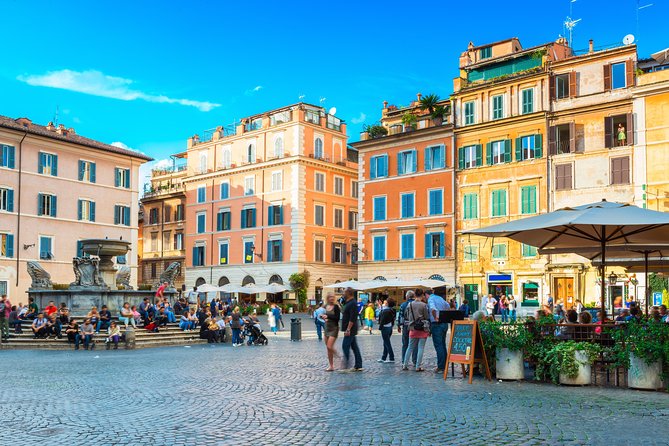
Next the tour shifts toward Isola Tiberina, crossing the Tiber while you take in views of Rome’s bridges and the river corridor. This part is more than scenic. It’s a mental reset. After the dense feeling of neighborhood streets, the river crossing widens your perspective and helps you understand how the city is shaped.
As you route by the large synagogue area, you’re getting an exterior look only. The tour description calls out the synagogue of Rome built in the early 1900s, and the experience stays at the street-level view rather than going inside. If you came specifically hoping for a synagogue interior visit, this is important to know up front.
Then you move toward Trastevere, where the mood changes again. Trastevere is often described as bohemian and lively, and in a half-day walking format, that’s exactly what you want: you’re not waiting all night for the fun. You’re stepping into it while the guide keeps weaving connections between what you see and the past behind it.
Trastevere’s Santa Maria in Trastevere: the big interior payoff
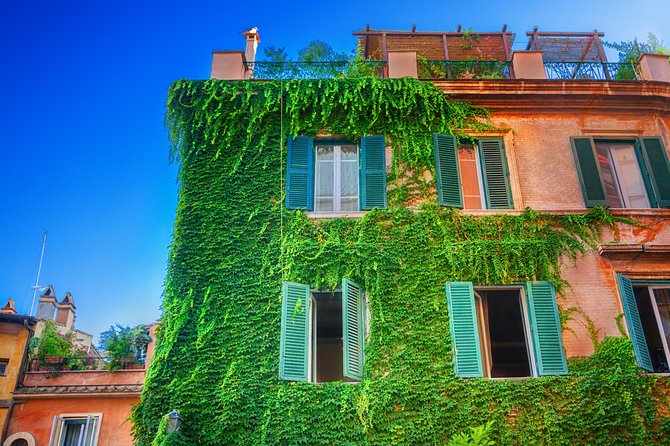
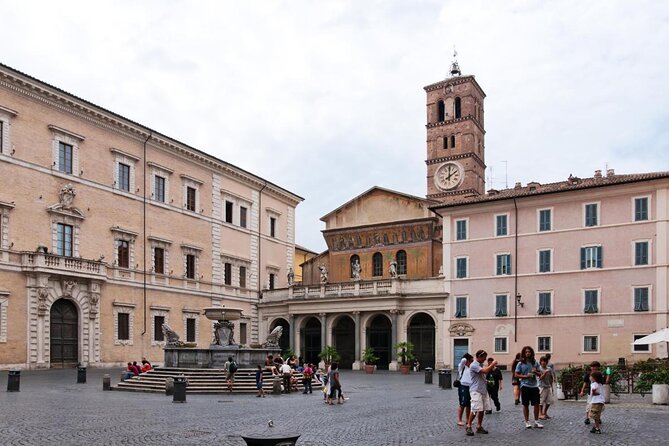
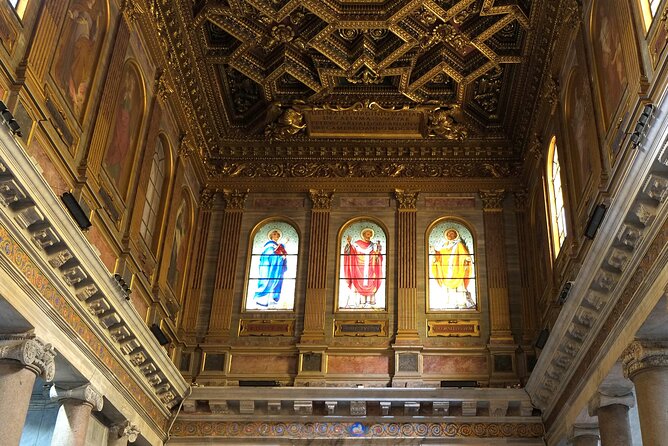
One of the best reasons to book this tour is the possible interior visit of Santa Maria in Trastevere. This church is among the oldest in Rome, with origins dating back to the 340s AD. That’s the kind of timeline that usually lives in guidebooks, but here it becomes practical because you’re standing in front of it (and possibly inside it).
The catch is that it’s subject to church schedule. That means you should treat the interior access as a bonus, not a guarantee. If the doors are open, it’s a major moment because it adds physical scale and atmosphere to the stories you’ve already heard.
When the timing works, this stop balances the walk. Earlier parts focus on how history sits under the street and around squares. Santa Maria brings the experience up into the senses—architecture, space, and the feeling of long continuity.
If you love churches as waypoints for history (not just pretty facades), this is the stop that tends to justify the whole afternoon.
A few more Rome tours and experiences worth a look

Ponte Sisto to Campo de’ Fiori: finishing strong in Rome’s most social square
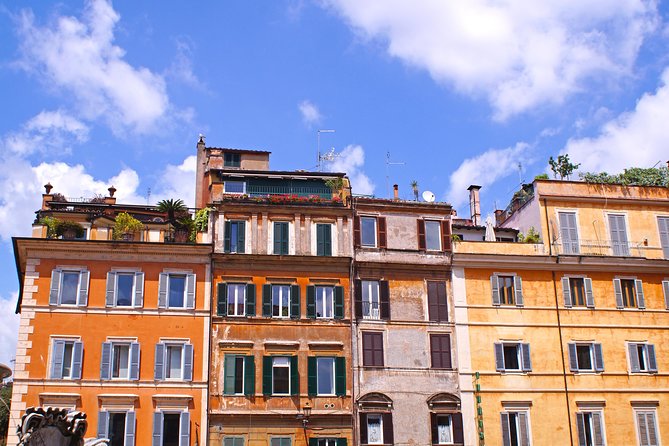
Near the end you cross back over the Tiber via Ponte Sisto. You’ll pass the area around Palazzo Farnese along the route, though the tour does not include entry into Palazzo Farnese. Still, it’s a valuable sight-line moment: you get the feel of grand Renaissance power sitting near everyday street life.
Then you arrive at Campo de’ Fiori, one of Rome’s busiest squares and a classic finishing point for independent exploring. I like ending here because you get options right away: you can keep walking the nearby lanes, or you can sit down and eat without having to reorganize your evening.
This is also where your guide’s best practical advice can help. Even when your main goal is history, you’ll still need dinner later. In similar walks, guides often point people toward what to order locally, and with this route, Jewish-influenced Roman dishes come up as a common recommendation—so keep your appetite ready.
The tour’s stated endpoint is Campo de’ Fiori, so you’re set up to continue at full energy right after the last explanation.
Price and value: what $66.38 buys you
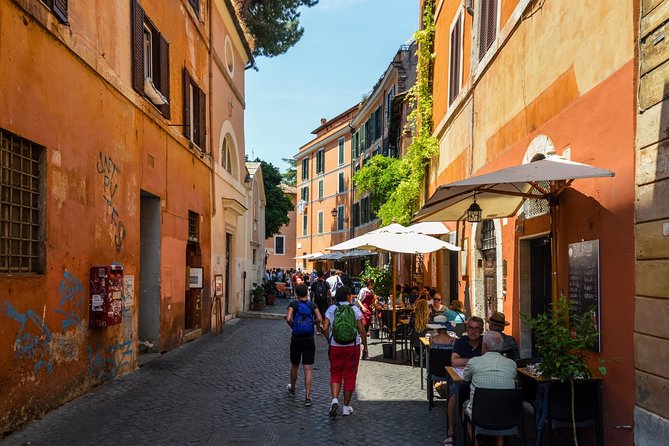
At $66.38 per person for roughly three hours, the value is mostly about guided time. You’re paying for a professional guide plus headsets, which matters more on evening walks when sound bounces around squares and streets.
Since food and drinks aren’t included, the cost isn’t tied to a meal package. That can actually be a plus: it keeps the tour focused on what you came for—streets, buildings, and stories—while leaving you free to choose dinner.
The stops include exterior synagogue viewing and a church interior visit that depends on schedule, so there aren’t lots of major paid admissions listed as part of the experience. That means your money goes into interpretation: how the guide helps you connect Caesar’s area, Jewish Ghetto life, and Trastevere’s night energy into a single mental map.
It’s also worth noting the small group size (max 15). A group of this size usually keeps the walk flexible, and it makes question time realistic instead of rushed.
Guides and pacing: why the personality matters on this route
This tour’s success lives and dies by the guide. The route moves through sensitive history and also into everyday Roman nightlife zones, so you want someone who can hold both tones—clear facts, but also human scale.
From the guide names associated with this experience—people like Irene, Jeanette, Paolo, Claudio, and James—there’s a pattern: strong storytelling plus humor, and a habit of pointing out details you’d skip without direction. Some guides are described as moving at a leisurely pace without rushing. That matters here because the route includes small squares and turns where you need time to stop and look.
There are also a couple of caution notes you should keep in mind. One issue mentioned was a guide focusing too much on footwear logistics, and another note said a guide’s commentary included personal political viewpoints. You can’t control that completely, but you can manage your expectations: go in wanting facts and place-based context, and be comfortable speaking up if you want a more strictly neutral tone.
Who should book this walking tour (and who should choose differently)
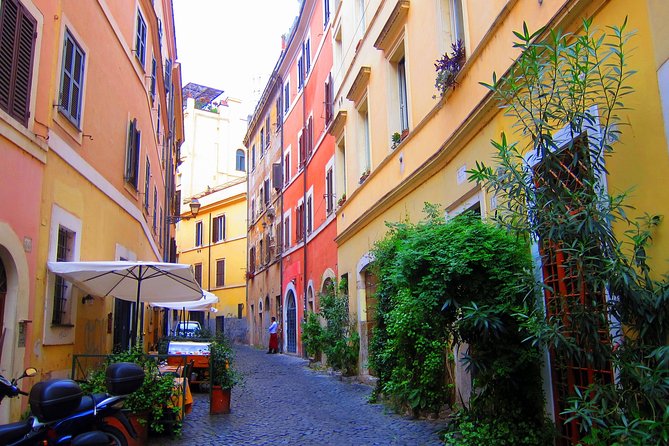
Book this if you want a structured walk that takes you off the most obvious tourist line. It’s ideal for people who have already seen a few big sights in Rome and now want the city’s side streets—the quieter parts that still shape daily life.
It’s also a strong pick for history-minded travelers who enjoy archaeology and how layers of time show up in real streets. You’ll cover ancient ruins context, ghetto-era storytelling, and then move into Trastevere’s neighborhood feel.
This may not be the best match if you have limited mobility or you’re looking for mostly sitting and indoor time. The tour calls for moderate physical fitness, and it is a walking format through uneven sidewalks and multiple stops.
If you’re very sensitive to changes in church access, plan for the Santa Maria interior to be schedule-dependent. And if you only want synagogue interior access, this one is exterior-based per the tour description.
Practical tips for a smoother evening walk in Trastevere and the Ghetto
Start with the obvious: comfortable shoes. Even if you’re not prone to blisters, you’ll be on your feet for the full route.
Dress for Rome’s evenings. The tour starts at 6:00 pm, and the weather can swing fast—warm now, cooler later. A light layer is usually smarter than betting on one temperature.
Bring your energy for questions. The guide is set up to explain what you’re looking at, but you’ll get the most by asking. If you’re curious about specific eras—ancient Rome versus medieval ghetto life—ask early so the guide can connect it to what’s right in front of you.
Lastly, plan your dinner immediately after. Since the tour ends in Campo de’ Fiori, it’s a natural moment to eat nearby. If you want something food-wise that fits the Jewish Rome angle, ask your guide what to look for and what’s worth ordering in the area.
Should you book this Trastevere and Jewish Ghetto tour?
If you want a high-value walking experience that combines ancient Rome, Jewish Ghetto context, and the daily texture of Trastevere, this is a good bet. The small group size, the use of headsets, and the strong guide focus on explaining what you see all point to a tour designed to help you understand Rome, not just pass through it.
I’d say skip it only if you strongly prefer fully ticketed museum-style visits, if you need guaranteed synagogue or church interior access, or if walking three hours of uneven Rome streets sounds unpleasant.
If your ideal Rome day is: start with history, walk through living neighborhoods, and end somewhere perfect for dinner—this one fits the bill.