REVIEW · NEW YORK CITY
The Soul of Harlem Walking Tour in New York
Book on Viator →Operated by You Are Here Walking Tours LLC · Bookable on Viator
Harlem comes alive fast when you walk it. This small-group route uses story-focused stops—run by local author Larry—to connect legendary names and lesser-seen streets around 125th Street into one smooth, moving lesson.
I especially love the way Larry talks history like it’s still happening, with a sense of humor that keeps even tough topics easy to follow. I also like that the important stops along the way come with free admissions, so your $60 mostly buys time with a guide and access to places you’d otherwise miss.
One thing to consider: the tour needs good weather, and the National Jazz Museum in Harlem stop only lines up Thursday through Saturday. If you’re traveling on another day, you’ll still get the Harlem story, but that particular museum timing may not work as shown.
In This Review
- Key highlights at a glance
- Entering Harlem Through the Metro-North View at Park Avenue
- Why This Small-Group Approach Feels Personal (and Not Like a Lecture)
- From Astor’s Row to the YMCA: Walking Harlem Like It’s a Living Story
- Schomburg Center: A Quick Stop That Changes How You Read Harlem
- Langston Hughes House: Seeing the Harlem Renaissance Through One Place
- The National Jazz Museum Stop: Check the Day Before You Trust the Plan
- Apollo Theater: The Walk of Fame Moment That Grounds the Legends
- 2082 Adam Clayton Powell Jr Blvd and the Theresa Hotel Story
- Price and Value: Is $60 Actually Fair for Two-and-a-Half Hours?
- Practical Tips So You Enjoy Every Stop
- Who Should Book This Tour
- Should You Book the Soul of Harlem Walking Tour?
- FAQ
- How long is the Soul of Harlem Walking Tour?
- What is the price per person?
- Where do you meet, and where does the tour end?
- Is the tour offered in English?
- What kind of tickets does the tour use?
- Are there any paid admissions at the stops?
- Is the group size limited?
- When is the National Jazz Museum in Harlem open?
Key highlights at a glance
- Small group (max 10): more back-and-forth, fewer people to compete with for questions.
- Larry’s storytelling: local perspective that ties people, music, art, and politics together.
- Famous + overlooked stops: the tour mixes big-name sites with street-level details.
- Free admissions at stops: you’re not paying extra to enter the main institutions.
- Short indoor moments, lots of walking: plan for about 2.5 hours on your feet.
Entering Harlem Through the Metro-North View at Park Avenue
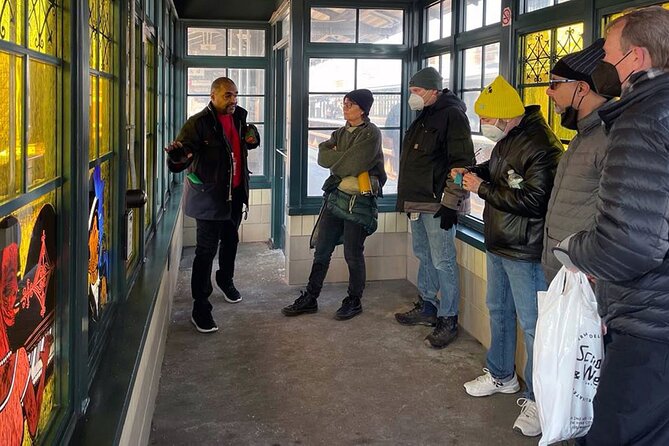
The tour kicks off at 85 E 125th St, right by 125th Street, where you can quickly orient yourself in the neighborhood. The first stop is at the Metro-North train station platform area, where you get a view toward Harlem’s famous stretch of 125th Street. It’s a smart start because you’re looking at the area’s scale and energy from the kind of daily commute spot most visitors never use.
You’ll also look at art works that describe Harlem’s history. Even if you’re not an art person, this works as a kind of preface: the tour shows you that Harlem isn’t only a list of famous names. It’s also a place that has been labeled, illustrated, argued over, and remembered in public—right where people pass through every day.
You can also read our reviews of more walking tours in New York City


Why This Small-Group Approach Feels Personal (and Not Like a Lecture)
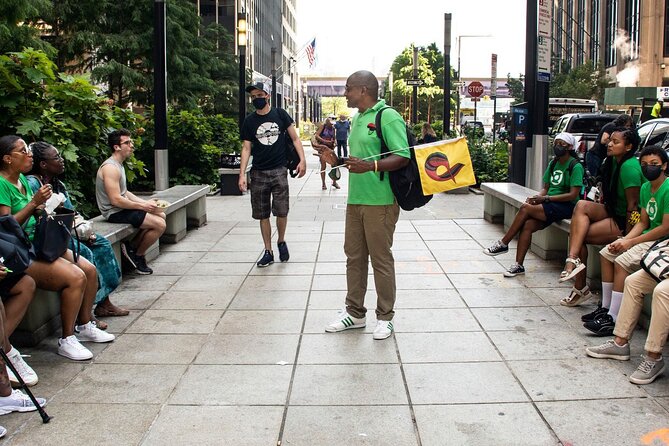
This is a small-group walking tour, capped at 10 people, and it shows in the pacing. With fewer mouths at once, Larry can answer questions without rushing you to the next corner. That matters in Harlem, where context changes depending on what you’re looking at—architecture, murals, institutions, and the street grid all carry meaning.
I like that the tour doesn’t try to cover everything. Instead, it picks key points, then connects them with stories you can carry with you as you walk. Several stops are short by design, so you’re not stuck waiting outside doors for long stretches. You get momentum, plus little breathing moments built into the route.
One more thing: the vibe is described as warm and funny in the feedback, and that balance helps when the subject matter includes struggle, violence, and civil rights history. You don’t have to be an expert to get it—Larry is there to translate the big picture into street-level details.
From Astor’s Row to the YMCA: Walking Harlem Like It’s a Living Story

After the platform view, you move into Harlem itself for a long core stretch—about an hour and 20 minutes—where the tour shifts from “where am I?” to “what am I seeing, and why does it matter?” This is the part that makes the tour feel worth more than the sum of its stops.
Here’s what you’ll walk and discuss along the way:
- The history of the Metro-North train station
- Astor’s Row
- The nickname the White House in Harlem
- The YMCA
- Several famous Harlem murals
- Lenox Terrace
- Harlem Hospital
- The Harlem State Office Building
- Blumstein’s Department Store, tied to the account that MLK almost lost his life there
- Plus time to walk the street blocks so the neighborhood’s culture and people aren’t just background
This is also where the tour earns its “soul” angle. Harlem isn’t only a museum district. It’s a neighborhood with institutions, community memory, and changing demographics all layered together. When Larry explains a building or corner, you start noticing how the physical details reflect social changes—who built what, who had access, and how power moved over time.
A practical note: you’re walking a lot during this middle segment, so wear shoes you actually like. Harlem streets can be a little uneven, and you’ll want your feet to feel good so you can focus on the stories instead of the sidewalks.
Schomburg Center: A Quick Stop That Changes How You Read Harlem
Next you head to the Schomburg Center for Research in Black Culture, part of the New York Public Library system. Even though your time here is brief (about 15 minutes), it’s a powerful pivot because it shifts from famous public landmarks to the work of preserving and researching culture.
What I like about this stop is the mission: the Schomburg Center is devoted to researching, preserving, and exhibiting materials focused on African American, African Diaspora, and African experiences. That focus matters because it explains something big about Harlem: much of what you’ll hear on the tour didn’t just happen on stages and street corners. It was also documented, archived, and defended.
You’ll leave with a clearer sense of why Harlem Renaissance culture and civil rights-era activism weren’t only about performance and protest. They were also about building records—who gets remembered, what gets studied, and how future generations will find the evidence.
Langston Hughes House: Seeing the Harlem Renaissance Through One Place

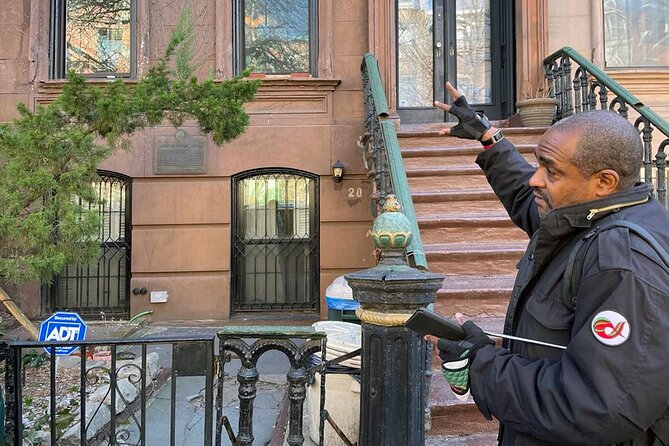
From Schomburg, you move to Langston Hughes House, a historic home tied to the iconic writer of the Harlem Renaissance. Your stop is short (about 10 minutes), but it’s timed well: you’re already in a mindset of preservation from the Schomburg visit, so the Hughes stop hits differently.
This is the kind of stop that’s easy to underestimate if you only think in terms of big, tourist-famous sites. A historic home is quieter and smaller than a theater, but it gives you a direct human scale. You start imagining the rhythms of writing life in Harlem—how art was created, not just performed.
Larry is expected to put Hughes front and center during this part of the walk, and that’s exactly what you want. One focused theme, told well, is often more useful than a frantic sprint through ten unrelated facts.






The National Jazz Museum Stop: Check the Day Before You Trust the Plan
Your jazz stop is the National Jazz Museum in Harlem, and it’s a highlight if it lines up with your schedule. Here’s the key detail: the museum is open Thursday to Saturday only. If your tour date falls on another day, you may not get this stop as described.
When it is open, you’ll spend about 10 minutes with exhibits tied to jazz history and the Harlem Renaissance era. You’ll review famous jazz musicians associated with that period, and you can see current exhibits plus vintage jazz photos, maps, books, and more. It’s a quick hit of both performance legacy and visual storytelling.
This stop works well if you like your history through culture. The Apollo Theater later adds the performance spotlight, but the jazz museum is where you get the context that turns names into a story: scenes, venues, collaborations, and how styles evolved.
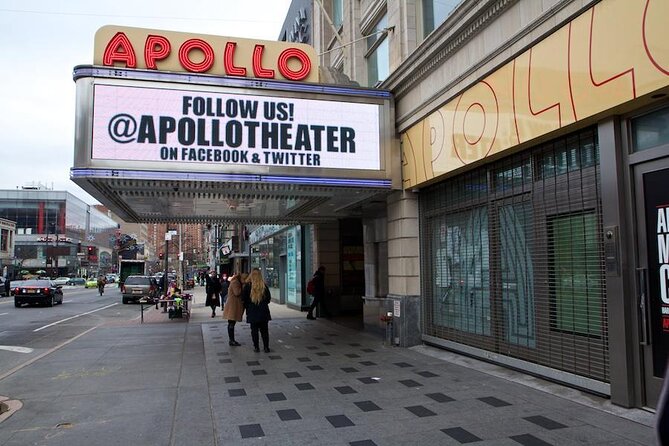
Apollo Theater: The Walk of Fame Moment That Grounds the Legends
Then it’s time for the Apollo Theater. This stop is short (about 5 minutes), but it lands because Apollo is one of those places you recognize instantly, even if you’ve only seen it in movies, documentaries, or album stories.
Outside, the tour discusses the Walk of Fame in front of the theater and the stars associated with performers who appeared there. You don’t need a long visit to get value here. The point is to connect the building to the movement—why Apollo became a stage that could change careers and shape cultural visibility.
If you’re trying to understand why Harlem became synonymous with music and performance excellence, this is the quick reality check. The theater isn’t just a landmark. It’s a symbol of opportunity and a marker of how fame and artistry can be shared.
2082 Adam Clayton Powell Jr Blvd and the Theresa Hotel Story
The last street stop centers on 2082 Adam Clayton Powell Jr Blvd, specifically the Theresa Hotel. This segment is about 5 minutes, which means it’s not about deep interior exploration. It’s about why a hotel address matters in Harlem’s story.
Larry discusses its rich Harlem history as you walk by. These short “pass-by” moments are more important than they seem. Harlem has many places where big events happened without a giant billboard for tourists. Walking by the sites and hearing what they represent helps you connect dots you’d otherwise miss.
The tour ends at the Apollo Theater area, at 233 W 125th St, 3rd Floor. So your final moment is also a convenient landing point for onward plans—dinner, a quick stop for a late coffee, or just more self-guided wandering.
Price and Value: Is $60 Actually Fair for Two-and-a-Half Hours?
At $60 per person for about 2.5 hours, this tour sits in the reasonable range for a guided neighborhood experience in New York. The key value is that the major stops are listed with free admissions, which reduces the usual “hidden costs” that can quietly balloon on tours.
What you’re really paying for is the guide time and the story glue. Larry’s local perspective is the product, not just the route. And because the group is capped at 10, you get a more personal interaction than big group walking tours.
Another value point: the tour is typically booked about 24 days in advance. That doesn’t automatically mean it’s the “best,” but it does suggest consistent demand—often a sign the experience holds up across different types of visitors.
Practical Tips So You Enjoy Every Stop
A few things will make this walk feel easy instead of tiring:
- Wear solid shoes. It’s a real walk with multiple named corners and institutions.
- Bring a light layer. New York weather shifts fast, and the tour depends on good conditions.
- Plan for short stops. You’ll see a lot, but time inside each place is limited.
- If your day is not Thursday to Saturday, note the jazz museum timing. That’s the only stop with a stated open-days restriction.
- Use the mobile ticket. You’ll have it on your phone for smoother check-in.
If weather turns poor, the tour may be canceled and you’ll be offered another date or a full refund. That’s worth considering if you’re locking in a tight schedule.
Who Should Book This Tour
You’ll like this tour most if you want Harlem explained through people, institutions, and street details—rather than only through famous photos and broad city facts. It also suits first-timers because it helps you focus your attention on what to notice when you’re back on your own.
It’s also a good match for families and mixed-age groups. The tour is built around manageable pacing with frequent explanation stops, and it’s described as doable even for people who don’t want a marathon walk.
If you’re looking for long museum time, this probably won’t satisfy you as a primary plan. This is a walking story format. Think of it as your Harlem orientation, not a substitute for spending hours inside each institution on a separate day.
Should You Book the Soul of Harlem Walking Tour?
Yes—if your goal is to understand Harlem beyond the postcard version, book it. The biggest reason is simple: Larry connects the past to what you can still see on the street—buildings, murals, institutions, and the cultural markers that keep echoing today.
Choose it especially if you care about getting context for the Apollo Theater, understanding why the Schomburg Center matters, and hearing how Langston Hughes and jazz fit into the neighborhood’s story. The small-group size keeps the experience human, not rushed.
One last decision check: confirm your day of travel if you want the National Jazz Museum stop, since it only opens Thursday to Saturday. If you plan around that, you’ll get the full arc.
FAQ
How long is the Soul of Harlem Walking Tour?
It lasts about 2 hours 30 minutes (approx.).
What is the price per person?
The tour costs $60.00 per person.
Where do you meet, and where does the tour end?
You meet at 85 E 125th St, New York, NY 10035, near 125th Street between Adam Clayton Powell Blvd and Frederick Douglass Blvd. The tour ends at the Apollo Theater, 233 W 125th St 3rd Floor, New York, NY 10027.
Is the tour offered in English?
Yes. The tour is offered in English.
What kind of tickets does the tour use?
You’ll get a mobile ticket.
Are there any paid admissions at the stops?
The stops listed include admissions marked as free.
Is the group size limited?
Yes. The tour has a maximum of 10 travelers.
When is the National Jazz Museum in Harlem open?
The National Jazz Museum in Harlem is open Thursday through Saturday.