REVIEW · NEW YORK CITY
Hamilton and Washington Revolutionary Walking Tour
Book on Viator →Operated by Revolutionary Tours NYC · Bookable on Viator
Hamilton and Washington are on your block. This 3-hour walk strings together real Revolutionary-era locations with the stories behind the scenes of the musical Hamilton, guided by a licensed NYC historian. I love how the route stays tight and walkable while still covering the big names, and I especially like the stop-by-stop storytelling that makes you connect people to places, not just dates to dates. One thing to plan for: you’ll be standing and walking for most of the tour, so dress for cold or heat near the southern tip of Manhattan.
The price, $52.95, lands in the midrange for a guided city-history experience, and what you get is more than trivia. With a maximum of 16 people, it feels like a real conversation, and you get to ask questions while the guide points out what mattered back then. My only caution: a few key stops involve sites where admission isn’t included, so you might spend extra if you want to go inside certain buildings.
If you want American Revolution history you can see with your own eyes, this tour is a smart way to do it in a single afternoon. You’ll finish at Trinity Church’s area, with the Hamilton family graves and other notable names tied back into the larger story of the founding era.
In This Review
- Key things to know before you go
- Lower Manhattan’s Revolution story starts fast
- A walk that mostly happens outdoors (and why that matters)
- Meeting in the Financial District, then shifting to the Revolution
- Hamilton U.S. Custom House: where the first Treasury story clicks
- Bowling Green: the statue moment and why it fueled revolt
- Peter Minuit Plaza: the origins thread for Hamilton
- Fraunces Tavern Museum: Washington’s farewell in the same room
- New York Stock Exchange and Wall Street: money, Hamilton, and Burr
- Federal Hall: the first Congress and an inauguration footprint
- Trinity Church NYC: graves that bring Hamilton’s family into focus
- Why the Hamilton musical connection actually helps
- What to pack for a 3-hour Lower Manhattan outdoor day
- Value check: is $52.95 a good deal?
- Who should book this tour (and who might prefer something else)
- Should you book this Hamilton and Washington Revolutionary Walking Tour?
- FAQ
- How long is the Hamilton and Washington Revolutionary Walking Tour?
- What does the tour cost?
- How big is the group?
- What language is the tour offered in?
- Where do you meet, and where does it end?
- Do I need tickets for the stops?
- Is the tour canceled if it rains or snows?
- Is Federal Hall open on weekends?
- Can children and service animals participate?
Key things to know before you go

- Small-group pace (up to 16) keeps the attention on your questions, not a crowd shuffle
- Licensed New York City guide with 20+ years experience means you get clear narration and strong context
- Musical references grounded in real locations, so Hamilton the story becomes Hamilton the street map
- Some stops require you to pay admission separately, depending on what you want to enter
- Federal Hall is closed on weekends, so plan your day if you’re aiming to see that stop
Lower Manhattan’s Revolution story starts fast
This is the kind of tour that helps you get your bearings fast in Lower Manhattan. You’re not touring random landmarks. You’re walking through a concentrated Revolutionary-era set of sites, which makes it easier to understand why the area mattered to the people at the center of the American Revolution—especially Washington and Hamilton.
The format is straightforward: a guided walk with multiple stops, each one timed at about 15–20 minutes. That means you get enough time for the story and photos, without burning your whole day on one building. It also means you’ll be outside for most of it, so bring weather gear.
You can also read our reviews of more walking tours in New York City



A walk that mostly happens outdoors (and why that matters)

Expect a mix of walking and standing. That’s not a complaint—just the trade-off. When you hear the story while you’re looking at the actual setting, it sticks. You’ll also notice how the tour keeps moving in a small area, so you’re not crisscrossing the city for one historical tidbit.
Weather is handled in a no-nonsense way. The tour goes out in rain, snow, and shine, and there are no cancellations or rescheduling for rain or snow within 24 hours of the start. If you book close to your trip and Manhattan weather is unpredictable, plan to wear layers and bring a compact umbrella even if skies look fine.
Meeting in the Financial District, then shifting to the Revolution

You meet at 1 Bowling Green and finish at Trinity Church, 89 Broadway. That start-to-finish shape is part of the value: you begin in the heart of where Revolutionary-era politics and finance eventually collide, then end at a place that ties the Hamilton family directly into the founding story.
And yes, you’ll see a bunch of places that show up in the cultural imagination of Hamilton. The key is that you get context for how those locations connect to real historical roles—Hamilton as the finance guy, Washington as the commander-turned-president, and Aaron Burr as a political force who always seems to be one step ahead.
Hamilton U.S. Custom House: where the first Treasury story clicks
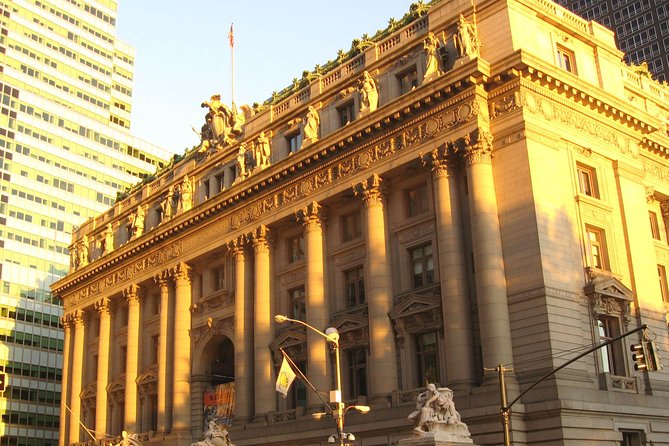
One of the first stops is the Alexander Hamilton U.S. Custom House, and that’s a smart anchor point for the whole tour. Hamilton’s big early-government work as the first Secretary of the Treasury is the through-line here, and the guide’s narration helps you understand why that role mattered. It wasn’t just paperwork. It was about how the new country paid its bills and built credibility.
Even if you’re more into the musical than textbooks, this stop gives you the real-world mechanism behind the drama. You’ll leave this part with a clearer sense of how finance shaped power in the early United States.
Practical note: admission ticket is not included for this stop, so if you want to go inside, you may need to arrange tickets separately.
Bowling Green: the statue moment and why it fueled revolt
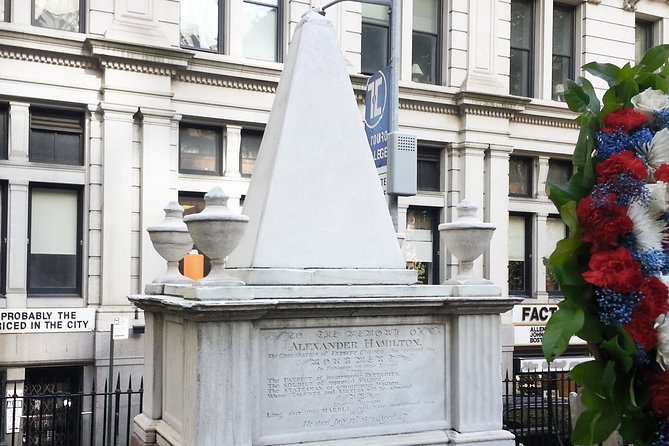
Then you move to Bowling Green, a site that connects quickly to the Revolutionary build-up. The story here centers on the lead statue of King George III and the event where it was destroyed. That kind of moment matters because it’s not subtle. It’s public. It’s political. And it signals that tension has turned into open resistance.
This is one of those stops where the guide’s narration makes you think about symbolism like it’s a tool. In a city, a visible target can become a public message.
Admission is free for the visit here, so you can spend your time listening and looking without worrying about extra entry costs.






Peter Minuit Plaza: the origins thread for Hamilton
At Peter Minuit Plaza, the tour shifts into earlier New York context, right at the start of the Revolutionary period and the backstory behind Hamilton’s origins. This stop helps you understand that Hamilton’s story didn’t start on a battlefield. It started in a city that was changing fast, with new identities forming under pressure.
If you like the way history connects backward—names, places, and migration—this is a good stop. Even if you only remember one thing, you’ll likely remember how the New York setting set up what Hamilton later became.
This stop is free to visit.
Fraunces Tavern Museum: Washington’s farewell in the same room
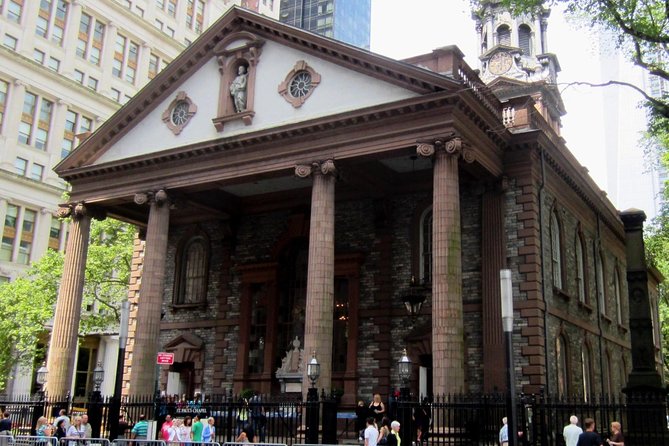
Next up is Fraunces Tavern Museum, known for the period when George Washington bade farewell to his officers. This stop is powerful because it turns the Revolution into human scenes: commanders, fatigue, loyalty, and the awkward moment when a war ends but the country’s problems don’t.
This is also where you’ll appreciate a good guide. You can read about Washington all day, but the narration helps the farewell feel like a turning point rather than a footnote. You’ll also hear related stories that give more texture to the founding era.
Admission ticket is not included for this stop, so consider whether you want to pay extra to go inside at your stop time.
New York Stock Exchange and Wall Street: money, Hamilton, and Burr
The tour continues into the financial corridor with a look at the New York Stock Exchange and then Wall Street. The guide ties this section to Hamilton’s financial plan and his connection to the institution, and then widens the lens to cover Aaron Burr’s political aspirations.
This is a great stretch if you like stories about power. Not just power with muskets, but power with votes and credit and influence. When you connect the Revolution to what happened on Wall Street, the founding feels less like a museum exhibit and more like the start of a long-running system.
For these stops, the info is provided on-site viewing and storytelling. Admission ticket is not included for the NYSE stop, while Wall Street’s stop is free.
Federal Hall: the first Congress and an inauguration footprint
At Federal Hall, you’re at a site that served as the first Capitol under the Constitution and hosted the first meeting of Congress. You’ll also hear about Washington’s inauguration. That’s a lot of national history for one place, and it makes sense why the guide slows down here.
One key practical note: the building is closed on weekends, so if your dates fall on a Saturday or Sunday, your ability to see/enter may be limited. Either way, you’ll still get the location context, but if you were aiming to go inside, plan a weekday.
Admission ticket is not included for this stop.
Trinity Church NYC: graves that bring Hamilton’s family into focus
You finish at Trinity Church NYC, where the tour includes a visit to the graveyard. This is where the story turns personal. You’ll find the graves of Alexander and Eliza Hamilton, plus other notable Revolutionary War figures such as Hercules Mulligan.
This is a fitting end point because it reminds you that founding-era figures weren’t larger-than-life symbols. They were families, communities, and individuals who lived, served, and died in real places.
Entry works only on days and times the church is open. Admission is free for the stop as described, but schedule matters because the tour goes only when the site is accessible.
Why the Hamilton musical connection actually helps
Lots of tours nod at the musical and call it a day. This one does better because it uses Hamilton the cultural entry point, then pulls you back to real events and roles—Hamilton’s Treasury work, Washington’s leadership transitions, and Burr’s political ambitions.
The effect is that you don’t just recognize names. You understand why a lyric, a character, or a famous scene links back to something that happened in New York. For anyone who already knows the show, this tour turns a playlist into a map.
For first-timers, it gives a simple way to remember the era: you follow the people and you meet the places that shaped their choices.
What to pack for a 3-hour Lower Manhattan outdoor day
This walk is short enough that you won’t feel like you’re on a full-day march, but long enough to matter what you wear. I’d plan around standing and outdoor conditions.
Bring:
- layers (even in warm months, the area can feel different from inland spots)
- comfortable shoes with grip
- a small umbrella or rain layer since the tour runs in bad weather
- a light water bottle
In colder months, the southern tip of Manhattan can feel sharp, and you’ll be outside for multiple stops. In hot or humid weather, shade and cool breaks depend on the day. Plan for the reality that you’re outside for a while.
Value check: is $52.95 a good deal?
For $52.95, you’re paying for three things: a licensed guide with long experience, a small group size, and a tight route that concentrates major Revolutionary landmarks in one session.
You’re also not paying for site admissions automatically. Admission is not included for several stops—Custom House, Fraunces Tavern Museum, NYSE, and Federal Hall. If you want only the walking narration and photos, you may not need to add much. If you want inside access where offered, you’ll want to budget extra.
That said, I still think the value works because this route gives you context you can’t get from casual sightseeing. You’re buying the explanation that connects Washington and Hamilton to these exact locations in Lower Manhattan.
Who should book this tour (and who might prefer something else)
I’d recommend it if:
- you like the Hamilton musical but want the real history behind it
- you want a one-session introduction to Washington and Hamilton in NYC
- you enjoy guided storytelling over solo museum wandering
- you’re traveling with mixed ages and want a guide who can handle different attention spans (the tour runs well for multigenerational groups)
I’d think twice if:
- you don’t handle walking/standing well
- you’re expecting a mostly indoor museum day
- you want lots of free time at each building beyond short stop windows
Should you book this Hamilton and Washington Revolutionary Walking Tour?
Yes, book it if you want a guided Lower Manhattan route that connects Revolutionary history to the names you already know. The small group size and the licensed historian angle make it feel focused, not generic, and the ending at Trinity Church gives the whole story a human finish.
Book it especially if you’re short on time and want your Washington-and-Hamilton learning to happen in one clean arc—from political finance and major institutions to Washington’s farewell and the Hamilton graves. Just plan to dress for outdoor weather and keep an eye on whether your visit falls on a weekend, since Federal Hall is closed then.
FAQ
How long is the Hamilton and Washington Revolutionary Walking Tour?
The tour is about 3 hours.
What does the tour cost?
It costs $52.95 per person.
How big is the group?
The experience is limited to a maximum of 16 travelers.
What language is the tour offered in?
The tour is offered in English.
Where do you meet, and where does it end?
You start at 1 Bowling Green, New York, NY 10004 and end at Trinity Church, 89 Broadway, New York, NY 10006.
Do I need tickets for the stops?
Some stops do not include admission tickets. Admission ticket details are listed for each stop, and you should expect to pay separately if you want to enter locations where admission isn’t included.
Is the tour canceled if it rains or snows?
Tours go out in rain, snow, and shine. There are no cancellations or rescheduling for rain or snow within 24 hours of the start of the tour.
Is Federal Hall open on weekends?
Federal Hall is closed on weekends, as noted for the stop.
Can children and service animals participate?
Children must be accompanied by an adult. Service animals are allowed.