REVIEW · NUREMBERG
Nürnberg kennenlernen: Highlights in der Altstadt
Book on GetYourGuide →Operated by Geschichte Für Alle e.V. · Bookable on GetYourGuide
A city can feel like a theme park, or like it has a pulse. This Nürnberg Old Town walk brings the past close, with stop-by-stop stories that connect buildings to real medieval life.
I like that it starts at the Henkerhaus Museum (Hangman’s House), so you get a vivid entry point instead of a bland “here’s the cathedral” opener. I also love the pacing: you’ll cover key places on foot without feeling rushed, ending with the Kettensteg bridge walk that’s both historic and fun.
One consideration: it’s an active walking route. Even though it’s listed as wheelchair accessible, it’s also marked not suitable for people with mobility impairments, so if you have any walking limits, you should check first.
In This Review
- Key highlights you’ll feel on the walk
- Starting at the Hangman’s House: how Nürnberg hooks you fast
- Pegnitz River to Hauptmarkt: the postcard walk that teaches city geography
- Frauenkirche spires and the town hall: church power meets civic power
- Sebalduskirche and Saint Sebaldus: where fact and legend meet
- Weißgerbergasse: a medieval lane spared from war
- Kettensteg to Maxbrücke: finishing on the oldest preserved metal suspension bridge
- Guides who tell stories in German (and do it with humor)
- Worth the $15: how to judge value for a 1.5-hour walk
- Timing on your feet: comfort matters more than you think
- Who should book this Nürnberg Old Town Highlights walk
- Should you book Nürnberg kennenlernen: Highlights in der Altstadt?
- FAQ
- Where does the tour start?
- How long is the tour?
- How much does it cost?
- What language is the tour guide?
- What should I bring?
- Is this tour wheelchair accessible?
Key highlights you’ll feel on the walk
- Henkerhaus Museum start: a spooky, human-sized way to launch into Nürnberg’s story
- Pegnitz River stroll: easy scenery while your guide explains how the city formed
- Hauptmarkt and Christkindlesmarkt: the main market zone that turns magical in winter
- Frauenkirche and town hall: gothic spires plus civic power, seen close up
- Weißgerbergasse survival street: the lane spared from war destruction
- Kettensteg to Maxbrücke: oldest preserved metal suspension bridge in Europe, then a satisfying finish
Starting at the Hangman’s House: how Nürnberg hooks you fast
The tour begins at the Henkerhaus Museum, in front of the Hangman’s House. This matters because you’re not starting with monuments. You start with a specific place tied to jobs, people, and justice in the city—dark? yes. Memorable? also yes.
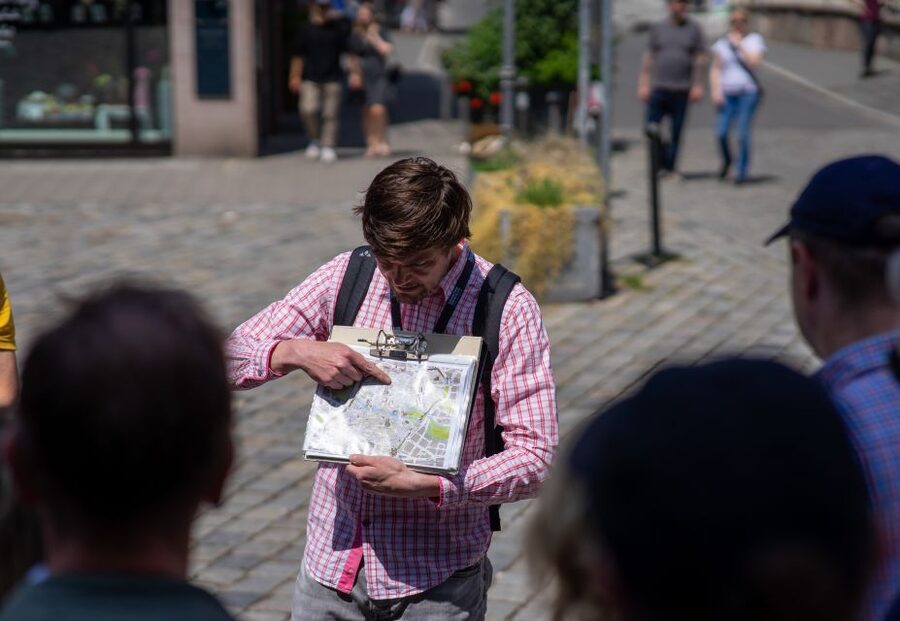
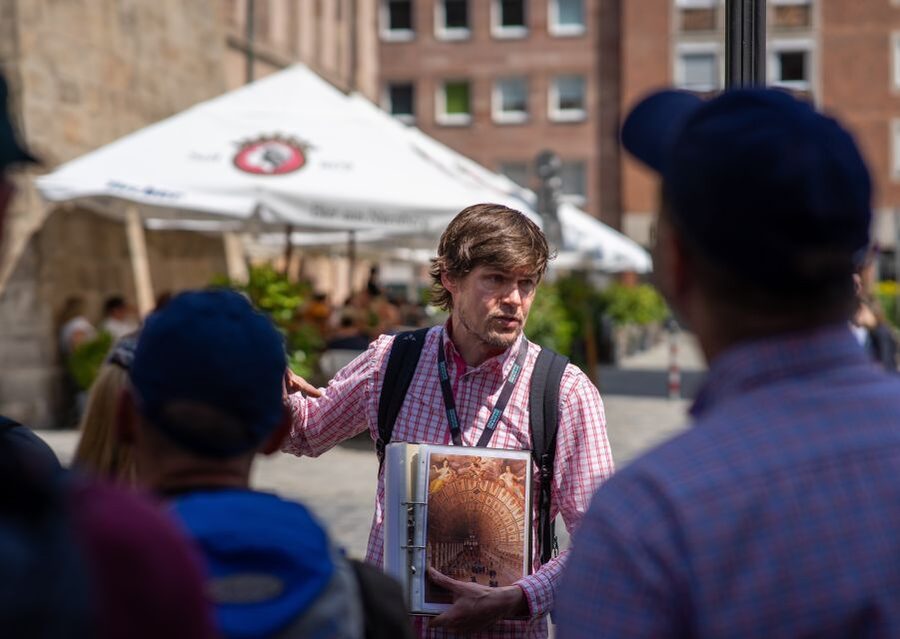
Your guide meets you holding a picture folder and wearing a name tag for Geschichte Für Alle e.V. That small detail hints at the style: story-led, visual, and built around making ordinary streets feel like chapters.
If you like history that comes with characters (not just dates), you’ll appreciate the way the tour opens in the Galerie im Henkerhaus before stepping into the old streets beyond.
You can also read our reviews of more tours and experiences in Nuremberg.

Pegnitz River to Hauptmarkt: the postcard walk that teaches city geography
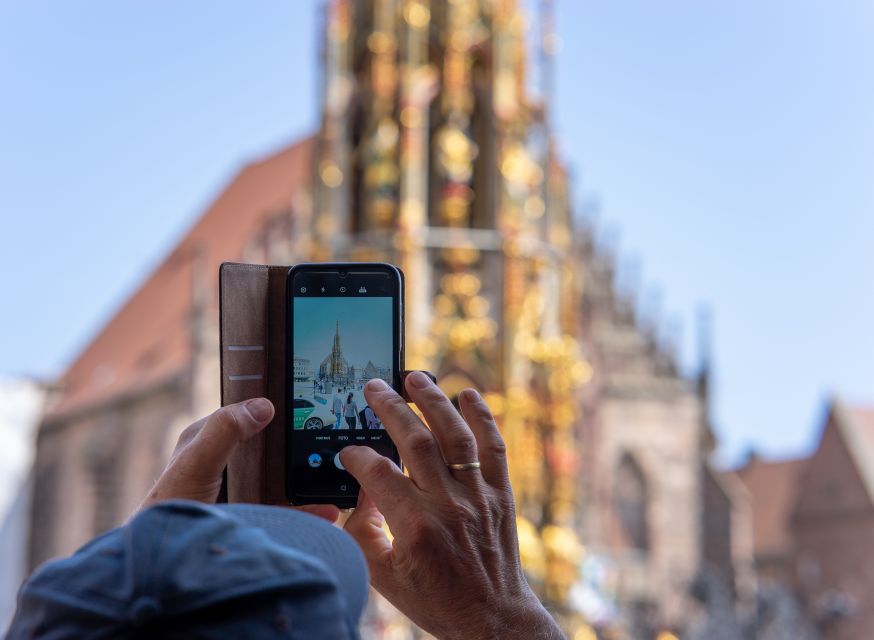
Once you’re moving, you follow the Pegnitz River through Nürnberg’s Old Town. This is one of the best ways to get your bearings fast. Rivers explain so much: where people traveled, where goods moved, and where towns naturally grew.
After the river stretch, you cross toward the Hauptmarkt Nürnberg, the famous main market. This is a key moment because in winter the Christkindlesmarkt takes over this space, turning the same historic streets into a holiday stage. Even if you’re not there in December, you’ll understand why this location becomes the city’s focal point.
Along the way, your guide points you toward major landmarks rather than treating the walk like a sightseeing checklist. You’ll likely find yourself thinking in “how the city functions” terms, not just “what’s the next building.”
Frauenkirche spires and the town hall: church power meets civic power
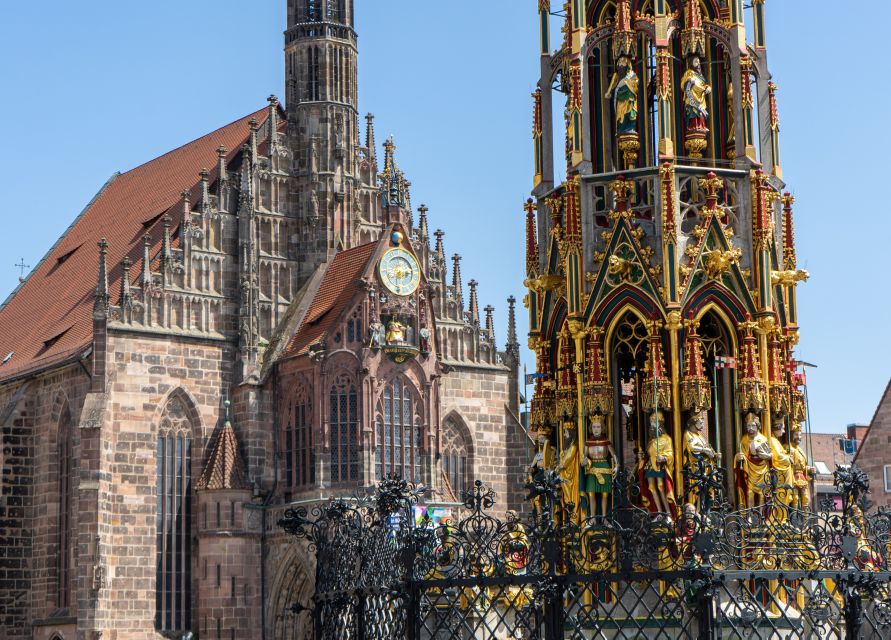
Next up is the Frauenkirche, where you can admire the gothic spires up close. This is the kind of stop that changes depending on the weather and the light. When the towers sit above the street canyon, you really feel how dominant church architecture was in medieval city life.
From there, the walk continues through the old town toward the historic town hall. The town hall isn’t just another old building. It represents civic authority—how decisions got made and how the city presented itself.
The guide’s job here is to connect the visual with the meaning. In practical terms, that means you don’t just see spires and facades. You learn why these buildings mattered and how they shaped daily rhythms, from markets to public life.
Sebalduskirche and Saint Sebaldus: where fact and legend meet
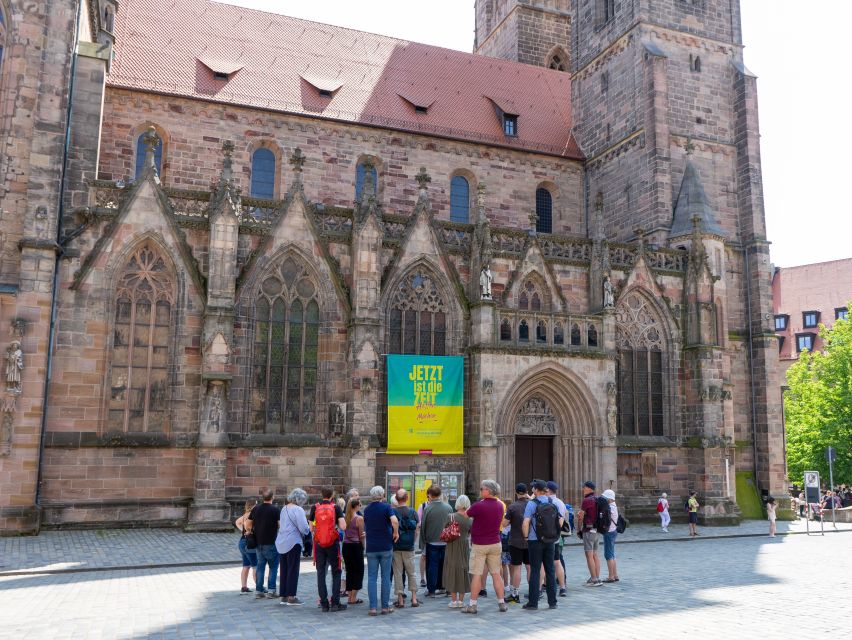
At the St. Sebaldus Church (Sebalduskirche), you step into a quieter, more spiritual part of the story. It’s described as one of the oldest churches in Nürnberg, which gives the stop extra weight: you’re looking at religious history that has been part of the city for a long time.
Here’s what makes this stop stand out: your guide shares both fictional and true stories about Saint Sebaldus. That mix is powerful because it shows how belief and identity worked in older centuries. People didn’t only rely on documents; they relied on stories that traveled through generations.
If you’re the type who enjoys small narrative twists, this is one of the most entertaining phases of the tour. If you prefer straight facts only, tell yourself it’s still fact-based context—the guide uses the legends to explain why the real person and the real tradition mattered.
Weißgerbergasse: a medieval lane spared from war
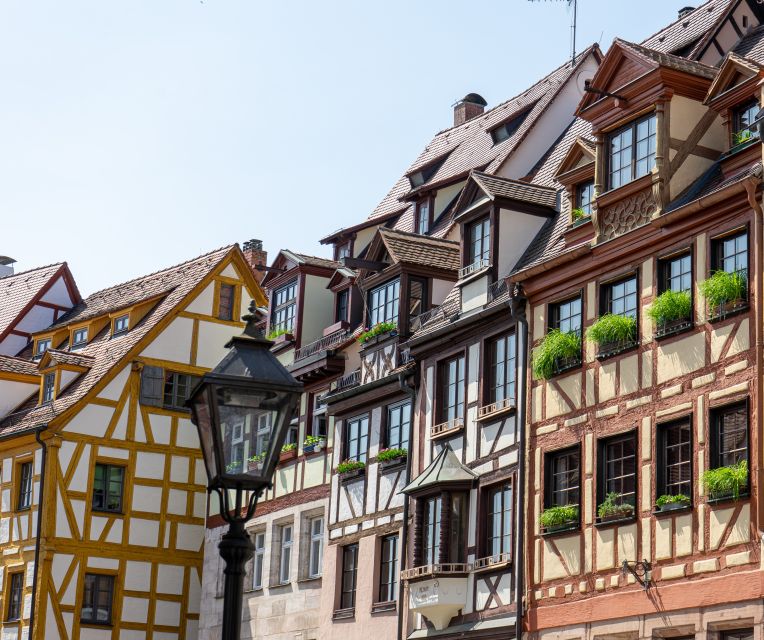
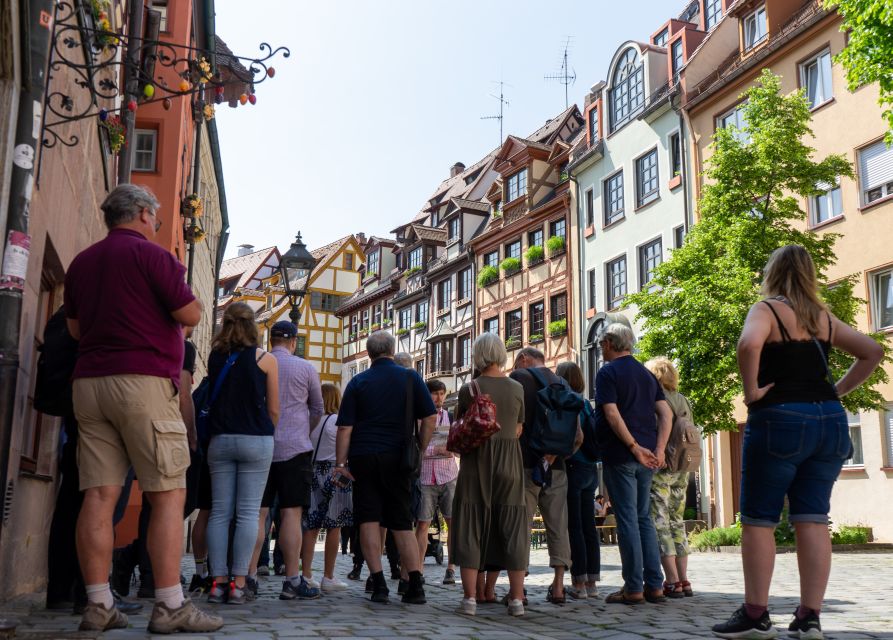
After the church stop, the tour moves through Weißgerbergasse, a street that was spared from war destruction. This is an important detail because it changes what you experience under your feet. In many European cities, you see scars and replacements. Here, you get a sense of continuity—more “this is what the street feels like” and less “this is a reconstruction.”
Walking a lane like this is different from viewing a landmark from across a square. Your pace slows naturally. You notice scale. You notice how buildings press in on the street. And you start to understand why older cities felt intimate: the street wasn’t just a corridor; it was a lived-in space.
If you like your history grounded in everyday streets (not only grand squares), you’ll enjoy this stretch a lot.
Kettensteg to Maxbrücke: finishing on the oldest preserved metal suspension bridge
The finale is at Kettensteg, crossed on foot. This is the oldest preserved metal suspension bridge in Europe, and the tour makes a big point of walking it. It’s a great ending because it shifts you from “churches and markets” into engineering and urban design.
Crossing a bridge adds a natural pace change. You look around differently. The river and nearby structure lines come into view. It also gives you a physical sense of how Nürnberg connected parts of the city.
Your tour ends after you reach the other side on the old Maxbrücke. That matters for photos and for the feeling of completing a loop: you don’t just finish at another starting-point looking direction—you finish with a new vantage.
Guides who tell stories in German (and do it with humor)
The tour runs with a live guide in German. That’s great for immersion if you understand the language, and it’s also fine if you don’t—because the guide’s method is built around images and short narratives tied to specific locations.
The strongest praise from different guides is consistent: people love how the tour doesn’t sound like a lecture. Guides such as Jo, Klemens, and Sonja are specifically mentioned for making the route interesting with small stories and clear explanations. One guide style doesn’t mean the content is limited; it means the delivery keeps your attention.
What you should look for during the walk is the guide’s habit of explaining why a place exists, not only what it is. You’ll get more out of Frauenkirche and the town hall when you understand the roles they played in Nürnberg’s past. You’ll get more out of the bridge when you understand how major structures fit into the city layout.
Worth the $15: how to judge value for a 1.5-hour walk
The price is listed as $15 per person, with a 1.5-hour duration. For that time, you’re getting a guided route that hits multiple major landmarks and one very specific engineering highlight (Kettensteg).
Here’s how I’d think about value for your trip: if you’d otherwise wander the Old Town on your own, you’d probably see the Frauenkirche, the market area, and a few streets. With a guide, you’ll understand the logic tying those stops together—river to market, civic to religious, preserved lane to bridge.
Also, 1.5 hours is a manageable commitment. Nürnberg can be a lot of walking in one day. This tour gives you an organized “core route” without eating your entire afternoon.
If you’re planning winter in Nürnberg, the connection to Christkindlesmarkt is another value bump, because the Hauptmarkt area is exactly where that seasonal world shows up.
Timing on your feet: comfort matters more than you think
This is a walking tour. The route includes short on-foot segments between stops, so you’re not stuck on one spot for a long time, but you do need stamina for continuous movement.
Bring comfortable shoes. Bring water. And dress for the weather—especially in colder months, when cobblestones and wind can turn a “short walk” into a real chill.
If you plan to pair this with museums or a meal right afterward, you’ll probably want to schedule something flexible. The tour ends at Maxbrücke, which is a convenient place to continue exploring, but you’ll still want enough time to warm up or grab coffee.
And one more practical note: the tour is marked as wheelchair accessible, yet also marked not suitable for people with mobility impairments. If you use a wheelchair or have specific mobility needs, confirm the route details directly with the operator so you’re not surprised.
Who should book this Nürnberg Old Town Highlights walk
This tour fits best if you want:
- A guided route that covers the main “big ideas” of Nürnberg’s Old Town
- A mix of architecture (Frauenkirche), civic life (historic town hall), and storytelling (Sebalduskirche and Saint Sebaldus)
- A memorable ending that’s not just another stop photo: walking Kettensteg on foot
You might rethink it if you:
- Have mobility limitations and need a clearly step-free, low-movement plan
- Prefer only modern explanations or deep museum-style content with no walking
It also works well as an orientation tour. Even if you’re returning later to explore on your own, you’ll understand where the city’s center of gravity lives.
Should you book Nürnberg kennenlernen: Highlights in der Altstadt?
I think you should book this if you want a smart, efficient introduction to Nürnberg’s Old Town that feels human, not mechanical. The tour uses a strong structure—river to market, churches to preserved street, then the bridge finish—and the guide style (from Jo, Klemens, and Sonja) is repeatedly praised for keeping things engaging with small stories and humor.
If you’re visiting in winter, the link to the Christkindlesmarkt area at Hauptmarkt is a bonus. If you’re visiting in warmer months, the architecture, the preserved street Weißgerbergasse, and the engineering highlight of Kettensteg still make the walk worthwhile.
If you have mobility concerns, do a quick check before committing, since the accessibility notes in the listing are mixed. Otherwise, this is a good value way to spend 1.5 hours and leave with a clearer picture of how Nürnberg “works” across centuries.
FAQ
Where does the tour start?
You meet the tour guide in front of the Hangman’s House (Henkerhaus Museum), with the guide holding a picture folder and wearing a name tag for Geschichte Für Alle e.V.
How long is the tour?
The walking tour lasts 1.5 hours.
How much does it cost?
The listed price is $15 per person.
What language is the tour guide?
The tour guide speaks German.
What should I bring?
Bring comfortable shoes, water, and weather-appropriate clothing.
Is this tour wheelchair accessible?
It is listed as wheelchair accessible, but it is also marked as not suitable for people with mobility impairments. If you have mobility needs, it’s smart to check details with the operator before booking.