REVIEW · NEW YORK CITY
SoHo, Little Italy, and Chinatown 2-Hour Guided Walk
Book on GetYourGuide →Operated by ExperienceFirst · Bookable on GetYourGuide
Street stories here feel stranger than fiction. This tight SoHo–Little Italy–Chinatown loop packs big themes into small distances: immigration, survival, and the kind of violence that once shaped these streets, plus quick celeb-and-fashion spotting in SoHo’s Cast Iron district.
I especially like how the guide turns ordinary blocks into a timeline, linking famous addresses to events like the Manhattan Well Murder and the Triangle Shirtwaist Factory fire. I also like the “see it and then understand it” format, with stop-by-stop detail at places such as the E.V. Haughwout Building and Alleva Dairy—stuff you’d pass without a guide’s context.
One consideration: this is real walking. It’s not set up for mobility limits, and you’ll want comfortable shoes and weather gear since the tour stays outdoors for most of the time.
In This Review
- Key things that make this walk worth it
- SoHo, Little Italy, and Chinatown: why this 2-hour format works
- Spring Street and Greene: the Manhattan Well Murder and what streets remember
- The Cast-Iron District and the E.V. Haughwout Building: style, tech, and a little star power
- 421 Broome Street, the Old Police Station, and other addresses with gravity
- Ravenite Club, John Gotti, and the way power moves through a neighborhood
- Little Italy on Mulberry Street: Alleva Dairy, the Triangle Shirtwaist fire, and community anchors
- Mob markers in Little Italy: Umbertos, Joe Gallo, and Old Saint Patrick’s
- National Shrine Church of San Gennaro and the idea of faith-as-place
- Chinatown’s Opium den, Bloody Angle, and Doyers Street
- Columbus Park: finishing at Gangs of New York’s famous setting
- Practical tips so the walk feels easy, not stressful
- Who this SoHo–Little Italy–Chinatown walk is best for
- Should you book this guided walk?
- FAQ
- How long is the guided walk?
- What does the $39 price include?
- Where does the tour start?
- Where does the tour end?
- What neighborhoods are covered?
- Is the tour guided in English?
- What should I bring?
- Is it suitable for people with mobility impairments?
- Is there free cancellation?
Key things that make this walk worth it
- Three neighborhoods, one narrative: you move from SoHo’s architectural swagger to Little Italy’s community institutions to Chinatown’s sharper edge.
- True-crime and street history in manageable doses: the stops include specific sites tied to gang violence and major events.
- SoHo’s architecture plus celebrity chatter: you’ll slow down in the Cast Iron district and keep your eyes open for famous faces.
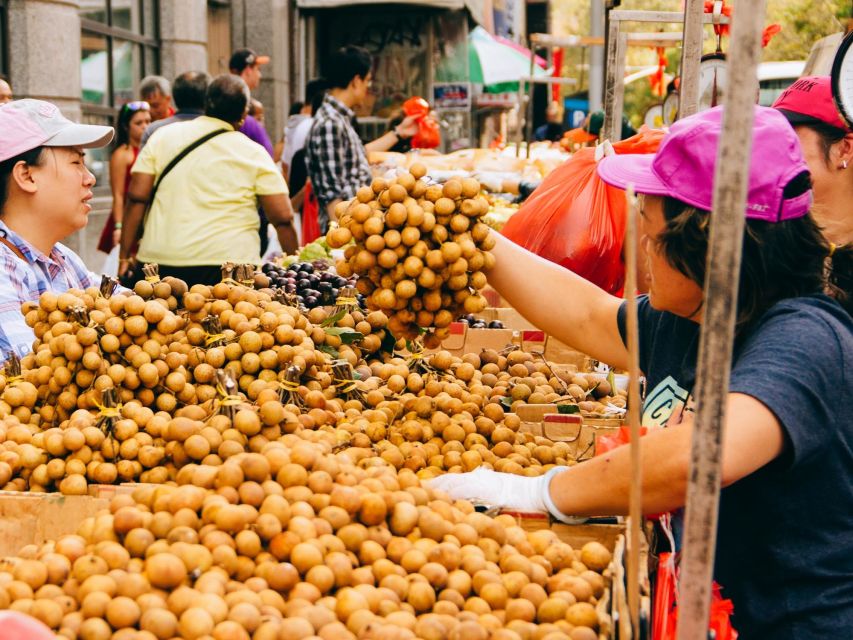
- Street-food time without built-in meal pressure: food costs aren’t included, but there’s room for you to grab bites on your own.
- Guides that bring pop culture into the story: some guides reference films and famous people alongside history, which makes the streets stick.
- A pace designed for comfort: recent tours mention guides keeping things easy-going and handling traffic carefully.
SoHo, Little Italy, and Chinatown: why this 2-hour format works
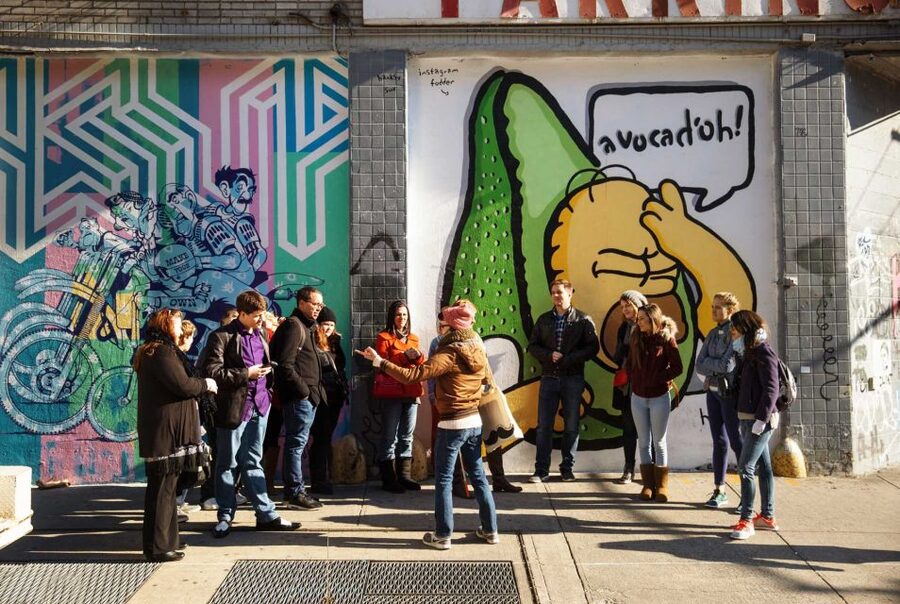
New York’s best stories don’t always live inside museums. They live in addresses, street corners, and the way neighborhoods overlap like chapters in the same book.
This walk is built for people who want a lot of meaning without committing to a whole day. In just two hours, you cover a chunk of Manhattan where immigrants arrived, communities formed, and power struggles—some criminal, some cultural—left marks you can still read.
It also helps that the route is straightforward: you start around Spring Street (often at Spring Street Park) and finish at Columbus Park. That “loop logic” means you’re not hunting around for what comes next.
And at $39 per person, the value is mainly in the guided interpretation. You’re not just paying to be transported; you’re paying to have a live person connect the dots between SoHo style, Little Italy institutions, and Chinatown street lore.
You can also read our reviews of more walking tours in New York City


Spring Street and Greene: the Manhattan Well Murder and what streets remember
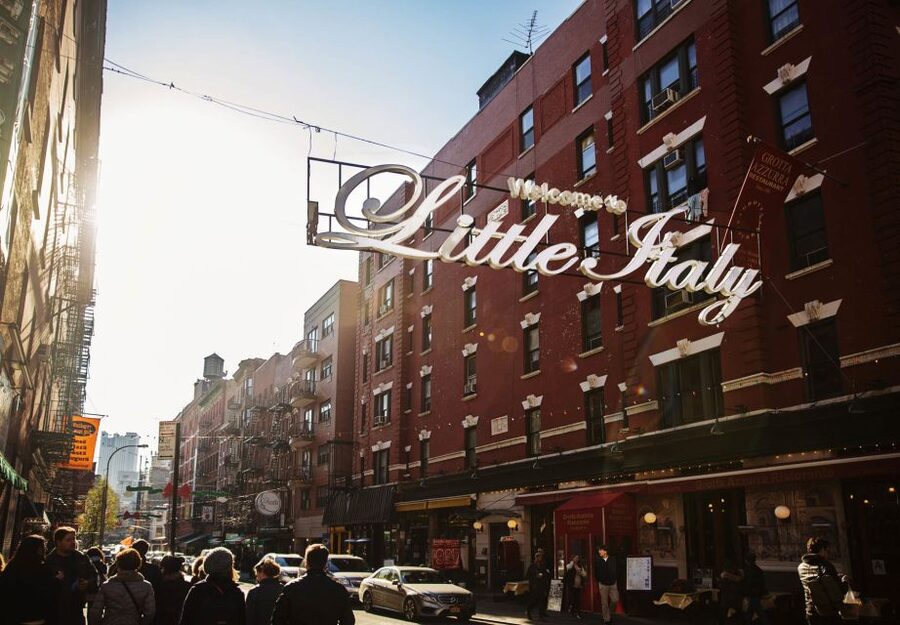
The tour kicks off in the SoHo area with Spring Street and nearby Greene and Spring. This is where you start learning to read the city like a timeline.
One of the early anchors is the Manhattan Well Murder at the Greene and Spring area. The guide frames it as the first recorded murder case in New York City, which instantly changes how you see an everyday street scene. Instead of a pretty block, you start noticing how dense, human, and dangerous the city could feel—even when nothing looks dramatic today.
This is also a good moment to set expectations. A walk like this doesn’t treat history as a statue behind glass. It presents it as something that happened in real time, where people made choices, took risks, and sometimes got crushed.
If you like city history that has teeth, you’ll appreciate how quickly the guide brings the topic down to street level.
The Cast-Iron District and the E.V. Haughwout Building: style, tech, and a little star power
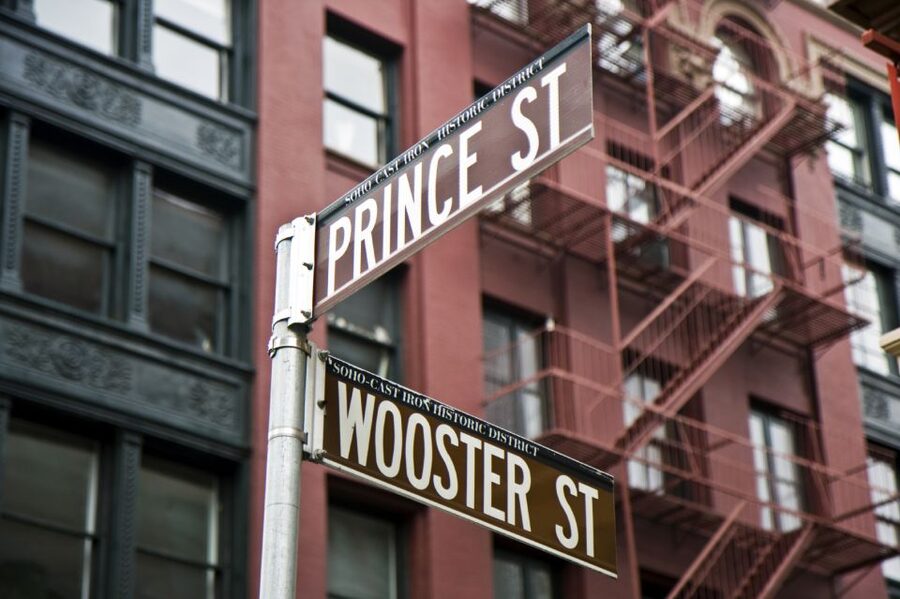
SoHo’s Cast Iron district is the part of the tour many people were hoping for—and it’s easy to see why. The architecture gives you a perfect backdrop for both photos and storytelling, and the tour explicitly encourages you to look out for celebrities and movie stars in the area.
Then you get the kind of stop that makes SoHo more than fashion. The E.V. Haughwout Building is highlighted as home to the first safety elevator. That detail matters because it shows how this neighborhood’s story isn’t only about aesthetics; it’s also about innovation and the push to move up and move forward.
Here’s what I like about how these stops are handled: the guide doesn’t keep the story in the past. Instead, you get the sense that every era invents its own “progress,” and then people use it—for work, for status, and sometimes for survival.
This is also where you may hear pop-culture threads from the guide. Some recent tour guides (like Arun, George, Felipe, or Steve) were praised for weaving recognizable references into the history so the streets feel less like homework.
421 Broome Street, the Old Police Station, and other addresses with gravity
As you move along, the tour leans into specific addresses that tug at your attention. Two good examples are the 421 Broome Street stop and the Old Police Station building.
At 421 Broome Street, the story tied to Heath Ledger’s death is brought up, along with the note that it involved Mary Kate Olsen’s apartment. Whether you’re a film person or not, these kinds of stops help you understand why neighborhoods become magnets for both ordinary life and high-profile events.
Then the Old Police Station gets its own spotlight: it’s described as a 1909 Beaux-Arts building and is now a residence. That transformation is part of the point. Institutions that once operated as authority structures eventually get repurposed when the city’s needs change.
This portion is also where it helps to pay attention to tone. The guide balances bigger cultural shifts with the grit of what happened there. You’ll get the sense that law, power, and crime didn’t just appear out of nowhere; they were built into the city’s systems and geography.
Ravenite Club, John Gotti, and the way power moves through a neighborhood
One of the most talked-about stops is the Ravenite Club, tied to the story of John Gotti. In a two-hour walk, you won’t get a full biography—but you do get a clear sense of how certain buildings and social spaces became part of the city’s crime ecosystem.
This is where a guided walk really earns its keep. Without context, you might see a building façade and move on. With context, the place becomes a chapter: where people gathered, where reputations were made, and where violence had a social “infrastructure.”
If you’re the kind of person who watches crime movies and then wonders what’s real versus staged, this tour’s approach should feel satisfying. It keeps the storytelling tied to recognizable streets and concrete locations.
You can also read our reviews of more guided tours in New York City



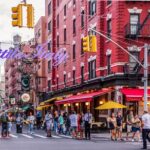

Little Italy on Mulberry Street: Alleva Dairy, the Triangle Shirtwaist fire, and community anchors
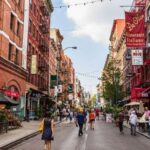
Little Italy is where the atmosphere shifts. You feel the neighborhood’s identity in the layout and in the places that have long served the community.
The walk centers on Mulberry Street, often described as the heart of Little Italy. This is the stretch where you’ll likely notice how quickly a “touristic street” becomes a real cultural corridor when you know what institutions to look for.
Alleva Dairy is one of the standout stops. It’s highlighted as a place where cheese has been made for a hundred years. Even if you don’t buy anything, the fact that such a simple craft tradition lasted this long tells you a lot about how immigrant communities preserve identity: through food, through routine, and through repeat customers.
Then you move from everyday culture to major tragedy with the Italian American Museum, tied to the Triangle Shirtwaist Factory fire. This is a heavy moment on the route, and the reason it belongs here is practical. The neighborhood story isn’t just about parties and traditions—it’s also about labor, risk, and the cost of industrial life for working people.
If you’ve ever heard the Triangle Shirtwaist story only in broad terms, the address-based framing helps you feel the proximity. You’re not hearing a distant lesson; you’re standing near where it happened.
Mob markers in Little Italy: Umbertos, Joe Gallo, and Old Saint Patrick’s
The walk also includes a stop at Umbertos, described as the site of the mob hit on Joe Gallo. This is part of the tour’s broader theme: gang violence and organized crime weren’t separate from daily city life; they were threaded through it.
Right nearby, you’ll also hear about Old Saint Patrick’s. That contrast matters. A church signals community continuity and cultural anchoring, while a mob-hit story signals disruption and fear. Seeing both on one route helps you understand why neighborhoods can feel both familiar and tense at the same time.
In a just-two-hours format, the guide keeps you moving, so you don’t get stuck in one emotional register too long. That’s a good thing—unless you’re hoping for a slow, reflective museum-style pace.
If you’re sensitive to crime stories, just know this is part of the walk’s design. It’s not hiding the darker material.
National Shrine Church of San Gennaro and the idea of faith-as-place
The National Shrine Church of San Gennaro adds a different kind of drama: the story of the liquefaction of the saint’s blood. It’s the kind of local belief that can sound unbelievable until you see how it functions as a community event and a public tradition.
This stop helps balance the tour. After mob-hit stories and gang-era violence elsewhere on the route, the shrine represents something rooted in ritual and collective meaning rather than street conflict.
Even if you don’t share the belief, you can still appreciate the purpose. The tour uses this moment to show how immigrant communities carried faith and translated it into physical landmarks that endured.
Chinatown’s Opium den, Bloody Angle, and Doyers Street
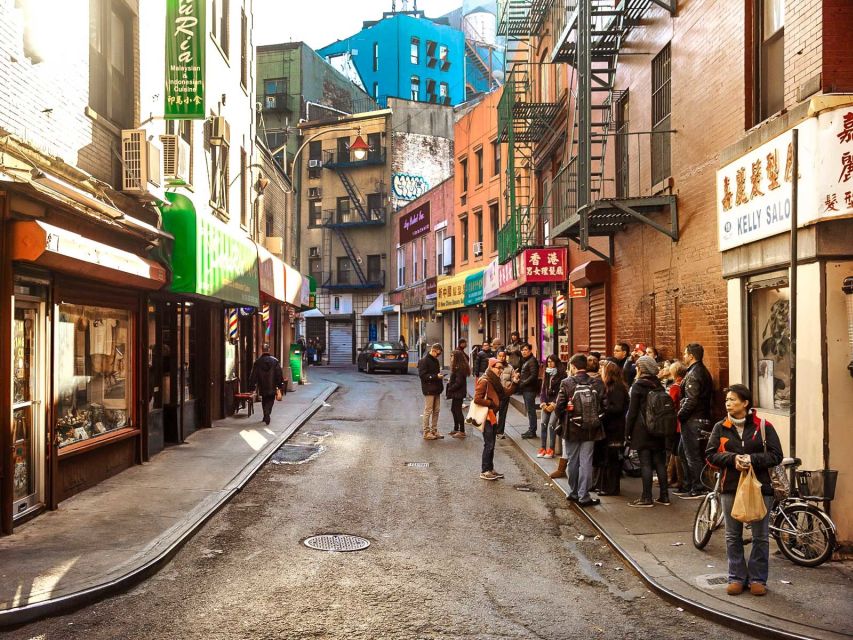
Chinatown is where the tour’s tone often turns sharper. The stops called out in the Chinatown portion aren’t gentle sightseeing points; they’re tied to darker chapters in the neighborhood’s past.
You’ll hear about an opium den stop, and you’ll also visit the Bloody Angle on Doyers Street. The guide frames these as places where Chinese gang violence occurred.
This is one of those moments where being with a live guide helps with interpretation. Without explanation, those labels might just sound like sensational trivia. With explanation, the stops become useful: you learn how immigration patterns, economic pressure, and power vacuums can produce conflict—and how those conflicts leave long-term traces in the city’s geography.
Chinatown here is treated as history you can walk up to, not a theme park. If you like true-crime storytelling but still want it tied to real places, this section will likely feel like the payoff.
Columbus Park: finishing at Gangs of New York’s famous setting
The walk ends at Columbus Park. The tour connects the location to Gangs of New York, which is useful even if you’re only tangentially familiar with the film or its reputation.
The best part of finishing here is that it gives you a mental “landing zone.” You’re done with the guided route, but you’re not done with the neighborhood. Columbus Park is a logical place to regroup, reset, and decide what street to follow next on your own.
If you still want more, you’re already oriented. You’ve learned how to read street names, blocks, and architectural cues, so you can keep exploring without feeling like you’re winging it.
Practical tips so the walk feels easy, not stressful
This tour is built for walking, with outdoor time throughout. Your main preparation should be boring and simple: comfortable shoes and weather-appropriate clothing.
A big practical win is how many guides handle pacing and logistics. Some guides have been noted for keeping the group moving at an easy pace, finding shade on hot days, and watching traffic carefully while crossing streets. That means you can focus on the stories instead of worrying about the logistics.
Also, remember that food costs aren’t included. The tour includes food sampling as part of the experience, so it’s smart to budget for small purchases when you see a stop where you want a bite.
Finally, if you’re the type who loves asking questions, this tour tends to reward that. Guides are described as open and responsive, and you may get extra context when you connect what you’re hearing to what you’re seeing.
Who this SoHo–Little Italy–Chinatown walk is best for
This is a strong choice if you’re:
- a first-time NYC visitor who wants a dense neighborhood overview in a short time
- someone who likes walking tours that explain why places matter, not just what places look like
- interested in immigrant history and the street-level side of organized crime stories
- hoping for a SoHo mix of architecture and modern-day celebrity buzz
It may not be ideal if you:
- want only cheerful, everyday sightseeing
- need a low-walking itinerary or have mobility constraints
- prefer museums or indoor exhibits over street-level storytelling
Should you book this guided walk?
If you want a 2-hour guided SoHo, Little Italy, and Chinatown experience that actually connects the dots between neighborhoods, this is a solid pick for the price. For $39, you’re buying guided interpretation across a lot of named, specific sites—addresses that turn into stories rather than random stops.
I’d book it if you like your NYC history grounded in real locations and you’re okay with crime and immigrant struggle themes being part of the route. I’d think twice if you’re looking for a food-only crawl, a mostly quiet stroll, or a fully accessible walk.
If you do book, show up with comfortable shoes, bring weather gear, and keep your eyes open—SoHo’s Cast Iron district is the kind of place where the setting matters as much as the facts.
FAQ
How long is the guided walk?
The tour lasts 2 hours.
What does the $39 price include?
It includes a walking tour with an English-speaking tour guide. Food costs are not included.
Where does the tour start?
The meeting point may vary depending on the option booked. One starting option listed is Spring Street Park.
Where does the tour end?
The drop-off locations include Columbus Park.
What neighborhoods are covered?
You’ll cover SoHo, Little Italy, and Chinatown.
Is the tour guided in English?
Yes, the live tour guide provides the tour in English.
What should I bring?
Bring comfortable shoes and weather-appropriate clothing.
Is it suitable for people with mobility impairments?
No, it is not suitable for people with mobility impairments.
Is there free cancellation?
Yes. Free cancellation is available up to 24 hours in advance for a full refund.