REVIEW · NEW YORK CITY
SoHo, Little Italy, and Chinatown NYC Guided Walking Tour
Book on Viator →Operated by Experience NYC™ · Bookable on Viator
SoHo, Little Italy, and Chinatown in one walk? That is the appeal: you get a tight tour of classic NYC sights plus the side streets that make these neighborhoods feel personal. I like the small group size (up to 15) because it’s easier to ask questions, and I like that you mix major landmarks with food stops you can choose to try at your own pace. Guides such as Gary and Liz also use their stories to connect architecture, immigration, and everyday life, not just facts.
One thing to consider: this is built around walking time, so you should expect a brisk pace and limited time to wander into shops on your own. If you want long browsing breaks in every neighborhood, plan on doing that before or after the tour.
In This Review
- Key Things I’d Book For
- SoHo, Little Italy, Chinatown: A Smart Downtown Sampler in 2 Hours
- Meet at City Hall, Finish Near the Museum of Ice Cream
- Woolworth Building View: Why It Once Shocked the World
- Park Row and Newspaper Row: The Media Power Center
- Brooklyn Bridge and the Courthouses: Engineering + Authority
- Chinatown: Dumplings on Mosco Street and the Streets Between
- Little Italy on Mulberry Street: A Street Where Restaurants Still Matter
- Cannoli King: One Sweet Stop, One Clear Choice
- SoHo: Cast-Iron Streets and the Haughwout Building Elevator Story
- Price and Value: What $36 Buys You Downtown
- Comfort Tips: Walk Smart, Eat Smart
- Who Should Book This Tour (and Who Might Not)
- Should You Book?
- FAQ
- How long is the tour?
- How much does it cost?
- Which neighborhoods does the tour cover?
- Is food included in the price?
- Are there specific food stops during the tour?
- What is included with the tour?
- Where does the tour start and end?
- Is the tour in English?
Key Things I’d Book For
- Small group feel (max 15) makes it more interactive than the big-bus version
- Landmark views like the Woolworth Building and Brooklyn Bridge come with context, not just photos
- Snack-driven detours include dumplings in Chinatown and a cannoli stop at Cannoli King
- Local street-level storytelling on Park Row, Canal Street, Mulberry Street, and Mosco Street
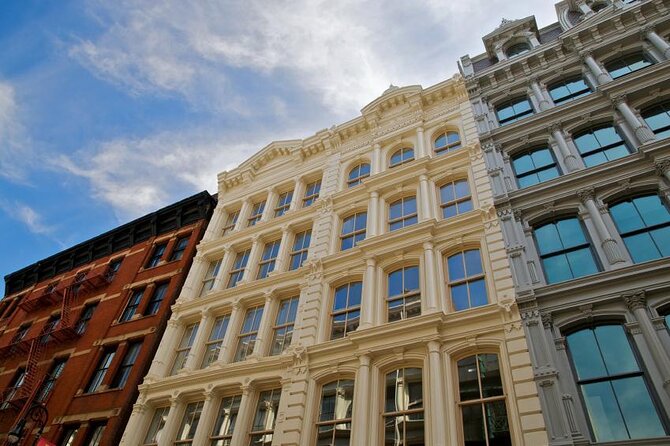
- Architecture lovers get a treat at the Haughwout Building and its passenger elevator history
SoHo, Little Italy, Chinatown: A Smart Downtown Sampler in 2 Hours
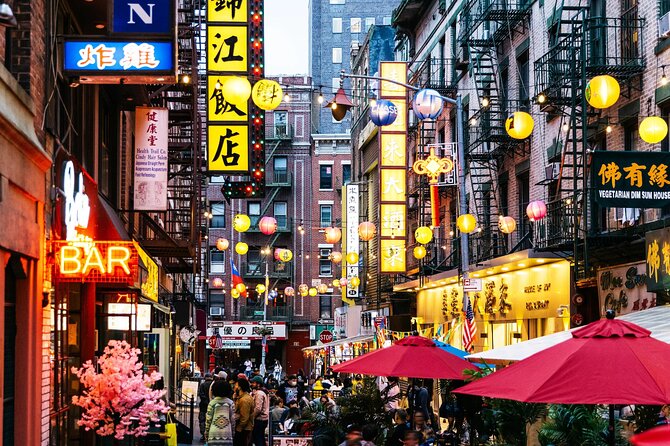
If you only have a short window downtown, this tour is a practical way to get your bearings fast. You move across three neighborhoods that look totally different on the street—SoHo’s cast-iron style, Little Italy’s restaurant energy, and Chinatown’s market streets—while your guide ties it all back to how the city grew.
The best part is that you are not stuck staring at one famous stop for the whole time. You get multiple “stop and look” moments (skyline views, bridge panoramas, courthouse exteriors) and then the walk-and-talk sections where you actually learn how people lived and worked in these blocks.
The group stays small (up to 15), which makes a difference here. You’ll hear the guide clearly, and you’re not stuck as a faceless line while the person in front blocks your view.
You can also read our reviews of more walking tours in New York City


Meet at City Hall, Finish Near the Museum of Ice Cream
The tour starts at City Hall (10007) and ends near the Museum of Ice Cream at 558 Broadway. That matters more than it sounds. City Hall is a central, easy-to-find starting point, and ending around Broadway puts you near subway connections for whatever you do next.
You also get a mobile ticket, which is handy in a city where paper slips disappear in jacket pockets fast. The tour runs about 2 hours including walking time, so it’s long enough to feel like a real plan but short enough that it won’t swallow your whole day.
If you like a clear route with a payoff at the end, this one fits that style. You’ll finish close to a fun stop (the museum area is lively in its own way), and you can hop right into dinner plans or an evening stroll.
Woolworth Building View: Why It Once Shocked the World
One of the first “look up” moments is the Woolworth Building view. This is the kind of New York landmark that almost feels like a poster—tall, distinctive, and instantly recognizable from many skyline photos. The guide adds the missing layer: how it earned its reputation and why it mattered when it was new.
This stop is a good warm-up. If you’re new to the city, it helps you calibrate. You start noticing details you’d otherwise miss: the building’s place in the skyline, how the downtown core is shaped, and how people have always treated architecture as a statement.
It’s also an early win because it breaks the walk with a classic photo moment. You’ll get that first “okay, I get it now” feeling before you head deeper into the neighborhood streets.
Park Row and Newspaper Row: The Media Power Center
Next comes Park Row, once known as Newspaper Row. This is where the tour shifts from skyline drama to city-building stories. You’re walking through a street that helped define American journalism, and your guide connects those major papers to the larger idea of downtown as a workplace magnet.
This is a stop you’ll appreciate even if you do not care much about newspaper history. It’s really about understanding how NYC organizes power: information, publishing, law, finance—these functions all cluster, then influence the streets around them.
Practical tip: this is one of the sections where you should pay attention to street corners and building facades. You’ll understand why the area mattered once you see how the neighborhood is structured.
Brooklyn Bridge and the Courthouses: Engineering + Authority
From Manhattan, you’ll get an iconic Brooklyn Bridge view. This is not just a “nice picture” moment. The guide shares stories about the bridge’s construction and why it became such a lasting symbol—how something built for a practical purpose turns into an identity for the city.
Then you pass famous courthouses. That shift is key. Downtown isn’t only commerce and landmarks; it’s also law and governance. The tour points out how these grand buildings show up in real landmark cases over time, and what role they play in how the city functions.
If you like architecture and systems, this section is strong. You’re watching the bridge represent connection, then looking at court buildings that represent order and decisions. Put together, it helps you see NYC as a machine that still runs on the same big forces.
You can also read our reviews of more guided tours in New York City






Chinatown: Dumplings on Mosco Street and the Streets Between
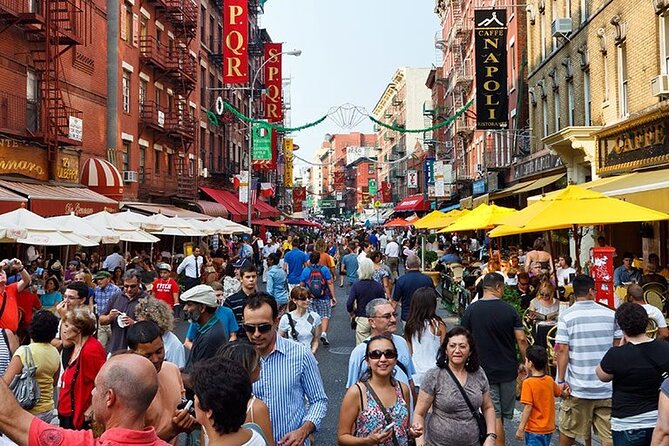
Chinatown is where the tour becomes fully street-level. You’ll spend time in Chinatown itself, and you’ll also walk Canal Street, known for its high-energy street scene and endless vendor displays.
A highlight here is the stop at Mosco Street for what the tour describes as some of the best dumplings. This is the kind of detour that makes the tour feel worth the money even if you are not a museum person. You’re not just reading about food culture—you’re getting pointed toward local favorites, with your guide helping you choose a spot.
Chinatown is also one of the stops where guides often bring extra tools. I’ve seen this tour’s guides use iPad photos while explaining history, and it helps you connect what you’re seeing now with what used to be there.
Two practical notes for you:
- Bring cash for snacks if you can. One guide specifically recommended it, and food isn’t included.
- Wear shoes that can handle crowding and short turns. This is not wide-open park walking.
Little Italy on Mulberry Street: A Street Where Restaurants Still Matter
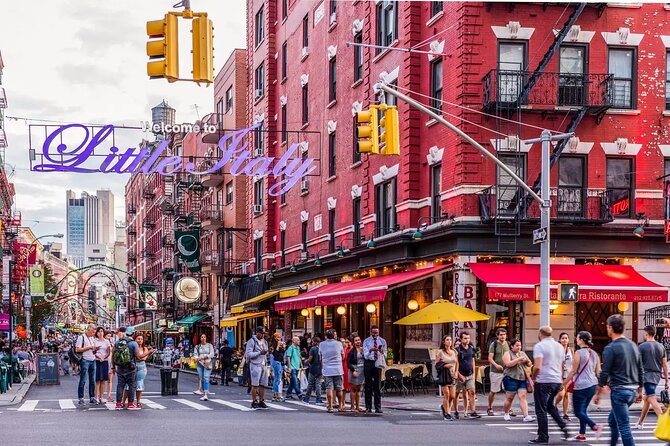
After Chinatown, the walk lands at Mulberry Street, the heart of Little Italy. Here you’ll feel the neighborhood through the things you can’t buy online: the restaurant doors, the storefront vibe, and the sense of people gathering for food.
Your guide tells the immigration story—how Italian families shaped the neighborhood and how it became the cultural hotspot it is today. This is where the tour connects past and present without turning it into a lecture.
You’ll also get a short window to enjoy the street. That’s ideal for a quick reset: you can pause for photos, spot familiar-style signage, and decide where you want to eat later.
If you’re the type who likes “walk up and pick a place” dining, this stop gives you a shortlist of what’s around. If you’re more structured, you can use it to decide your final restaurant plan.
Cannoli King: One Sweet Stop, One Clear Choice
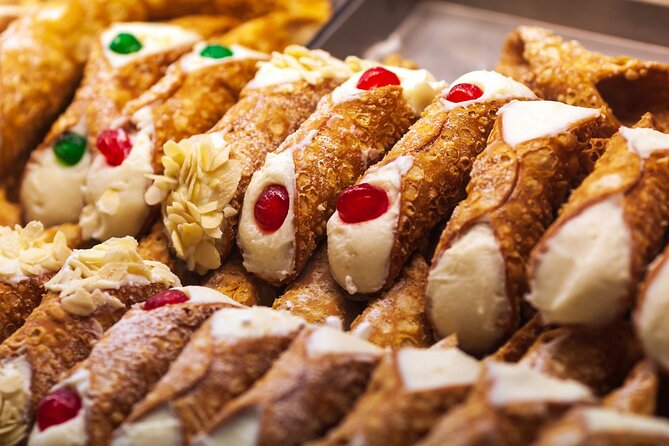
Then you hit a 5-minute stop at Cannoli King for pastries and a classic cannoli. This part is simple: you get a brief break, you get a famous treat option, and you move on before you lose your momentum.
Because food is not included, you should expect to pay out of pocket here. This is also why it can be smart to keep your appetite steady: you’ll likely want room for the dumplings, then the cannoli, and maybe dinner later.
This short stop works well in a tour like this. It avoids the slow, line-based detours that can wreck a walking itinerary, while still giving you that classic NYC dessert moment.
SoHo: Cast-Iron Streets and the Haughwout Building Elevator Story
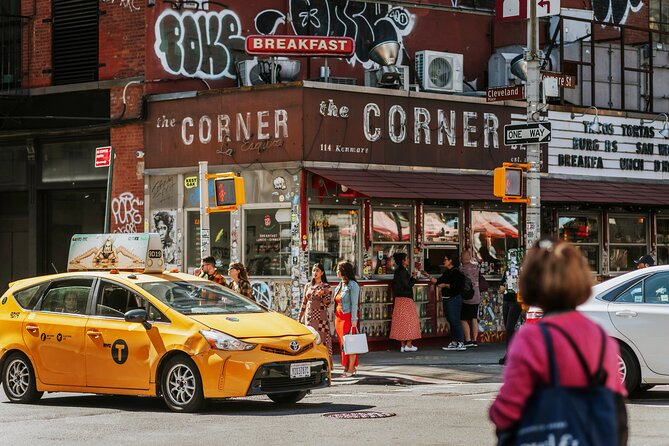
SoHo is the final neighborhood stop, and it’s a visual shift you’ll feel immediately. You’ll walk the area known for cobblestone streets and cast-iron buildings, plus the mix of galleries and boutiques that makes this district a magnet for style seekers.
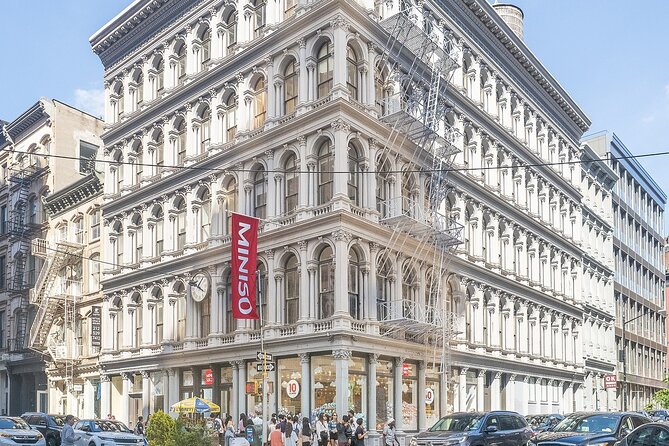
What really makes SoHo worth slowing down for is the story your guide tells at the Haughwout Building. This cast-iron landmark is famous for the world’s first-ever passenger elevator installed there. So instead of just admiring the facade, you learn why it changed how people moved inside tall buildings—and how new tech reshaped city life.
This is also a great spot for photos, but do not just shoot and walk away. Look at the way the buildings line the street, and notice how the neighborhood’s design supports that retail-and-walk rhythm.
If you’re a history fan, you’ll enjoy how the tour frames modern SoHo as an evolution—from industrial beginnings to what it became. If you’re a design person, you’ll enjoy how the architecture is the argument.
Price and Value: What $36 Buys You Downtown
At $36 per person for about 2 hours, the value comes from three things working together:
1) You get a guided route across multiple neighborhoods, not a single-point stop.
2) You get multiple landmark views (Woolworth Building, Brooklyn Bridge, courthouse area) plus street storytelling in Chinatown and Little Italy.
3) You get food pointers you can choose to follow (dumplings and cannoli), even though food/drinks aren’t included.
If you tried to do this on your own, you could copy the walking path, but you would likely miss the “why this street mattered” context that your guide supplies. That context is what turns a collection of photos into something you remember.
The fact that the group is capped at 15 travelers helps value too. You’ll generally get more of a back-and-forth feel, especially on the narrative-heavy parts.
Comfort Tips: Walk Smart, Eat Smart
This is a walking tour with a total duration that includes walking time. One guest noted the walk was about 2 miles, and that sounds about right for a route that also stops often for photos and explanations.
Do this to keep it comfortable:
- Wear supportive shoes. Cobblestones in SoHo can punish soft sneakers.
- Bring a light layer. NYC weather changes fast, and one tour participant mentioned cold and windy conditions.
- Stay hydrated when it’s hot. Another participant said their guide made sure everyone drank water and stayed in shade when possible.
- Plan for snack spending. Food isn’t included, so set aside cash or a card budget for dumplings and cannoli.
Finally, if you like shopping, remember the tour time is limited. This is not built for long store breaks. Use the walk to learn and find what you want, then make your purchases afterward.
Who Should Book This Tour (and Who Might Not)
This tour is a great fit if you want a guided overview that still feels like walking around real neighborhoods. It’s also ideal when you have limited time and you want to hit classic NYC zones: Chinatown, Little Italy, and SoHo.
You’ll likely enjoy it most if you like:
- architecture and landmark stories
- food culture as part of the city’s identity
- a route that gives you direction for later dining and wandering
You might want a different option if you strongly prefer slow sightseeing with lots of shop time. Because this tour is structured around a 2-hour plan, you may feel like you’re moving even when the streets are tempting you to stop.
Should You Book?
Yes, if you want a smart downtown introduction that blends skyline views, street history, and two classic food moments. The price makes sense for what you cover, and the small group format helps keep it engaging—whether your guide is Gary, Liz, or someone else leading that day.
Book it if you like to learn while you walk and you want a route that ends in an easy place to continue your day. Skip it if you need long free time in every neighborhood, since this one is built for motion, stories, and photo ops rather than extended browsing.
FAQ
How long is the tour?
The tour runs about 2 hours, and the duration includes walking time.
How much does it cost?
It costs $36.00 per person.
Which neighborhoods does the tour cover?
You’ll cover SoHo, Little Italy, and Chinatown.
Is food included in the price?
Food and drinks are not included. There are optional food stops along the way.
Are there specific food stops during the tour?
Yes. The tour includes a dumpling stop in Chinatown on Mosco Street and a cannoli stop at Cannoli King.
What is included with the tour?
It includes a professional local tour guide and a guided walking tour, plus famous local foods in each neighborhood as optional (cost not included), and multiple photo ops.
Where does the tour start and end?
It starts at City Hall, New York, NY 10007 and ends near the Museum of Ice Cream, 558 Broadway, Manhattan, NY 10012.
Is the tour in English?
Yes, it’s offered in English.