REVIEW · SOFIA
Sofia Highlights 2 Hour Sightseeing Walking Tour
Book on Viator →Operated by 365 LTD · Bookable on Viator
Sofia on foot in two hours. This small-group highlights walk strings together big-name landmarks and a few surprise stories, so you get the feel of Sofia without spending a full day commuting between sites. I especially like being able to enter St. Alexander Nevsky Cathedral, and I love how the licensed guide (often Nikola) keeps the whole route easy to follow while answering questions as you go.
One thing to plan for: the tour relies on good weather, and not every building on the route has admission included—some stops are exterior viewing only, or you’ll need to pay separately if you want to go inside.
A Walking Tour That Actually Feels Like a Plan
- Alexander Nevsky Cathedral entry included, right at the start
- A tight, logical route that moves from churches to mosques, then down into Roman Serdica
- Quick stops with real explanations, not long waits or wandering
- Mineral water springs tasting, a very Sofia detail (and it’s free on the route)
- Ends at Vitosha Boulevard, so lunch is right there instead of far away
In This Review
- A 2-hour highlights tour that helps you get your bearings fast
- Start at St. Alexander Nevsky Cathedral and the Sofia big-picture story
- Unknown Warrior to Basilica of Saint Sofia: the city’s layers, told in minutes
- The yellow cobblestones of the royal-palace-now-gallery area
- Rotunda Church of St George: Sofia’s Roman past, easy to miss
- Mosque, synagogue, and the living architecture of Sofia
- Sofia’s older museum story: when a mosque becomes a museum
- Ancient Serdica Archaeological Complex: the most satisfying “down under” moment
- Mineral water springs: a very Sofia kind of stop
- Modern power and big monuments: guards, assemblies, and postwar layouts
- Church tragedies and city-name legends: Saint Nedelya and the Monument of Saint Sofia
- The ending that actually works: right at Vitosha Boulevard
- Price and value: what $19.35 gets you (and what it doesn’t)
- Who this walking tour fits best
- Should you book the Sofia Highlights 2-hour walk?
- FAQ
- What time does the Sofia Highlights 2-hour tour start?
- Where do I meet the guide?
- How long is the tour?
- Is the tour offered in English?
- Do I need a printed ticket?
- Where does the tour end?
- How big is the group?
- What’s included in the price?
- Which admissions are not included?
- Is tipping included?
- Is free cancellation available?
- Does the tour run in bad weather?
A 2-hour highlights tour that helps you get your bearings fast
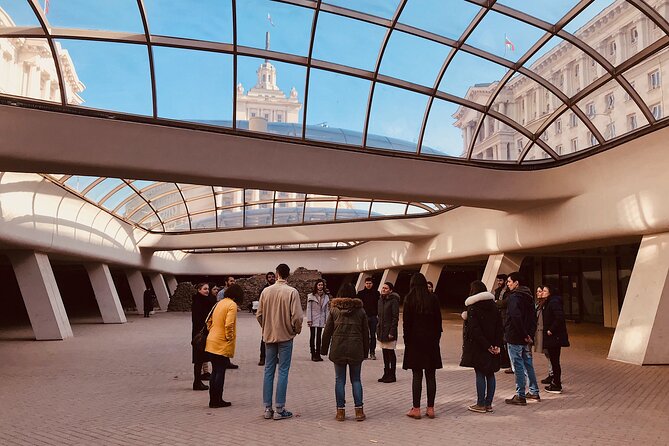
If Sofia is new to you, you can easily spend your first day seeing a few famous buildings—then leaving with no idea how they connect. This tour solves that with a steady storyline: where the city’s power shifted, why the churches and mosques matter, and how Roman-era remains sit under modern streets.
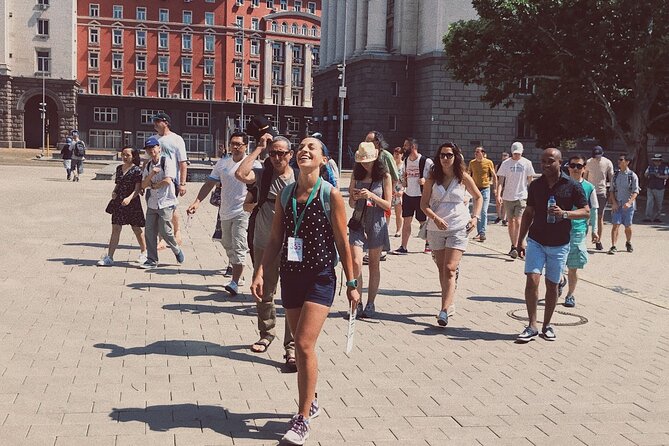
The pacing is also realistic. You’re looking at an about-2-hour walk with short stops (many around 5 minutes) plus one proper interior visit at the start. That makes it a good option when your schedule is tight, you’re jet-lagged, or you just want a concentrated overview before you go exploring on your own.
Start at St. Alexander Nevsky Cathedral and the Sofia big-picture story
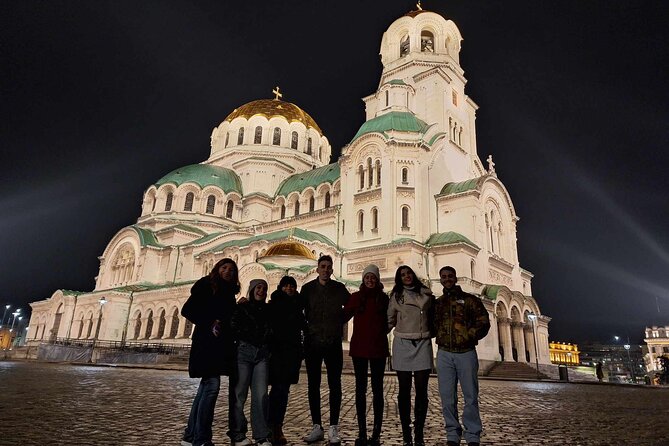
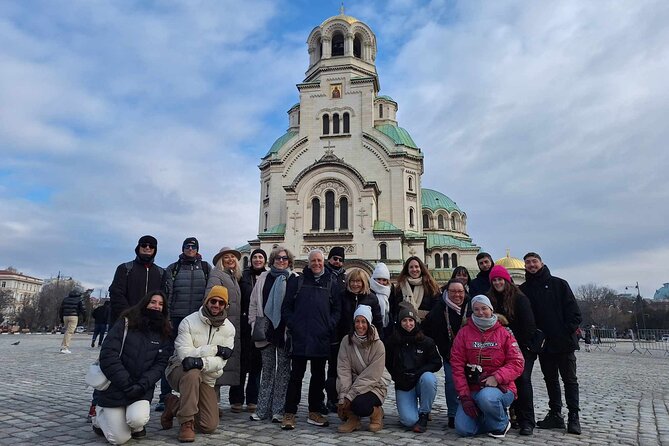
You begin in Sofia Center at the Patriarchal Cathedral St. Alexander Nevsky, in front of the cathedral itself (meeting point: pl. Sveti Aleksandar Nevski). The starting time is 11:00 am, and the route kicks off with an overview that links Bulgarian history to Sofia’s role as the country’s crossroads.
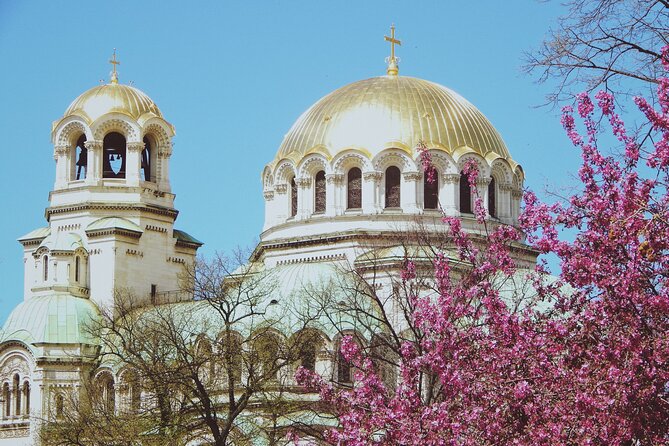
The big payoff here is simple: you meet the guide in front of Alexander Nevsky and you also enter the cathedral as part of the tour. That’s not just sightseeing theater—it sets the tone. A guide can point out what to notice (art, design, and the cathedral’s background) while you’re inside, when it actually makes sense to look closely.
One practical note: because the tour is designed for about two hours, the cathedral time is focused rather than endless. If you love slow museum-style touring, you may want to circle back later after your walk. But as a first pass, it’s a strong start.
You can also read our reviews of more walking tours in Sofia

Unknown Warrior to Basilica of Saint Sofia: the city’s layers, told in minutes
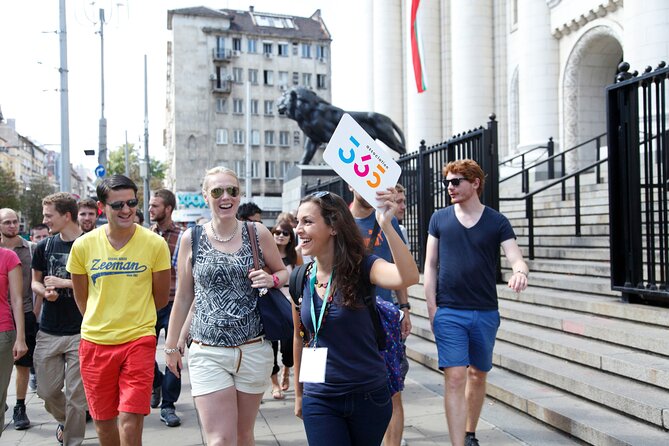
After Alexander Nevsky, you move to the Monument to the Unknown Warrior. It’s brief, but it matters—this lion statue and memorial complex are dedicated to Bulgarian heroes, and the guide explains the symbolism of the lion. Even if you’re not a statue person, this stop gives you a key to reading Sofia’s public monuments.
Next comes the Basilica of Saint Sofia, where the tour focuses on the story behind the church that gave the city its name. That’s a smart move because it turns a familiar-sounding landmark into a clue about how Sofia developed over time.
Then you reach the Saint Nikolas Russian Church. The tour frames it around wishes—how and why people connect this church to that idea. You’re not there long, but it’s the kind of stop that adds local color without slowing the pace.
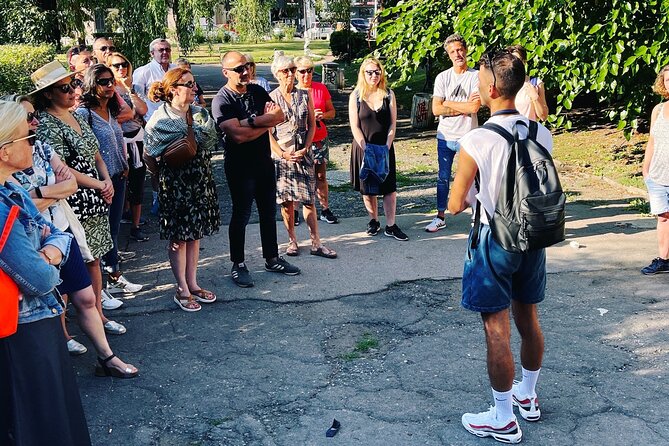
And in between these landmark buildings, you also pass through a park that many locals like. The atmosphere shift is noticeable: instead of “photo-stop tourism,” you get a glimpse of Sofia’s more everyday tempo, including that youthful, street-level feel.
The yellow cobblestones of the royal-palace-now-gallery area
From churches, the walk shifts toward the cultural core. One stop is the National Art Gallery, housed in Bulgaria’s former Royal Palace. You’ll also learn about the story of the yellow cobblestones surrounding it, which is the kind of detail that’s easy to walk past on your own.
Important for planning: admission for the National Art Gallery is not included. That doesn’t make the stop pointless—it still works as a photo and orientation moment. But if you want to go inside, set aside extra time and plan on paying your own ticket.
Rotunda Church of St George: Sofia’s Roman past, easy to miss
Sofia has older layers, and one of the best ways to spot them is the Rotunda Church of St George. It’s described as well hidden, so this stop is basically about helping you notice something you’d probably overlook at street speed.
This is your Roman past moment. The guide connects the building to Sofia’s ancient roots (and explains why it’s so special despite its more discreet presence). Again, it’s not a long sit-down visit—think quick context and then a chance to look.
Mosque, synagogue, and the living architecture of Sofia
As the route continues, the city becomes more visibly “multi-faith, multi-era.” You get the Basilica-to-mosque-to-synagogue feeling, with clear explanations for each.
The Banya Bashi Mosque is especially useful because it’s Sofia’s only functioning mosque today. The tour frames its story around the Bulgarian Muslim community, so you’re not just looking at architecture—you’re learning why it’s still relevant.
Sofia Synagogue comes next. It’s presented as the biggest on the Balkan peninsula, and the guide shares the extraordinary history of the Bulgarian Jewish community. Admission here is not included, so you’ll want to treat this stop as a meaningful exterior look unless you choose to visit separately.
Between these two, it helps that the guide keeps the route moving in short segments. That way, you’re not standing around trying to understand the broader context while hungry, tired, or stuck at a single stop for too long.
Sofia’s older museum story: when a mosque becomes a museum
You’ll also see the National Institute of Archaeology with Museum, which is explained as once a mosque—now Sofia’s oldest museum. Admission is not included, so expect that the tour helps you connect the site to Sofia’s changing religious and cultural roles, even if you’re not going inside during the walk.
The same idea carries into the stop at the Presidency Building and other government-area landmarks later on. Some places aren’t about entering—they’re about understanding symbolism, history, and how the city communicates power in public spaces.
Ancient Serdica Archaeological Complex: the most satisfying “down under” moment
One of the most memorable parts of this route is Ancient Serdica Archaeological Complex. The tour explains that beneath Sofia’s modern-day center lies the ancient city of Serdika, and you get to walk around the excavations.
This is a strong stop for two reasons:
- It changes the scale of what you’re seeing—suddenly Sofia isn’t just medieval churches and modern streets.
- It feels physical. You’re walking in the space where the past is literally exposed.
It’s also one of the better “use your time well” moments because the tour keeps it short enough to stay on schedule while still giving you enough time to look and absorb.
Mineral water springs: a very Sofia kind of stop
Sofia exists early on partly because of its mineral waters, and the tour includes a stop where you can try them. It’s clearly presented as something you should not hesitate to sample, with the note that the waters have healing powers.
Even if you take the healing claims with a grain of skepticism, the practical value is real: this gives you a uniquely local experience that’s hard to recreate on your own unless you already know where to go. Also, it’s one of the few moments that’s not purely visual. You get taste, not just photos.
Modern power and big monuments: guards, assemblies, and postwar layouts
Later in the route, you’ll see the Presidency Building area with Bulgarian National Guards always in front. The guide discusses the symbolism of the unusual job, and you can take a picture with them. This is one of those stops that makes sense even if you’re not a politics person—public rituals and uniforms are part of Sofia’s identity.
From there, the tour continues to the National Assembly of the Republic of Bulgaria area. The guide explains that after WW2, the Largo of Sofia was constructed by the new communist power and that the layout symbolizes the regime’s strength. You’ll see the Council of Ministers and National Assembly, along with the Presidency building area as part of this wider view.
Admission for these government sites is not included, so you’re reading the scene rather than entering it. Still, it adds a needed contrast to the religious and ancient parts of the walk.
Church tragedies and city-name legends: Saint Nedelya and the Monument of Saint Sofia
Two of the story-heavy stops come near the end.
First, the Monument of Saint Sofia (Patron of the City). The tour points out the statue and the controversy around it. That’s a great way to learn that not all landmarks are just decorative—some are arguments in stone, reflecting how different eras view identity.
Then you reach the Catholic Cathedral of St Joseph and Saint Nedelya Orthodox Cathedral. The Catholic cathedral is presented as Sofia’s biggest Catholic church, with a story about Bulgaria’s small Catholic community. After that, Saint Nedelya is framed around the tragic story of Bulgaria’s biggest terrorist attack.
Both are free to view on the route, and both are quick stops. Still, the guided context is the whole point. Without it, you’d just see domes. With it, you understand what people have lived through near these walls.
The ending that actually works: right at Vitosha Boulevard
The tour finishes right next to Sofia’s main pedestrian street, Vitosha Boulevard (ending by bul. Vitosha 1). That’s a smart design, because you don’t have to fight transit or walk back to find food.
This is also where you can keep going at your own pace. The area is filled with restaurants, and it’s easy to pair lunch with a short wander while the explanations are still fresh in your head.
Price and value: what $19.35 gets you (and what it doesn’t)
At $19.35 per person for about two hours, this tour is priced like a budget-friendly way to build a foundation. The biggest value is that you get an official licensed local guide and a route that covers a lot of Sofia’s identity, from religious architecture to ancient ruins to modern state symbolism.
Included on the route:
- Official licensed local tour guide
- Mobile ticket
- Entry to the St. Alexander Nevsky Cathedral (since the tour includes entering)
Not included (important for expectations):
- Tips
- Admission tickets for several stops, including the National Art Gallery and other sites marked as not included on the route
So, the real question is not just cost—it’s whether you want a guided overview. If you’re the kind of traveler who likes context and prefers to spend your free time choosing optional extra visits, this price works well.
Also consider group size. The maximum is 30 travelers, which is large enough to keep the tour economical but usually small enough that a guide can still manage questions.
Who this walking tour fits best
This tour fits you if:
- You want a strong Sofia orientation quickly
- You like a guided route that connects landmarks into a single storyline
- You’re comfortable with a moderate walking pace over a couple of hours
- You’d rather start with the highlights than plan ten separate tickets and routes
It might be less ideal if:
- You want to spend long periods inside major museums (the walk is time-efficient)
- You expect every stop to include admission
- Weather is poor when you travel, since the tour requires good conditions
Should you book the Sofia Highlights 2-hour walk?
Yes, if you want Sofia in a clean, organized format. For the money, you get a lot of key architecture and city symbolism, plus the standout inside visit at St. Alexander Nevsky Cathedral and a very local moment with the mineral water springs.
If you’re the type who hates “quick stops” and wants slow, deep museum time, you’ll probably want to use this tour as your first step, then return later for specific places you care about most. But for most first-timers, it’s a smart, efficient way to start seeing Sofia like a local.
FAQ
What time does the Sofia Highlights 2-hour tour start?
It starts at 11:00 am.
Where do I meet the guide?
Meet at Patriarchal Cathedral St. Alexander Nevsky, Sofia Center, pl. Sveti Aleksandar Nevski, 1000 Sofia, Bulgaria.
How long is the tour?
The duration is about 2 hours.
Is the tour offered in English?
Yes, it’s offered in English.
Do I need a printed ticket?
No. You’ll use a mobile ticket.
Where does the tour end?
It ends near the beginning of Sofia’s main pedestrian street, Vitosha Boulevard (Sofia Center, bul. Vitosha 1).
How big is the group?
The tour has a maximum of 30 travelers.
What’s included in the price?
An official licensed local tour guide is included. The St. Alexander Nevsky Cathedral entry is included as part of the tour.
Which admissions are not included?
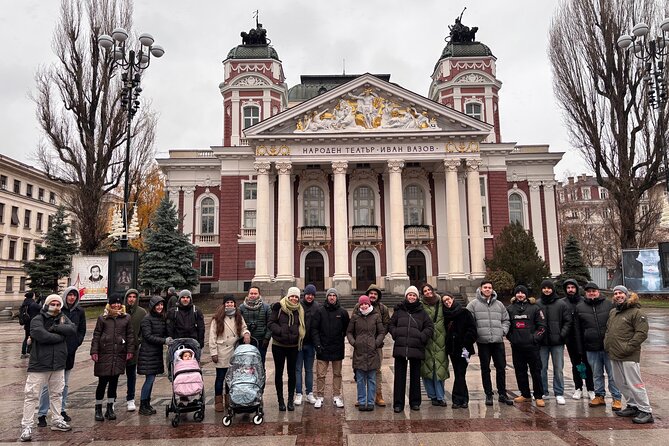
Admission tickets are not included for stops such as the National Art Gallery, Ivan Vazov National Theater, National Institute of Archaeology with Museum, and several other listed sites on the route.
Is tipping included?
No. Tips are not included.
Is free cancellation available?
Yes. You can cancel up to 24 hours in advance for a full refund.
Does the tour run in bad weather?
It requires good weather. If it’s canceled due to poor weather, you’ll be offered a different date or a full refund.