REVIEW · LONDON
London in WW2 Walking Tour with Churchill War Rooms Visit
Book on Viator →Operated by Urban Saunters · Bookable on Viator
WWII in London sounds grand. This one feels close. You’ll trace the stress points of 1940s Westminster, then step into Churchill’s underground command center where Britain tried to outlast the Blitz. It’s a smart mix of street-level history and the real machinery of wartime government.
I especially like the small group size (15 or fewer). That keeps the pace human and makes it easier to ask questions instead of talking into a crowd. I also like that Churchill War Rooms entry is included, plus an audio guide inside, so your time there is guided first and then flexible.
One thing to plan for: most of the walk is outside, with several short photo stops. If it’s pouring rain or there’s street activity, you’ll want good shoes and a little patience.
In This Review
- Key highlights at a glance
- A WWII Walk Through Westminster to Churchill’s Underground HQ
- What You’re Paying For: War Rooms Entry + a Real Guide
- Meeting at Victoria Embankment and How to Time the 3-Hour Window
- Westminster Bridge: Green Paint, Hidden Danger, and WWII Under Your Feet
- Parliament and Parliament Square: When Big Ben Fell Silent
- Westminster Abbey Outside Views and Why the Setting Still Matters
- Whitehall’s Cenotaph and Women in WWII Monuments: Paying Attention, Not Just Passing By
- Horse Guards Parade: A Photo Stop With Serious Backdrop
- Churchill War Rooms: Guided Orientation, Then Self-Guided Time
- The Guide’s Style: Storytelling, Humor, and Human Scale
- Price, Pace, and Value for Your Itinerary
- Tips to Get More From It (Without Overthinking)
- Who This Tour Fits Best (and Who Might Want a Different Option)
- Should You Book This London WWII Walking Tour and War Rooms Visit?
- FAQ
- How long is the London WW2 walking tour with Churchill War Rooms?
- What’s included in the price?
- Is Westminster Abbey included?
- How big is the group?
- Where do you meet and where does the tour end?
- Is hotel pickup or drop-off included?
- Are service animals allowed?
Key highlights at a glance
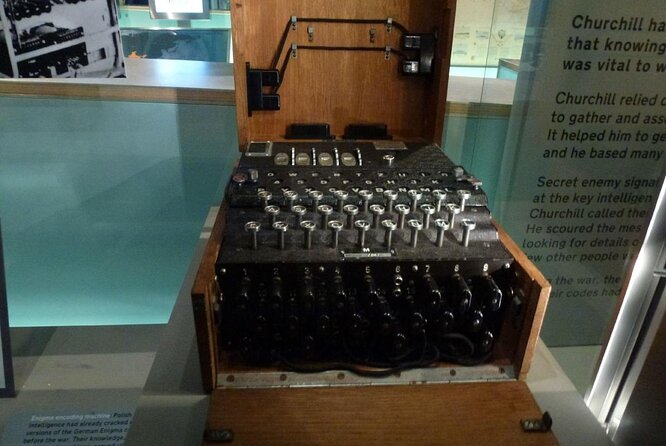
- Churchill War Rooms entrance included with an audio guide
- Small group (max 15) for better questions and smoother timing
- Westminster route with WWII context around Parliament and memorials
- Several iconic landmarks viewed from street level (no long detours)
- War Rooms visit is partly guided, then self-paced
- Guides who mix humor with facts, including storytelling names like Nathan and Babs
A WWII Walk Through Westminster to Churchill’s Underground HQ
This tour is built around one simple idea: the war wasn’t only at sea or in the skies. In London, it lived in the corridors of power—on streets like Westminster Bridge, outside Parliament, and along Whitehall where the machinery of government had to keep running.
You’ll cover major landmarks fast, but not shallow. The guide connects the dots between places you already recognize and what was actually at stake in WWII. That link—between stone-and-history and wartime decisions—is what makes this walk more than a “see the sights” stroll.
And then you go underground. The Churchill War Rooms portion is where the story tightens. You stop looking at Westminster from street level and start seeing how leaders ran Britain’s survival from behind locked doors.
You can also read our reviews of more walking tours in London



What You’re Paying For: War Rooms Entry + a Real Guide
The price—$104.02 per person—can feel like a lot until you look at what’s included. You get the guided walking tour, the Churchill War Rooms admission, and an audio guide once you’re inside. That means you’re not piecing together separate tickets and you’re not walking into the War Rooms cold.
The value also comes from how the group is handled. With 15 travelers or fewer, you’re less likely to feel herded. You’ll also get explanations that fit a small room, which matters for something as detailed as WWII command operations.
If you’re trying to do a lot in London in a short time, this structure helps. You spend roughly 3 hours total—walk and landmarks first, then the War Rooms—without turning the day into a logistics puzzle.
Meeting at Victoria Embankment and How to Time the 3-Hour Window
You start at Boadicea and Her Daughters, Victoria Embankment (SW1A 2JH). It’s a workable meeting place because it’s central and near public transportation, which makes it easier to arrive without stress.
Expect the walking portion to move at a steady rhythm. Stops outside range from about 5 minutes to around 10 minutes, so you’ll get quick context, photo opportunities, and then you’re moving again. If you hate rushed sightseeing, plan to use the War Rooms time as your slower, deeper chunk.
At the end of the walk, the guide takes you into Churchill War Rooms on King Charles St (SW1A 2AQ). After that, the War Rooms experience becomes self-guided so you can linger where you want. That’s a good balance: story and orientation up front, control afterward.
Westminster Bridge: Green Paint, Hidden Danger, and WWII Under Your Feet
Your first stop is Westminster Bridge, viewed outside. The bridge’s Houses of Commons side is historically painted green, which helps you anchor the political geography immediately. Even if you’ve seen Westminster Bridge before, the WWII framing gives it a new weight.
You’ll also hear a detail that lands hard: bombs are still found in London waters today, tied to the legacy of WWII air raids. Whether you’ve read about the Blitz before or not, this kind of fact turns the street into something more physical. It’s not just about the past; it’s about the way the past keeps showing up.
This stop is brief, so don’t treat it like a museum stop. Think of it as your orientation moment: where power sits, where danger came from, and why certain views mattered.
Parliament and Parliament Square: When Big Ben Fell Silent
Next up is Houses of Parliament, again outside. The guide frames Parliament as the political center during a period when the Third Reich’s threat was rising and London was under constant pressure. You’ll also get the contrast between Westminster’s normal rhythms and wartime disruption—like the quieting of Big Ben and the constant threat overhead.
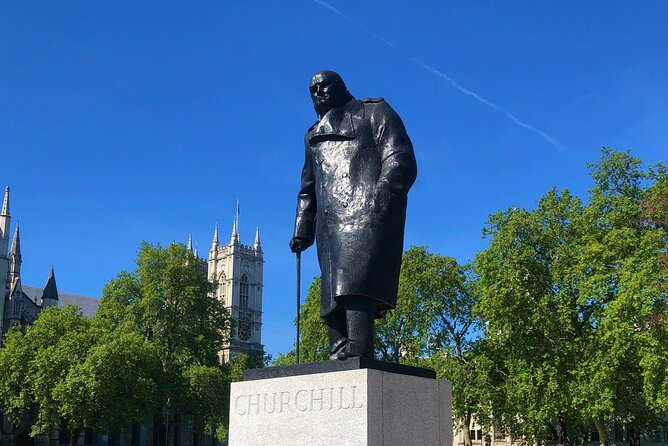
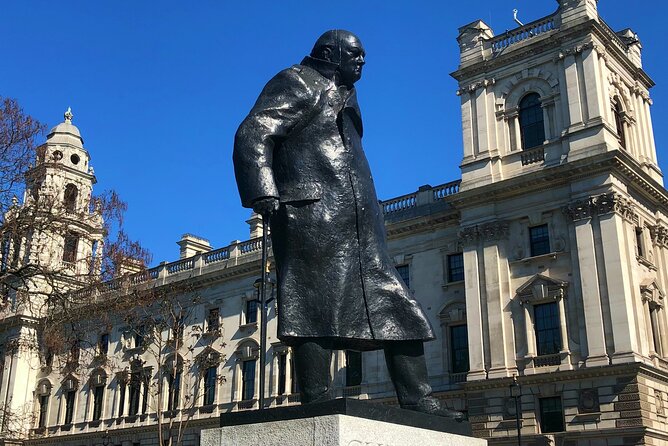
Then you move to Parliament Square, a place you can recognize instantly. It’s a “democracy collage” of public memory, with statues including Mahatma Gandhi and Millicent Fawcett, plus Honest Abe (Lincoln). The point isn’t just who’s represented—it’s what democracy means when it’s tested.
This stop is also outside and short, so the main benefit is perspective. You see the square, then you hear how the values celebrated there were exactly what wartime Britain had to protect and defend.




Westminster Abbey Outside Views and Why the Setting Still Matters
You’ll pass by Westminster Abbey from the outside area. Entrance isn’t included, so you’re not touring the interior as part of this specific experience. Still, the guide ties the Abbey area back to Westminster’s WWII significance.
Why does this matter? Because Westminster isn’t one building. It’s a tight cluster of institutions—government, memorial space, and national identity—that were all part of the same story during the war years. Even without going inside, you get the “why here” that most casual sightseeing skips.
If you do want to go in, you’d need a separate ticket. But even if you’re not planning extra entrances, the outside context makes the Abbey feel less like a postcard and more like a landmark in a live, pressured city.
Whitehall’s Cenotaph and Women in WWII Monuments: Paying Attention, Not Just Passing By
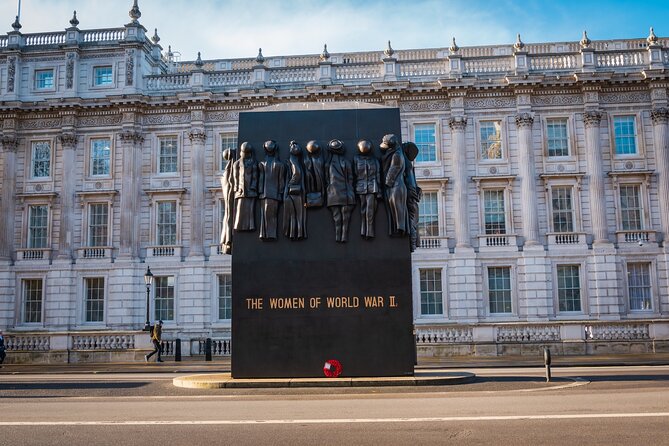
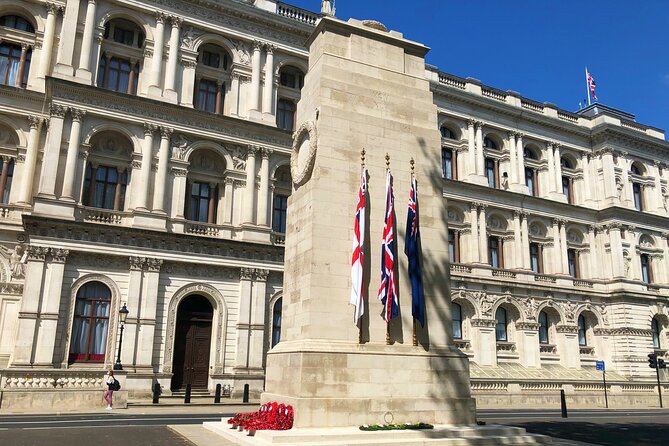
The tour continues to Whitehall, where the Ministry of Defence connection gives you a modern link to wartime decision-making. You’ll also visit key memorial points from the outside, including the Cenotaph and the Women in WWII monuments.
This is one of the stops where the tour becomes more than historical trivia. The Cenotaph is about remembrance in a way that feels direct, not academic. The Women in WWII monument adds another layer—recognizing contributions beyond the stereotype of what wartime service “looks like.”
If you care about understanding the human side of WWII, this is a meaningful segment. One of the strengths of the guides you’ll see mentioned by name—people like Nathan—tends to focus on people, not just policies. You’ll feel that shift when you’re looking at memorial space and hearing what it’s trying to honor.
Horse Guards Parade: A Photo Stop With Serious Backdrop
At Horse Guards Parade, you’re positioned for classic Westminster photo angles. You’ll see the mounted Queen’s Horseguards and learn where to stand for the best view, including the official entrance to Buckingham Palace itself.
This part is quick—about 10 minutes—so treat it as a break in the serious tone rather than a second major lesson. It’s a chance to grab photos, reset your legs, and enjoy how the area still looks ceremonial even though the WWII world your guide described is just a few streets away.
If you’re traveling with teens or anyone who needs variety, this stop helps keep the experience moving without losing context.
Churchill War Rooms: Guided Orientation, Then Self-Guided Time
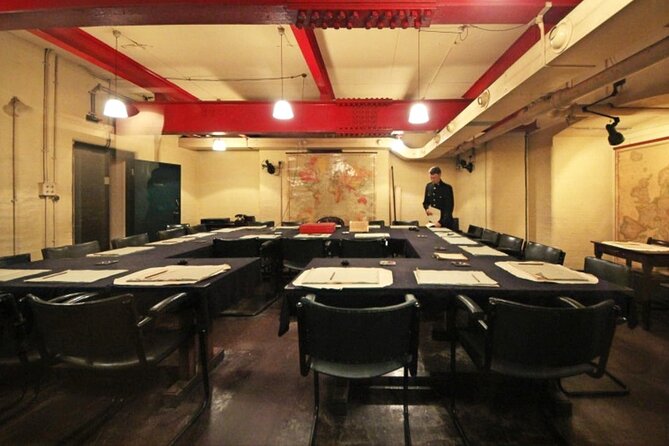
This is the anchor of the whole experience. The Churchill War Rooms visit runs about 1 hour, and it starts with your guide. You’ll learn how the underground offices became the epicenter of Britain’s wartime government effort—where planning and decisions had to happen under threat of invasion.
You’ll also use the audio guide inside, which helps you move at your own pace without missing key details. Many people find that combination works well: first you get a guided sense of the layout and stakes, then you can linger where you personally want depth.
A practical tip: don’t rush the rooms. The War Rooms are designed for you to slow down and read the details. If you skim, the place feels like “cool underground rooms.” If you take your time, it starts to feel like a working space, built for speed and survival.
Also, one reason guides get praised so much here is the way they time entry and keep you oriented. You may find entry feels easier than doing it completely on your own, since your guide handles the handoff and keeps the flow smooth.
The Guide’s Style: Storytelling, Humor, and Human Scale
What really stands out across this kind of tour is how the guide speaks. The best sessions are part lecture, part story, and part street-level interpretation. Guides like Nathan, Babs, Jeremy, Paul, and Richard show up repeatedly in people’s writeups for a reason: they connect facts to moments and keep things lively.
Humor is part of that. Expect light pop-culture detours sometimes—stories have included things like the KGB pelicans and modern-name drops from London’s hotels—used as contrast, not as a distraction. That tone matters because WWII can get heavy fast. A little wit helps you stay focused.
Guides also tend to handle real-world street conditions. If there’s a protest or disruption, the guide’s job is to keep the group moving safely and efficiently. That’s not something you can control, so it’s a comfort to have a guide who knows how to adapt.
Price, Pace, and Value for Your Itinerary
Let’s talk fit. If you’re doing London for a few days, this tour is a high-impact way to get WWII context without burning an entire day on one museum.
The pace—walking plus outside stops—means you’ll cover a lot of ground in a short window. The War Rooms time then gives you the deeper attention. That split is ideal for people who want both: structure on the street and slow reading underground.
Is it perfect for everyone? Not if you want a long, unhurried tour of every building, because you’re not going inside Parliament or Westminster Abbey here. But if you want the story of WWII Westminster with a major anchor site, this is a strong use of time.
Tips to Get More From It (Without Overthinking)
A few practical things will help you enjoy this more:
- Wear comfortable shoes. It’s a walking tour with multiple short stops.
- Bring a light rain layer if the forecast looks iffy. London weather loves drama.
- Be ready at the start time. The schedule is tight enough that arriving late can stress the group flow.
- Plan to linger in the War Rooms. Since the second half is self-guided, that’s your chance to slow down.
- Use the audio guide actively. You’ll get more out of the rooms if you pause when something catches your attention.
If you’re a history fan, you’ll have plenty to chew on. If you’re not, the street-level storytelling still gives you something to react to, and the War Rooms do the heavy lifting visually.
Who This Tour Fits Best (and Who Might Want a Different Option)
This works best for you if:
- you want WWII Westminster context and not just a museum visit
- you like small groups and guided storytelling
- you’re curious about what wartime leadership looked like from the inside
It may not be the best match if:
- you want to enter Westminster Abbey as part of the ticket (this tour does not include that entrance)
- you strongly dislike walking in cold or rain
- you want a long stay at one single location instead of a packed route
If you’re traveling with teens, this format often lands well because it mixes landmarks with a clear “why it mattered” theme.
Should You Book This London WWII Walking Tour and War Rooms Visit?
I’d book it if your trip has limited time and you want a meaningful WWII experience without spending hours building an itinerary. The biggest reasons are simple: Churchill War Rooms entry is included, the group stays small, and the route focuses on the places where decisions were made and the public watched.
It’s also a smart “first WWII tour” in London. You’ll walk away with a clear mental map of Westminster under pressure, then you’ll have the War Rooms as the concrete payoff.
If you care most about one thing—say, deep museum time—then you might consider an itinerary that prioritizes fewer stops. But if you want the story of WWII Westminster stitched together and tied to the War Rooms, this is an efficient, satisfying way to do it.
FAQ
How long is the London WW2 walking tour with Churchill War Rooms?
The duration is about 3 hours.
What’s included in the price?
You get a guided walking tour of Westminster, an English-speaking local expert guide, a Churchill War Rooms entrance ticket, and an audio guide inside the War Rooms.
Is Westminster Abbey included?
No. Entrance to Westminster Abbey is not included, and you’ll view it from outside.
How big is the group?
The tour is limited to a maximum of 15 travelers.
Where do you meet and where does the tour end?
You start at Boadicea and Her Daughters, Victoria Embankment, London SW1A 2JH. The experience ends at Churchill War Rooms, King Charles St, London SW1A 2AQ.
Is hotel pickup or drop-off included?
No. Hotel pickup and drop-off are not included.
Are service animals allowed?
Yes, service animals are allowed.