REVIEW · MAPUTO
Maputo Downtown Walking Tour
Book on Viator →Operated by Maputo Tour Guides · Bookable on Viator
Downtown Maputo gets a story fast. This 3-hour walking tour is a small-group circuit through major landmarks, mixing big civic buildings with everyday city life, then turning you loose for the rest of the day. You’ll move at a local pace with a guide who ties the sights together, from Nossa Senhora da Conceição Cathedral to the Central Market and beyond.
What I like most is how practical it feels for first-time orientation, without turning into a checklist stomp. I also like the built-in rhythm: about an hour in the thick of downtown history, then a couple of hands-on stops (market, gardens) so Maputo feels real, not staged. One thing to consider: the Fortress of Maputo entry is listed as not included, so you may need extra cash or a separate ticket plan if you want to go inside.
In This Review
- Key highlights worth your attention
- Maputo downtown in 3 hours: what this walk really covers
- Start at Fortaleza de Maputo: your orientation point by the port
- Cathedral and Old Town Hall: white stone and colonial pride
- Praça da Independência and Samora Machel’s statue: symbolism you can question
- Franco-Mozambican Cultural Center: the “almost-casino” story
- Casa de Ferro: Eiffel’s iron house and the hot-climate lesson
- Tunduru Botanical Gardens and the city’s “safari in town”
- Central Market: ingredients, tips, and a shortcut to Mozambican cooking
- Jumma Masjid and the train station: faith and forward motion
- Bagamoyo Street: French colonial charm with a gritty edge
- Fortress time and the best way to use the free afternoon
- Price and logistics: why $35 works if you plan your day right
- Who this tour suits (and who might want something else)
- Should you book the Maputo Downtown Walking Tour?
- FAQ
- How long is the Maputo Downtown Walking Tour?
- How much does the tour cost?
- What’s included in the tour?
- Is the tour a group experience or private?
- What’s the meeting point?
- Which stops are free to enter?
- Is the Fortress of Maputo admission included?
- Can I get a refund if I cancel?
Key highlights worth your attention
- Guides that pace well and answer questions while keeping the tour moving through Maputo’s center
- Major landmarks packed into a short walk so you get bearings fast and still have your afternoon free
- Iron architecture moments like Casa de Ferro, designed by Gustave Eiffel and brought prefab from Belgium
- Free entry at many stops (cathedral, town hall, cultural sites), which helps the $35 price feel fair
- A market stop that’s useful for food ideas if you want to cook after you return to your hotel
Maputo downtown in 3 hours: what this walk really covers
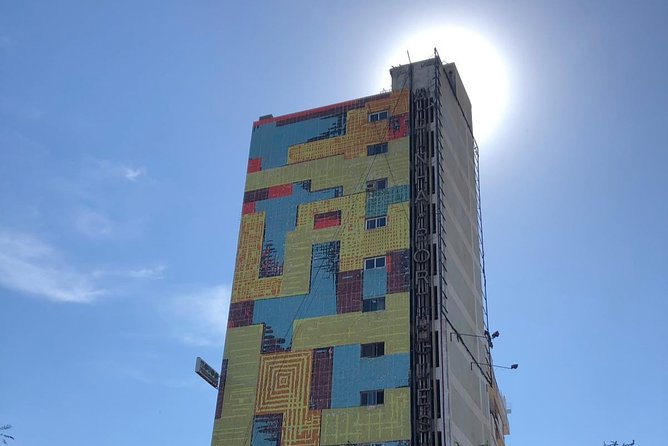
This is one of those tours that helps you understand the city’s shape without needing a map app and a full day. You start at the port-side Fortress of Maputo area, then work your way through the downtown core, hitting the places that explain Maputo’s layers: Portuguese colonial power, independence-era symbolism, and the city’s current cultural and religious mix.
The route is about 3 hours, and after that you’re free. That matters, because it keeps you from spending your whole day in “tour mode.” It also makes the walking time easier to manage if you’d rather save your energy for something else later, like a museum, a beach trip, or just wandering in peace.
Cost-wise, $35 per person is a straightforward number. What makes it feel like value is that many of the stops are free to enter during your visit. You’ll also get snacks, which sounds small until you’re halfway through a walking route and your energy dips.
Start at Fortaleza de Maputo: your orientation point by the port
Your meeting point is inside the Fortress of Maputo, right by the port of Pesca at Praça 25 de Junho. Starting from a fortified point gives you an instant “why this city is here” angle. It’s the kind of start that turns the tour from random sightseeing into a guided walk with geography in mind.
The Fortress itself has a timeline you’ll hear as you look around. It was first built of wood in 1787. Later, stone fortifications went up toward the sea in 1811, and a mid-1800s plan shows it becoming fully stone. The current form traces back to renovation and partial reconstruction work that began with a 1945 proposal, and the full work was inaugurated in 1956.
Inside, you can expect historic remains tied to forts around the country, plus cannon and other artifacts. The tour format here is short at the fortress stop, so I treat it like an orientation preview. If you’re the type who loves lingering in detail, plan for extra time after the tour so you don’t feel rushed.
One key caution: the fortress entry is listed as not included. If you know you want to go in fully, budget for that at the start so it doesn’t become a last-minute hassle.
Cathedral and Old Town Hall: white stone and colonial pride

The first big “wow” stop is the Cathedral of Our Lady of the Immaculate Conception, locally known by that longer name, or sometimes as Nossa Senhora da Conceição. This is the big white cathedral that makes a strong first impression. It was built in the 1930s to 1940s by Marcial simões Freitas e costa, who worked for the railways and provided his work free of charge. The story here isn’t just architecture; it’s the Catholic Church showing up in a period when Portugal’s influence had been shaken.
A detail I found especially memorable is the Pope Francis connection. The cathedral was one of the places where hundreds of people had a chance to see Pope Francis during his Mozambique visit in early September 2019. That gives the building a “living landmark” feel, not just a historical one.
Next up is Old Town Hall. This 1940s-era building was designed by architects Carlos César dos Santos, Franz Keindl, and Aranaldo Pacheco Pereira Leite. Stand in front of it and you’ll hear about the Lisbon-style pavement inscription Aqui é Portugal, which is the line tied to President Américo Tomás’s 1964 visit to Mozambique.
Inside, the payoff is quieter but worth it: you’ll see models of old Lourenço Marques (the city’s earlier name for today’s Maputo) and a hall where the past becomes easier to picture. This stop is short, so your best move is to ask your guide what to look for before you rush into photos.
Praça da Independência and Samora Machel’s statue: symbolism you can question
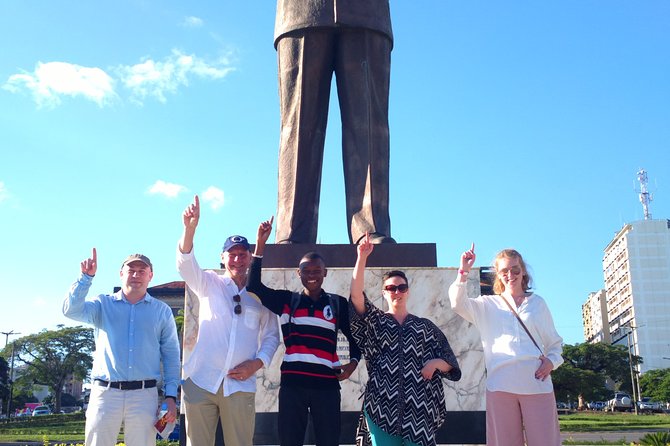
In the center of Praça da Independência, you’ll find the bronze sculpture of Samora Machel, Mozambique’s first president. The details matter here, because this statue isn’t just a memorial. It’s part of a bigger story of politics, influence, and how countries represent themselves.
The statue was designed and constructed in Pyongyang, North Korea by the Mansudae Overseas Projects. It stands about 9 meters tall and weighs roughly 4.8 tons, set on a high marble slab. It’s also illuminated at night, so the plaza shifts character after dark.
One thing your guide may bring up is that the statue has faced criticism for not looking enough like Samora Machel. I like that kind of conversation on a tour like this because it helps you see that public art can be debated, not just admired. You’ll finish this stop with a better sense of what independence-era pride looked like in physical form.
Franco-Mozambican Cultural Center: the “almost-casino” story
The Franco-Mozambican Cultural Center is one of the busier cultural hubs in town, with live music and photo exhibitions. On this walk, it also serves as a neat historical lesson about how plans can stall and shift.
The building was originally built by Dr. Eduardo de Almeida Saldanha as a social club and a casino back in 1989, the same year Lourenço Marques became the capital of Mozambique. Architects Wells Inc. handled the design, and builders Rochelle & Smith came from Johannesburg. Even the ironwork was imported from Scotland.
Then the concession for the casino didn’t happen, and the grand idea stalled. Later it was sold to two Englishmen, and the building’s purpose evolved. That arc makes the site feel like a real piece of history rather than a museum item: ambition, bureaucracy, then reinvention.
Casa de Ferro: Eiffel’s iron house and the hot-climate lesson
Casa de Ferro, or The Iron House, is one of the most distinctive stops on the route. This building was designed by Gustave Eiffel and shipped pre-fabricated from Belgium in 1892 before being assembled outside the town.
There’s a practical detail you’ll hear: Eiffel reportedly didn’t like the building in this setting, and the iron construction wasn’t ideal for a hot country without air conditioning. The location also wasn’t ideal, which is an old-school way of saying: the architecture made sense for shipping, but life in the tropics changed the rules.
The building’s uses keep shifting over time. A court of justice plan didn’t materialize as expected. It ended up as a girl school under the sisters Hospitallers, later changed after religious orders were removed from public schools following the 1910 revolution in Portugal, and it eventually became offices. In 1972, it moved to the present site to house a geographical museum, with displays that also touch how an office might have worked.
If you like architecture, this stop is pure payoff. If you don’t, it still works because the story explains why buildings evolve in the real world.
Tunduru Botanical Gardens and the city’s “safari in town”
Then you shift from stone and iron into green space at Tunduru Botanical Gardens. This is one of Maputo’s best, most laid-back pockets of calm in the center, and the tour uses it as a breathing point after heavier civic landmarks.
The garden name changes matter here. Before independence, it was called Vasco da Gama. After independence, the name shifted along with the city and other avenues, and your guide will explain the why.
You’re also likely to hear about fruit bats. Even if you don’t get a perfect “photo moment,” the idea of bats in a city garden gives you a sense of Maputo’s scale and wildlife presence.
Timing can sweeten the experience. If you do this walk on a Saturday, you might spot wedding celebrations in the garden area, with dancing and singing. That adds an unplanned, joyful layer that doesn’t feel staged for tourists.
Central Market: ingredients, tips, and a shortcut to Mozambican cooking
The Central Market is the kind of stop that makes the day more useful. It’s described as one of Maputo’s best markets and is known for being fresh and clean. The building was built in 1901 by David Carvalho, using iron elements imported from Belgium.
This is where you can translate Maputo into dinner ideas. You can buy ingredients like cassava leaves, which connect to the famous matapa (often with prawns). You can also get tips from local women on how to prepare dishes.
One reason I like this stop is that it turns cuisine into a story you can touch. Mozambique’s food reflects a mix of influences, including Arabic, Portuguese, Chinese, British, and Indian ideas, all blended with local ingredients and cooking methods. Portuguese influence shows up strongly in many dishes, and your guide may help you understand that through examples.
This isn’t a full cooking class, of course. But it gives you a head start if you’d like to eat well during your trip or shop once and cook later.
Jumma Masjid and the train station: faith and forward motion
Jumma Masjid is short on time but strong on context. It’s described as the first mosque in Maputo, built using wood and zinc, like many structures in the area. The lower façade dates to 1887, with parts added in 1902. The mosque itself is new, and the neighborhood history matters too: this was an area where the Indian population lived.
What you’ll hear tied to this place is religious coexistence. The south of Mozambique is mostly Christian, while the biggest Muslim community is in the north, and the mosque is used as an example of good relations between religious groups in the city.
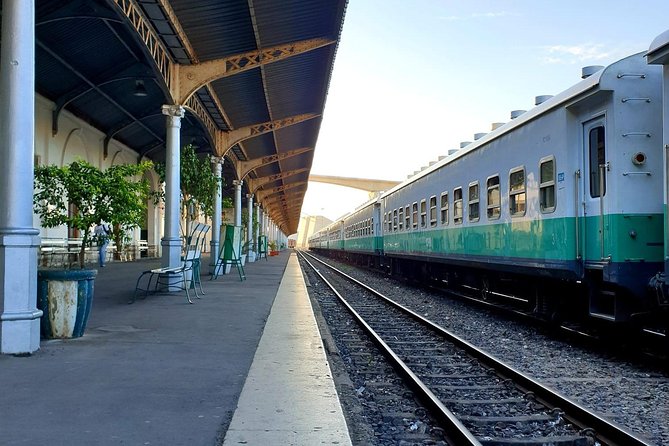
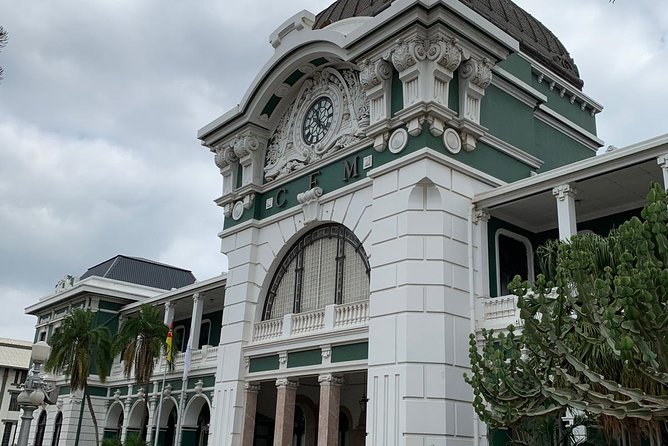
Then comes Maputo Central Train Station, a showpiece for architecture lovers. It’s often said to be among the most beautiful train stations in southern Africa. You’ll hear that it was listed by an America magazine among the most beautiful worldwide, and that it ranked third. The station also features a photo exposition related to that list, which keeps the stop from feeling like a trivia lecture.
Fact-wise, the station’s build matters. It was built between 1908 and 1910 and designed by Alfredo Augusto Lisboa de Lima, Mário Veiga, and José Cristian de la Paula Ferreira da Costa. Construction was carried out by local builders Buccellato & Brother, with Pietro Buccellato handling major work.
Even if trains aren’t your thing, this stop is a reminder that Maputo wasn’t isolated. It was connected, planned, and built with serious ambition.
Bagamoyo Street: French colonial charm with a gritty edge
Bagamoyo Street is described as having a New Orleans feel. Before independence it was known as Araujo Street, and its location near the harbor made it busier over time. You’ll see French colonial architecture with iron pillars and verandas, plus bars and hotels—some of them now run down.
It’s also described as a red light district, and it’s the kind of street where the “doesn’t sleep” energy shows at night. You’ll also hear a pop-culture link: Leonardo DiCaprio filmed scenes for Blood Diamond here.
This part of the walk can be a bit sharper than the cathedral-square sequence. My advice: keep your attention on your guide, stick with the group, and treat it like a photo opportunity plus a reality check about city life. You’ll get a fuller picture of Maputo when you don’t only see the polished monuments.
Fortress time and the best way to use the free afternoon
Back at the Fortress area, the tour wraps around the major sights, then leaves you with the rest of your day open. That freedom is a gift. Downtown Maputo has more than enough to explore on your own right after the walk, especially if the tour has helped you figure out which streets and buildings you want to see again.
If you’re the type who likes to return for details, Casa de Ferro and the Central Market are great second-pass targets. If you’re more into atmosphere, spend extra time around Tunduru Botanical Gardens. And if you want a deeper civic perspective, make room for more time near Praça da Independência and the Cathedral area.
Price and logistics: why $35 works if you plan your day right
At $35 per person, you’re paying for three things: a guided walk, local context for what you’re seeing, and entry to a format where many stops are free to access. The small-group cap of 15 travelers also makes a difference. It’s easier to ask questions, easier to hear explanations on busy sidewalks, and easier for the guide to keep pace.
You’ll get snacks, which is a simple but real help on a day that includes several walking segments and multiple “look closely” moments. You’ll also receive a mobile ticket, which is the kind of low-friction detail you’ll appreciate once you’re in motion.
One more practical point: this tour is often booked about 28 days in advance on average. If you’re traveling during a popular window, try not to wait until the last minute.
Finally, the guides running this walk are a big part of why the experience lands well. In the information you shared, guides such as Wilson, Nelton, Walter, Edilson, and Herminio are associated with strong English and clear explanations, plus pacing that keeps the group from feeling dragged. You’ll also see that guides are able to handle disruptions like traffic closures tied to events such as Armed Forces Day, which helps the tour stay on track even when the city is doing its own thing.
Who this tour suits (and who might want something else)
You’ll likely enjoy this tour if you want:
- A fast orientation to downtown Maputo’s main landmarks
- Architecture and symbolism explained in plain language
- A route that includes a market stop and a green stop, so you don’t only see monuments
You might choose a different option if:
- You don’t like walking or prefer a slower pace with fewer stops
- You want only one or two deep sites, rather than a variety of short visits
Also, if you’re planning a full day, the tour’s structure helps. You get the highlights in the morning-ish time window, then you can build your own afternoon around what you liked most.
Should you book the Maputo Downtown Walking Tour?
If you want your Maputo trip to start with a clean sense of place, this is an easy yes. The short duration, the strong mix of landmarks and everyday stops, and the free-entry nature of many sites make the $35 price feel reasonable. Plus, you’re not locked into the rest of the day—you get your energy back afterward.
I’d book it if you’re curious about why the city looks the way it does: Portuguese-era buildings, independence-era public space, and the iron-and-museum stories that show how Maputo adapted over time. Just plan for the Fortress entry not being included, and wear shoes you can handle for a few hours of city sidewalks.
FAQ
How long is the Maputo Downtown Walking Tour?
The tour lasts about 3 hours.
How much does the tour cost?
It costs $35.00 per person.
What’s included in the tour?
Snacks are included, and you’ll receive a mobile ticket.
Is the tour a group experience or private?
It’s a group walking tour with a maximum of 15 travelers.
What’s the meeting point?
You meet at the Fortress of Maputo (Fortaleza), near the port of Pesca at Praça 25 de Junho, Maputo.
Which stops are free to enter?
The stops listed with admission ticket free include the Cathedral, Old Town Hall, Praca da Independencia, the Franco-Mozambican Cultural Center, Casa de Ferro, Tunduru Botanical Gardens, the Central Market, Jumma Masjid, and the Central Train Station.
Is the Fortress of Maputo admission included?
No. The tour lists admission for the Fortress of Maputo as not included.
Can I get a refund if I cancel?
Yes. You can cancel up to 24 hours in advance for a full refund. If you cancel within 24 hours, there is no refund.