REVIEW · PARIS
Paris – Latin Quarter Free Tour in English (Tip-Based)
Book on Viator →Operated by StellarTours · Bookable on Viator
Old Paris starts at the fountain. This Latin Quarter tour turns big-name landmarks into a clear story you can walk through. I like the pay-what-you-want style (so you control the final cost) and how the guide makes centuries of change feel easy to picture. One heads-up: the route is packed, so some stops are short, and you’ll need to keep moving to get the full arc.
You can join with a morning or afternoon start time, and you’ll get an English-speaking, certified expert guide guiding the whole loop. The pacing is timed well for a 2-hour visit, with a handy flow from medieval lanes to the school-and-writers stretch of the neighborhood. It’s also capped at 50 people, so it’s not a huge mob, but it can still feel busy around the most famous sights.
At the end, you don’t just get dropped off into emptiness. The tour finishes at Place de la Contrescarpe, where you’re right in the middle of restaurants, bars, and café energy to keep the day going.
In This Review
- Key Highlights You’ll Feel on the Walk
- The Latin Quarter, Without the Guesswork
- Price and What Tip-Based Really Means Here
- Meeting Points, Timing, and How to Plan Your Day
- Stop-by-Stop: What You’ll See From Saint-Michel to the Pantheon
- Fontaine Saint-Michel: The Tour’s Big Entrance
- Rue de la Huchette: Narrow Streets, Old Stories
- Shakespeare and Company: Writers’ Paris in Book Form
- Notre-Dame de Paris Views: A Quick Frame of a Landmark
- The Oldest Tree in Paris (Dating to 1601)
- Eglise Saint Julien Le Pauvre: A Quiet Education Hub
- Salvador Dalí Sundial: Art That Points Back to Santiago
- Eglise Saint-Severin: Gothic Space with Ceiling Drama
- Les Thermes de Lutece: Roman Baths Under Modern Paris
- Musée de Cluny: Medieval Paris in One Ornate Building
- La Sorbonne and the Pantheon: Education Meets the Main Mausoleum
- La Sorbonne: When School Became the City’s Core
- Pantheon: All Gods, Then France’s Greatest Names
- St. Étienne-du-Mont: Saint Genevieve’s Relics
- Ernest Hemingway’s First Home Office: Paris as a Moveable Feast
- Finishing at Place de la Contrescarpe: Turn the Tour Into Dinner Plans
- What Makes the Guides Matter (Bruce, Sanna, and the 5-Star Feel)
- Who Should Book This Latin Quarter Tour?
- Should You Book This Tip-Based Latin Quarter Free Tour?
- FAQ
- Is this tour really pay-what-you-want?
- How long does the Latin Quarter walk take?
- Where does the tour start and end?
- Is the tour in English?
- Do I get a mobile ticket?
- Are there admission fees for the stops?
- What group size should I expect?
- Can I bring a service animal?
- Will it refund if I cancel?
Key Highlights You’ll Feel on the Walk

- Pay-what-you-want, with tips accepted only via credit/debit and electronic payments (VAT is added)
- Old streets and buildings across medieval Paris, Roman remains, and major cultural institutions
- Short, timed stops that help you cover a lot in about 2 hours
- Literature and art stops tied to Shakespeare and Company, Salvador Dalí, and Ernest Hemingway
- Notre-Dame views plus a sweep into the heart of the Pantheon story
The Latin Quarter, Without the Guesswork
The Latin Quarter is one of those parts of Paris where you can easily get “lost in pretty streets” and miss the big ideas. This tour is designed to keep you oriented: where you are, what era you’re in, and why a building you pass matters.
I like that the route keeps switching themes—religion, education, literature, and even Roman engineering—so you never feel stuck staring at the same kind of façade. You also get a practical walking rhythm: quick stops for photos and context, then enough explanation to make the next corner make sense.
You can also read our reviews of more tours and experiences in Paris.



Price and What Tip-Based Really Means Here
This is a tip-based free tour style, but it still has a small booked price per group: about $3.62 per group (up to 9). After that, you decide what to contribute, which is a good fit if you’re watching your budget but still want a guided pass through the key sights.
Two important details for planning:
- Tips are accepted only via credit/debit and electronic payments.
- VAT is added to contributions, so the total might be a bit higher than you expect even if you choose a modest amount.
If you carry cash and were hoping for a simple hand-to-hand tip, this setup won’t match that. If you prefer card payments, it’s straightforward.
Meeting Points, Timing, and How to Plan Your Day
The tour starts at Fontaine Saint-Michel (Pl. Saint-Michel, 75005 Paris) and ends at place de la Contrescarpe (75005). The listed start time is 11:00 am, but the tour offers morning or afternoon start times, so you can slot it early for orientation or do it later to line up your dinner plans.
Duration is about 2 hours. That’s long enough to feel like you covered the core of the Latin Quarter, but short enough that you won’t lose your whole afternoon to walking.
A useful tactic: wear shoes you trust and keep your phone charged. With lots of close-up sights, you’ll want quick photos, and you won’t have time to stop for long detours.
Stop-by-Stop: What You’ll See From Saint-Michel to the Pantheon
This walk is built like a guided timeline. You start near the fountain that marks a modern Paris “reset,” then slide backward into medieval streets, then forward into major institutions and famous writers.
Fontaine Saint-Michel: The Tour’s Big Entrance
Your tour begins at Fontaine Saint-Michel, an imposing fountain tied to the Grand Reconstruction of Paris. It’s a strong starting point because the guide frames Paris as a city that was reshaped fast—moving from medieval foundations to a modern jewel.
Expect a short, punchy intro: enough history to set the tone before you start weaving through older streets.





Rue de la Huchette: Narrow Streets, Old Stories
Next you’ll walk Rue de la Huchette, known as one of Paris’s oldest streets. This is the moment where the Latin Quarter stops being a map and becomes a real, tight-feeling neighborhood lane.
The drawback here is the same thing that makes it special: it’s narrow. If you want photos without people in them, you’ll need a quick, patient angle and a little luck.
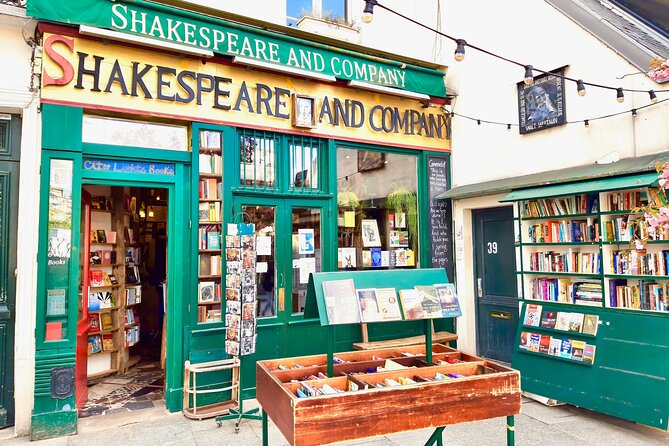
Shakespeare and Company: Writers’ Paris in Book Form
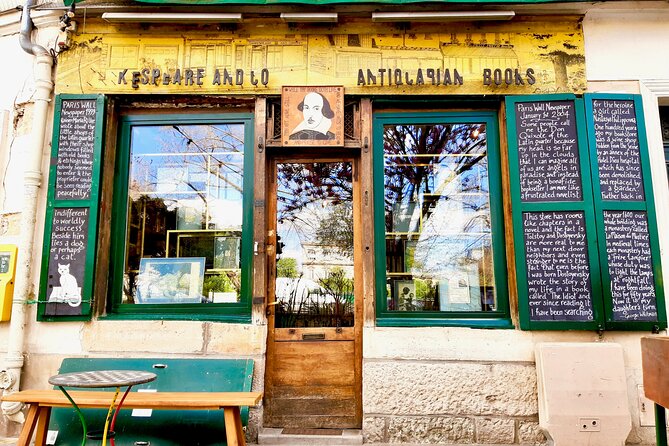
Then it’s Shakespeare and Company, the iconic bookstore with a legacy from the 1920s. This stop gives you the literature side of the Latin Quarter, with names like Hemingway, James Joyce, and F. Scott Fitzgerald tied to the neighborhood’s creative mythology.
Even if you’re not a big books person, it works. It explains how Paris’s intellectual reputation became part of the streets themselves.
Notre-Dame de Paris Views: A Quick Frame of a Landmark
After that, you’ll reach Cathedrale Notre-Dame de Paris for breathtaking views. The stop is short, but the payoff is that the guide uses the time to connect Notre-Dame to the wider Latin Quarter story rather than treating it like a standalone postcard.
If you’re hoping for long time inside, plan to do that separately. This walk is more about getting oriented and understanding why Notre-Dame belongs here.
The Oldest Tree in Paris (Dating to 1601)
You’ll also get a moment for the oldest tree in Paris, dating back to 1601. There’s a local tradition to touch its leaves and make a wish, which gives the tour a small human pause amid the grand monuments.
This is a nice reset stop, especially if you’ve been walking in museum-mode for the past hour.
Eglise Saint Julien Le Pauvre: A Quiet Education Hub
Next comes Eglise Saint Julien Le Pauvre, one of the oldest buildings in Paris. The key idea here is education: it was once a center of learning alongside Notre-Dame, which helps explain why the Latin Quarter became the city’s study zone.
The church is modest compared to the big headline buildings nearby, so it’s easy to pass if you’re rushing. With the guide, it becomes a meaningful stop.
Salvador Dalí Sundial: Art That Points Back to Santiago
Then you’ll see a Salvador Dalí sundial connected to the Camino de Santiago de Compostela. Dalí loved the Latin Quarter, and the guide links the neighborhood to a very specific travel-culture thread through time.
If you like art details, you’ll enjoy this one. If you’re not into symbolic objects, just treat it as a fun break from the heavy religious and academic sites.
Eglise Saint-Severin: Gothic Space with Ceiling Drama
After that, it’s Eglise Saint-Severin, a 13th-century church with Flamboyant Gothic features. The standout is the vaulted ceilings and the palm-tree style columns the guide points out, and there’s a chance you might hear the pipe organ if it’s playing.
This is another stop where a short visit still feels good, because the interior architecture can be “read” in minutes once someone points you to the right details.
Les Thermes de Lutece: Roman Baths Under Modern Paris
Then you move into archaeology territory at Les Thermes de Lutece. These Roman baths were built after the Romans invaded Paris in 52 B.C., and the guide explains how this wasn’t a private luxury thing—it was part of an entire city complex available to citizens.
The lesson here is scale: Roman Paris wasn’t just buildings, it was a whole system. Even for a short stop, this helps you see the Latin Quarter as layered, not just old.
Musée de Cluny: Medieval Paris in One Ornate Building
Next is Musée de Cluny, now the medieval museum of Paris. The building itself is a story—ornate and from the 15th century—and the guide ties it back to the older Paris the neighborhood grew from.
This stop is brief, so think of it as a guided preview. If you love medieval interiors, you’ll want to come back for a longer visit later.
La Sorbonne and the Pantheon: Education Meets the Main Mausoleum
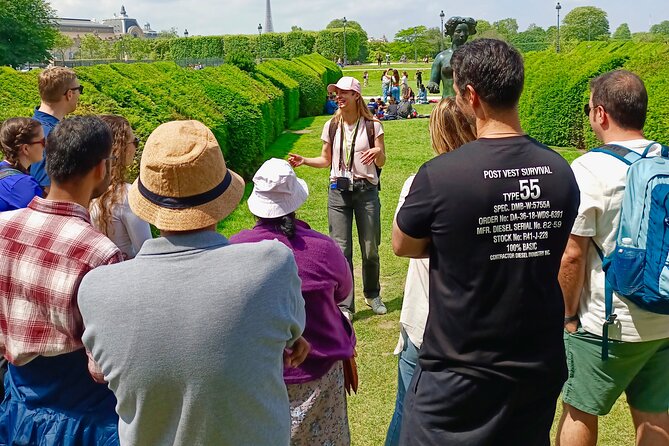
This part of the walk is where the Latin Quarter shifts from “old streets” to “big ideas.” You’ll see why the area became the education center and why the Pantheon matters far beyond local sightseeing.
La Sorbonne: When School Became the City’s Core
La Sorbonne is next, and you’ll hear how it became the nucleus of education in the Latin Quarter. It’s described as the 3rd oldest university in the world, with roots reaching into the 11th century and a reference point dating to 1257.
This stop is valuable even if you’re not a student of history, because it explains the Latin Quarter’s identity. Once you understand the schools, the nearby streets feel different—you see them as part of an intellectual machine.
Pantheon: All Gods, Then France’s Greatest Names
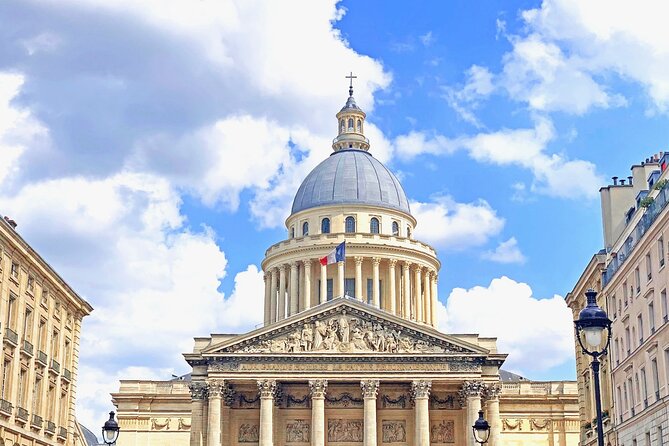
The Pantheon is the main event. You’ll learn that it originally meant All the Gods, started as a major religious structure, and later became France’s most important mausoleum. The guide also connects it to the French story of changing values over time.
Expect the big-name roll call: Victor Hugo, Marie Curie, and other major figures are buried inside. This is one of those stops where a short visit works better when you get the big picture first.
St. Étienne-du-Mont: Saint Genevieve’s Relics
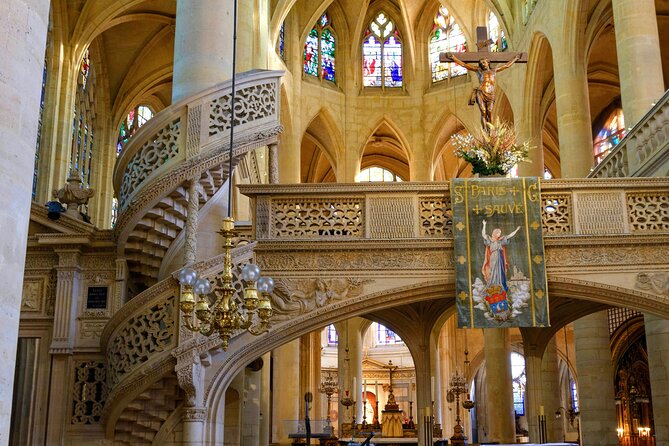
Then you’ll enter St. Etienne du Mont, a majestic 15th-century church. Here, the key detail is the tomb and knuckle of Paris’s patron saint, Saint Genevieve, plus a story about how she played a role when the Roman Empire was falling.
This stop can feel emotional in a good way because it’s tied to a specific city protector. It also helps make the Latin Quarter’s religious layer feel personal rather than abstract.
Ernest Hemingway’s First Home Office: Paris as a Moveable Feast
Finally, you’ll reach Ernest Hemingway’s first home office in the Latin Quarter. The guide connects Hemingway to the neighborhood’s lasting influence on his life and writing, including the famous idea that Paris stays with you wherever you go.
If you’re a fan of writers, this is a fun “map it in your head” moment. You start connecting street corners to characters instead of treating them like random backdrops.
Finishing at Place de la Contrescarpe: Turn the Tour Into Dinner Plans
The tour ends at place de la Contrescarpe, which is set up perfectly for what you should do next: eat nearby without getting stuck in a logistics scramble. It’s full of restaurants, bars, and cafés, so you can keep the Latin Quarter mood going.
My advice: pick your meal plan immediately after the tour while your feet are still in the zone. If you wait and wander far, the magic is harder to recreate.
What Makes the Guides Matter (Bruce, Sanna, and the 5-Star Feel)
The experience really lands because the guide shapes the pacing and the story. I’ve seen this kind of walk fall flat when it becomes a list of monuments. Here, the timing and explanation style keep it moving, and that shows in the strong scores.
In past runs, guides like Bruce and Sanna have been highlighted for being friendly and making the history feel alive. You want a guide who can switch tones: quick facts when you’re outside, more meaning when you’re in front of a church or monument, and a clear wrap-up at the end.
Who Should Book This Latin Quarter Tour?
This works well if:
- You’re short on time but want to understand why the Latin Quarter feels like Paris’s brain.
- You like walking tours that mix religion, education, literature, and Roman remnants in one loop.
- You want an English guide and a schedule that includes an easy start and a strong food zone at the end.
It’s also a good first “orientation walk” for people who don’t want to spend hours researching before they arrive.
Should You Book This Tip-Based Latin Quarter Free Tour?
Yes—if you want a guided way to grasp the Latin Quarter’s layers in about two hours, this is a smart pick. The route hits the big anchors (Notre-Dame views, the Pantheon, Sorbonne) and also includes fun side beats (a Dalí sundial, Hemingway’s early home office, Roman baths at Les Thermes de Lutece) that you might miss on your own.
Book it especially if you prefer structure but still want flexibility on cost. The main reason to skip is the short stop lengths: if you want long time inside churches and museums, this will feel like more of a preview than a full visit plan.
FAQ
Is this tour really pay-what-you-want?
It’s described as a tip-based free tour. You pay a small booking price per group and then you can contribute tips, with tips accepted only via credit/debit and electronic payments. VAT is added to contributions.
How long does the Latin Quarter walk take?
The tour lasts about 2 hours.
Where does the tour start and end?
It starts at Fontaine Saint-Michel in the 5th arrondissement and ends at place de la Contrescarpe, also in 75005 Paris.
Is the tour in English?
Yes, the tour is offered in English.
Do I get a mobile ticket?
Yes. A mobile ticket is included.
Are there admission fees for the stops?
The stops listed show admission ticket free for each site included in the route.
What group size should I expect?
The tour has a maximum of 50 travelers, and the pricing shown is per group (up to 9).
Can I bring a service animal?
Yes, service animals are allowed.
Will it refund if I cancel?
Cancellation is free if you cancel at least 24 hours before the experience’s start time. If you cancel less than 24 hours before, the amount you paid won’t be refunded.