REVIEW · PARIS
Paris by Night Walking Tour: Ghosts, Mysteries and Legends
Book on Viator →Operated by City Wonders Ltd · Bookable on Viator
Paris turns serious after dark, and this walk leans into it. I like the tight small-group format (up to 20 people) and the way the guide links famous power spots with darker episodes you usually skip. I also love the specific stops, like the Conciergerie tied to Marie Antoinette and the grim sentencing scenes around the Palais de Justice. The main thing to consider: this is often more history and executions than true ghost-and-spook performance, so set your expectations before you go.
The route is an easy-to-follow night circuit from Pont Neuf toward Place de l’Hôtel de Ville, with plenty of time for street-level stories about the French Revolution, the Paris Commune, and even Nazi-occupied Paris. If you want spooky vibes, bring your sense of drama. If you want the “why did people panic?” version of Paris history, you’ll eat this up.
In This Review
- Key tour highlights (quick hits)
- Walking Paris at night, starting by Pont Neuf
- Small group size and English-led storytelling
- Square du Vert-Galant: the Templar story in a romantic setting
- St-Germain-l’Auxerrois and the St. Bartholomew’s Day Massacre
- Île de la Cité: where Roman power turns into French power
- Palais de Justice: where the guillotine meets the spotlight
- The Conciergerie: Marie Antoinette’s prison connection
- Place de l’Hôtel de Ville: executions from medieval times to 1800s
- What this tour does best (and where it can miss the mark)
- A real drawback to keep in mind: you may want more “spook”
- Price and value: what $18.10 buys you in Paris
- Timing, pace, and what to wear
- Should you book this Paris by Night tour?
- FAQ
- How long is the Paris by Night walking tour?
- Where do I meet the guide, and where does the tour end?
- Is the tour in English, and how big is the group?
- What’s included in the price?
- Is this tour actually scary, or more historical?
- Can I get a refund if my plans change?
Key tour highlights (quick hits)
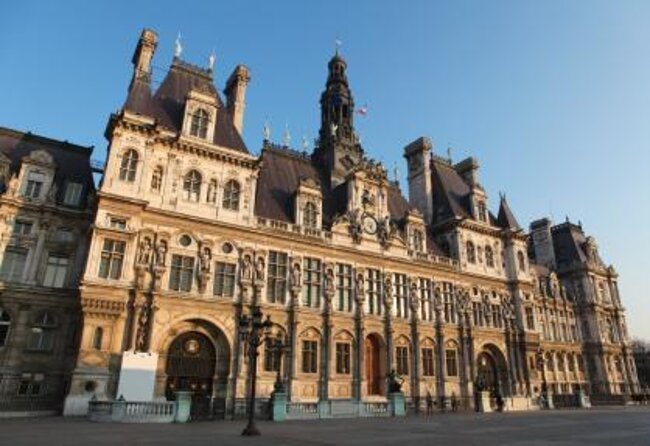
- Pont Neuf start, Place de l’Hôtel de Ville finish: a classic center-city loop with a clear end point.
- Marie Antoinette’s prison stop: you pass the Conciergerie, where her story intersects with the Revolution.
- Square du Vert-Galant scene-setting: the guide brings in a Templar-burning tale at this riverside viewpoint.
- St. Bartholomew’s Day Massacre context: the church of Saint-Germain-l’Auxerrois frames the 1572 Huguenot killings.
- Palais de Justice as a “theatre” of justice: guillotine sentences and public punishment come into focus.
- A walk around roughly 10,000 steps: it’s compact, but you’ll move, especially in evening shoes.
Walking Paris at night, starting by Pont Neuf
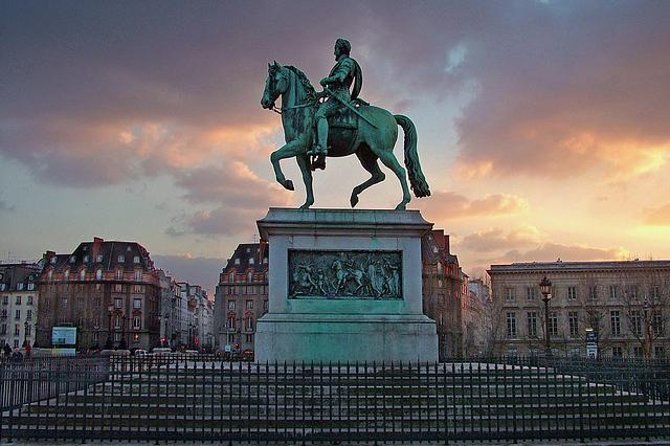
This tour begins near the Pont Neuf area, at the equestrian statue of Henri IV (15 Pl. du Pont Neuf). It’s central Paris, so you’re not dragging yourself across town at dusk. From there, you head through streets that feel calmer than daytime, which matters because the stories depend on mood and pacing.
Plan on a steady walking rhythm. One common comment from the experience is that you’re looking at about 10,000 steps over roughly two hours. That’s not a “sit and sip” tour. It is also not a giant hike through the outer ring of Paris. You’re moving between key sites at a human pace, with the guide stopping you at moments that connect.
You can also read our reviews of more walking tours in Paris



Small group size and English-led storytelling
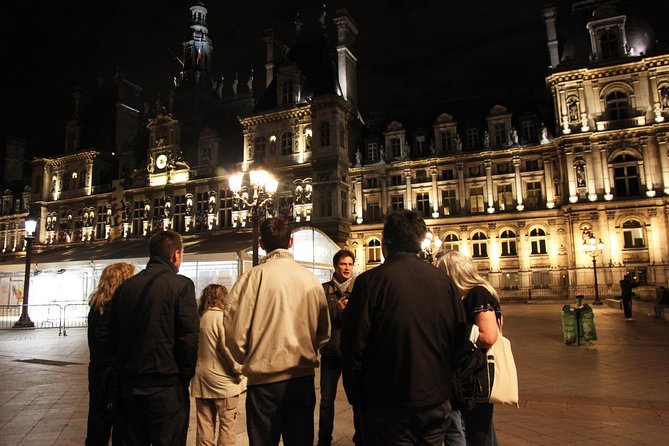
The group limit is 20 people or fewer, which is one of the biggest practical advantages. In a smaller group, the guide can keep the pace from turning into a lecture you have to shout over. It also helps when questions pop up, especially when you’re dealing with heavy topics like massacres and executions.
The tour is offered in English, so you’re not stuck piecing together details on your own. Reviews also point to guides like Sophia, Thelma, Emmy, Ami, Daniel, Sylvia, and Kritika being clear speakers and good storytellers. You won’t control who you get, but the format and repeated guide performance are a real part of the value here.
Square du Vert-Galant: the Templar story in a romantic setting
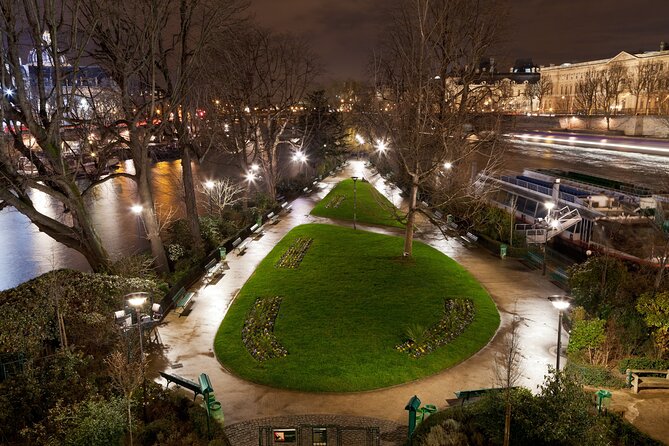
One of the first stops is Square du Vert-Galant. It’s a pretty riverside pocket near the Seine that feels made for evening views—yet your guide uses that contrast on purpose. The story tone shifts from postcard to plague-of-the-mind.
Here, the guide links the space to a tale involving the burning at the stake of the last Knights’ Templar. The square is also connected to Henry IV (and his mistresses), so you get a layered sense of how Paris reuses its spaces. People come for the view; you’re learning how the same spot can hold completely different meanings depending on the century.
What to watch for: this is a short stop, and you’ll be standing and listening. If you don’t like brisk outdoor pauses, bring patience.
St-Germain-l’Auxerrois and the St. Bartholomew’s Day Massacre
Next is Eglise Saint-Germain-l’Auxerrois, a church tied to the St. Bartholomew’s Day Massacre of 1572. Your guide explains how and why around 30,000 Huguenots were killed, and the church’s own place in the story becomes part of the lesson.
This is one of the most educational pieces of the walk because it grounds a major event in a real location. You’re not just hearing “there was a massacre.” You’re seeing the setting that helps explain how public violence can be tied to authority, religion, and timing.
The good part for you: if you like history that has names, dates, and causes, this stop delivers. It also pairs well with the tour’s later focus on punishment and public crowds.
Île de la Cité: where Roman power turns into French power
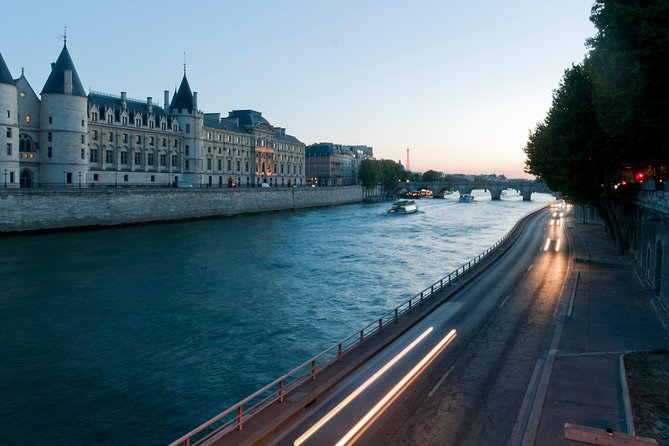
You’ll pass by the Île de la Cité, the central island in the Seine. The tour frames it as a strategic location long before medieval Paris. In the 4th century, it was the site of the fortress of the Roman governor.
This is a smart move, because it stops the history from feeling like a string of random scandals. Instead, you start to see a pattern: the most dangerous stories tend to happen where the state and its institutions already had leverage.
Even though you’re not touring every inch of the island here, the guide’s framing helps you connect it to the Revolution-era justice sites that show up later.
You can also read our reviews of more evening experiences in Paris

Palais de Justice: where the guillotine meets the spotlight
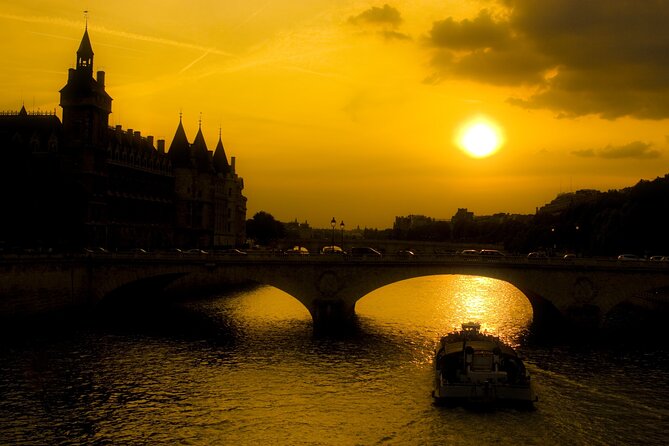
At the Palais de Justice de Paris, the tour turns into the kind of grim storytelling that makes people look up and then regret it a second later. The point is not gore for gore’s sake. It’s how the Revolution used public trials and punishment as messaging.
Your guide explains that people were judged guilty there during the French Revolution, and sentenced to the guillotine in front of cheering crowds. The tour also emphasizes how this could affect almost anyone in the power chain, not just anonymous criminals.
Why this matters on a night walk: when it’s dark and the streets feel quieter, the idea of crowds becomes more unsettling. You can picture people gathering. You can feel how public justice can double as public theatre.
The Conciergerie: Marie Antoinette’s prison connection
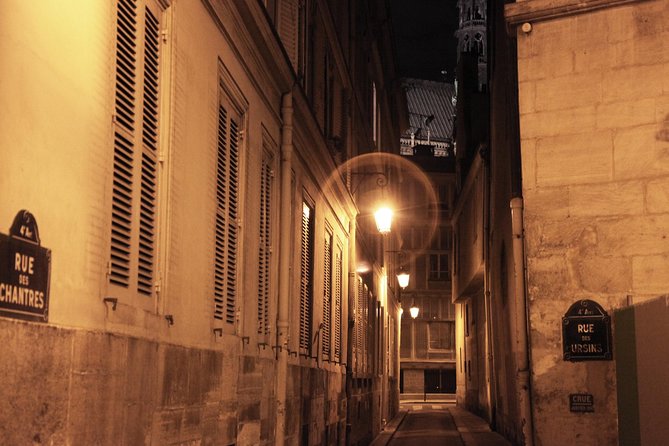
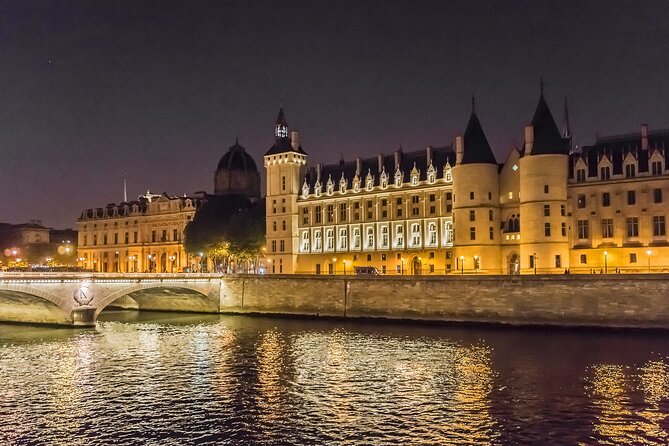
One of the standout “this is why I came” moments is the area of the Conciergerie, where the tour places Marie Antoinette as a former prisoner. Even if you’ve seen her portraits a hundred times, visiting the street-level orbit of her imprisonment changes how the story lands.
This stop works because it anchors big history into a concrete place. The French Revolution can feel like a giant moving machine when you read about it. But when a guide puts it next to a building tied to her captivity, you get a tighter human scale.
Small caution: some people come for ghost stories first and history second. This is history-first, with haunting as mood rather than literal apparitions.
Place de l’Hôtel de Ville: executions from medieval times to 1800s
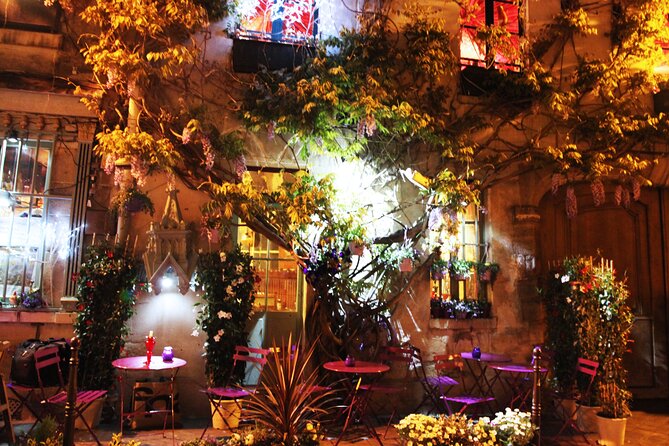
The walk ends near Place de l’Hôtel de Ville (the “Hotel de Ville” area), and this is a strong choice for a finish. The tour explains how important executions happened here from 1310 to 1830, including Ravaillac and La Brinvilliers.
This stop gives you a sense of time depth. You’re not only hearing about the Revolution. You’re seeing that Paris repeatedly used the same civic heart as a stage for punishment over centuries.
Practical tip: because it’s the end of the tour, it’s a good moment to take photos and then stop moving. If you keep walking immediately afterward, you’ll burn energy you might want for a post-tour drink or dessert.
What this tour does best (and where it can miss the mark)
Here’s the honest balance. The official theme is ghosts, mysteries, and legends, but the experience often leans toward “dark history” more than “spooky supernatural.” Many people say it’s informative and sometimes even chilling because the stories involve murder, massacres, torture, war, and plagues. One recurring note is that it’s not always scary in a movie-horror way.
Still, the tour is unusually good at specificity. You get names, places, and linked events rather than generic “Paris was dangerous” talk. Guides like Sophia and Daniel get praised for storytelling that holds attention, and for answering questions while you walk. And doing it at night adds weight. Even without literal ghosts, the atmosphere can make the past feel loud.
A real drawback to keep in mind: you may want more “spook”
If your dream is a ghost tour with eerie vibes and clear supernatural legends, you might feel slightly shortchanged. Some feedback explicitly calls out that they wanted more mystery/ghost emphasis and got mostly historical facts.
There’s also another caution you should know if you care about accuracy: one detailed review from a university French professor criticized a large share of the historical information as inaccurate, listing multiple specific examples (like claims about Catherine de’ Medici’s movements and other event details). That doesn’t mean your tour will be wrong—but if you’re very sensitive to dates and claims, go in ready to treat parts as storytelling rather than a peer-reviewed timeline.
Price and value: what $18.10 buys you in Paris
At about $18.10 per person for roughly two hours, this tour is strong value for three reasons.
First, you’re paying for a guided route with an actual narrative, not just a list of monuments. You get the context that makes the places stick, especially for heavy episodes tied to the Palais de Justice and execution sites.
Second, the small group limit (max 20) improves the experience. It’s the difference between hearing a guide at you versus feeling like the guide can steer the pace and respond to questions.
Third, the tour includes a local guide and focuses on central sites you’d likely visit anyway. Even if you don’t follow the guide’s whole storyline, the route helps you understand what you’re looking at. That’s the best kind of value: you don’t just spend time; you come away with a clearer mental map.
Timing, pace, and what to wear
This is a walking tour, so your body matters here. Expect a decent chunk of walking in about two hours, and plan for around 10k steps. Wear comfortable shoes, ideally with grips for slick stones near the Seine.
Night also affects your senses. The stories hit better when you can hear clearly, so arrive a few minutes early and stand where you can catch every sentence. If you’re the type who loses focus when you’re cold or uncomfortable, dress for the evening, not for the daytime.
Should you book this Paris by Night tour?
Book it if you want a short, guided night walk through central Paris with a dark, story-driven spine. It’s a great pick for first-timers who want more than the usual postcard Paris list. It’s also ideal if you like history that has consequences and names tied to real streets, not just museum captions.
Skip it (or adjust expectations) if you’re mainly after supernatural ghost stories and want something that feels like a spooky performance. Also pass if you’re very strict about historical accuracy and timeline detail, since the tour’s tone is part storytelling and part interpretation.
If you do book, go in with the right mindset: you’re not hunting ghosts in the air. You’re meeting Paris’s past in the places where power used to punish, and where the city still carries that weight after dark.
FAQ
How long is the Paris by Night walking tour?
It’s about 2 hours.
Where do I meet the guide, and where does the tour end?
You meet at the Equestrian Statue of Henri IV, 15 Pl. du Pont Neuf, 75001 Paris. The tour ends near Hotel La Ville, 70 Rue de Rivoli, 75004 Paris.
Is the tour in English, and how big is the group?
The tour is offered in English. Groups are limited to a maximum of 20 travelers.
What’s included in the price?
You get a local guide and the tour runs as a small group. Hotel pickup and drop-off are not included.
Is this tour actually scary, or more historical?
The experience centers on dark stories about Paris’s past—murders, massacres, executions, and major events—so it often feels more like history with a spooky tone than a fully supernatural ghost show.
Can I get a refund if my plans change?
Yes. You can cancel for a full refund as long as you cancel at least 24 hours before the experience start time.