REVIEW · OSAKA
Osaka: Castle History Walking Tour / Castle Tower Admission
Book on GetYourGuide →Operated by Local Guide Stars · Bookable on GetYourGuide
Osaka Castle fights are written in stone. I love how this tour makes the defense design click fast, from triple moats to masugata gate traps, and then rewards you with a big view once you reach the top. You also get skip-the-line access through a separate entrance, so your time goes to learning instead of waiting.
I also like the way the guide points out the small details that make Osaka Castle feel real, like hidden stone marks from master craftsmen and the story of the castle’s largest stone and how it was transported in the 1500s. One consideration: the tour focuses on the key routes and the tower experience, but it does not include a guided walkthrough of every museum floor, so plan to read signs or explore on your own after.
In This Review
- Key highlights you’ll care about
- Why Osaka Castle defenses make this tour worth your time
- Meeting at Lawson S Otemae Rest House and getting oriented fast
- Walking the outer moats and the defense layers attackers couldn’t bypass
- Hokoku Shrine: a short, meaningful stop amid military stonework
- The largest stone and the hard logistics of building a fortress
- Into the tower: arrow slits, gun ports, and why design was psychological
- How Osaka Castle fell in 1614–1615 (and why rivalry matters)
- Price and value: what $33 buys you at Osaka Castle
- Who this tour fits best (and who might prefer self-guided)
- Should you book this Osaka Castle guided tour?
- FAQ
- How long is the Osaka Castle History Walking Tour with tower admission?
- Where does the tour start?
- What’s included in the price?
- Does this tour include admission to the Osaka Castle tower?
- Is the tour guided in English?
- What should I wear or bring for the walking portion?
- Is there a guided stop at Hokoku Shrine?
- Is free cancellation available?
- Is the museum’s every floor guided during this experience?
Key highlights you’ll care about
- Skip-the-line entry to the tower with an efficient route into the action
- Triple moats and layered gates explained as a practical battle plan
- Masugata entrances and zigzag approaches that trapped attackers under fire
- Largest stone + transport methods from the 16th century, plus stone-carver marks
- Tower defenses up close with arrow slits, gun ports, and psychological design choices
Why Osaka Castle defenses make this tour worth your time

Osaka Castle isn’t just a famous skyline stop. It’s basically a textbook of 16th-century military thinking, designed so attackers couldn’t rush straight in and win by speed.
What I like about this tour format is that you don’t just hear history as dates and names. You watch it work. You’ll walk the outer areas that were meant to delay and divide an enemy, then you’ll connect those routes to what you see later in the tower. That cause-and-effect is the real value here.
The guide also brings out the details that most people miss when they visit on their own. Expect explanations of wall angles and stonework meant to be hard to climb, plus the kind of “why would they build it like that?” details that make the castle feel engineered, not decorative.
And the payoff is real: the top-of-tower view gives you a clear sense of how this fortress controlled its surroundings, including the city spread beyond the moats.
You can also read our reviews of more walking tours in Osaka



Meeting at Lawson S Otemae Rest House and getting oriented fast
You meet in front of the Lawson S Otemae Rest House Store. There are multiple Lawson locations nearby, so check your map pin carefully and look for the Local Guide Stars sign.
Why this matters: Osaka Castle can feel like a lot of walking once you arrive. Starting at a clear meeting point means you avoid the typical “where do we start?” chaos. It also sets up the tour’s pace—by the time you get into the defense routes, you already have your bearings.
This is a 90-minute experience overall, with the guided portion timed tightly around the castle grounds and a Hokoku Shrine stop, then time built in for photos and some self-exploring.
Walking the outer moats and the defense layers attackers couldn’t bypass
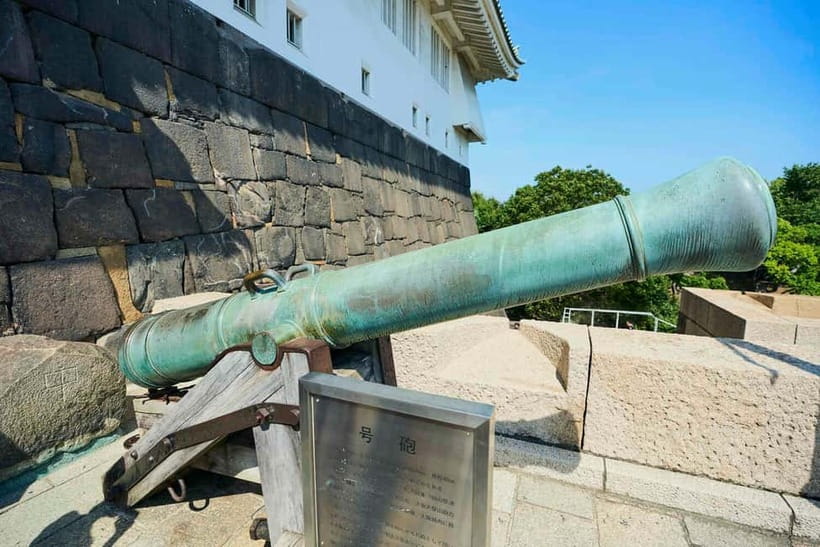
This is the heart of the tour: you’ll move through the castle’s outer defenses like you’re stepping through a strategy map.
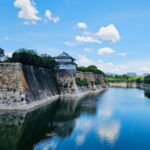
You’ll learn how the moats weren’t only about water. They were part of a system to slow movement, split groups, and force attackers into the wrong paths. The route includes the triple moat concept and the idea of multiple defense lines—so even if someone gets past one obstacle, the next barrier is designed to break momentum.
The guide explains multi-layered gates and masugata entrances. These are the kinds of architectural details that sound technical until you see the logic in person. You’ll also trace the zigzag approaches that enemies once faced, meaning the attackers weren’t moving in a straight line that defenders could ignore. The layout is built to keep opponents visible and controllable, even when they’re advancing.
Practical tip: wear comfortable shoes and expect uneven walking. This tour is about route reading and observation, not resting on benches.
Hokoku Shrine: a short, meaningful stop amid military stonework
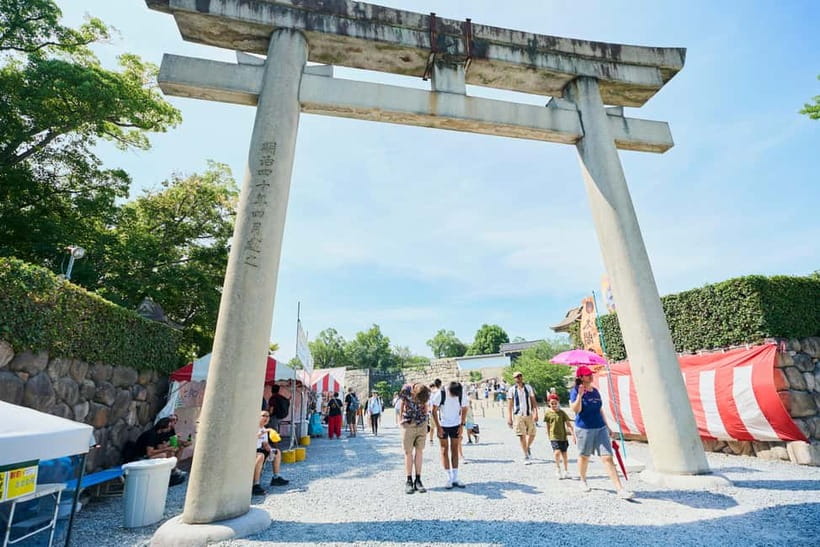
At Hokoku Shrine, you’ll get a guided visit for about 20 minutes. It’s a nice break in tone from the fortress-focused talk.
The value of this stop is that it keeps the story human. Castles in Japan aren’t only about warfare. They’re also tied to belief, memory, and community meaning. You’ll come back to the castle defenses with a clearer sense of why this site has continued importance long after the sieges ended.
If you’re the type who likes context, this is a good mid-tour anchor.
The largest stone and the hard logistics of building a fortress
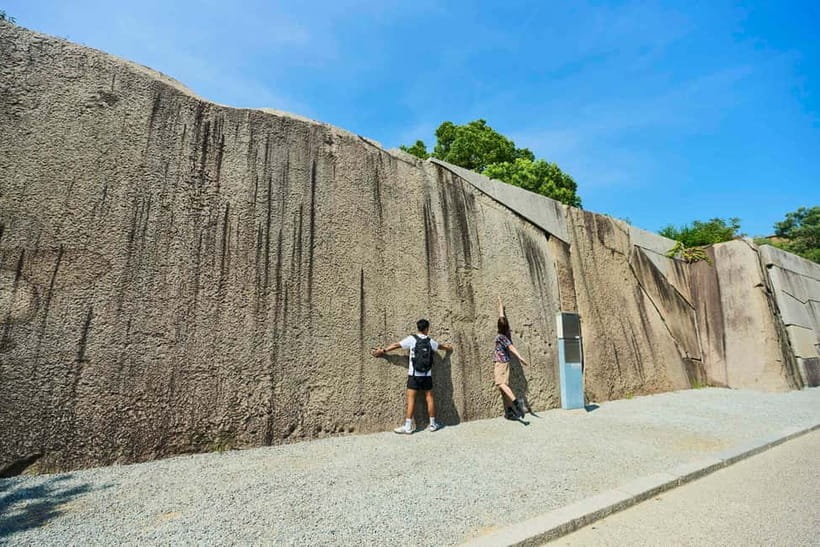
One of the most memorable parts of the experience is the stop focused on the largest stone in the castle. The guide connects it to the 16th-century methods used to move and position massive stones—an impressive part of the overall story because “castle building” is usually treated as vague.
You’ll also learn what to look for in the stonework, including hidden stone marks from master craftsmen. Those marks matter because they show that the castle wasn’t built by guesswork. You’re seeing the practical signatures of skilled labor—craft plus engineering.
This is a strong stop for anyone who likes construction details, because it answers questions like:
- How did they move something that big without modern equipment?
- Why do stones and joins look the way they do?
- What did the builders intend, beyond appearance?



Into the tower: arrow slits, gun ports, and why design was psychological
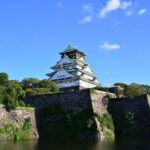
Once you’re back at the tower, the tour shifts from “how the outside stopped attackers” to “how the last defense held.”
You’ll hear about the tower as a command post and the final strongpoint, with defensive features that weren’t random. Expect explanations of arrow slits and gun ports—openings designed for fighting from cover. The guide also talks about gold used in the castle’s messaging, including how those choices could work on the psychology of enemies. It’s a reminder that warfare includes perception, not only weapons.
Here’s what I like as a visitor: the guide doesn’t just point out holes and openings. They connect the design choices back to the routes you walked earlier. So when you see a defensive element at height, you understand the logic behind why the castle wanted people funneled into specific zones.
After the guided part inside the main area, you’ll also have photo time and additional self-guided time to continue exploring.
Important note to plan your expectations: the tour includes admission to the tower, but it does not include a guided tour of each floor in the Osaka Castle museum. If you want a floor-by-floor explanation of every room, you may need to read signage carefully or plan extra time on your own.
How Osaka Castle fell in 1614–1615 (and why rivalry matters)
A good tour ends with a story that sticks. This one does that by bringing you to the “how did it end?” question.
You’ll learn how this fortress was considered invincible in its era, but still fell in 1614–1615. The guide explains that the fall wasn’t just about walls being weak—it was shaped by the fierce rivalry between Toyotomi Hideyoshi’s legacy and Tokugawa Ieyasu’s ambition.
That context is useful because it stops the castle from being a museum piece. It becomes a political instrument. The architecture and the siege history point to the same truth: even strong defenses can be overtaken when power shifts.
Price and value: what $33 buys you at Osaka Castle
At $33 per person, the biggest value is what’s included: tower admission plus a professional English-speaking guide. On top of that, you get skip-the-line access via a separate entrance, which can matter a lot at peak times.
If you’re planning to visit Osaka Castle anyway, the real question is what kind of experience you want:
- If you want to understand the design and the “battle logic,” you’re paying for interpretation, not just entry.
- If you’re happy reading signs and walking at your own pace, a guided tour may feel like an extra cost.
For me, the value angle is simple: this tour compresses the best story into a short window. You’re getting the main defense routes, a shrine stop, and the tower experience in about 90 minutes without having to piece everything together yourself.
Also, it’s low-pressure to book because free cancellation is offered up to 24 hours in advance, and the reserve-and-pay-later option is available.
Who this tour fits best (and who might prefer self-guided)
This is a great fit if you:
- care about architecture with a purpose (moats, gates, wall angles, and military layout)
- want the tower experience explained in a way that connects to what you saw outside
- like your history with practical details, like stone transportation and hidden stone-carver marks
- appreciate clear English guidance and safety-minded pacing (you’ll see from guide feedback that groups are handled thoughtfully)
You might prefer something else if you:
- want a fully guided, floor-by-floor museum tour (this experience doesn’t promise that)
- just want photos and don’t care about defense design logic
- travel with very slow mobility needs where extra walking could feel tiring (the tour does involve walking through multiple historical points)
Should you book this Osaka Castle guided tour?
Book it if you’re the type who looks at a wall and wonders how it worked. The defense design walkthrough is the main reason: triple moats, masugata traps, zigzag approaches, and tower fighting features all explained as one connected system.
Pass or consider another option if you mainly want casual roaming and minimal explanation. Since the guided portion is timed and the museum floor walkthrough isn’t included, you’ll likely want to be okay with self-exploring the areas after the guide’s key route.
If you’re doing Osaka Castle as a must-see, I’d lean yes—because for $33 you’re not just buying entry. You’re buying a readable battlefield story that makes the castle feel alive.
FAQ
How long is the Osaka Castle History Walking Tour with tower admission?
The tour is listed as about 90 minutes.
Where does the tour start?
Meet in front of the Lawson S Otemae Rest House Store. There are multiple Lawson stores in the area, so confirm the exact location on Google Maps and look for the Local Guide Stars sign.
What’s included in the price?
The price includes an Osaka Castle Tower Admission Ticket and a professional English-speaking guide.
Does this tour include admission to the Osaka Castle tower?
Yes. Tower admission is included, and the tour includes skip-the-line access through a separate entrance.
Is the tour guided in English?
Yes. The tour is offered with a live English-speaking guide.
What should I wear or bring for the walking portion?
Wear comfortable shoes and bring weather-appropriate clothing, since the tour involves walking through historical sites.
Is there a guided stop at Hokoku Shrine?
Yes. You’ll have a guided visit there (about 20 minutes).
Is free cancellation available?
Yes. You can cancel up to 24 hours in advance for a full refund.
Is the museum’s every floor guided during this experience?
No. A guided tour of each floor in the Osaka castle museum is not included. You’ll have time to visit and explore on your own in the tower area.