
REVIEW · HOI AN
Hoi An Walking Tour
Book on Viator →Operated by Vacation Indochina Travel · Bookable on Viator
Hoi An has a way of making history feel walkable. This private 4-hour tour threads you through two standout spots in the Old Town, explained clearly by an English-speaking guide, with hotel car transfers included so you spend less time figuring out logistics. I also like the small “comfort touches” that make mornings easier, like bottled water and fresh coconut water.
The only thing to watch is time. Stop durations are short (around 15 minutes and 30 minutes), so if you’re the type who wants a slow, deep reading at each site, you may feel slightly rushed.
In This Review
- Key highlights before you go
- A Walking Tour That Gets You Oriented Fast
- Morning pickup and the museum-style briefing
- Stop 1: Japanese Covered Bridge (Chua Cau)
- Stop 2: Fukian Assembly Hall (Phuc Kien) and Thien Hau
- What the guide experience really changes
- Price and value: what $69 actually buys you
- Timing, weather, and the walking reality
- Getting the most from the route (without overthinking it)
- Who this tour suits best
- Should you book this Hoi An Walking Tour?
- FAQ
- FAQ
- What time does the Hoi An walking tour start?
- How long is the tour?
- Is hotel pickup and transfer included?
- Is the tour private?
- Does the guide speak English?
- Are admission fees included?
- What drinks are provided?
- Are meals included?
- Is the ticket available on a mobile phone?
- What is the cancellation policy?
- What if the weather is bad?
Key highlights before you go
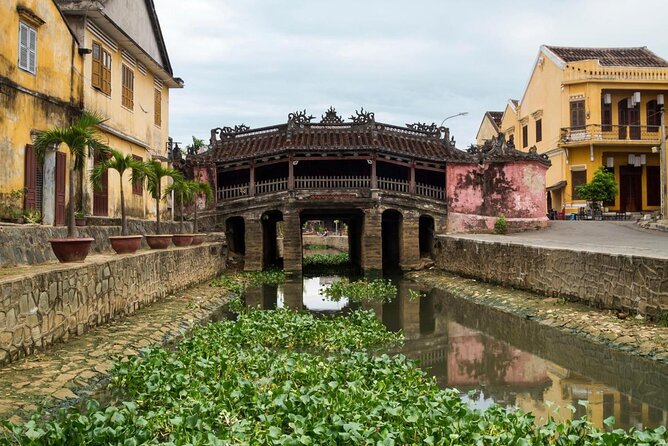
- Japanese Covered Bridge (Chua Cau) built by Japanese craftsmen tied to the historic merchant community
- Phuc Kien (Fukian) Assembly Hall devoted to Thien Hau, goddess of the sea
- Hotel transfers included, so you’re not hunting for a start point on foot
- Admission fees handled along the way, plus water and fresh coconut water
- Your group only on this private tour, with an English guide and a mobile ticket
A Walking Tour That Gets You Oriented Fast
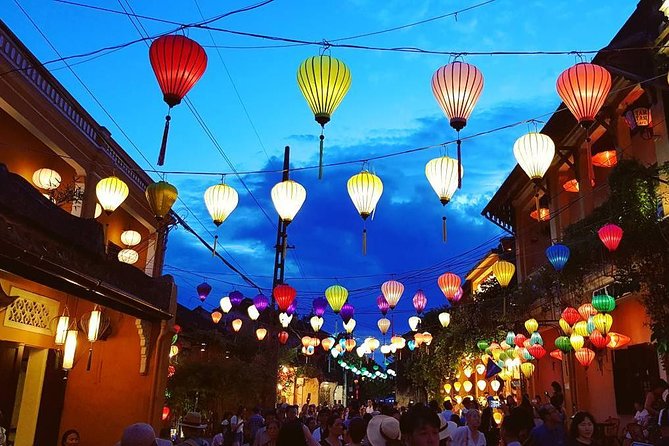
If Hoi An feels like a picture you can’t quite place, this tour helps you put the pieces together. You’ll get an overview of the area’s cultural and historical process early on, then walk through two major “anchor” sites that explain why this town became such a meeting point of traders and faiths.
A big plus is that the day is designed for movement without stress. You’re not left to guess where to go next. With car transfer from your hotel to the visit area, and then another ride back after, the walking feels like the main event, not a chore.
This is also the kind of tour that works even when your schedule is tight. With an approximate 4-hour length and an 8:00 am start time, you can still keep your afternoons open for the beach, food walks, or just wandering.
You can also read our reviews of more walking tours in Hoi An



Morning pickup and the museum-style briefing

Tours like this succeed or fail based on how smoothly they start. Here, you begin with a meeting and a short orientation that sets context before you hit the Old Town landmarks. The tour description mentions a historical and cultural museum security meeting area, where you’ll get an overview of the historical process and the culture of the ancient town.
You also don’t have to worry about language barriers. The guide speaks English, and that matters in Hoi An, where the details can be missed if you’re just reading signs.
Practical note: the tour is marked as private, meaning only your group participates. That usually keeps the pace comfortable and the questions coming, especially if your group has a mix of ages or interests.
Stop 1: Japanese Covered Bridge (Chua Cau)
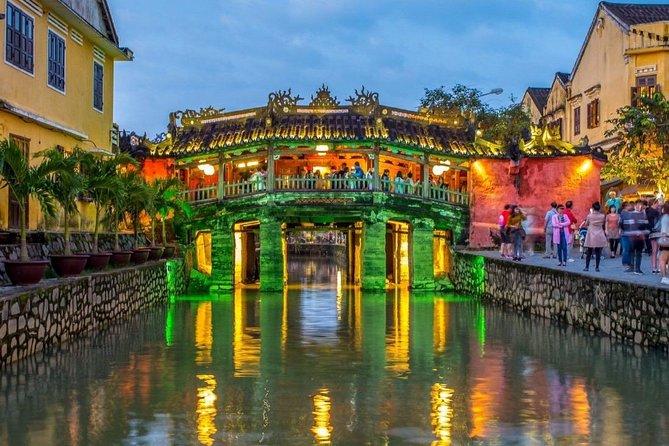
Your first real hit of “wow, this place has layers” is the Japanese Covered Bridge, also called Pagoda Bridge (Chua Cau). This bridge wasn’t just decoration. It was built by Japanese craftsmen, connected to a broader community of Japanese merchants who were active in Hoi An.
Even if you’re not the type to chase every architectural detail, this stop pays off because it explains a simple idea: Hoi An wasn’t shaped by one culture alone. It became a crossroads where different trading communities left marks you can still see today.
Time-wise, you’re there for about 15 minutes with an admission ticket listed as free. That means you should treat it like an orientation stop. Look first, then let the guide’s explanation tie what you see to what it meant.
What to watch for: because the time is brief, take your questions seriously. Ask about how the Japanese merchant community connects to the bridge’s purpose and symbolism. If you wait until the next stop, you might not get the same attention.
Stop 2: Fukian Assembly Hall (Phuc Kien) and Thien Hau
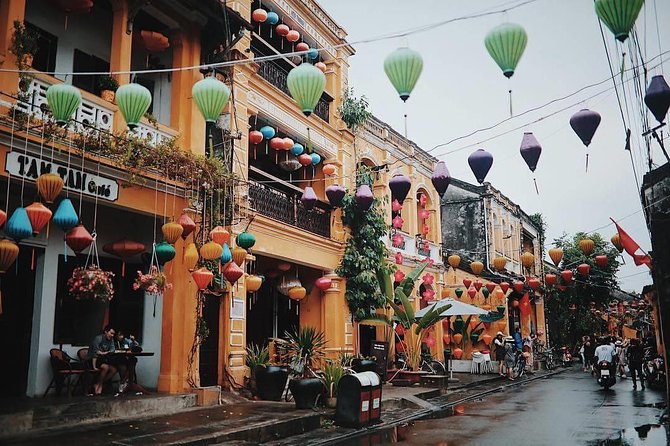
Next up is the Fukian Assembly Hall, also listed as Phuc Kien at 46 Tran Phu Street. This is a temple-meets-community building, the kind of place where faith, travel, and trade all intersect in one physical space.
The hall is dedicated to Thien Hau, the goddess of the sea. That matters in Hoi An because seafaring and commerce go together. When a coastal town relies on waterways for survival and trade, you don’t just build temples for decoration. You honor the forces that keep journeys safe.
You’ll spend around 30 minutes here, and admission fees are included. This stop feels a little more “story-heavy” than the bridge because it’s tied to a specific devotion. If you like your travel with meaning—what people believed, why they built, who they served—this is the one that tends to satisfy.
Possible drawback to consider: if you were hoping for a long, slow walk through one site, this tour structure won’t fully match that style. The schedule is designed to cover two major landmarks efficiently, so you’ll get the core story rather than an all-day deep study.
What the guide experience really changes
On a walking tour, the guide isn’t just a translator. The guide decides what you notice and what you ignore. The experience is designed around an English-speaking guide who can connect the visuals to the “why,” and that’s where the tour earns its near-perfect recommendation rate.
From guide-name references you may see during booking or across similar tour dates, names like Nini, Huy, Jesmine, Dung, and Annie/Anni come up repeatedly for being fun, organized, and helpful. The vibe across these accounts is consistent: the guides don’t just recite facts. They make the walk feel smooth and give you practical context as you move.
A small but real benefit for your trip: guides can also help you avoid aimless wandering in the heat. Even on a short tour, knowing what something represents changes how you see the next alley, doorway, and meeting hall.
If you want to get more out of it: show up with one or two questions in mind. For example, ask how Thien Hau’s worship fits into a trading town. Or ask why the bridge design matters beyond its look.
Price and value: what $69 actually buys you
At $69 for roughly 4 hours, this tour isn’t just “a guide and a walk.” You’re paying for a set of included pieces that usually cost you extra if you DIY it.
Here’s what’s included:
- Car transfer from your hotel to the visit area, plus return to your hotel afterward
- An English-speaking guide
- Bottled drinking water and fresh coconut water
- Admission fees
What’s not included:
- Meals
- Personal expenses
- Tips and gratuities
So is it good value? For many visitors, yes—especially because you’re getting transfers and admissions handled. If you’ve ever tried to line up entrance fees, track opening times, and figure out the best route on your own, you’ll understand the appeal.
If you’re traveling with just one or two people, a private tour can feel like a splurge. Still, the included transport helps soften that. If you’re split between doing one big activity versus several small ones, this tour is a smart way to anchor your time in the Old Town without burning daylight on logistics.
How to budget alongside it: plan a light breakfast, then treat lunch as a separate experience afterward. Since meals aren’t included, you’ll have flexibility to choose what you actually crave.
Timing, weather, and the walking reality
This is a walking tour, so weather matters. The experience is explicitly marked as requiring good weather. If conditions are poor, you’ll be offered a different date or a full refund.
In practice, that means you should keep your morning schedule flexible. Hoi An can shift fast between bright and rainy. If it looks iffy, bring a small umbrella or a light rain layer so you’re not stuck cutting the day short.
Also consider the start time. An 8:00 am meeting is early enough to catch comfortable walking before the hottest parts of the day. If you love photography, the morning light also tends to make the Old Town details easier to spot.
Getting the most from the route (without overthinking it)
Because the tour focuses on two major sites with short stop times, you’ll enjoy it more if you switch into “guided storytelling” mode. Don’t try to do everything on your own while you’re there. Let the guide set the pace and the priorities.
Here are two simple ways to maximize your day:
- Take a moment to look at the bridge and assembly hall before asking questions. Then your questions make sense.
- When the guide talks about Japanese craftsmen or Thien Hau, connect it to something you can see: layout, symbols, or the building’s purpose.
You’ll likely leave with clearer mental maps of why Hoi An’s Old Town looks the way it does—bridges, meeting halls, and faith spaces all tied to trade routes and community identity.
Who this tour suits best
This tour is a strong match if you want:
- A private experience with your group only
- An English-speaking guide who explains what you’re looking at
- A short morning activity that makes later exploration easier
- Included admission fees and transfers so the day stays smooth
It may not be the best fit if you prefer:
- Slow pacing and lots of time at one site
- A very detailed, academic-style tour at every stop
- A food-centered experience (meals aren’t included, and the focus is historic/cultural landmarks)
For families, couples, and first-timers to Hoi An, the format is practical. For repeat visitors, it can still work if you want a quick “two-site refresher” with a guide’s perspective.
Should you book this Hoi An Walking Tour?
If you’re short on time, this is the kind of booking that pays off. Two major landmarks, clear explanations, admissions and transfers handled, and a comfortable morning schedule. The guide-led approach is the heart of the experience, and the track record behind guides like Nini, Huy, Jesmine, Dung, and Annie/Anni suggests you’re likely to get both useful context and a friendly tone.
I’d especially recommend it if you want to feel oriented before you wander the Old Town on your own. You’ll understand the “why” behind what you see, which makes the rest of your Hoi An day more enjoyable.
Book it if you’re okay with shorter stop times and you’re here for the highlights, not a full-day deep study.
FAQ
FAQ
What time does the Hoi An walking tour start?
The tour start time is 8:00 am.
How long is the tour?
The tour duration is about 4 hours.
Is hotel pickup and transfer included?
Yes. The price includes car transfer from your hotel to the visit area and transfer from the town back to your hotel after the tour.
Is the tour private?
Yes. It’s a private tour/activity, so only your group participates.
Does the guide speak English?
Yes. The tour includes a guide who speaks English.
Are admission fees included?
Yes. Admission fees are included in the tour price, and the itinerary lists the Japanese Covered Bridge admission ticket as free while the Fukian Assembly Hall admission is included.
What drinks are provided?
You get bottled drinking water plus fresh coconut water.
Are meals included?
No. Meals are not included.
Is the ticket available on a mobile phone?
Yes. The experience includes a mobile ticket.
What is the cancellation policy?
You can cancel for a full refund if you cancel at least 24 hours before the experience starts. If you cancel less than 24 hours before, the amount paid isn’t refunded.
What if the weather is bad?
This experience requires good weather. If it’s canceled due to poor weather, you’ll be offered a different date or a full refund.