REVIEW · OSLO
Best of Oslo Guided Walking Tour
Book on Viator →Operated by Vox City International Ltd · Bookable on Viator
Oslo feels big until you stitch it together on foot. This 2-hour walk gives you a tight, high-impact loop through the major central landmarks with a real local voice. I especially love how the guide connects the dots between today’s politics, royal life, and everyday culture, and how you’ll get standout photo moments at the Opera House and Oslo Cathedral. The main thing to consider is simple: it’s still a walking tour, so plan for wind, cobblestones, and staying warm.
You start in University Square, right where you can look outward at the city layout and inward at the institutions that shape it. If you’re the type who likes to ask questions while you walk, this format works well. I’d just set expectations: this is an overview, not a museum ticketing marathon, so some stops are best enjoyed from the outside.
In This Review
- Key highlights worth marking on your map
- A fast two-hour hit of Oslo’s best-known sights
- Starting at University Square: find the P.A. Munch statue
- University of Oslo to theatre traditions: the city’s cultural backbone
- Royal Palace and Karl Johans gate: monarchy meets the street
- Storting and the Nobel Prize hotel: law, power, and prestige
- Red-brick halls and a major shopping center: old trades meet modern tastes
- Oslo Cathedral (Domkirka) and the Opera House: two very different icons
- The oldest district and the market square: real Oslo comes from the streets
- Akershus Fortress, City Hall, and the Nobel Peace Center: where meaning is built in
- Waterfront to Tjuvholmen: modern Oslo by the harbor
- Vox City app: turn the tour into a longer Oslo plan
- Who this tour is best for
- Should you book the Best of Oslo Guided Walking Tour?
- FAQ
- What is the duration of the Best of Oslo Guided Walking Tour?
- Where does the tour start and how do I find it?
- What time does the tour begin?
- Is entry to attractions included?
- What language is the guide, and are there other language options?
- Do I get anything to do after the guided walk?
Key highlights worth marking on your map
- A guided overview of Oslo’s power centers from the Royal Palace to the Storting
- Photo-ready icons like Oslo Cathedral and the National Opera and Ballet building
- Akershus Fortress with a complicated past (royal residence, prison, military base)
- Nobel Peace Center (built in 2005) as a dedicated stop for peace-focused learning
- A waterfront finish with skyline views and a look at modern Oslo at Tjuvholmen
- Vox City app audio to keep exploring after the walk ends
A fast two-hour hit of Oslo’s best-known sights
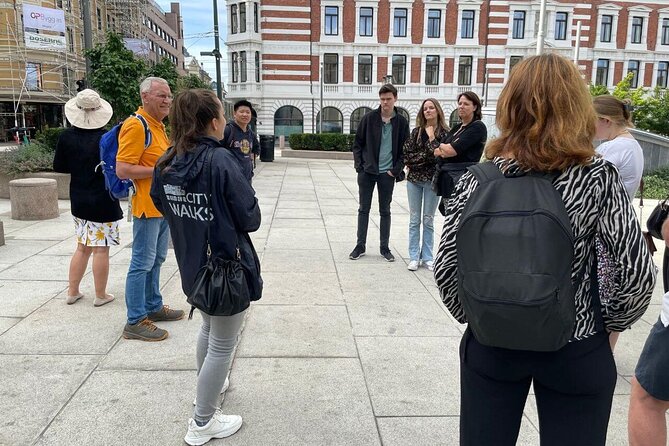
This is the kind of tour that helps on Day 1. Oslo’s center can feel orderly in a way that makes it harder to understand without a guide. Here, you get a guided route that stitches together government buildings, royal symbolism, churches, and major cultural institutions—mostly in a straight shot through the most useful parts of town.
At $38.70 per person for about 2 hours, the value comes from two places. First, it’s time-saving: you cover a lot of ground in a short window. Second, you don’t just get facts on a page—you get context while you’re actually standing near the buildings. That’s what turns “I saw a palace” into “I get why it matters.”
The best part is how often the guide pulls in characters from Norwegian life—people like Henrik Ibsen and Edvard Munch—so the landmarks stop being isolated monuments. You start to see Oslo as a living stage where art, politics, and civic identity all share the same streets.
You can also read our reviews of more walking tours in Oslo



Starting at University Square: find the P.A. Munch statue
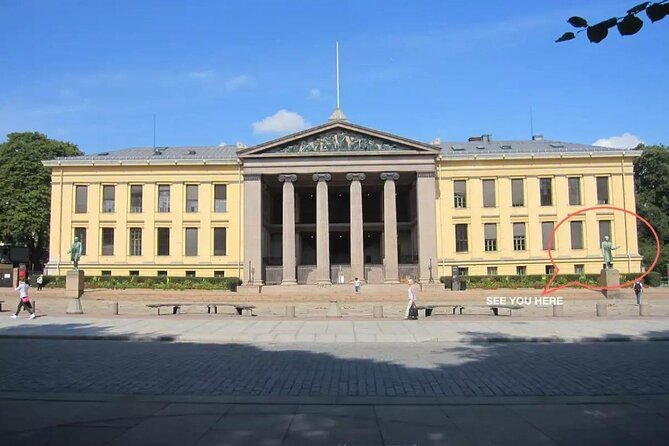
Your meeting point is not a mystery, but you need to pay attention. You’ll meet near the Faculty of Law (Det juridiske fakultet / UIO) on Karl Johans gate, close to the University Aula area. The key landmark to use: the statue of P.A. Munch by the Faculty of Law building entrance. You’ll start at 10:00 am and you should aim to arrive about 5 minutes early.
This matters more than people think. A couple of common travel problems can derail a short tour: arriving late, missing the exact language group, or wandering into the wrong doorway. If you’re coming from somewhere else in Oslo, give yourself extra time to confirm you’re at the right spot before the walk begins.
Also note the practical timing: the tour ends back at the meeting point, so you don’t need to plan a complicated transfer afterward.
University of Oslo to theatre traditions: the city’s cultural backbone
One of the first things you’ll see is the first University of Oslo building, a historical and ceremonial hall tucked into the center of the city. Even if you don’t go inside, the stop works. You get a sense of how institutions like universities shape a capital beyond politics—through education, tradition, and public life.
Then the route turns toward Norway’s theatre tradition, with a stop near one of Oslo’s most beloved landmarks. The guide’s angle here is useful if you like understanding culture, not just architecture. You’ll hear how theatre fits into Oslo’s identity—what it reflects about society and how public arts became part of the national conversation.
What I like: these early moments set a tone. They tell you the city isn’t just about “pretty buildings,” it’s about how people gather, argue, perform, and learn.
What to watch: because it’s early in the walk, you’ll want to keep moving and not let the first photo stop slow you down too much.
Royal Palace and Karl Johans gate: monarchy meets the street
Next comes the Royal Palace, built centuries ago as a monarch’s residence. You’ll also see the King’s Guard, which is one of those Oslo details that helps the city feel specific, not generic. The palace isn’t just a historical object; it’s a living symbol of continuity.
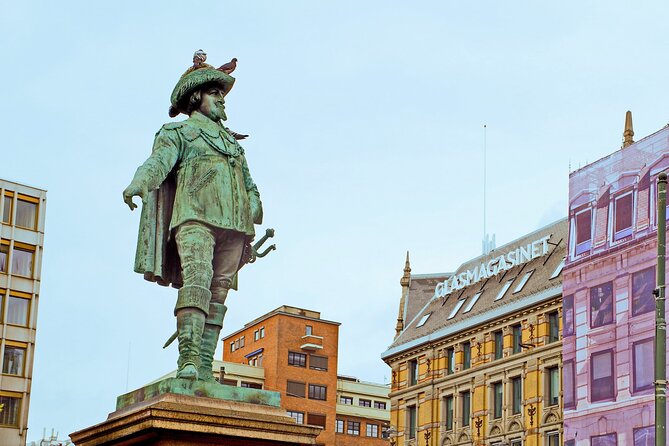
Right after that, you’ll stroll along Karl Johans gate, the main street lined with shops and restaurants. You’ll spot the statue of King Karl XIV Johan, a visual reminder that Oslo’s street grid carries layers of identity—who ruled, what mattered, and what the city chose to commemorate.
This portion of the walk is great if you like to orient yourself. Once you understand Karl Johans gate’s role, planning the rest of your trip gets easier: it becomes a backbone for getting around on foot and by tram.
Storting and the Nobel Prize hotel: law, power, and prestige
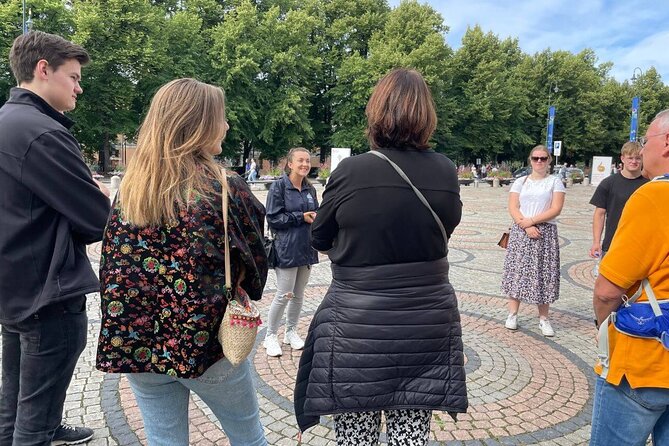
You’ll pass the Storting building—Norway’s parliament—where lawmakers have assembled since 1866. Standing nearby gives you a real sense of scale and seriousness. The guide’s explanations here help you understand how Norwegian political life has evolved, and why the central location matters.
Then you’ll look at the iconic five-star hotel with the white granite façade where Nobel Prize winners stay each year. This stop is a clever contrast to the parliament: both are symbols of national importance, but one is built for governance, and the other is built for global recognition. It’s also an easy moment to connect what you’ve heard about Norway’s culture of public debate with the country’s role on the world stage.
You can also read our reviews of more guided tours in Oslo

Red-brick halls and a major shopping center: old trades meet modern tastes
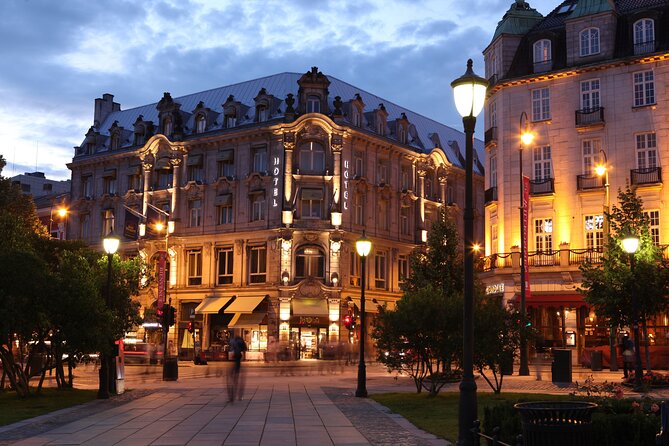
After the landmark-heavy political stretch, the tour shifts into everyday Oslo. You’ll see red-brick halls that have housed shops with arts, crafts, cafes, and more for centuries. Even without entering, the character is clear. It’s the kind of space where you can imagine the city’s commercial energy changing over time.
You’ll also admire a large shopping center where you can find designer brands, local shops, gifts, and bargain buys. This stop is practical. It’s where you can quickly decide: do you want souvenirs you’ll actually use, or do you need something practical like a warm layer, a snack, or a last-minute gift?
Consideration: this part is more about atmosphere than ticketed sites. If you’re hoping for inside-the-building highlights at every stop, you might prefer a tour that includes museum entrances. Here, you’ll rely on the guide’s context and your own curiosity at street level.
Oslo Cathedral (Domkirka) and the Opera House: two very different icons
One of the tour’s photo magnets is Domkirka, also known as Oslo Cathedral. It’s the main church for the Diocese of Oslo and the seat of the Bishop of Oslo. You’ll look up at the structure, and the guide will frame it as a key part of how Oslo’s religious and civic life connects.
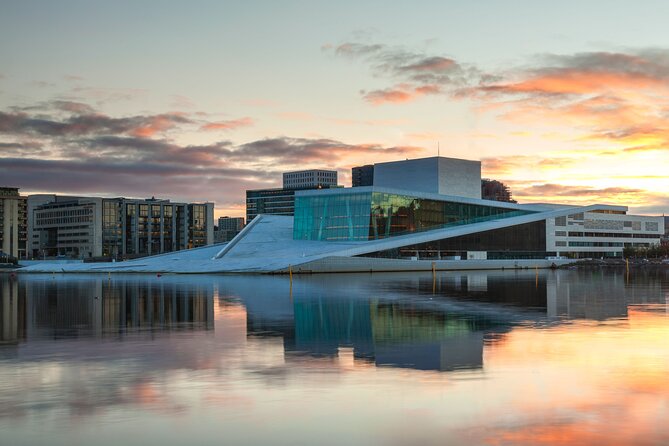
Then comes an architectural must-see: the building home to the Norwegian National Opera and Ballet. Even if you’ve only seen photos, standing nearby helps. This is one of those modern landmarks where the design seems to invite you to slow down and look closely at lines, angles, and the way it sits in the city.
If timing works, keep your eyes open for small ceremonial details. On one outing, people timed their visit so that the changing of the guards happened after the tour, which made the whole day feel lucky. You can’t count on that, but if your schedule is flexible, it’s worth staying nearby after the walk to see whether anything is happening.
What I like: this stretch balances sacred and creative. Cathedral to opera isn’t random—it’s Oslo showing two ways people gather: worship and performance.
The oldest district and the market square: real Oslo comes from the streets
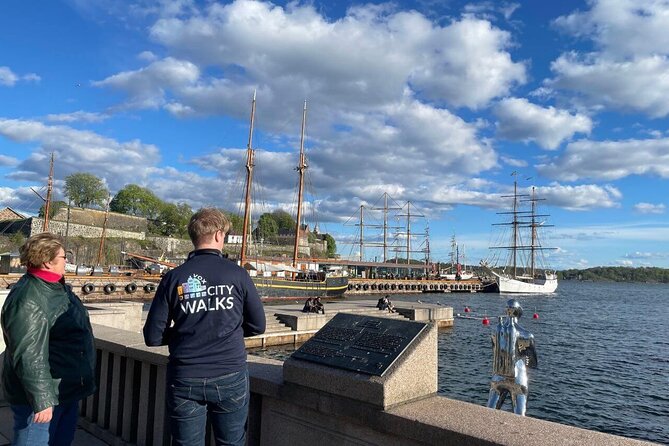
Next you’ll walk into the city’s oldest district, described as charming with cobblestone streets and impressive architecture. Then you’ll reach a historic market square, where Oslo’s oldest buildings can be found.
These stops are the payoff for anyone who likes cities at street level. You’re not just moving past landmarks—you’re walking through the parts of town where the layout itself feels like history. This is where you start noticing how people have navigated Oslo for generations: pathways, building spacing, and the way public squares function as meeting points.
Tip for your photos: cobblestones and older building façades look best when you’re not rushing. Pause for a couple of minutes, zoom in on doorways and corner details, then keep going.
Akershus Fortress, City Hall, and the Nobel Peace Center: where meaning is built in
The tour then moves into a heavier zone: Akershus Fortress. You’ll pass a fortress with a complicated history—used as a royal residence, a prison, a military base, and more. This is a stop where the guide’s storytelling really matters, because you’re looking at a physical structure that has served totally different purposes over time.
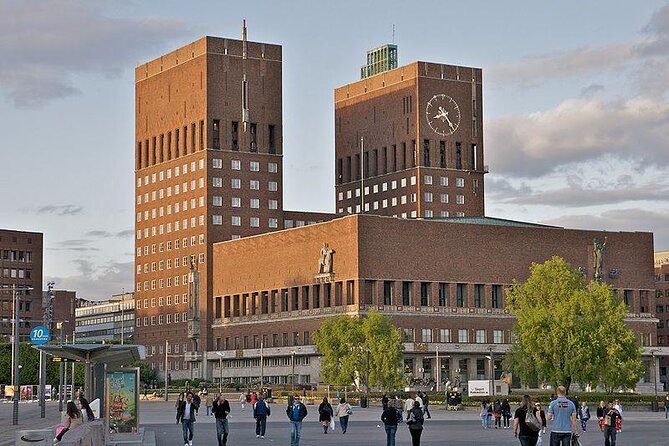
After that, you’ll admire Oslo City Hall, whose exterior artwork reflects the city’s cultural heritage and history. The exterior can feel like a visual summary—if you know what to look for.
Then you’ll arrive at the Nobel Peace Center, built in 2005, a place focused on peace and understanding around the world. Even if you don’t go inside, this stop is meaningful because it ties Oslo’s identity to a global conversation. It’s a reminder that Norway’s international influence isn’t just economic or political—it’s also moral and educational.
What to watch: entry to attractions isn’t included, so think of these stops as “see it, frame it, and decide later.” If you want to go in, plan it for another part of your day when your energy is higher.
Waterfront to Tjuvholmen: modern Oslo by the harbor
The final stretch gives you the view payoff. You’ll stroll along the waterfront area for skyline views and an easy snap of Oslo’s scenery. Then you’ll reach Tjuvholmen, once a historic fishing and shipbuilding community that has been transformed into a modern district with restaurants, shops, and art galleries.
This ending is smart for two reasons. First, it turns the tour into a loop through both old and new Oslo. Second, it puts you near areas where you can keep wandering after the guide ends—especially if you like dining outside and browsing at street level.
Practical note: waterfront sections can be windy. Bring a layer you’ll actually wear when the temperature drops.
Vox City app: turn the tour into a longer Oslo plan
One of the most useful add-ons here is the Vox City sightseeing app. You get access to self-guided audio tours so you can keep exploring on your own after the two hours end. You’ll use a QR code on your voucher to download the app and audio guide ahead of time.
This matters because a good walking tour is only half the job. The rest is turning what you learned into next steps. If you’re spending just a couple of days in Oslo, this kind of audio add-on can help you choose what to do next without scrambling for more directions.
Who this tour is best for
This fits well if you want:
- a central Oslo orientation with minimal planning
- major landmarks covered in about 2 hours
- a guide who keeps the walk moving while still answering questions
- an easy way to learn the why behind buildings, not just what they are
It may be less ideal if:
- you want mostly indoor stops and museum time
- you hate walking or you’re traveling with limited stamina
- you expect every highlight to include an entrance fee (entry isn’t included)
Given the route and stop density, I’d treat it like your morning “map builder” tour. Then you can choose later what deserves your extra time.
Should you book the Best of Oslo Guided Walking Tour?
I’d book it if you’re prioritizing a strong overview of Oslo’s center and you like learning while you walk. The route hits the palace, parliament area, Oslo Cathedral, the Opera House, Akershus Fortress, the Nobel Peace Center, and the waterfront—so you come away with a mental model of the city, not just a list of stops.
I’d hesitate only if you know you’ll struggle with cold wind or lots of walking, or if you want deep museum time included. And whatever you do, don’t wing the meeting point—use the P.A. Munch statue cue and arrive a few minutes early.
FAQ
What is the duration of the Best of Oslo Guided Walking Tour?
The guided walking tour is approximately 2 hours long.
Where does the tour start and how do I find it?
The tour starts at University Square by Det juridiske fakultet (UIO), Karl Johans gt. 47. Meet near the statue of P.A. Munch by the Faculty of Law building entrance, located at University Aula, Karl Johan Str. 47.
What time does the tour begin?
The start time is 10:00 am.
Is entry to attractions included?
No. Entry to attractions is not included.
What language is the guide, and are there other language options?
The live guide is English only. The tour also includes multilingual commentary in English, Spanish, German, French, and Italian.
Do I get anything to do after the guided walk?
Yes. You can use the Vox City sightseeing app with a complimentary self-guided walking tour of Oslo. You’ll scan the QR code on your voucher to download the app and audio guide prior to arrival.