REVIEW · PARIS
Latin Quarter Paris Guided Walking Tour Semi-Private 12ppl Max
Book on Viator →Operated by Babylon Tours Paris · Bookable on Viator
Two neighborhoods, one smart walk through Paris. This guided route pairs Île de la Cité with the Latin Quarter, so you move from Roman roots to Left Bank life in one connected story. I really like the max 12-person group size, which keeps the pace relaxed and lets you ask questions.
The main thing to think about is that some of the biggest sights here are exterior-only during the walk, and at least one major museum stop is not included—so you’re getting context and orientation more than a full “inside-everything” day.
In This Review
- Key points to know before you go
- The big idea: Île de la Cité to the Latin Quarter in one connected story
- Price and time: what $59.69 buys in 2.5 hours
- Start on Île de la Cité: Lutetia’s ghost in the first stop
- Notre-Dame from the outside: big views without the inside ticket
- Saint-Michel Fountain: a moral scene in stone
- Shakespeare and Company: the Left Bank bookmark stop
- Saint Julien le Pauvre and Saint Séverin: oldest churches you can still use today
- Eglise Saint Julien le Pauvre
- Eglise Saint-Severin
- Musée de Cluny area: Roman baths beneath the museum story
- Sorbonne and the Pantheon: schooling, thinking, and secular memory
- La Sorbonne
- Pantheon (exterior)
- Luxembourg Gardens: the calm pause that makes the walk feel longer
- St. Étienne du Mont and the Wall of Philip II Augustus: when there is time
- St. Étienne du Mont
- Wall of Philip II Augustus
- Guides who make history stick (and keep the pace sane)
- Who this tour fits best
- Practical tips so the walk feels easy
- Should you book this Latin Quarter walk?
- FAQ
- Where does the tour start and where does it end?
- How long is the tour?
- Is this tour in English?
- How big is the group?
- Is the tour offered in bad weather?
- Which stops include admission tickets?
- Is the tour wheelchair accessible?
- What fitness level do I need?
- Do I need to provide a phone number?
- What happens if it doesn’t meet the minimum number of guests?
- What is the cancellation window?
Key points to know before you go
- Max 12 guests keeps this feeling like a guided walk, not a cattle-line tour.
- Roman to medieval to modern Paris: you’ll trace the city’s story across two famous areas.
- Notre-Dame and the Pantheon are exterior stops, so you’ll focus on seeing, not queuing.
- Shakespeare and Company is built into the route for a literary Left Bank moment.
- Multiple churches and the Musée de Cluny area give you architectural texture beyond the usual highlights.
- Rain or shine, so dressing for weather matters more than you might expect.
The big idea: Île de la Cité to the Latin Quarter in one connected story

If you’ve only got a couple days in Paris, it’s easy to end up hopping between far-apart sights. This walk is built to do the opposite: you start on Île de la Cité, where Paris began, then you work your way toward the Latin Quarter, the Left Bank area tied to students, thinkers, and writers.
What makes it satisfying is the “why” behind each stop. The guide doesn’t just point out buildings. You’ll get the context that helps you look at Paris with better eyes: how the city grew, which eras left marks in the streets, and why this neighborhood became a magnet for intellectual life.
And because it’s semi-private (never more than 12), the experience stays human. You’re walking with a small cluster of people instead of a loud crowd, which helps when your guide pauses often for questions.
You can also read our reviews of more walking tours in Paris



Price and time: what $59.69 buys in 2.5 hours
At about $59.69 per person for roughly 2 hours 30 minutes, this is the kind of tour that’s mainly about value through orientation. You’re paying for a guide to stitch together history, architecture, and local culture as you go—so you spend less time guessing where to look next.
You also get a practical format: a walking tour means you’re not boxed into one museum room. The route naturally connects major icons (like Notre-Dame) with neighborhood staples (like Shakespeare and Company), plus churches and green space.
Just be clear about what it is not: it’s not a full-day, everything-included museum pass. You’ll see a lot, but some entry tickets aren’t part of the cost.
Start on Île de la Cité: Lutetia’s ghost in the first stop
The tour kicks off on Île de la Cité, the oldest settlement area in Paris. Your first moments are about getting oriented fast: why this island mattered so much, and how today’s city sits on top of earlier layers.
You’ll hear how this site was once Lutetia, a former Roman city that preceded the Paris that grew outward. Even if you’ve seen pictures of Paris your whole life, it’s a smart start because it frames everything else you’ll walk past. Instead of treating Notre-Dame like it appeared out of nowhere, you get the deeper timeline first.
Notre-Dame from the outside: big views without the inside ticket
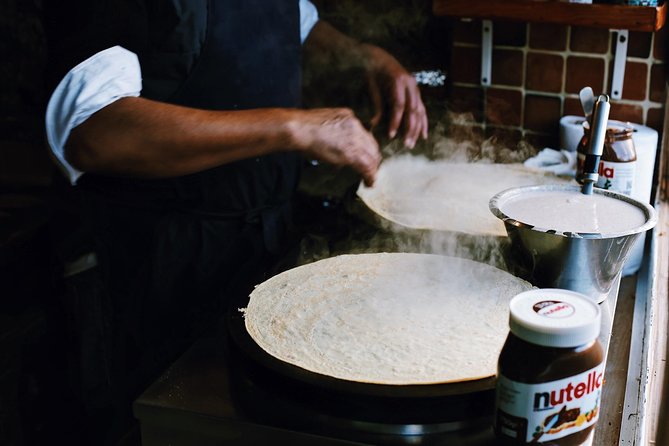
Next up is Cathedrale Notre-Dame de Paris, viewed from outside. The tour specifically flags that this is exterior-only, and the ticket is not included.
That’s not a flaw. It actually fits the pace. Notre-Dame is a “read the building” sight, and from the outside you can take in its scale and Gothic style without turning the afternoon into line management. If you’ve been hoping to tour inside, you’ll need a separate plan—but for many first-timers, the exterior stop works perfectly as a visual anchor.
Saint-Michel Fountain: a moral scene in stone
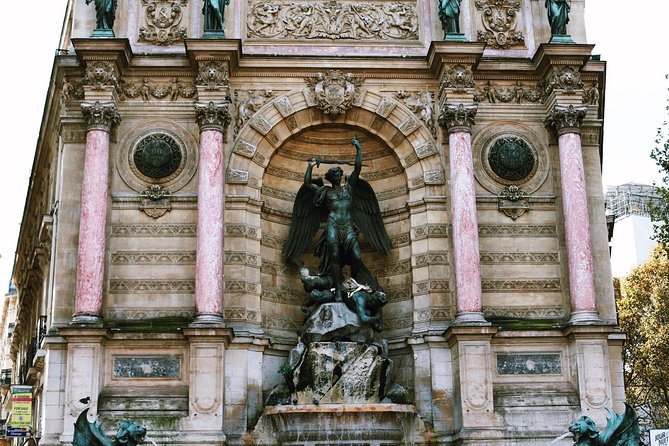
From Notre-Dame’s zone, you’ll pass the Fontaine Saint-Michel, commissioned by Haussmann under Napoleon III. This isn’t just a decorative stop. The fountain depicts the archangel Michael vanquishing the Devil, which gives you a concrete example of how public art can carry moral meaning.
It’s also a helpful break in the walk. After big architecture, this kind of stop resets your attention. You get a quick, memorable image that’s easier to recall later when you’re moving around the city on your own.
You can also read our reviews of more guided tours in Paris






Shakespeare and Company: the Left Bank bookmark stop
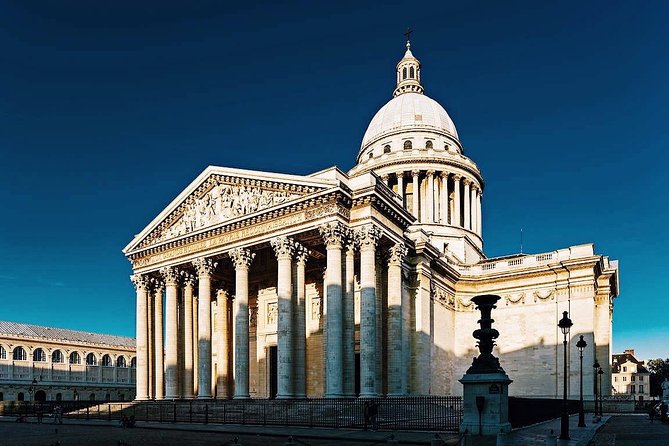
Then comes Shakespeare and Company, the famed bookstore near Notre-Dame. This place is famous for a reason: it’s not one of those sterile tourist shops. It’s a real literary landmark with a distinct feel tied to generations of writers and readers.
On this walk, it functions as a reset point: you’re switching from monuments to neighborhood culture. You’ll learn what makes the bookstore such a durable symbol of the Left Bank, and you get time to slow down and look around.
Depending on the guide and timing, you might even catch a small “performance” moment—some departures include a brief live reading style stop here—so don’t be surprised if the bookstore feels like more than a photo stop.
Saint Julien le Pauvre and Saint Séverin: oldest churches you can still use today
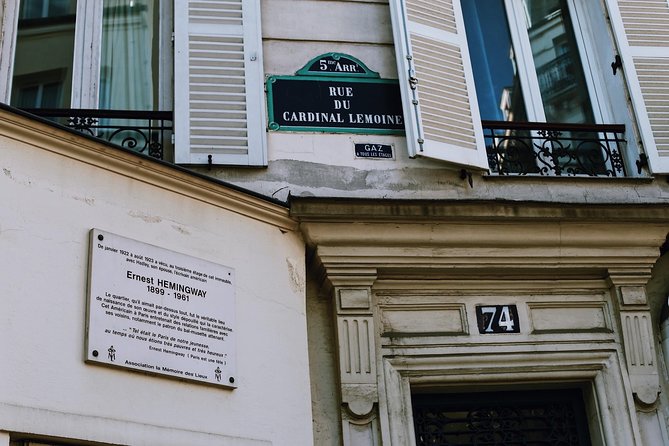
The route then shifts into religious architecture, with two notable churches on the program.
Eglise Saint Julien le Pauvre
You’ll see Eglise Saint Julien le Pauvre, described as one of the oldest religious buildings in the area. This is the kind of stop that rewards you for paying attention to details. Even when you’re only viewing the exterior, older churches tell you what “survived” through centuries of change.
Eglise Saint-Severin
Next is Saint Séverin, a Roman Catholic church that’s still used for worship and recognized as one of the oldest remaining churches on the Left Bank. This is a good reminder that Paris history isn’t only preserved behind glass. People still live in these layers.
A practical note: because the tour has limited time, you should expect short looks and quick guidance rather than long stays inside.
Musée de Cluny area: Roman baths beneath the museum story

After the churches, you head toward Musée de Cluny, known as the National Museum of the Middle Ages. The key fact here is structural: the museum is partially built on remnants of third-century Gallo-Roman baths.
That’s a fascinating idea to carry with you as you walk. It helps you understand why the Latin Quarter feels like it has multiple cities stacked together. You’re not only seeing medieval Paris; you’re seeing where earlier life literally shaped the ground.
The museum admission is not included, so this stop is more about context and direction. If you’re interested in going inside, you’ll want to plan that as a separate visit.
Sorbonne and the Pantheon: schooling, thinking, and secular memory
The tour moves into the intellectual zone with La Sorbonne and then heads toward the Pantheon.
La Sorbonne
You’ll pass Sorbonne University, presented as an epicenter of knowledge and tied to the creation of the French university. Even if you’re not into academic history, it’s one of those Paris stops that helps you connect architecture to institutions. This is where ideas took physical form.
Pantheon (exterior)
Next is the Pantheon, also described as exterior-only, with tickets not included. It started as a church dedicated to St Genevieve, but today it functions as a secular mausoleum. You’ll learn who rests there—among the names highlighted are Voltaire and Rousseau.
This stop is especially valuable if you like history with a clear map of influence. It ties the neighborhood’s intellectual identity to real people and real politics.
Luxembourg Gardens: the calm pause that makes the walk feel longer
After the denser history stops, you’ll reach Luxembourg Gardens, a classic Paris breather. The route frames it as sitting at the border of Saint-Germain-des-Prés and the Latin Quarter, with gardens inspired by Florence’s Boboli Gardens.
You’ll hear that the gardens were created in 1612 under the initiative of Queen Marie de Medici, and the site covers about 25 hectares. Even if you don’t go deep into the park, this pause is strategic: it breaks up the walking, helps your brain absorb what you’ve seen, and gives you a chance to scan the neighborhood rhythm before continuing.
If you’re someone who likes to photograph people as much as buildings, this is a good moment. The gardens feel like a real place, not just a background.
St. Étienne du Mont and the Wall of Philip II Augustus: when there is time
Toward the end, you may see a couple extra highlights, depending on timing.
St. Étienne du Mont
If there’s time, the tour includes St. Étienne du Mont, noted for the shrine of St Genevieve and the tomb of Jean Racine. This is a very “Paris” combination: religion, culture, and literature all in one.
Wall of Philip II Augustus
You’ll also pass the Wall of Philip II Augustus, described as the oldest city wall in Paris. The story ties it to conflicts involving Philip II of France and the Anglo-Norman House of Plantagenet, and it was built to protect the capital before the Third Crusade.
Even as a short pass-by, this is a powerful stop. It’s one of those reminders that the Latin Quarter wasn’t always open and walkable in the way we experience it now. Walls shaped movement, safety, and the city’s growth.
Guides who make history stick (and keep the pace sane)
A walking tour lives or dies by the guide, and this one is consistently led by professionals who can connect scenes and ideas without turning everything into a lecture.
Names that come up often include Jay, Eden M., Hugo, Francois, Belen, Emma, Agustina, Bel, Tamari, Paloma, Stefanie, and Georgia. Across those guides, the common strengths are clear: you’ll get stories with context, clear answers to questions, and pacing that doesn’t feel rushed.
Some guides are also known for using tools like photos and maps to help you form a mental picture while you’re walking. That matters. When you can visualize the city’s layout, you understand more than the facts—you understand how Paris works.
If you’re traveling with a kid, this tour can also work well because guides can explain big ideas without losing the kid in the details. I’d treat it as a good family option for ages who can handle a steady walk and short stops.
Who this tour fits best
This is a strong choice if you want:
- A first-time Paris orientation that doesn’t feel generic
- A walk focused on history, architecture, and local culture instead of only shopping and selfies
- A small-group format where you can actually hear the guide and ask questions
- A practical way to get from major icons to literary and student-life Paris
It’s not the best fit if:
- You need fully accessible routes or lots of inside time (the tour isn’t recommended for wheelchair users or those with walking disabilities)
- You want a “everywhere inside” museum schedule, since some stops are exterior-only and at least one museum admission isn’t included
Practical tips so the walk feels easy
You’ll be walking for about 2.5 hours, so set yourself up for comfort:
- Wear comfortable shoes and plan for uneven sidewalk moments.
- Bring a bottle of water.
- Pack an umbrella if rain is possible, since the tour runs rain or shine.
- Avoid large bags or suitcases; you’re expected to move comfortably on foot.
- You’ll need to have a mobile phone number with country code provided so the operator can coordinate.
Also, if you’re the type who likes to keep schedules tight, this tour helps—but don’t schedule back-to-back must-dos right after. Give yourself a buffer so you can use the guide’s end-of-tour recommendations without rushing.
Should you book this Latin Quarter walk?
Book it if you want a smart, small-group way to connect Paris’s origins to its Left Bank identity—Roman-era beginnings, Notre-Dame from a great vantage, bookish Paris at Shakespeare and Company, and a guided route through churches, the Sorbonne, the Pantheon area, and Luxembourg Gardens.
Skip it or plan extra add-ons if your top priority is going inside major sights. Since Notre-Dame and the Pantheon are exterior-only and Musée de Cluny isn’t ticketed, you’ll get more insight than full interior access.
For most visitors, this is the kind of tour that pays off immediately: you’ll leave with better instincts for where to wander next, what to notice, and how to read the neighborhood without guesswork.
FAQ
Where does the tour start and where does it end?
The tour starts at Cité75004 Paris, France and ends in the Latin Quarter, Paris.
How long is the tour?
It runs for about 2.5 hours.
Is this tour in English?
Yes, it’s offered in English.
How big is the group?
It’s semi-private, with a maximum of 12 travelers.
Is the tour offered in bad weather?
Yes. It runs rain or shine.
Which stops include admission tickets?
Some stops are listed as free. At least Notre-Dame and Musée de Cluny are marked as not included. The Pantheon is also not included and is treated as an exterior stop.
Is the tour wheelchair accessible?
The tour is not recommended for those with walking disabilities or using a wheelchair.
What fitness level do I need?
You should have a moderate physical fitness level.
Do I need to provide a phone number?
Yes. It’s imperative that you provide a mobile phone number (including country code).
What happens if it doesn’t meet the minimum number of guests?
The tour has a minimum number of travelers. If it’s canceled because that minimum isn’t met, you’ll be offered an alternative date or a full refund.
What is the cancellation window?
You can cancel up to 24 hours in advance for a full refund. If you cancel less than 24 hours before the start time, the amount paid isn’t refunded.