REVIEW · GALLE
Galle Fort Walking tour
Book on GetYourGuide →Operated by Madawa Galagedara · Bookable on GetYourGuide
Galle Fort clicks into place on foot. This Galle Fort walking tour uses the walls, bastions, and everyday street corners to turn centuries of history into something you can actually picture, from defensive design to Dutch-era life.
What I really like is the focus on the fort’s key features without rushing past them, plus the way your guide (Madawa Galagedara) connects Galle’s story to wider Sri Lanka history so you understand what you’re seeing. The other big win is the relaxed, question-friendly pacing: you’re not stuck watching someone talk at you.
One caution: it’s a lot of walking on uneven ramparts and in open sun, so bring water and plan for heat. Also, refreshments are not included, and it is not suitable for people over 95.
In This Review
- Key reasons this Galle Fort tour works so well
- Galle Fort on foot: why this 90-minute format feels worth it
- Meeting under the Clock Tower: the fastest way to get oriented
- Moon Bastion and the defensive logic of the walls
- Dutch-era highlights: Amanhgalla, the Dutch Reformed Church, and cinnamon storage
- Court Square and the Dutch hospital: history tied to daily life
- Lighthouse and Flag Rock Bastion: views with a real sense of place
- Lighthouse Street, Ian drainage system, and the walk toward Pedlar’s Corner
- Price and value: why $15 feels fair for what you get
- Pace, comfort, and what to bring (so the walk stays fun)
- Who should book this Galle Fort walking tour
- Should you book this Galle Fort tour with Madawa Galagedara?
- FAQ
- How much does the Galle Fort walking tour cost?
- How long is the tour?
- Where do I meet the guide?
- Is the tour guided in English?
- What’s included in the price?
- Are refreshments included?
- What should I bring?
- Is the tour suitable for very elderly guests?
- Is free cancellation available?
- Can I reserve now and pay later?
Key reasons this Galle Fort tour works so well
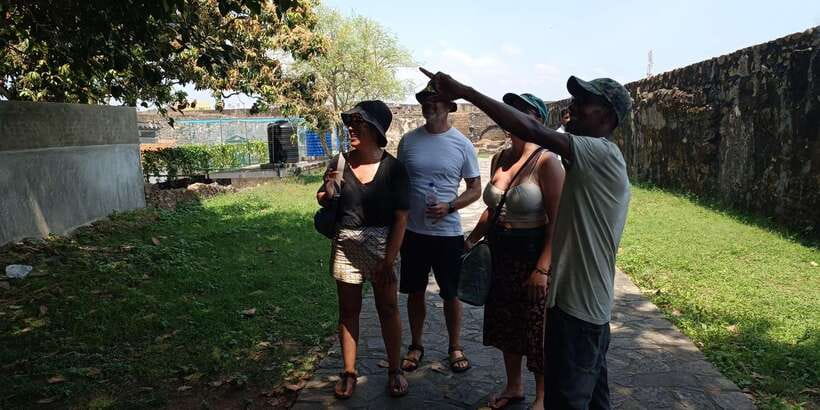
- Madawa Galagedara keeps the story local: fort history plus Sri Lanka context, with space for questions.
- You start with the high points (Clock Tower area, Moon Bastion), so the fort’s layout makes sense fast.
- Bastions aren’t just names: you visit Moon Bastion and hear about Star and Sun Bastions too.
- Dutch-era landmarks are used as real wayfinding: church, cinnamon storage, court square, and the hospital.
- You end near food and an easy exit at Pedlar’s Corner Cafe.
- Timing helps: early morning or late afternoon can feel cooler, and a late slot can set you up for sunset views.
Galle Fort on foot: why this 90-minute format feels worth it
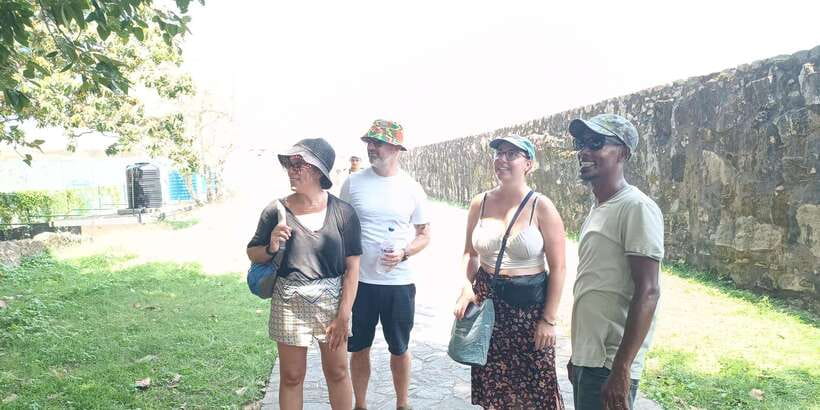
Galle Fort is one of those places where you can technically wander on your own… but the streets move fast and the details blur. This tour is short enough to keep your energy, yet structured enough that you leave with a map in your head, not just photos on your phone.
For $15 per person, you get a live English-speaking guide and entrance-free access to what you’ll be viewing along the route. What you’re paying for isn’t a ticket to a building you could skip; it’s the ability to read the fort’s design—walls, bastions, and street layout—like a story.
You’ll also notice the tour leans into the human side: how the Dutch presence shaped buildings, how the fort functions as a living town today, and how Sri Lanka’s bigger history threads through local places. That’s the difference between collecting landmarks and actually understanding them.
Meeting under the Clock Tower: the fastest way to get oriented
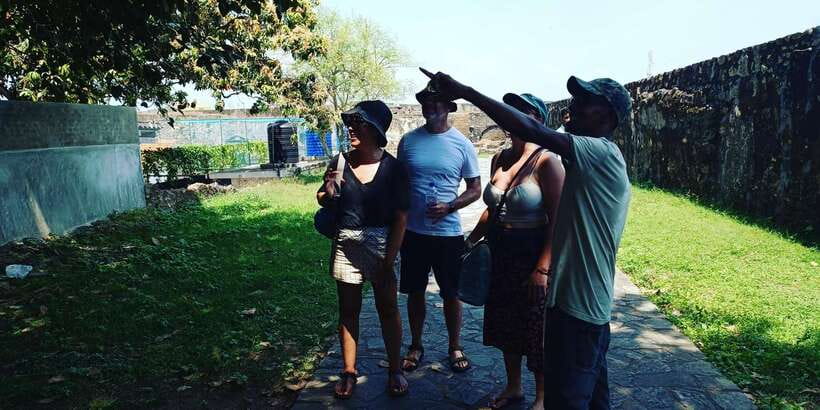
Your tour begins under the Galle Fort Clock Tower, inside the fort area. The meeting point is practical: when you enter Galle Fort from the new entrance, the clock tower is on your right.
This matters more than it sounds. Galle Fort can feel like a maze until someone gives you a mental “north.” Starting at a central, recognizable point helps you build that orientation immediately, so every next stop feels like progress instead of repetition.
From there, you’ll take a short walk and then move into the fort’s higher defensive story. Even if you’re only doing a 1.5-hour visit, you’ll end up seeing the fort as a connected system rather than scattered sights.
Moon Bastion and the defensive logic of the walls
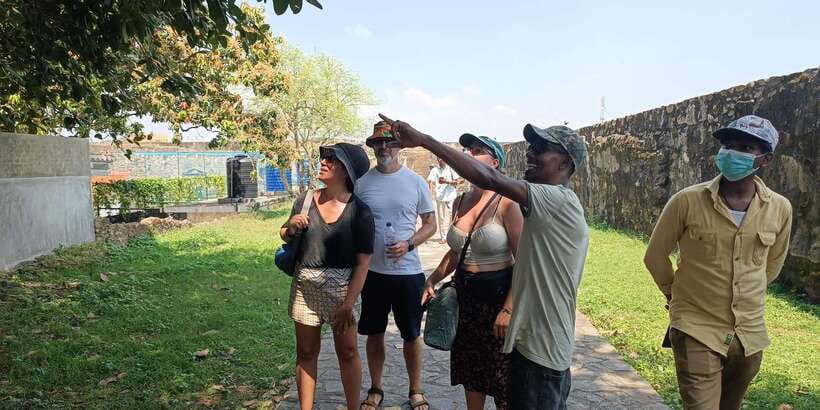
The tour then heads to Moon Bastion, one of the fort’s key high points. Bastions are where the fort’s personality shows: thick walls, strategic angles, and the physical reason guns and watchers were placed where they were.
Your guide explains the fort’s history from that elevated position, and you’ll also hear about the Star Bastion and Sun Bastion. Even if you don’t stop at every bastion for a long look, having the names and purposes tied to what you can see from the ramparts helps you follow the fort’s logic.
Here’s what I’d watch for as you’re there: look for how the walls curve and how sightlines work along the perimeter. When you understand that, you’ll start noticing details you’d otherwise skip—like why certain walls feel higher or thicker at particular stretches.
Dutch-era highlights: Amanhgalla, the Dutch Reformed Church, and cinnamon storage
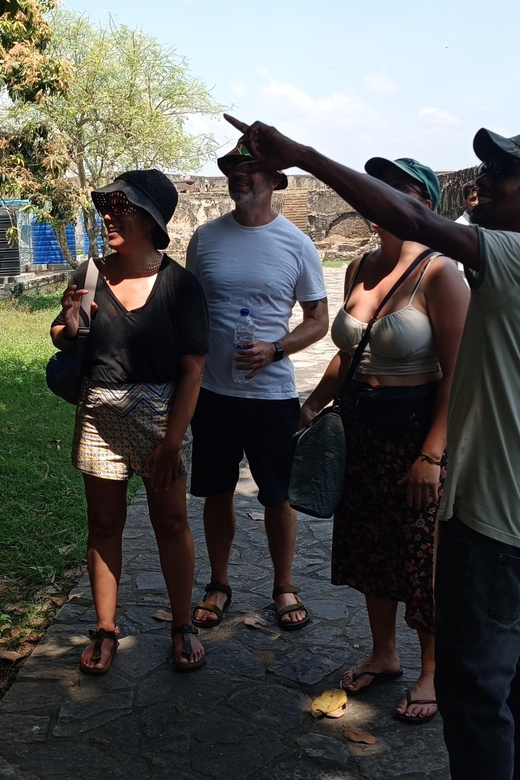
Once you’re on the ramparts and moving through the fort, the tour becomes a guided walk through major Dutch-era landmarks. This is where you get the “postcard” sights, but with added meaning.
You’ll be shown the Amanhgalla Hotel, the Dutch Reformed Church, and the Dutch cinnamon storage building. The cinnamon storage stop is especially interesting because it anchors the fort in the economic side of colonial-era life. It’s not only about defense and religion; it’s also about trade and what the fort protected.
The Dutch Reformed Church gives you a chance to see how architecture signals priorities. And the Amanhgalla area helps you understand how modern hospitality fits into a space originally designed for different uses.
In plain terms: these stops help you read Galle Fort as a layered place, not a single era pinned like a museum label.
Court Square and the Dutch hospital: history tied to daily life
Next you’ll move toward Court Square and then see the Dutch hospital. This section feels like the tour slows just enough to let the “why” land.
Court Square is where power, administration, and public life intersect. A guided explanation makes it easier to picture what the space meant to people living inside the fort. You’re no longer guessing at what you’re looking at; you know what role the spot played.
The Dutch hospital is the same idea, but with a different emphasis. It helps you connect the fort’s colonial story to systems that affected health and care. Even if you’re not a history buff, these stops give the walk emotional context: this wasn’t only about soldiers and merchants, but also about people coping with illness and risk.
If you like tours that connect “buildings” to “behavior,” this portion is one of the best reasons to book.
Lighthouse and Flag Rock Bastion: views with a real sense of place
As you continue, you’ll reach the lighthouse and Flag Rock Bastion. This is where Galle Fort shifts from inland streets to a stronger relationship with the sea.
From the ramparts and the lighthouse area, you start feeling the coastal engineering of the fort: the way the perimeter is designed to face outward. It’s also a great spot for atmosphere—salt air, open sightlines, and the sense that this town has always been shaped by maritime trade and coastal challenges.
Your guide’s explanations keep the stop from becoming just “nice view.” You’ll understand why the lighthouse and surrounding points belong in the fort’s defensive and functional story.
If you’re planning your day around photos, don’t treat the lighthouse as a quick checkpoint. Spend a moment scanning the perimeter and thinking: where would you watch, where would you defend, and how does the fort keep its distance from the shore?
Lighthouse Street, Ian drainage system, and the walk toward Pedlar’s Corner
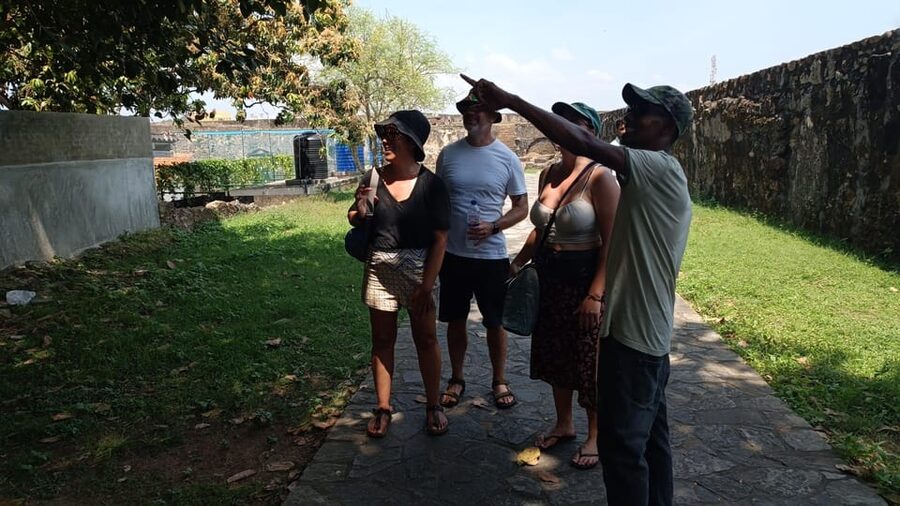
After the lighthouse area, the route continues along Lighthouse Street, then includes a stop to see an Ian drainage system. This might sound like a niche technical detail, but it’s one of those things that turns a place from pretty into practical.
Drainage systems are a form of survival in coastal climates. When your guide points out how water would be managed and where it would go, you start understanding why certain streets and surfaces feel the way they do. It’s also a reminder that infrastructure is part of heritage, not separate from it.
From there you’ll move through Pedlar’s Street and finish at Pedlar’s Corner Cafe. Ending near a cafe is genuinely convenient. You’re done, your legs are tired, and you have an obvious place to reset with a drink or snack on your own terms.
And if you’re thinking about timing: many people prefer early or late slots because the fort can get hot, and late afternoon can line up with cooler conditions and sunset views from the ramparts.
Price and value: why $15 feels fair for what you get
Let’s talk value in real terms.
You pay $15 per person, and you get:
- a professional guide (Madawa Galagedara)
- English-language commentary
- entrance-free viewing for what’s on the route
- a route that’s built around major fort features, not random stops
You don’t get refreshments, so you’ll need to handle water and snacks yourself. That’s a small tradeoff, but it’s also why packing what you need matters.
To me, the best value piece isn’t that the tour is cheap. It’s that the guide’s role is specific: explaining Moon Bastion, Star and Sun Bastions, Dutch landmarks like the church and cinnamon storage building, plus connecting it all to Sri Lanka’s broader history and even local political and social context. When a guide can answer questions on the spot, you’re buying time saved and confusion avoided.
Pace, comfort, and what to bring (so the walk stays fun)
This is an easy concept: you’ll be walking. The route includes ramparts, elevated areas, and street transitions, so comfort comes down to preparation.
Bring:
- a hat
- sunscreen
- water
Wear shoes with grip, even if you don’t think you’ll need them. Fort streets and ramparts can be uneven, and you’ll want stable footing when you stop for photos or when your guide points things out.
Two practical tips I’d give you:
- Pick a start time based on the sun. If you can choose, early morning or a late-afternoon option around 4:30pm can feel cooler and sets you up for rampart views.
- Use the guide’s question time. Ask about what you’re staring at. This tour is built for that.
Also note: it’s not suitable for people over 95, which likely comes down to walking demands and elevation. If you’re near that threshold, ask the operator before committing.
Who should book this Galle Fort walking tour
This is a great match if you:
- want the fort’s history told through specific features (bastions, ramparts, and recognizable Dutch landmarks)
- enjoy guides who can answer questions, including context about Sri Lanka beyond the fort
- like short tours that still leave you feeling you “got it,” rather than just passed through
- prefer a relaxed pace over a sprint of stop-and-go photos
It’s also a strong pick for people who want a meaningful introduction to Galle without committing to a whole day. A 1.5-hour walking format is ideal when you’ve got other plans in town and want something that actually improves the rest of your trip.
Should you book this Galle Fort tour with Madawa Galagedara?
Yes, if your goal is to understand Galle Fort, not just look at it.
Book it if you want:
- structure in a short time
- a guide who connects local sites to bigger Sri Lanka history
- time to take in key spots like Moon Bastion, Dutch church and cinnamon storage, and the lighthouse area
- an end point near food at Pedlar’s Corner Cafe
Skip it (or rethink timing) if you:
- struggle with warm, sun-exposed walking and haven’t planned for hydration
- need a fully non-walking or step-light format
- prefer to move completely at your own pace without guide input
If you’re on the fence, choose a start time that keeps the heat manageable. Then show up with water and a curious mindset. This tour is designed for exactly that kind of traveler.
FAQ
How much does the Galle Fort walking tour cost?
It costs $15 per person.
How long is the tour?
The tour lasts about 1.5 hours.
Where do I meet the guide?
Meet under the Galle Fort Clock Tower. If you enter Galle Fort from the new entrance, the clock tower is on the right side.
Is the tour guided in English?
Yes. It’s a live tour guide speaking English.
What’s included in the price?
The tour includes a professional tour guide and all entrance fees are free.
Are refreshments included?
No. Refreshments are not included.
What should I bring?
Bring a hat, sunscreen, and water.
Is the tour suitable for very elderly guests?
It is not suitable for people over 95 years.
Is free cancellation available?
Yes. You can cancel up to 24 hours in advance for a full refund.
Can I reserve now and pay later?
Yes. There’s a reserve now, pay later option to keep your plans flexible.