REVIEW · PARIS
Early Access Paris Notre Dame Cathedral Walking Tour
Book on Viator →Operated by LetzGo City Tours · Bookable on Viator
Notre-Dame is back, and the details matter. This English-language early access walking tour strings together the medieval origins of Paris on Île de la Cité with restored cathedral interiors and classic Seine views, all with an expert local guide setting you up to look smarter and faster. I love that Notre-Dame is genuinely the star, with a focused interior visit, and I also love how the route adds context before and after so the buildings feel connected instead of random stops. The one thing to keep in mind: the cathedral can still get very busy, so your experience depends on the day’s crowds and entry conditions.
You’ll start near the center of it all, walk at a comfortable group pace, and spend about 45 minutes inside Notre-Dame (with time later for more island landmarks). The value for most people comes from paying for guidance, storytelling, and time-saving direction, not from assuming you’re buying a paid skip-the-line miracle (especially since Notre-Dame entry is free). My only real caution is practical: there’s a fair amount of walking over uneven cobblestones and some stairs, so plan for your legs.
In This Review
- Key Things That Make This Tour Work
- Early Access Notre-Dame: What You’re Actually Paying For
- Where You Start, How the Walk Feels, and What to Bring
- From Square Jean XXIII to the Seine: Paris Before Gothic
- Île de la Cité: The Island That Became the Point
- Notre-Dame Interior in 45 Minutes: What to Look For
- Tip for the Interior Visit
- Parvis Notre-Dame, Charlemagne, and Why the Plaza Matters
- Police Prefecture and the WWII Story in Stone
- Flower Market, Palais de Justice, and the Island’s Darker Side
- Sainte-Chapelle Upgrade: The Royal Gothic Hour
- Tour de l’Horloge, Henri IV’s Square, and the Pont Neuf Finish
- Is It Worth $71.20 for a 2-Hour Tour?
- Who This Tour Suits Best (and Who Should Skip It)
- Should You Book This Early Access Notre-Dame Tour?
- FAQ
- How long is the walking tour?
- What language is the tour offered in?
- Where does the tour start?
- Where does the tour end?
- Is Notre-Dame entrance included?
- Is Sainte-Chapelle included?
- How long do you spend inside Sainte-Chapelle if you upgrade?
- Do I need to pay for food or transportation?
- What should I bring and wear?
- Is the tour suitable for limited mobility?
- Can I cancel for free?
Key Things That Make This Tour Work

- Restoration-focused Notre-Dame interior time: you get a guided setup and a real look inside for about 45 minutes.
- Île de la Cité context before the big moments: Roman-era and medieval power stories show up early.
- Seine and UNESCO riverbanks in the same flow: you get postcard views without fighting crowds all day.
- Optional Sainte-Chapelle upgrade: you can add a royal Gothic hour if that’s your priority.
- Small group size (up to 25): easier to hear your guide and keep the pace sane.
Early Access Notre-Dame: What You’re Actually Paying For
The title says early access, but here’s how I’d think about value: you’re paying for interpretation and a smoother visit, not for a guaranteed fast track through everything. Notre-Dame itself is free and open to all, so what you’re buying is the guided planning around it—where to stand, what to notice, and how to connect the building to the island’s larger story.
At $71.20 per person for about 2 hours, the math works best if you want your time to feel purposeful. If your goal is only to take photos and wander, you can do a lot on your own for less. If your goal is to understand why Notre-Dame looks the way it does after restoration, and what you’re looking at, the tour makes sense.
You can also read our reviews of more walking tours in Paris



Where You Start, How the Walk Feels, and What to Bring
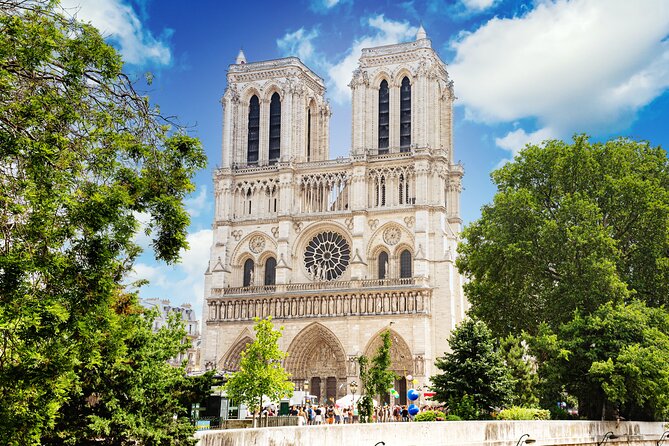
You meet at Place Louis Aragon (75004) and the basic finish is Pont Neuf (75001), with an important twist: if you upgrade for Sainte-Chapelle, your tour end shifts to that chapel area. The walking is part of the experience. It’s not a hop-on/hop-off situation, and you will cover uneven surfaces and some elevation.
Do this like a local: bring photo ID, wear comfortable shoes, and pack water. Notre-Dame has a church dress code, so plan on covering shoulders—bring a scarf or jumper. One more practical note: the tour operates in all weather, so a light rain layer can save your mood.
From Square Jean XXIII to the Seine: Paris Before Gothic
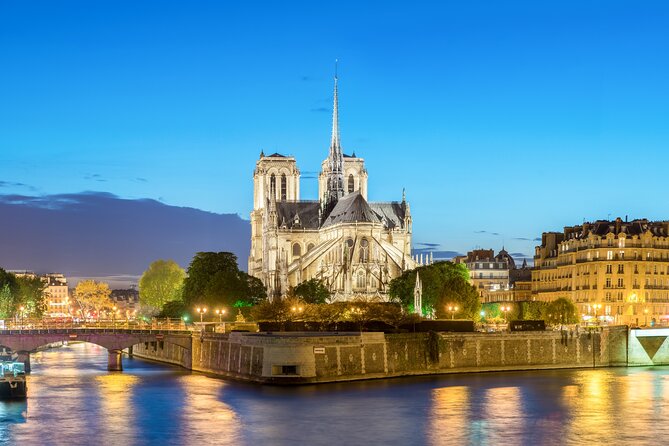
The first stop is Square Jean XXIII, a place with hidden layers. Archaeological excavations here uncovered a pillar tied to Roman-era propaganda, linked to the traders known as les Nautes—a detail that helps explain how commerce and politics shaped early Paris. Even if you’re not a Roman-history person, this kind of pre-Notre-Dame setup pays off once you start seeing the island as a power center, not just a photo backdrop.
From there you head to the Seine. The riverbanks in central Paris are part of a UNESCO World Heritage area, and the walk gives you that wide-angle feeling without needing a long transit detour. Expect short, scenic stretches where your guide points out what you’d otherwise miss: the city’s geography is the skeleton of everything you’ll see next.
Île de la Cité: The Island That Became the Point
Now you’re walking into the heart of Paris’s old story: Île de la Cité, the island where major landmarks cluster and where centuries of government, religion, and conflict happened. This stop isn’t just geography—it’s the tour’s “here’s why the rest makes sense” moment.
You also get a quick but memorable detour connected to how Parisians marked time and meaning on the street level: a spot used for measuring distances from Paris to other places, plus a site tied to execution-era rituals where criminals apparently faced their fate before punishment. It’s the kind of detail that turns the city from scenery into a living document.
Notre-Dame Interior in 45 Minutes: What to Look For
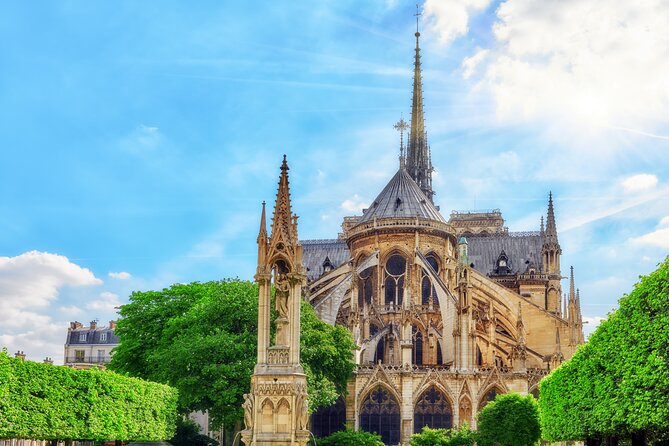
This is the big payoff: you enter Cathedrale Notre-Dame de Paris and spend about 45 minutes inside. The restoration story is not just marketing. The description you’ll hear focuses on how centuries of grime and ash were stripped from the cream-colored limestone, leaving the vaults and tall columns looking brighter than you might expect.
Your guide will steer you toward the cathedral’s craftsmanship, including the fact that over 2,000 workers and craftsmen took part in reconstruction. That matters because it explains why the building feels crisp and intentional today, not like an untouched ruin.
When you look up, there are specific visual cues your guide will help you find: a gold-leaf star pattern set across a deep blue ceiling in one of the side chapels, and cherubs around the oculus—a ring of stone at the center of the four vaults that form the transept crossing. You’ll also hear about the new liturgical furniture, like the altar, and notice delicately sculpted scenes from the life of Christ.
One thing to know before you go in: parts of the cathedral have a silence rule. It’s not about rules for fun—it’s about respecting a worship space. If you’re the kind of person who likes to talk over photos, save it for outside.





Tip for the Interior Visit
Because you only have about three-quarters of an hour, go in with a plan. I’d pick two priorities: one for the view upward (vaults, ceiling details) and one for the sculpted narrative (chapels, Christ scenes, altar area). That keeps the time from slipping by in a blur.
Parvis Notre-Dame, Charlemagne, and Why the Plaza Matters
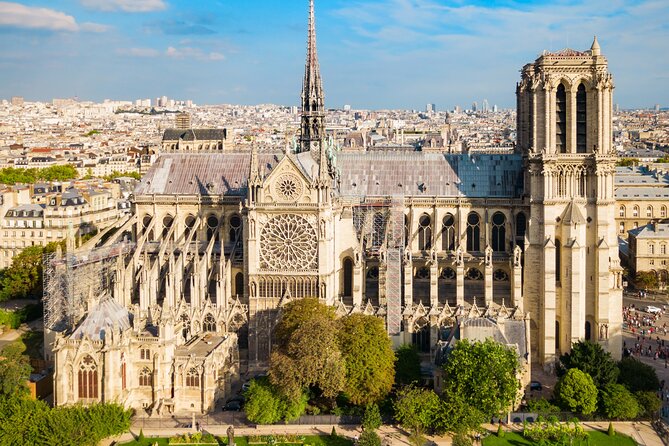
Next comes Parvis Notre-Dame – Place Jean-Paul II, the plaza in front of the cathedral. This area is in the middle of being redesigned to open views toward the Seine and to improve visitor flow. Even if you’re not thinking about urban planning, this is the part that affects how you’ll experience the cathedral from the street—where you stand, how you move, and whether crowds funnel you into tight gaps.
You’ll also see a monumental bronze statue of Charlemagne and His Guards. Charlemagne isn’t random here; the guide connects him to the broader sweep of medieval authority that shaped what the cathedral represented. And along the route, your guide points out that the square’s story reaches back to Roman times, which helps you understand how old city layers overlap.
Police Prefecture and the WWII Story in Stone
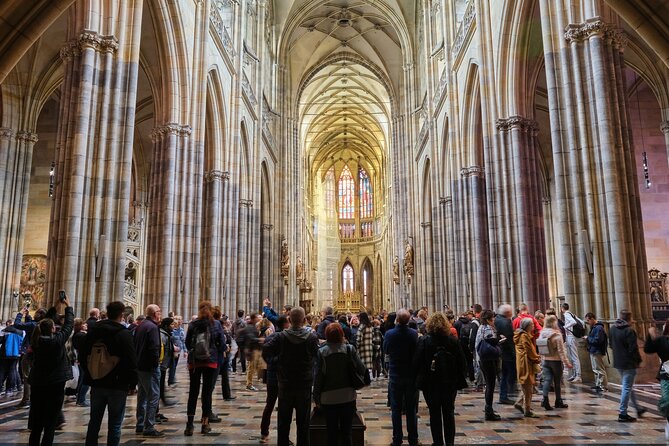
You’ll briefly stop at the Préfecture de Police. The key detail is that the building has visible bullet impact from WWII, tied to the liberation period of Paris. It’s a fast stop, but it adds something important: this area isn’t only museum work. It’s still a working seat of public authority and services.
This is one of the reasons I like this tour format. It doesn’t treat history like wallpaper. It treats it like something that still leaves marks.
Flower Market, Palais de Justice, and the Island’s Darker Side
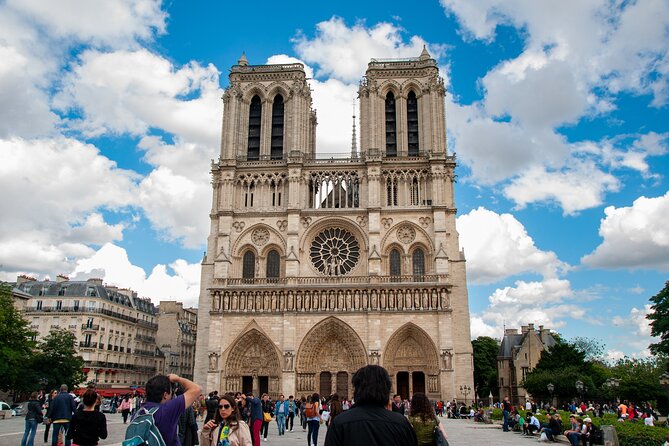
Walking on Île de la Cité keeps mixing moods. At Marche aux fleurs, you’ll see the flower market that has attracted gardeners and passersby since 1830. It can be covered or open-air, and the pavilions often date to the 1900s. The market isn’t always open, so if you go on a day it’s closed, you’ll still get the area context without the full photo payoff.
A bit later, the route passes by the Palais de Justice (the courthouse complex). The site has a long government lineage, traced back to Roman times and carried forward by later dynasties like the Merovingian and Capetian periods. This helps explain why the island keeps drawing power to itself—religion and government were never far apart here.
Then the tour takes a darker turn with the old prison of Paris, where Marie Antoinette stayed for nine months. The Revolutionary Tribunal sentenced 2,639 people to execution by guillotine during the Reign of Terror. This isn’t just trivia—it’s part of why the island feels heavy even when it’s sunny and crowded.
Sainte-Chapelle Upgrade: The Royal Gothic Hour
If you add the optional Sainte-Chapelle entry, you get a different kind of reward: a concentrated look at Gothic design used for royal religious power. The chapel is part of the medieval Palais de la Cité complex and was under construction after 1238, consecrated on 26 April 1248.
On the walk through the area, you’ll have photo time and a short introduction to the exterior before later entrance for those who upgraded. The interior visit is about 60 minutes, which is a solid window for a place like this. Expect time to actually look—not just a quick sighting before moving on.
A note on timing: some people find that line situations around famous Paris sites can be unpredictable. The good news is that your tour includes a structured visit window for the chapel option, and your guide will help you know how to make that hour count.
Tour de l’Horloge, Henri IV’s Square, and the Pont Neuf Finish
The last stretch adds a “Paris in miniature” feel: old structures, street-level tradition, and big river views.
You’ll see the Tour de l’Horloge, a 650-year-old clock tower that originally served as a watchtower for the Royal Palace. The tower is rectangular, massive, and rises about 47 meters, with walls nearly a meter thick. Restoration work happened in phases—one key stretch in the mid-1800s—so the tower’s current look is the result of careful preservation rather than a simple untouched past.
Then you’ll pass an oldest square in Paris associated with Henri IV, built for his first son, where you may spot the local game pétanque. Even if you don’t play, it’s a quick reminder that this is still a living neighborhood, not only a stage set.
Finally, you arrive at Pont Neuf, the oldest bridge in Paris. The payoff is the view line: you can look out toward the Louvre, the Seine, the Eiffel Tower, the French Academy, and the Monnaie de Paris. If you did not upgrade for Sainte-Chapelle, this is where your tour ends.
Is It Worth $71.20 for a 2-Hour Tour?
For me, the honest way to judge the price is by what’s included. You pay for:
- Guided context on the island and Notre-Dame
- Interior time inside Notre-Dame for about 45 minutes
- A structured walking route so you don’t lose time figuring out what to look at
- An optional add-on: Sainte-Chapelle with about 60 minutes inside
You do not pay for a paid attraction ticket to Notre-Dame itself, since entry to the cathedral is free and open to all. So if you’re the kind of traveler who reads signs, likes walking at your own pace, and doesn’t care about architecture details, you may feel the cost is high for a short window.
If you want your first Notre-Dame visit to land emotionally and visually, the tour’s value is in the “what am I seeing and why does it matter” guidance. That’s also why the guides get praised for keeping the tour flowing and for pointing out specific parts of the structure.
Who This Tour Suits Best (and Who Should Skip It)
This fits best if you:
- Want Notre-Dame interior time plus a guided route across Île de la Cité
- Like stories that connect architecture to politics, commerce, and daily life
- Appreciate a small group experience (max 25) where you can hear the guide
It’s less ideal if you:
- Have limited mobility, since the tour is not recommended and includes walking over uneven surfaces and stairs
- Hate waiting around iconic sites, since crowds can affect how smooth entry feels
- Want a totally hands-off experience with no guided setup
Should You Book This Early Access Notre-Dame Tour?
I’d book it if your trip plan includes Notre-Dame as a “must,” and you want more than a quick walkaround. The strongest reason to choose it is that you get direction for what to look at inside the cathedral, plus island context that turns the rest of the walk into one coherent story.
I’d skip it or rethink the upgrade if Sainte-Chapelle isn’t on your list, or if you’d rather build your own DIY route with free cathedral entry. For many first-timers, though, this is a smart way to make a short visit feel complete.
FAQ
How long is the walking tour?
It runs for about 2 hours.
What language is the tour offered in?
The tour is offered in English.
Where does the tour start?
The start point is Place Louis Aragon, 75004 Paris.
Where does the tour end?
If you do not upgrade for Sainte-Chapelle, the tour ends at Pont Neuf, 75001 Paris. If you upgrade, the tour ends at Sainte-Chapelle.
Is Notre-Dame entrance included?
Notre-Dame Cathedral entry is included in the tour experience, and the cathedral entrance itself is free and open to all.
Is Sainte-Chapelle included?
Sainte-Chapelle is an optional upgrade. Entry to Sainte-Chapelle is not included in the base package.
How long do you spend inside Sainte-Chapelle if you upgrade?
Your interior visit time is about 60 minutes.
Do I need to pay for food or transportation?
No. Hotel pickup/drop-off, transportation, and food and drink are not included.
What should I bring and wear?
Bring photo ID, comfortable shoes, and water. For Notre-Dame’s dress code, plan on covering shoulders with a scarf or jumper.
Is the tour suitable for limited mobility?
It is not recommended for travelers with limited mobility, since the route involves uneven surfaces, cobblestones, and stairs.
Can I cancel for free?
Free cancellation is available up to 24 hours before the experience’s start time for a full refund.