REVIEW · SAINT JOHN
Pete’s Historic Walking Tour
Book on Viator →Operated by Historic Walking Tour by Peter Ferguson · Bookable on Viator
Saint John history can feel close here. With Pete Ferguson guiding you and visual photo copies on the route, you piece together the city from 1783 to today in a way that sticks. We’re talking Water Street origins, major turning points, and how the waterfront became the stage for modern cruise arrivals.
Two things I especially like are the tour’s tight, conversational flow (frequent stops, no wandering around lost) and the small group size, capped at 20 people. That makes it easier to follow along and hear the guide clearly, even when you’re near busy streets. Morning and afternoon departures also help if you’re building a day around other plans.
One caution: at about 2.5 hours, it can feel long if you mainly want a quick photo loop with minimal standing. The pace is built for storytelling, not for long browsing breaks.
In This Review
- Key Highlights You’ll Actually Feel On the Walk
- Where This Tour Fits in Your Saint John Day
- Start Point: Duke Street & Water Street and Getting Your Bearings Fast
- Water Street to Market Square: Loyalists, the Great Fire, and a Marco Polo Model
- City Hall and the City Market: Pete’s Pub Lore and Civic Architecture
- Charlotte Street Murals and King’s Square: Public Art With a Purpose
- Irving Oil Headquarters Across From King Square: Business as Local History
- Imperial Theatre and Admiral Beatty: Vaudeville to Aviation-Linked Fame
- Trinity Church and Germain Street: Loyalist Faith and Civic Clubs
- Princess Street and Prince William Street: Preservation, Wall Street of Canada, and Immigration Stories
- Three Sisters Lamp and the Marco Polo Terminal Finale
- Price and Value: What $33.80 Buys You Here
- Walking Comfort, Timing, and How to Make It Feel Easier
- Who This Tour Suits Best
- Should You Book Pete’s Historic Walking Tour in Saint John?
- FAQ
- How long is Pete’s Historic Walking Tour?
- How much does the tour cost?
- Are there different tour times?
- Where do I meet, and where does it end?
- Is the walk strenuous?
- What’s included in the ticket?
- Is lunch included?
- What happens if the weather is bad?
- Are service animals or dogs allowed?
- Do I need to cancel far in advance for a refund?
Key Highlights You’ll Actually Feel On the Walk
- A local guide who tells the story like it’s happening again: Pete weaves in personal bar-and-community details alongside the big civic events.
- Real landmarks, not just street names: you hit Loyalist-era spots, civic buildings, churches, parks, and major downtown institutions.
- Visual aids on the route: rare-photo copies and model details help turn “old” into something you can picture.
- Easy-city routing when hills show up: the tour can use pedways and vertical connections to avoid the worst climbs.
- Stops are free to enter at listed locations: you’re not hit with extra admission fees at each point on the map.
- A satisfying endpoint for cruise or waterfront time: you finish by the Marco Polo Cruise Terminal and the waterfront area.
Where This Tour Fits in Your Saint John Day
This is a smart pick if Saint John already looks like a “real place” to you, not just a checklist. The charm here is that the city’s past isn’t hidden off-site. It’s in streets, corners, facades, and small public markers that most people speed past.
The structure helps. You start in the downtown core, then progress through Uptown-adjacent stops that link political power, disasters, commerce, and architecture. By the time you reach the cruise terminal area, you’re not just seeing a dock. You understand how the maritime story evolved into modern tourism.
For practical planning: you can choose a morning or afternoon tour time, and it runs about 2 hours 30 minutes. At $33.80 per person, the value comes from the density of stops and the fact that you’re paying for guided context, not just sightseeing.
Start Point: Duke Street & Water Street and Getting Your Bearings Fast
You meet at Duke Street and Water Street (Saint John, NB). This is a good launchpad because it keeps you close to the historical spine of the city without requiring a big commute across town.
Right away, the guide sets the lens: Saint John’s story includes Loyalist settlement beginnings, a catastrophic fire, and the way the city rebuilt and modernized. You’ll also learn what to look for as you go—small signage, building placement, and public art details that only make sense after someone points them out.
If you like walking tours that help you understand geography (where you are and why it mattered), this one does that early. It’s not a “stand here and wait for someone to read a plaque” style. The narration is tied to what you can see within a few steps.
Water Street to Market Square: Loyalists, the Great Fire, and a Marco Polo Model
The first stop is on Water Street, on the way to Market Square. You pause near Furlongs liquor store. The point isn’t shopping. It’s location—because in older cities, commerce and survival are always braided together.
Then you head to Market Square. This section is where you get a sense of “big events at street level.” You’ll learn where the Loyalist Landing in 1783 occurred, where the Great Fire of Saint John began, and context around the Prince Charles and Lady Diana walkabout details connected to the same area.
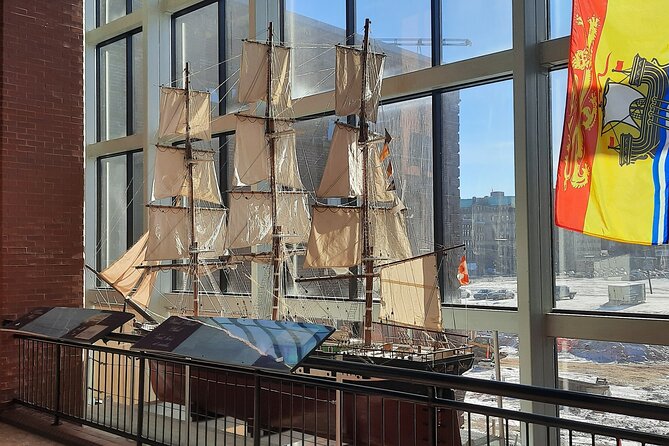
Inside Market Square, you’ll be shown the Marco Polo sailing ship model. Even if you don’t think you care about ships, this works because the model gives you a tangible reference. The guide explains why the ship became famous, and you start seeing how maritime trade and passenger journeys connect to Saint John’s identity.
Time note: this segment is about 15 minutes. It’s enough to orient you without dragging. If you want heavy shopping time at the market, you’ll have less of that during the tour’s scheduled window.
City Hall and the City Market: Pete’s Pub Lore and Civic Architecture
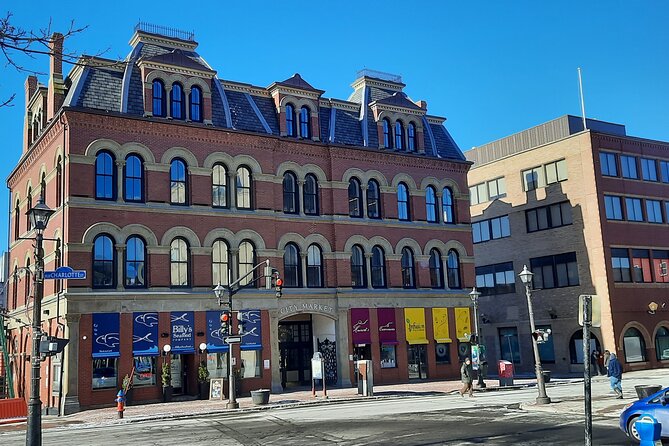
Next comes Saint John City Hall. One of the most “you can’t get this on your own” moments is that you hear the history of Pete’s Pub, owned by your guide. It’s not just trivia. It’s a way of showing how local businesses and entertainment shaped community life over decades.
You also get sports and entertainment stories, plus a timeline connection tied to 35 years at the pub. This is the part of the tour where the guide’s personality matters. If you enjoy humor and storytelling mixed into facts, this stop hits.
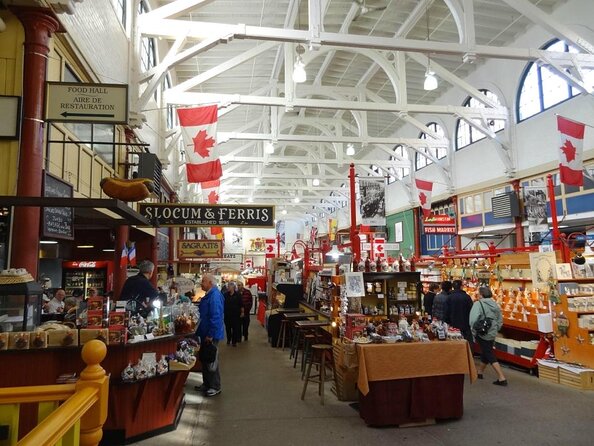
Then you move to Saint John City Market. You’ll get architectural features and the market’s history, plus the practical perk of a few extra minutes to shop. It’s described as the oldest continuously operating market in Canada, which helps you see why the building and layout matter.
Drawback to consider: one critique from a past participant was that the tour might feel like it spends too much time with narrative in certain spots and not enough time for market browsing. If you know you want a long look at stalls and packaged goods, you might plan extra time on your own after the tour.
Charlotte Street Murals and King’s Square: Public Art With a Purpose
After the market, you head to Charlotte Street. The focus here is a tucked-away mural moment in an alley area—large paintings of famous Saint John people. It’s brief (around 10 minutes), but it’s the kind of stop that makes you slow down and notice what you’d otherwise miss: local faces, local legacy.
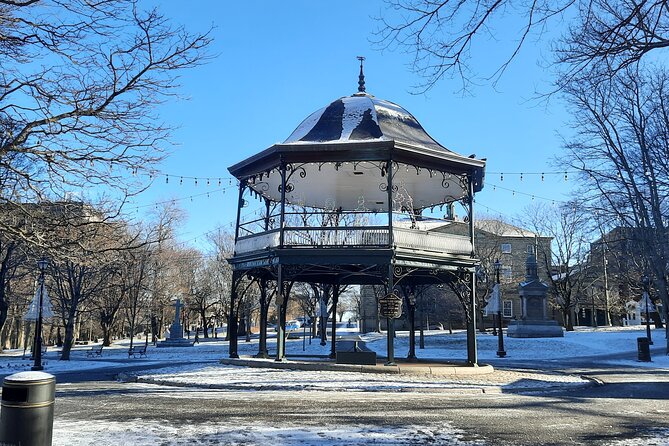
Then you move into King’s Square. This park has a 1785 foundation, and the guide points out major elements with a “what happened here” framework. You’ll hear about:
- the molten metal mass connected to the Great Fire
- the William Young statue
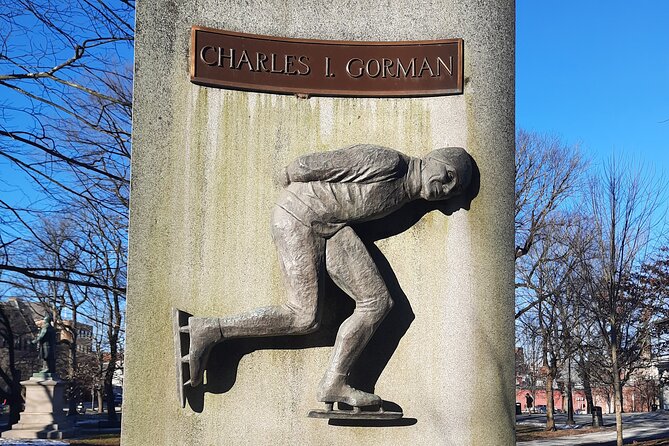
- the Charles Gorman statue
- the King Edward VII Bandstand
This is where Saint John’s story becomes visual. The guide doesn’t just name monuments. You learn how the city remembers tragedy, celebrates civic figures, and keeps public gathering spaces alive.
If you’re the type who likes parks because they’re calm and photogenic, you’ll appreciate this stop. It also gives a natural pause before the theatre block.
Irving Oil Headquarters Across From King Square: Business as Local History
A quick cross-street moment brings you to the Irving Oil Home Office, across from King Square on King Square South Street. The guide explains the Irving family history in New Brunswick beginning with K.C. Irving in 1899.
This stop works for two reasons. First, it shows how family wealth and industry shaped the region’s development. Second, it ties modern corporate presence to older roots, so you don’t treat companies as anonymous modern giants.
It’s only about 5 minutes, but it’s packed. If you’re curious about how New Brunswick became what it is today, this is a clean primer.
Imperial Theatre and Admiral Beatty: Vaudeville to Aviation-Linked Fame
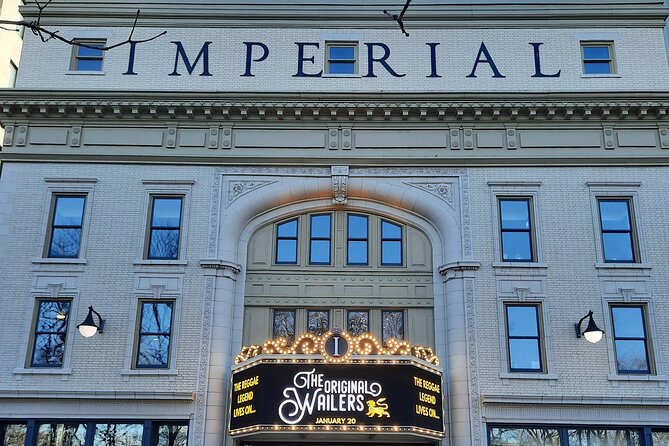
The tour then shifts into the theatre corridor, starting with the Imperial Theatre. You get the theatre’s history beginning as a vaudeville theatre in 1913. The guide also points out architectural features like the chandeliers, so it’s not just dates—it’s how the space was built to impress.
Beside it, you’ll look at the Admiral Beatty building. This is where you get a luxury-hotel origin story beginning as far back as 1925. The guide also notes famous visitors, including Amelia Earhart before the famous transatlantic flight.
Even if you’re not a theatre person, the angle here is smart: entertainment venues and hotels were the city’s stage for status and international connection. Saint John wasn’t isolated. People came through.
Time note: each of these stops is around 10 minutes. It’s a quick hit, not an all-day museum detour.
Trinity Church and Germain Street: Loyalist Faith and Civic Clubs
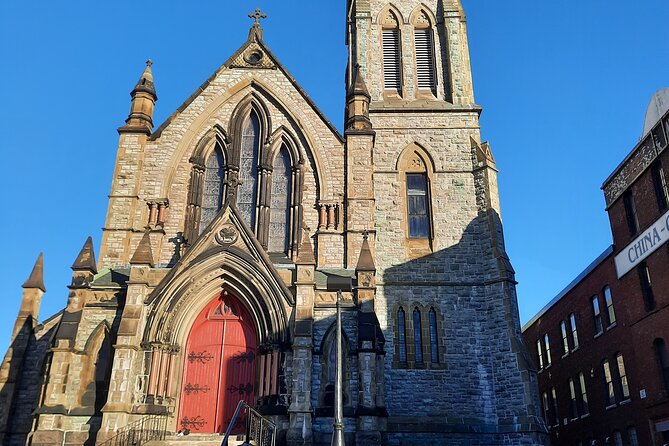
Trinity Church is a key moment for anyone who likes Loyalist-era roots. The guide describes the Loyalist Church features and its history, including the four main artifacts held there.
It’s also a spot where you can see how older institutions anchor a city’s identity. Churches like this often function as both religious and community landmarks, which matters for understanding why certain neighborhoods developed the way they did.
You then continue to Germain Street. The street gets named after Lord George Germain, and the guide adds local context. Nearby, you’ll see the Union Club, a business club from 1884. The tour looks at that club’s history too.
These stops are short, but they add depth. You start noticing patterns: who had power, where they met, and how names on streets connect to decisions that affected daily life.
Princess Street and Prince William Street: Preservation, Wall Street of Canada, and Immigration Stories
At Germain and Princess Streets, the tour turns right on Princess Street, heading toward Prince William Street. Here you’ll see an example of newer construction designed to conform to preservation standards. Next to it is the historic Ritchie building, with features explained by the guide.
Then comes Prince William Street, once known as the Wall Street of Canada. This stretch is one of the most information-dense parts of the walk. You’ll get highlights like:
- Chubb’s Corner with carved stone heads
- old City Hall
- the old post office
- the Jarvis building
- Bank of New Brunswick Palatine building
- the Seamen’s Mission
The Seamen’s Mission stop matters because it shows how maritime work connected to care and community support, not just shipping schedules.
Across from the mission is the Partridge Island mural, which depicts the history of the island and immigration. The guide explains immigration and quarantine at Partridge Island, with special attention to the Irish during the Potato famine.
This section is powerful because it connects art to people. You don’t just see painted scenes. You learn what those scenes represent in human terms.
Time note: this segment is about 15 minutes, so you’ll want your camera ready but also your attention on the guide’s links between buildings and events.
Three Sisters Lamp and the Marco Polo Terminal Finale
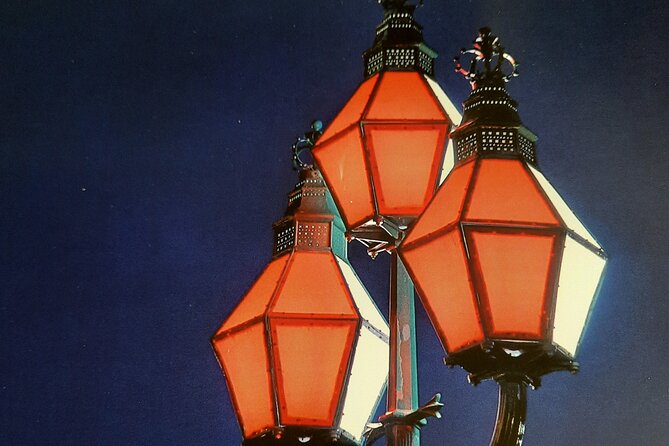
The tour then moves to the Three Sisters Lamp in St. Patrick Park at the foot of Prince William Street. You’ll learn why it’s named that way and how the lamps saved lives. It’s a small stop, but it’s the kind of detail that makes you think differently about street design and public safety.
Finally, you finish at the Marco Polo Cruise Terminal and the Area 506 Waterfront Container Village. The guide shares the history of the cruise industry in Saint John and how it began. If you’re visiting via cruise, this ending helps you understand what you’re stepping into when you come ashore.
Time note: the finishing section is brief, around 5 minutes. The goal is to land you near the waterfront with a clearer sense of the maritime story.
Price and Value: What $33.80 Buys You Here
$33.80 is a fair price for a guided walk of roughly 2.5 hours with 15 stops and meaningful storytelling at each one. The value isn’t just the number of locations. It’s the mix of:
- street-level context for major events (Loyalist landing and the Great Fire)
- explanations tied to specific buildings and parks
- visual support like rare-photo copies and the Marco Polo model
- local personal narrative, including the guide’s pub history
You also have a practical benefit: the tour lists free admission at the stops included, so you’re not paying add-ons just to stand in front of a building.
What you should plan for: lunch is not included. If you finish near the cruise terminal area, you’ll likely want a simple plan for food afterward, since the tour ends right as the city is at its most active.
Walking Comfort, Timing, and How to Make It Feel Easier
This is described as an easy walking tour with moderate physical fitness needs. One of the smarter things about Saint John’s downtown is that you don’t always need to attack the steepest bits on foot. You may be routed through pedways, and there can be help from escalators and elevators in the walkway system.
Still, you should wear supportive shoes. Even an easy tour has stops. You’ll stand and listen at multiple points, and at 2.5 hours that adds up.
Timing tip: if you hate long waits, choose a morning slot when you’re fresher. If you love daytime exploring and shopping, consider adding a little extra time near City Market before or after the tour so you can browse at your pace.
Who This Tour Suits Best
This one is ideal if you:
- want to understand Saint John’s story from 1783 onward without reading a stack of guidebooks
- like humor mixed into history, especially with a local guide who can answer questions and follow up if he doesn’t know on the spot
- prefer a small group format that stays easy to hear
- appreciate seeing how immigration, disasters, and commerce shaped street life
It’s also a good fit for people who want “light walking.” The guide has shown willingness to accommodate mobility needs, and the route is built for an approachable pace.
If you’re only looking for big postcard sights and long browsing time at one location, you might find the narrative-focused structure less satisfying.
Should You Book Pete’s Historic Walking Tour in Saint John?
Yes—if you want a guided walk that turns Saint John into a story you can picture. The tour’s biggest strength is the way it connects specific places to specific events, plus the added detail from photo copies and ship-model context.
I’d skip it only if you’re chasing maximum free time for shopping or you know you’ll feel impatient with frequent stops and standing. For most people, though, this hits the sweet spot: easy city walking, clear storytelling, and a Saint John timeline that makes the waterfront ending feel earned.
FAQ
How long is Pete’s Historic Walking Tour?
It runs about 2 hours 30 minutes.
How much does the tour cost?
The price is $33.80 per person.
Are there different tour times?
Yes. Morning and afternoon tour times are available for convenience.
Where do I meet, and where does it end?
You meet at Duke Street & Water Street in Saint John. The tour ends at the Marco Polo Cruise Terminal / Area 506 Waterfront Container Village.
Is the walk strenuous?
It’s intended for people with moderate physical fitness. The walk is described as easy and not strenuous, and the route may use pedways to help avoid steep hills.
What’s included in the ticket?
The ticket includes Pete’s Historic Walking Tour with a mobile ticket. Admission at the listed stops is marked free.
Is lunch included?
No. Lunch is not included.
What happens if the weather is bad?
This experience requires good weather. If it’s canceled due to poor weather, you’ll be offered a different date or a full refund.
Are service animals or dogs allowed?
Service animals are allowed, and pet dogs are welcome.
Do I need to cancel far in advance for a refund?
You can cancel for a full refund up to 24 hours before the start time.