REVIEW · LONDON
Burnings, Butchery & Black Death: A Walking Tour of London’s Bloody Past
Book on Viator →Operated by Historic London Tours · Bookable on Viator
London’s dark side walks fast. In about two hours, you trace plague stories and trade landmarks that stretch back 1,000+ years. It’s a tightly guided loop through the City of London’s most grim turning points.
I love the small groups (max 15), which keeps the walk easy to follow and makes questions part of the fun. I also love the free admission built into most stops, so you get real sights without extra ticketing.
One possible drawback: the pace is brisk, with roughly ten minutes at each stop. If you’re the type who wants to linger, you might wish you had more time at the Church of St. Bartholomew the Great and the hospital museum, especially since the tour runs best in good weather.
In This Review
- Key highlights worth your time
- Why this 2-hour route feels like a time machine in London
- Price and value: what $27.73 gets you in practical terms
- Where you meet and where the walk lets you off
- Charterhouse plague pit: starting with death, not myths
- Smithfield Market and St John’s Gate: commerce and power under pressure
- Cloth Fair and the William Wallace memorial: London’s stories in side streets
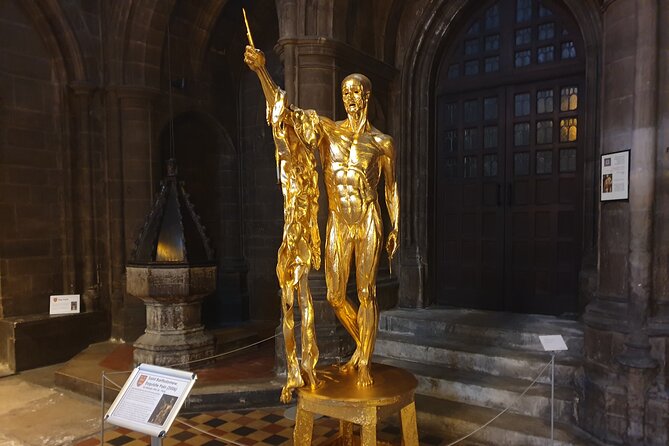
- St Bartholomew the Great: London’s oldest surviving parish church
- Golden Boy at Pye Corner: where the Great Fire met legend
- Holborn Viaduct and the River Fleet: the Victorian sewer you can almost smell
- Ye Olde Mitre: practical London history with a place to eat
- Saint Bartholomew’s Hospital Museum: medicine, duty, and long survival
- Who should book this tour, and who might prefer a different style
- Should you book Burnings, Butchery & Black Death?
- FAQ
- How long is the walking tour?
- What does the tour cost?
- Is the tour offered in English?
- Where does the tour start and end?
- Are the entrances included?
- What is the group size limit?
- What if the weather is bad or I need to cancel?
- Are service animals allowed?
Key highlights worth your time
- A small, capped group (15 max): you’ll hear your guide and actually catch the details.
- Most stops are free to enter: the route is built to keep value high.
- Plague + markets + medicine in one walk: you connect causes, not just sights.
- Great Fire relic at Pye Corner: history turns into legend fast around Golden Boy.
- River Fleet turned sewer: Victorian London gets real in a way you won’t forget.
- Old pub moment at the end: you can top it off at Ye Olde Mitre after the darkest chapters.
Why this 2-hour route feels like a time machine in London
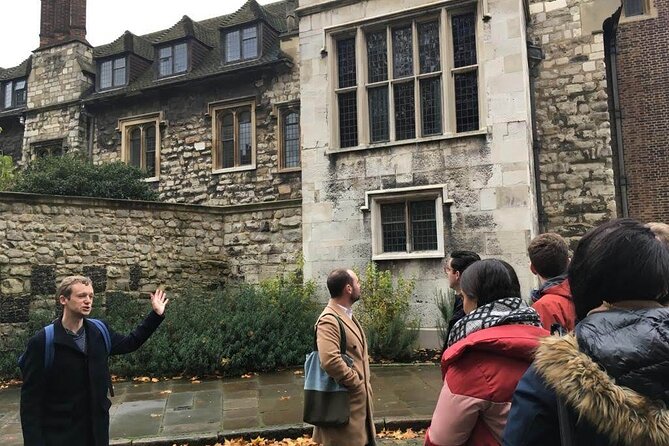
This tour works because it doesn’t try to cover every inch of London. Instead, it concentrates on a compact stretch around the City of London, where you can trace long threads of the same place: disease, commerce, punishment, and care.
You start with medieval London’s most haunting spaces, then you jump forward to markets and fire, and finally land in Victorian realities that make modern life look oddly fragile. It’s the kind of walk that helps you read street-level London like a written page.
And if you end up with a guide like Tom, you’ll likely notice a pattern: quick wit, clear explanations, and answers that connect today to yesterday. That style matters. When the story is this dark, you want it told clearly, not as grim wallpaper.
You can also read our reviews of more walking tours in London



Price and value: what $27.73 gets you in practical terms
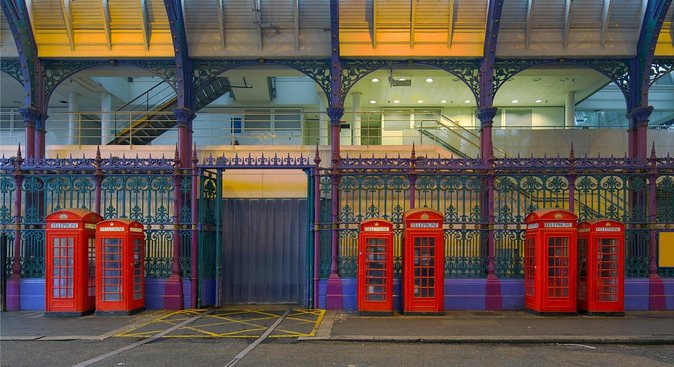
At $27.73 per person for about two hours, this is a “buy once, get a lot” kind of tour. The big reason is that multiple stops have free admission tickets included in the experience.
In plain terms: you pay for the guidance and the structure, not for a long list of add-on fees. Only one major stop explicitly has admission included in the tour (Church of St. Bartholomew the Great). The rest of the listed sights on the route are free for you to enter during your visit.
It also helps that the walk is limited to keep the group small. That usually means you don’t spend the whole time repeating yourself into the back row.
Where you meet and where the walk lets you off
You begin at Underground Ltd, Aldersgate St, Barbican (EC1A 4JA). That’s a convenient launch point if you’re already using the Underground around the Barbican area.
The tour ends on Ely Place (around the corner from Farringdon Station). That’s a smart finish because Farringdon is a major connector, so you’re not stuck with a long trip back across town after a focused walk.
You’ll also want to plan for getting there on time. The tour runs in a sequence, with short stops, so arriving a bit late can mean you miss context at the earlier points that tie the whole story together.
Charterhouse plague pit: starting with death, not myths
The opening stop is the Charterhouse, a fourteenth-century monastery tied to a plague pit. This is a strong start because it frames the whole walk: disease didn’t happen “somewhere else.” It lived right here, beside working communities.
Expect a quick but pointed orientation. Your guide sets the tone with why plague mattered beyond sickness—how it reshaped fear, daily routines, and the way London thought about order.
If you’re sensitive to grim topics, this is where you decide how you want to handle the material. The tour doesn’t hide it, but it also doesn’t turn it into shock value. It’s more about understanding why the city looked and acted the way it did.
Smithfield Market and St John’s Gate: commerce and power under pressure
Next comes Smithfield Market, described as a meat market with a history stretching about 1,000 years. This stop is more than a history lesson about food. Markets concentrate people, animals, and movement—and that’s exactly where public health problems can spread faster than you’d expect.
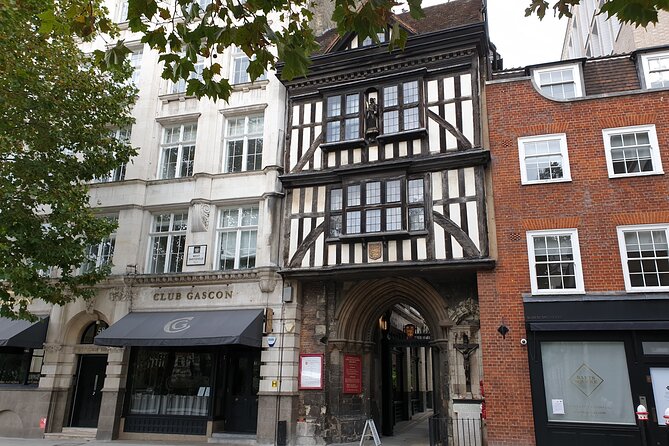
Then you move to St John’s Gate, home of the medieval Knights Hospitallers. This part of the tour gives you a helpful contrast: while Smithfield shows the city at its busiest, St John’s Gate points to institutions built around care, duty, and systems that lasted.
Even if you’ve seen plenty of London churches and castles, this combination is different. You get both the everyday grind (food and trade) and the organized structures (religious and military life) that shaped how the city functioned during turbulent times.






Cloth Fair and the William Wallace memorial: London’s stories in side streets
After the heavier medieval anchors, the walk turns into a lesson in London’s “in-between spaces.” Cloth Fair is a quiet alley with a noisy past, and it’s exactly the kind of place you’d usually pass without noticing.
This is one of the reasons the tour feels efficient: it trains your eyes. You start thinking about alleyways and boundaries as part of history, not just leftover space between landmarks.
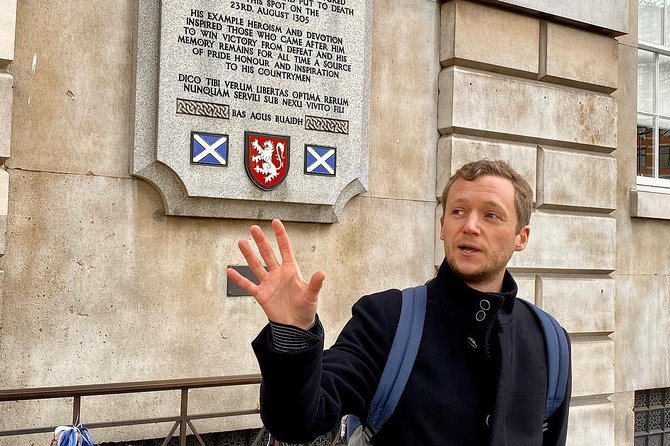
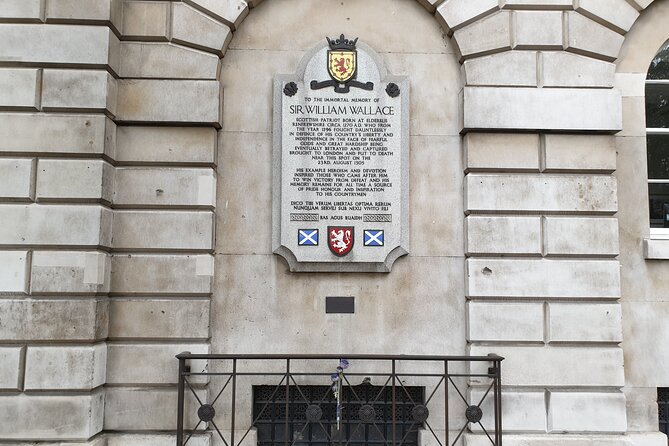
Then you reach the William Wallace Memorial. It’s a reminder that even in the City of London—so English, so merchant-driven—bigger political stories seep into the landscape.
This section is also where the guide’s pacing matters. With about ten minutes per stop, you get the essential story arc, not a slow drift. If you like that focused style, you’ll enjoy it. If you want to read every plaque and photo-stop for twenty minutes, plan to save that for your own time after the tour.
St Bartholomew the Great: London’s oldest surviving parish church
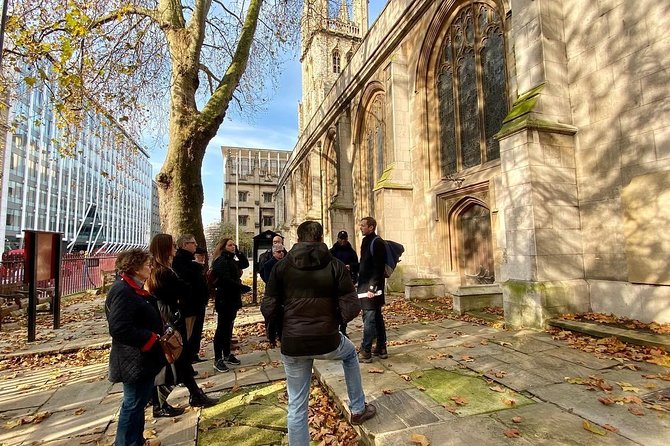
The tour includes a stop at Church of St. Bartholomew the Great, described as London’s oldest surviving parish church. Admission here is explicitly included, which helps you justify the cost even more if you’re planning to visit any of the sites nearby anyway.
This church matters for the tour because it’s an anchor point: it represents continuity. During centuries of plague, conflict, and reinvention, parish life was one of the few constant rhythms people could count on.
Look at this stop as a “breathing moment” that doesn’t erase the darkness. It shifts the tone from disaster and fear to the daily structures that kept communities stitched together.
Golden Boy at Pye Corner: where the Great Fire met legend
Next is Golden Boy of Pye Corner, connected to the site where the Great Fire of 1666 died out. That connection alone makes it worth seeing, because the Great Fire is one of the defining events in London’s survival story.
What makes this stop extra interesting is the second layer: eighteenth-century ghost hysteria. In other words, the area didn’t just produce ash and rebuilding—it also produced folklore, fear, and stories people told to explain what they couldn’t control.
You’ll likely see how the tour keeps moving between concrete events and the way people responded emotionally. That helps you understand the human side of disasters: not just the flames, but the rumors, panic, and meaning-making that followed.
Holborn Viaduct and the River Fleet: the Victorian sewer you can almost smell
The tour then heads to Holborn Viaduct, tied to the River Fleet, described as Victorian London’s largest open-air sewer. This is one of those stops where the history clicks with modern awareness.
Once you know the River Fleet was treated as an open problem, you start to notice how much city planning is a response to what people lived with. It’s not just grim detail for shock. It’s the logic behind sanitation reforms—why streets, water, and waste systems suddenly mattered more than ever.
This is also a good stop for photography, if the light is right. Viaducts and old city infrastructure have a “London identity” feel that photos often miss in other tour areas.
Ye Olde Mitre: practical London history with a place to eat
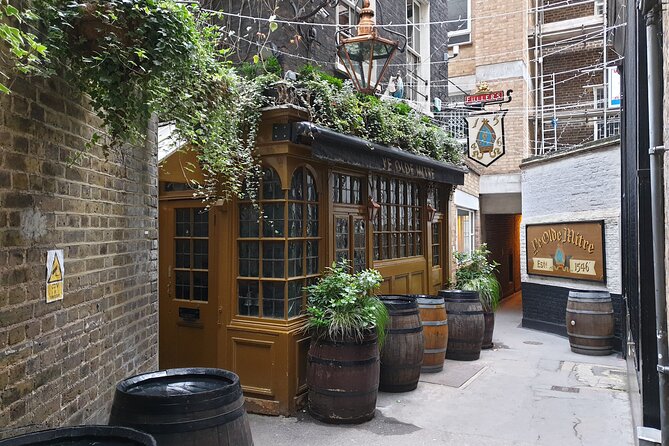
At Ye Olde Mitre, you get a change of pace. It’s described as a hidden down-an-alley pub, and it’s the kind of stop that makes the whole experience feel more livable.
While the tour itself is timed, this pub stop is where you can turn history into a break. Some people have mentioned finishing with lunch here, and the kind of comfort-food order that fits the vibe: cheese toasties and pork pies.
Even if you don’t plan to eat, the location is useful. You’re in a quieter pocket, away from the main “walk-by” tourist path, which helps you feel like you stepped off the scripted London route.
Saint Bartholomew’s Hospital Museum: medicine, duty, and long survival
The final stop is Saint Bartholomew’s Hospital Museum, described as the oldest surviving hospital in the country. Ending here makes sense because the tour started with plague and fear—then it moves toward institutions that dealt with harm and recovery.
This is where the tour’s theme tightens: the city’s “bloody past” isn’t only about suffering. It’s also about systems for care, and how those systems became part of London’s identity.
With only about ten minutes at the stop, don’t expect a full museum experience. Think of it as a meaningful closing frame. If you want more, you’ll likely know exactly what direction to take your follow-up visit once you’ve seen the starting point.
Who should book this tour, and who might prefer a different style
This is a great choice if you:
- Like history with a clear narrative thread, not a random list of plaques
- Want small-group guidance and short, efficient stops
- Enjoy learning about how London evolved under pressure—plague, fire, sanitation, and institutions
You might skip it if:
- You want a lighter, more scenic walking tour (this is intentionally dark in theme)
- You’re the type who needs long entry time inside museums and churches rather than quick context stops
If you do book, wear comfortable shoes. The stops are short, which means you’ll spend more time walking between them than you might expect from a two-hour label. Also keep an eye on the weather. The experience requires good weather, and that matters for a walk this focused.
Should you book Burnings, Butchery & Black Death?
I think you should book it if you want London history that’s not stuck in the usual postcard loop. It’s built around an honest, local view of disease, markets, fire, and sanitation, and it does it in a manageable two hours with a small group.
If you’re curious about how the City of London worked during its worst moments—and how people tried to respond—this tour gives you the kind of street-level context that stays with you. Pair it with the Ye Olde Mitre stop if you want something warm at the end.
If you’re not into grim topics or you hate brisk pacing, pick a different style of tour. But if you like your history direct and specific, this one is easy to recommend.
FAQ
How long is the walking tour?
It runs for about 2 hours.
What does the tour cost?
The price is $27.73 per person.
Is the tour offered in English?
Yes, it’s offered in English.
Where does the tour start and end?
You start at Underground Ltd, Aldersgate St, Barbican, London EC1A 4JA. You end on Ely Place (around the corner from Farringdon Station).
Are the entrances included?
Most stops list admission as free. Church of St. Bartholomew the Great has admission included.
What is the group size limit?
The tour has a maximum of 15 travelers.
What if the weather is bad or I need to cancel?
The experience requires good weather. If it’s canceled due to poor weather, you’ll be offered a different date or a full refund. You also get free cancellation, with full refunds if you cancel at least 24 hours before the start time.
Are service animals allowed?
Yes, service animals are allowed.