REVIEW · ASAKUSA
Asakusa Senso-ji Temple and Old Tokyo Walking Tour
Book on Viator →Operated by Localized Walking & Food Tours · Bookable on Viator
Asakusa can feel like a glorious crowd mess, fast. This short, small-group walk helps you make sense of Senso-ji and the surrounding sights without getting turned around, plus you get an English-speaking local guide on hand for questions. I love that the group is limited (max 12) so you’re not shouting over the noise, and I like the practical focus—what to look for and how to handle shrine and temple customs.
The main consideration is simple: you’re walking through some very busy streets, so wear comfortable shoes and expect a crowd around the main gates.
In This Review
- Key highlights to know before you go
- Why Asakusa feels overwhelming without a plan
- Price and logistics: what $20 buys you
- Meet at Tokiwado Kaminari-okoshi Honpo and find the flow fast
- Nakamise Shopping Street: Kaminarimon energy with context
- Senso-ji Temple: how to look, what symbols mean, and where to pause
- Asakusa Shrine (Sanja-sama): Shinto rituals right beside the temple
- Hoppy Street and the modern edge: a break from temple-only Tokyo
- Azuma Bridge: Sumida River views to close the loop
- What makes the guides matter: more than facts
- Walking time, group size, and comfort tips
- Who should book this Asakusa walking tour
- Should you book this Asakusa walking tour?
- FAQ
- How long is the Asakusa Senso-ji Temple and Old Tokyo walking tour?
- How much does the tour cost?
- Is it a small-group tour?
- Is the guide available in English?
- Where does the tour start and end?
- Is food included?
- Does the tour include transportation?
- Do I need to pay admission for the stops?
- What ticket format will I receive?
- What happens if the weather is poor?
Key highlights to know before you go
- Small-group size (max 12) means easier Q&A and photos without shoulder-to-shoulder stress
- Senso-ji Temple + Asakusa Shrine in one loop, so you see how Buddhism and Shinto show up side by side
- Nakamise Shopping Street gives you the story behind the stalls, not just a shopping crawl
- Prayer basics like purification and proper guidelines can make your visit feel more meaningful
- Photo-friendly timing and vantage suggestions show up in guide feedback, especially around the temple area
- Azuma Bridge is a nice breather with river views and landmarks in the frame
Why Asakusa feels overwhelming without a plan
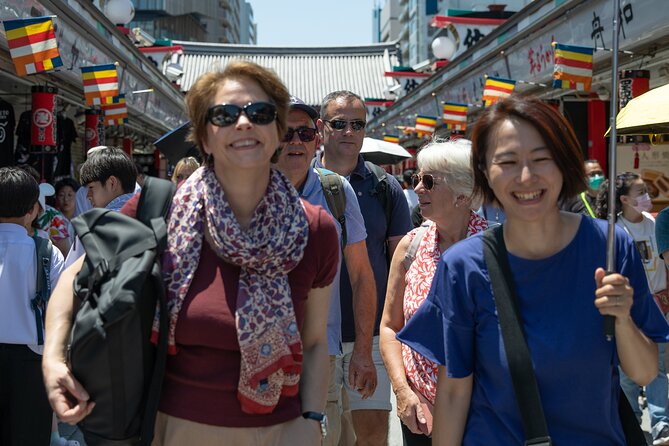
Asakusa is one of those Tokyo neighborhoods where the sights hit you all at once—smells, noise, flags, people, lanterns, souvenirs. If you try to “wing it” there, you can end up doing the famous temple photo from the wrong angle, missing the little details that explain what you’re seeing, or just walking in circles.
This tour works because it’s designed around the core area you actually need to understand: the approach streets leading into Senso-ji, the temple grounds themselves, and the nearby Shinto counterpart at Asakusa Shrine. Instead of treating it like a checklist, the guide helps you connect symbols, traditions, and even everyday street culture to the places you’re walking past.
Price and logistics: what $20 buys you
At $20 per person for about 2 hours, the value is in the structure. You’re paying for an English-speaking local guide, a guided walking route, and cultural and historical commentary throughout—plus a small-group format that keeps the experience from turning into a herd.
Also, a lot of what you’re seeing here doesn’t require paid entry. The tour includes stops where admission is listed as free, which means your money mostly goes toward the interpretation and direction. In practice, that’s what tends to matter most on first visits: knowing where to stand, when to move, and what the rituals are actually about.
Meet at Tokiwado Kaminari-okoshi Honpo and find the flow fast
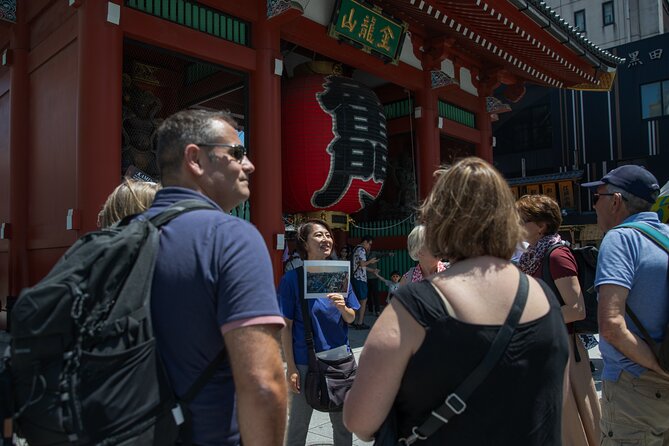
Your starting point is Tokiwado Kaminari-okoshi Honpo in Asakusa (Taito City), near Kaminari-okoshi and the early approach to the temple area. The good news is that the meeting point is described as near public transportation, so you’re not stuck figuring out last-mile transit in a maze.
The “real life” tip: go with a little extra time. Asakusa is crowded, and meeting spots can feel confusing at first glance. Once you locate the group, the route makes sense immediately, and you’ll feel the day getting organized instead of scattered.
Nakamise Shopping Street: Kaminarimon energy with context
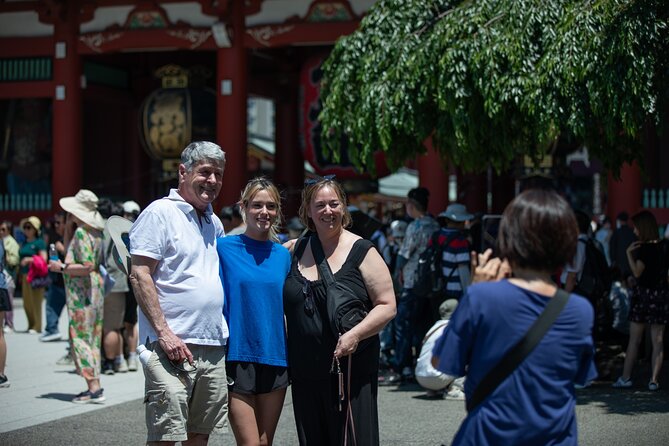
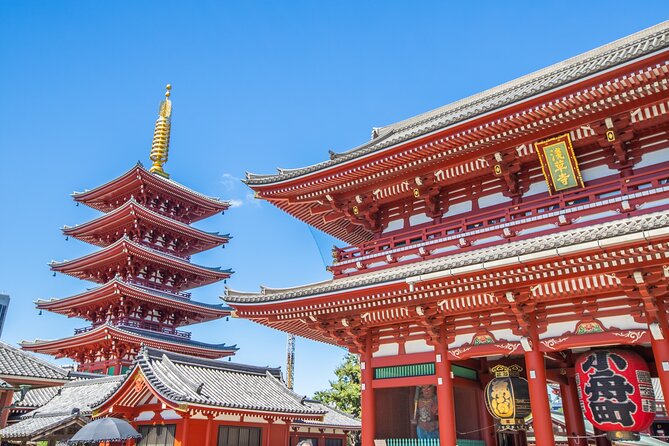
The tour starts by walking through Nakamise Shopping Street toward Kaminarimon, the big thunder gate that anchors the Senso-ji approach. This is where the street feels like Tokyo’s older side: traditional stalls, classic snacks, and souvenir shopping in a long corridor that pulls you toward the temple.
What I like about pairing this street with a guide is that you’re not just walking past shops—you’re learning what to notice. You’ll also get a sense of how the market culture supports the temple experience, not just competes with it for your attention.
A small drawback: Nakamise is busy, so if you’re sensitive to crowds or you need frequent quiet breaks, this early portion may feel intense. Still, it’s usually the easiest time to ask questions and reset your bearings before you step into the temple complex.
Senso-ji Temple: how to look, what symbols mean, and where to pause
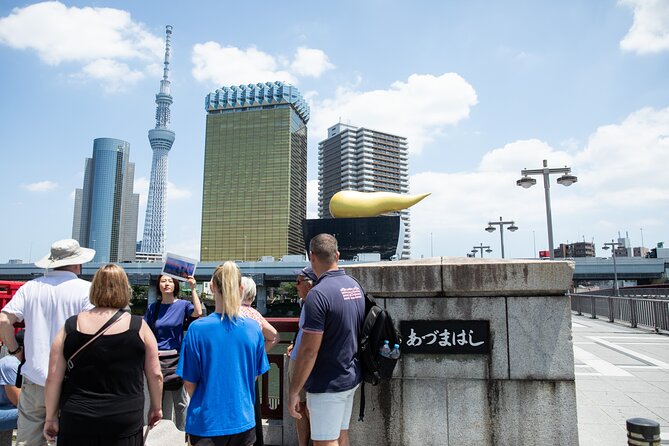
Senso-ji is the star of the show, and your guided time there is about understanding the place in layers. The guide’s job isn’t to recite dates; it’s to give you stories and cultural context so you can actually read the temple instead of treating it like a backdrop.
One of the most praised parts from guide-led experiences here is practical temple etiquette—how people pray, how to move through the space, and what certain actions symbolize. For example, some guides have specifically walked people through purification steps and how to handle prayer customs. When you know the basics, your visit stops feeling like you’re guessing and starts feeling like you’re participating correctly.
You’ll also be working your way through the busiest areas, including the main temple viewpoints. If your guide points out a better angle or a photo spot (this shows up repeatedly in guide feedback), take the suggestion. The temple area rewards patience: stand still for a moment, watch where people funnel, and you’ll usually get a cleaner shot.
Time-wise, this is the longest stop (around 30 minutes), so it’s not a quick sprint. It’s enough time to get oriented, see the main highlights, and not panic that you missed something important.
Asakusa Shrine (Sanja-sama): Shinto rituals right beside the temple
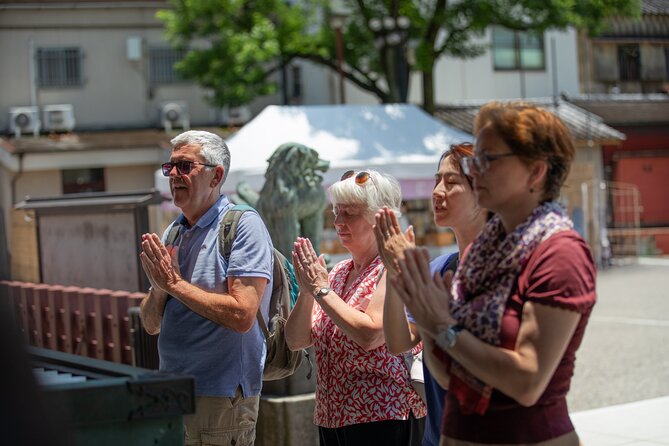
Next up is Asakusa Shrine, also known as Sanja-sama, located right near Senso-ji. This is where the tour gets interesting fast, because you see how two belief systems shape public space and visitor behavior.
The guide often focuses on Shinto identity and the meaning behind the shrine’s dedication—helpful if you’re not already familiar with how Shinto practices differ from Buddhist temple routines. You may also get guidance on what you’ll see when people offer prayers, and how to act respectfully without freezing up.
A good part of visiting both places back to back is that you can compare the feel of the two sites. The temple section tends to draw you in with big visual statements, while the shrine section can feel more focused on ritual behavior and small moments of worship. Having a guide in the middle of that contrast makes the differences click.
Hoppy Street and the modern edge: a break from temple-only Tokyo
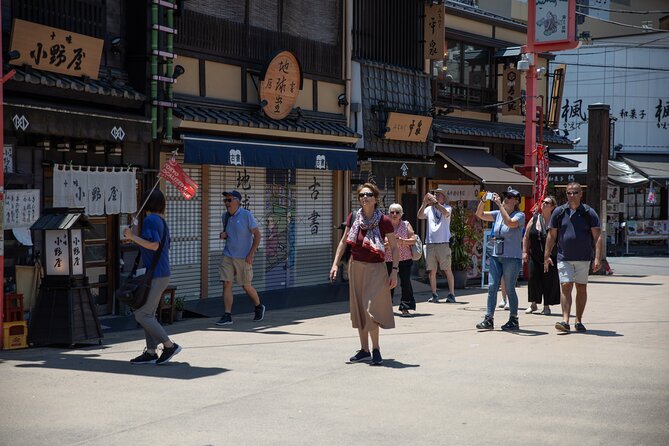
After the shrine, the tour moves to Hoppy Street, a lively stretch tied to izakaya-style nightlife and the popular drink called hoppy. This stop is shorter (around 10 minutes), but it matters because it reminds you that Asakusa isn’t frozen in the past.
Hoppy Street helps you understand the neighborhood as a living place. It’s still about tradition and older Tokyo flavor, but it’s also where locals and visitors share food and casual drinks after temple sightseeing. Even if you’re not planning a night out, it gives you a feel for the rhythm of the area.
The tour also includes time on Shin Nakamise, which is described as an extension with a modern twist on traditional shopping. This is a smart contrast: you get the classic Nakamise look, then you see what changes when the shopping corridor evolves. If you enjoy scanning what’s popular now (not just what was popular decades ago), this portion helps.
Practical note: these street segments can be loud and crowded too. The upside is that they’re quick and give you variety before the final river view.
Azuma Bridge: Sumida River views to close the loop
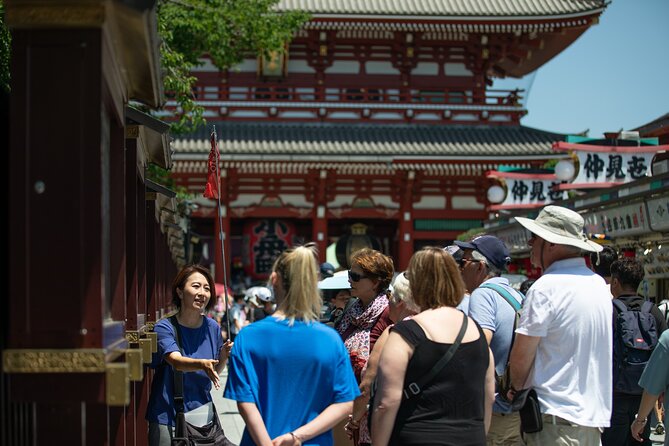
The walk ends near Azuma Bridge, spanning the Sumida River. This is a great finishing move because it turns you outward instead of keeping you focused only on indoor or shrine-side spaces.
You’ll get landmark views in the distance (including Tokyo Skytree mentioned for this area) and the iconic “walking tour” sense of completion—like you’ve traced a full story across neighborhoods. The last stop also gives your legs a chance to reset while still staying in the same area, so you don’t feel like the day ends with chaos.
Time is short here (around 10 minutes), so treat it as a quick photo and a breath, not a long sit-down. If you want more time by the river, this is a natural place to continue on your own.
What makes the guides matter: more than facts
The biggest praise across guide feedback isn’t just that they explain history—it’s that they help you do the visit correctly and enjoy it more. You’ll often see mention of guides being attentive, answering questions well, and making sure everyone understands what’s happening around them.
Here are the practical guide moments you can look for as you join:
- Prayer and ritual guidance: purification steps, how to pray, and proper guidelines so you don’t feel awkward
- Meaningful context: why Senso-ji and Asakusa Shrine matter to Asakusa’s identity
- Photo support: help finding a better vantage point, especially around the temple complex
- Local recommendations: shopping and food ideas that fit the area (useful if you’re staying nearby)
- Clear teaching style: some guides are described as patient, not rushing people through
Guides named in feedback include Aya, Polina, Keiko, Loc, Glenda, Rio, Hiroko, Mei Yu, and Nana. Each seems to bring a slightly different teaching style—some using visual aids (like binders with pictures), others focusing on hands-on ritual explanation. The common thread is that they try to make the experience make sense instead of leaving you to translate everything yourself.
Walking time, group size, and comfort tips
This is a 2-hour experience on foot, with multiple short stops. That’s ideal when you want something structured but you don’t want to burn half a day in transit.
Because it’s small-group (max 12) and includes several concentrated sights, you’ll likely move at a steady pace. I recommend planning for:
- Comfortable shoes for crowded sidewalks and temple approaches
- Water if you’re sensitive to long walking in warm weather (food and drinks aren’t included)
- A bit of patience with crowd flow near the main temple areas
If you’re the kind of traveler who likes “see it, understand it, then go back and explore later,” this tour fits that style perfectly. It also works well if you’re juggling a tight schedule and just need a smart overview you can build on.
Who should book this Asakusa walking tour
This tour is a great fit if:
- You’re visiting Asakusa for the first time and want a guided route that prevents getting lost
- You want temple and shrine context without needing to do homework first
- You’re traveling solo or as a couple and appreciate a small group
- You like blending classic sights with quick street-scene variety (Hoppy Street and Shin Nakamise)
It may be less ideal if:
- You need a very quiet experience (crowds are part of the deal here)
- You prefer museum-style learning over on-your-feet walking
- You’re not interested in anything beyond the main temple photos
Should you book this Asakusa walking tour?
Yes—if your priority is understanding Asakusa while you’re still there, not after you leave. For the $20 price point, you’re buying something that self-guided visits often lack: calm direction in a chaotic area, plus clear guidance on how temple and shrine customs work.
I’d book it if you want a strong first visit to Senso-ji and Asakusa Shrine with practical context, then use the rest of your day to shop, snack, and wander where you feel like it. The walk ends at Azuma Bridge, which is a nice springboard for continuing your Tokyo day without starting over from scratch.
FAQ
How long is the Asakusa Senso-ji Temple and Old Tokyo walking tour?
The tour is about 2 hours.
How much does the tour cost?
It costs $20.00 per person.
Is it a small-group tour?
Yes. The group is limited to a maximum of 12 travelers.
Is the guide available in English?
Yes. The tour includes an English-speaking local guide.
Where does the tour start and end?
It starts at Tokiwado Kaminari-okoshi Honpo (1-chōme-3-2, Asakusa) and ends near Azuma Bridge (2-chōme-1-16, Kaminarimon).
Is food included?
No. Food and drinks are not included.
Does the tour include transportation?
No. Transportation to and from the meeting point is not included.
Do I need to pay admission for the stops?
The stops listed for Nakamise Shopping Street, Senso-ji Temple, and Asakusa Shrine show admission ticket as free.
What ticket format will I receive?
You get a mobile ticket.
What happens if the weather is poor?
The experience requires good weather. If it’s canceled due to poor weather, you’ll be offered a different date or a full refund.