REVIEW · BOSTON
Boston: Freedom Trail History Small Group Walking Tour
Book on GetYourGuide →Operated by Hub Town Tours · Bookable on GetYourGuide
Walk the Revolution in 2.5 hours. The Freedom Trail tour turns Boston’s biggest Revolutionary-era sites into a connected story, ending with strong North End views instead of a random drop-off. It’s built for people who want the highlights fast, without fighting foot traffic the whole time.
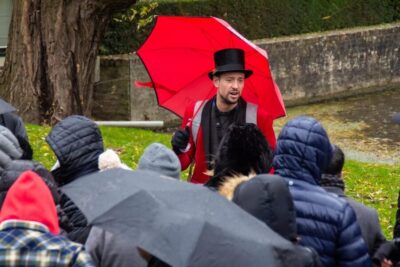
I especially like the small-group setup, capped at 16 guests. I also like how the guide frames the whole period as real choices people faced, loyalty or rebellion to crown and country, while hitting key stops like Granary Burying Ground and the Paul Revere House.
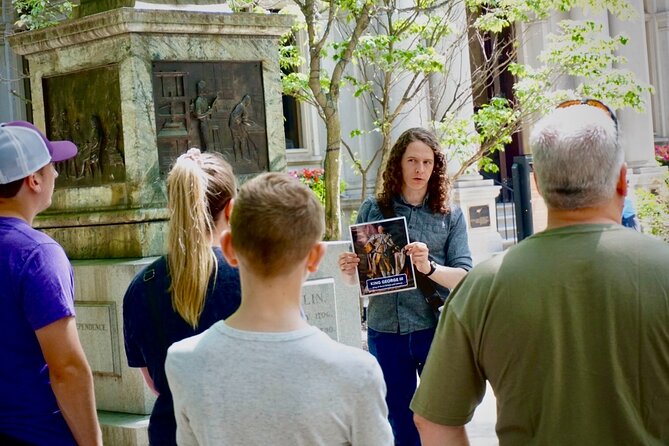
One thing to consider: this is about a 2-mile walk on mostly city sidewalks, and it’s not suitable for people with low fitness or children under 6. Add the no large-bags rule (and no video recording), and you’ll want to pack light.
In This Review
- Key things that make this tour worth your time
- Why the Freedom Trail works so well as a guided walk
- Price, duration, and the 2-mile walking reality
- Meeting at Boston Common: start smart, start together
- Stop-by-stop: what you’ll actually experience along the route
- Boston Common and the State House area
- Granary Burying Ground and nearby early institutions
- Old City Hall, Old Corner Book Store, and Old South Meeting House
- Old State House and the Boston Massacre Site
- Faneuil Hall and a real break at Quincy Market
- Paul Revere House to Old North Church: the North End finale
- Copps Hill Burying Ground, USS Constitution views, and Bunker Hill Monument
- Finishing at Copps Hill Terrace near Old North Church
- Who this tour is best for (and who should think twice)
- The guide experience: where the “5-star” energy comes from
- What to do before and after to get the most out of it
- Should you book the Boston Freedom Trail History small-group tour?
- FAQ
- How much does the Boston Freedom Trail History Small Group Walking Tour cost?
- How long is the tour?
- Where does the tour start?
- How many Freedom Trail landmarks are included?
- How big is the group?
- Are museum admissions included?
- Is video recording allowed?
Key things that make this tour worth your time
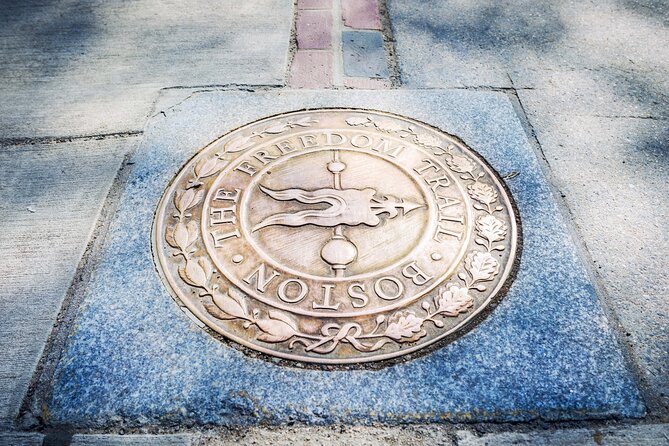
- All 16 official Freedom Trail landmarks in one organized walk, not a scavenger hunt
- Max 16 people so you can ask questions and actually hear your guide
- North End finish at Copps Hill Terrace near Old North Church, with views toward USS Constitution and Bunker Hill Monument
- Story-led stops at the Boston Massacre Site, Old State House, Old South Meeting House, and more
- Guides with personality often called out by name, including Cyprus, Josh, Cal, Eric, Nick, Miles, Will, Matt, Lin, Maz, and Tracey
Why the Freedom Trail works so well as a guided walk
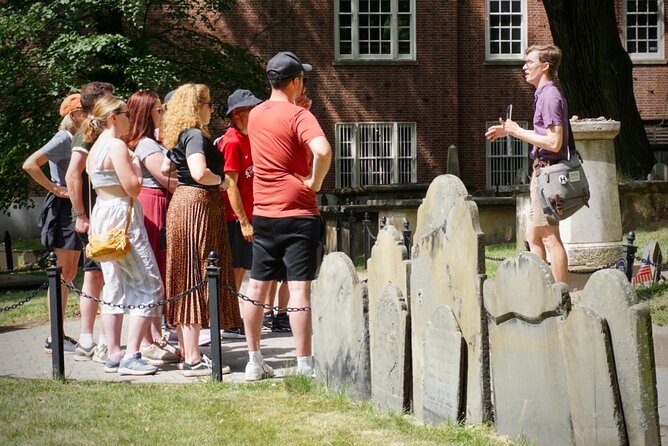
Boston can be overwhelming in the best way. You get these landmarks, you get markers on the ground, and you start asking what it all means. This tour solves that problem by doing the “put it together” part for you.
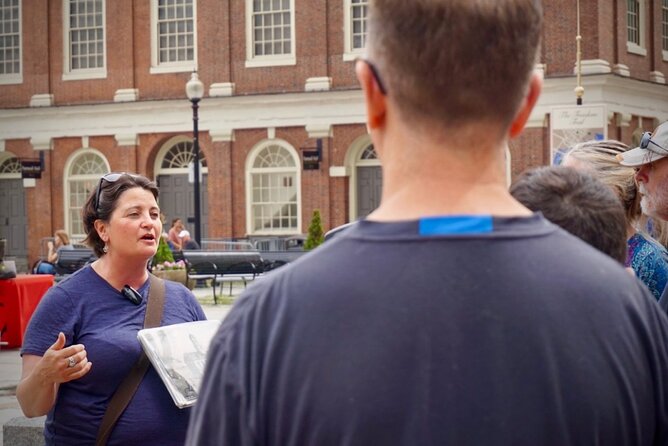
You follow the Freedom Trail through Downtown Boston and into the North End. The guide’s job is not just to point out buildings. It’s to explain how a tough 15-year period led to the American Revolution, with the central theme being loyalty versus rebellion to crown and country. That framing matters because it makes the stops feel connected, not like a list.
And there’s a practical bonus: walking it with a live guide keeps you moving at a steady pace. You’re not stuck waiting at every corner for the next landmark sign, and you’re not wrestling with big tour crowds. This is exactly the kind of “first Boston” activity that helps you understand the city layout before you branch out on your own.
You can also read our reviews of more walking tours in Boston

Price, duration, and the 2-mile walking reality
At $39 per person for about 2.5 hours, this is priced like a “high-value overview.” You’re not paying museum ticket costs, and the main expense is guide time plus covering the full Freedom Trail set of stops.
Here’s the math you should think about: you get roughly 16 official landmarks in one go, plus a structured end at Copps Hill Terrace. If you tried to do this solo, you’d spend time figuring out the route, deciding what to prioritize, and slowing down to read everything. The tour gives you a guided storyline while you cover ground efficiently.
Time and distance are reasonable, but they’re still real. The accessible route is about 2.0 miles (3.2 km), and the tour won’t run more than 3.0 hours. This is not the kind of walk I’d pair with a long, late-night plan unless you’re sure your feet are fine.
Also keep a couple rules in mind:
- No video recording
- No luggage or large bags
- Comfortable shoes and weather-appropriate clothing are a must
Meeting at Boston Common: start smart, start together
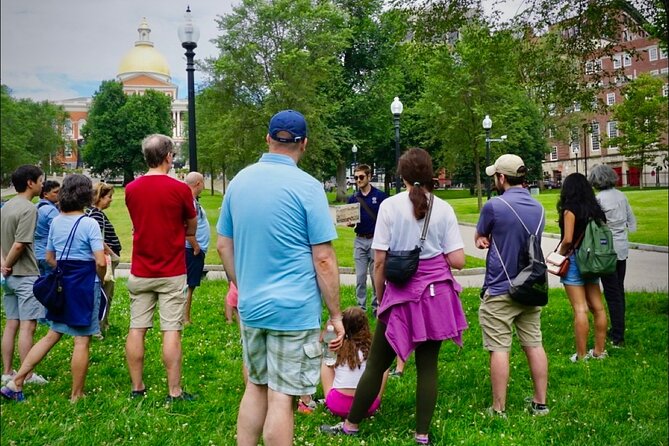
The tour begins at the Boston Foundation Monument inside Boston Common, on the northern boundary of the park, opposite 50 Beacon Street. Look for the granite memorial with a bronze relief showing two men shaking hands, tied to the Puritans arriving in 1630.
Why start here? Because Boston Common is where the Freedom Trail originates in real-world terms. From the first minutes, you’re set up to understand the city center as the “origin point,” not a random starting plaza.
You’ll also get the benefit of an easy initial buffer. Common is open, it helps you orient fast, and it’s a natural place to gather as a group before you start the tighter downtown walking.
Stop-by-stop: what you’ll actually experience along the route
This tour moves through the core Freedom Trail landmarks with guided stops of varying lengths. That rhythm is part of the value: you get small chunks of story, not one long lecture.
Boston Common and the State House area
You start with a short guided introduction at Boston Common. Then the route heads toward government and public power, with time at the Massachusetts State House and Park Street Church.
For your brain, these early stops matter because they set the theme of public life. When the Revolution story later turns into speeches, confrontations, and political action, you’ve already got the civic context in your head.
You can also read our reviews of more historical tours in Boston

Granary Burying Ground and nearby early institutions
Next comes Granary Burying Ground (a longer guided stop). This is where the tour’s storytelling style tends to click: the guide connects the people and the place, so you’re not just viewing a cemetery as an object.
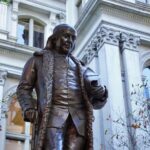
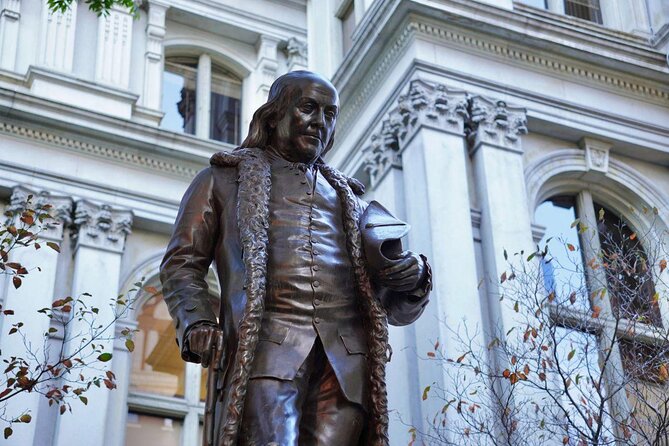
From there you pass by King’s Chapel, then Boston Latin School and the Benjamin Franklin Statue. That pairing is useful because the tour isn’t only about famous names tied to battles. It’s also about ideas, education, and the everyday institutions that shaped public thinking.
Possible drawback here: because these are all active downtown blocks and historic grounds, you may feel the walking pace. Bring water if the weather is warm and keep your shoes broken in.
Old City Hall, Old Corner Book Store, and Old South Meeting House
As you move deeper into downtown, you’ll visit Old City Hall, the Old Corner Book Store, and the Old South Meeting House.
Each of these places supports a different angle of the Revolution story, but the key point is how the guide ties them together. You’ll get a sense that this wasn’t an abstract political event happening far away. It was happening on streets you can still walk today.
At Old South Meeting House, you’ll spend a shorter guided block, which means the guide likely focuses your attention on what makes it part of the Revolution timeline.
Old State House and the Boston Massacre Site
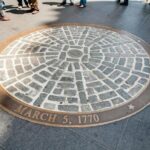
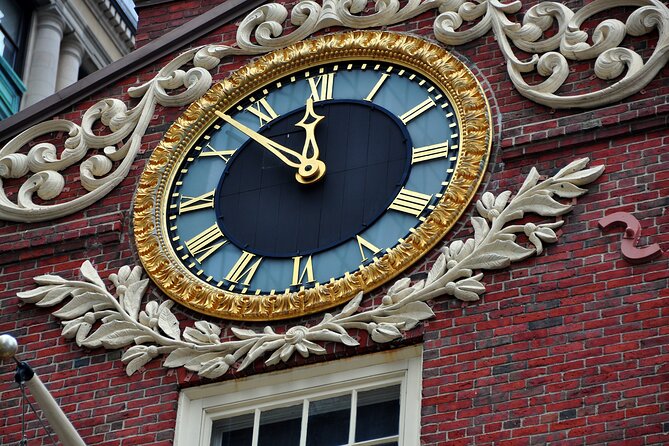
Then you hit Old State House and the Boston Massacre Site with guided time.
This is one of the “high-intensity” stretches of the walk because your ears will be working harder. The tour’s big selling point is hearing the gripping stories from Revolutionary Boston, and this is exactly where those stories tend to land hardest in the route.
If you’re sensitive to heavy topics, pace yourself. You can always step back a half-step during the story so you’re not boxed in, and still catch every key point.
Faneuil Hall and a real break at Quincy Market
You’ll pass Faneuil Hall and then get 10 minutes of break time at Quincy Market.
That break is practical, not decorative. You’ll have just walked a dense cluster of sites, and the short pause lets you reset before you continue toward the North End. Use those 10 minutes for a quick snack or a restroom stop, then rejoin the group without drama.
One heads-up: this segment is busy even in non-peak times. Your best move is to choose one drink or one bite and stick to it, instead of zigzagging around and losing time.
Paul Revere House to Old North Church: the North End finale
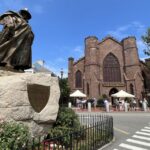
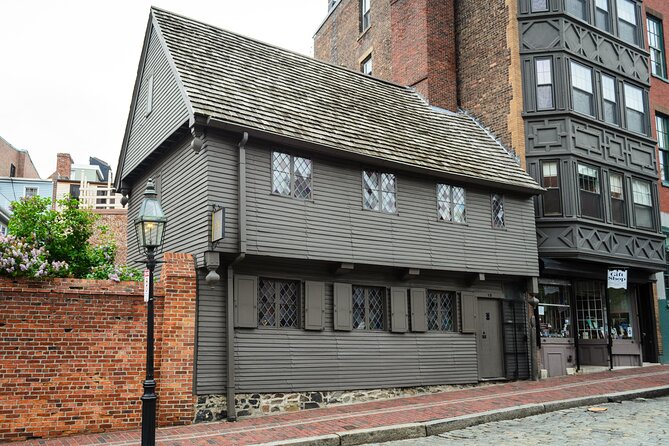
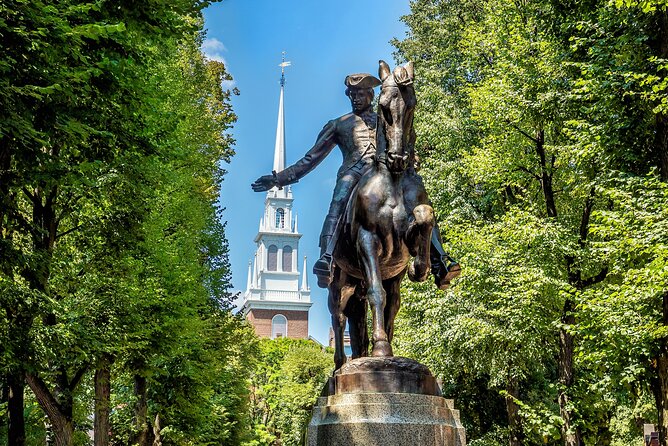
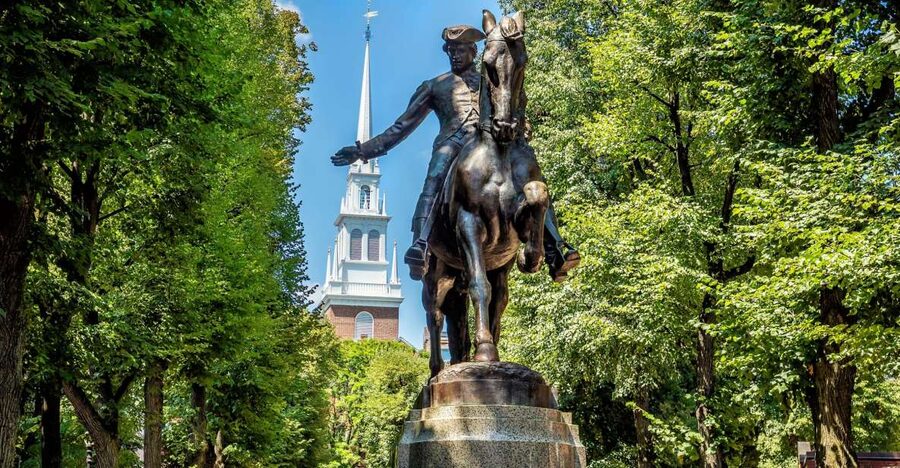
The tour continues to the Paul Revere House, then the Hanover Street area, then the Paul Revere Statue, and finally the Old North Church.
This is where the Freedom Trail story often becomes unforgettable because it concentrates on names you already hear in school, but with context you actually feel on the ground. Your guide keeps the focus on Revolutionary Boston and the origin of the United States, so you’re connecting the “iconic figure” to the broader political conflict.
Copps Hill Burying Ground, USS Constitution views, and Bunker Hill Monument
After Old North Church, you’ll visit Copps Hill Burying Ground (guided time). Then you’ll get scenic views while moving past USS Constitution and toward Bunker Hill Monument in Charlestown.
These viewpoints are an intentional payoff: you’re walking the Revolution story in Boston proper, then you get visual proof that the story reaches outward. Even if you’re not stopping for photos at every moment, the views help your brain build a bigger map of where things happened.
Finishing at Copps Hill Terrace near Old North Church
The tour ends at Copps Hill Terrace with guided time, steps from Old North Church and close to Italian restaurants in the North End.
Why I like this finish: you finish where you can keep going. You don’t end in a dead zone or back at a transit hub far from anything interesting. You end in a neighborhood that makes it easy to turn history into dinner plans.
You also get a last wide look. The terrace is set up so you can see the U.S.S. Constitution and Bunker Hill Monument over in Charlestown, giving you a clean “wraparound” moment for the whole walk.
One logistical note to watch in your confirmation: the meeting info indicates the start point clearly, but the ending location is described as the North End terrace. Plan to end at Copps Hill Terrace, near Old North Church, and confirm the exact meeting/ending instructions in your booking details.
Who this tour is best for (and who should think twice)
This is a strong fit if you:
- Want the full Freedom Trail overview without spending your day planning
- Like history told as a story with characters and choices
- Prefer small groups over large crowds
- Want a Downtown-to-North-End route that leaves you positioned to explore afterward
It’s less ideal if you:
- Are traveling with kids under 6 (not suitable)
- Have low level of fitness (the route is about 2 miles)
- Need a route with fewer mobility challenges—because while the activity is listed as wheelchair accessible, the additional note says it’s not suitable for people with mobility impairments. That’s a conflict you should resolve directly with the provider before booking.
If you want a calm, question-friendly walk and don’t want to do the heavy lifting of route planning, this tour makes sense.
The guide experience: where the “5-star” energy comes from
The biggest pattern in the guide feedback is not just facts. It’s delivery. People highlight guides who keep the group engaged and manage timing so you don’t feel dragged.
Names that come up in that context include:
- Cyprus (praised for enthusiasm and embodying values tied to freedom and equality)
- Josh (named for making the tour feel vivid)
- Cal (often called out for professionalism and connecting personally with the Paul Revere story)
- Eric (praised for explaining with passion and keeping questions in the mix)
- Nick (praised for keeping the tour on track and answering questions well)
- Miles (praised for humor and making the American Revolution story stick)
- Matt (praised for telling the Revolution like a live-action story)
- Lin and Tracey (praised for engagement and speaking with real passion)
You should expect more than a lecture. You’ll likely get quick stories, punchy explanations, and guide personality that helps the sites feel alive rather than static.
What to do before and after to get the most out of it
Before you go:
- Wear comfortable shoes. You’ll be walking a full 2-mile loop on city terrain.
- Bring weather gear. You’ll be outside through multiple stops.
- Pack light because large bags aren’t allowed.
After the tour:
- Plan dinner in the North End since the finish is near Old North Church and surrounded by Italian restaurants.
- If you’re doing more sightseeing, use the tour as your foundation. You’ll understand where things are and why they matter, which makes the rest of your Boston time less stressful.
Should you book the Boston Freedom Trail History small-group tour?
If your goal is a guided, story-first overview of the Freedom Trail with all 16 landmarks, this is a very solid option. The duration is short enough to keep the day flexible, the group size keeps it human, and the ending at Copps Hill Terrace gives you a memorable final look plus easy neighborhood dinner plans.
I’d book it if you want: a clear route, strong narration, and an end point that sets you up to keep exploring. I’d hesitate only if you have mobility constraints that make a ~2-mile walking route hard, or if you’re traveling with young children under 6.
If that sounds like you, this is one of those Boston walks that helps everything else click.
FAQ
How much does the Boston Freedom Trail History Small Group Walking Tour cost?
The price is listed as $39 per person.
How long is the tour?
The tour lasts about 2.5 hours, and it won’t be more than 3.0 hours.
Where does the tour start?
You meet your guide inside Boston Common at the Boston Foundation Monument, opposite 50 Beacon Street.
How many Freedom Trail landmarks are included?
The tour covers all 16 official Freedom Trail landmarks.
How big is the group?
The tour is a small-group experience with 16 guests max.
Are museum admissions included?
No. Admission inside museums is not included.
Is video recording allowed?
No. Video recording is not allowed.