REVIEW · SPLIT
Split: Diocletian Palace & Old Town Guided Walking Tour
Book on GetYourGuide →Operated by APODOS TRAVEL AGENCY · Bookable on GetYourGuide
Split rewards the curious, fast. This guided walk turns Diocletian’s Palace from ruins into a place you can picture, step by step, then links it to the Old Town streets you’ll keep walking after. I especially liked the Peristyle courtyard access and the way the walk points out the major palace gates and then snaps them to real city life outside the walls. One thing to consider: the route includes cobblestones and some steps, so you’ll want solid footing.
In practice, this tour works because it’s tightly focused on the parts of the palace most people miss on their own. You’ll see the Bronze, Silver, Golden, and Iron Gates and get inside the palace spaces that shape Split’s layout, including the cathedral connection. And if you get a guide like Ina, Natasa, Darko, or Tin, you’ll benefit from stories that explain what you’re standing in, not just dates on a wall.
The main drawback is physical, not historical. Even though it’s wheelchair accessible, the experience still requires you to handle uneven cobblestone surfaces and 15–30 steps, depending on the route that day.
In This Review
- Key Things I’d Not Skip on This Split Walking Tour
- A Short Tour That Gives You the Real Split Layout
- Starting on the Riva Promenade: The Waterfront-to-Old Town Transition
- Entering Diocletian’s Palace Through the Gates You Can Still Find Today
- Peristyle Courtyard and the Palace Spaces People Miss
- St. Domnius (Sv. Duje): When a Cathedral Replaces an Imperial Mausoleum
- Bronze-to-Golden Storytelling: What Your Guide Is Really Doing
- Old Town Stops That Show Split After the Romans
- Practical Value: Does $17 Actually Make Sense?
- Getting the Most Out of a 50-Minute Walk
- Who This Tour Suits Best (and Who Might Need a Backup Plan)
- Should You Book This Guided Walk in Split?
- FAQ
- Where does the tour start?
- What parts of Diocletian’s Palace are included?
- Will I go inside St. Domnius (Sv. Duje)?
- How long is the tour?
- What languages is the guide available in?
- What should I bring, and is the walk hard?
Key Things I’d Not Skip on This Split Walking Tour
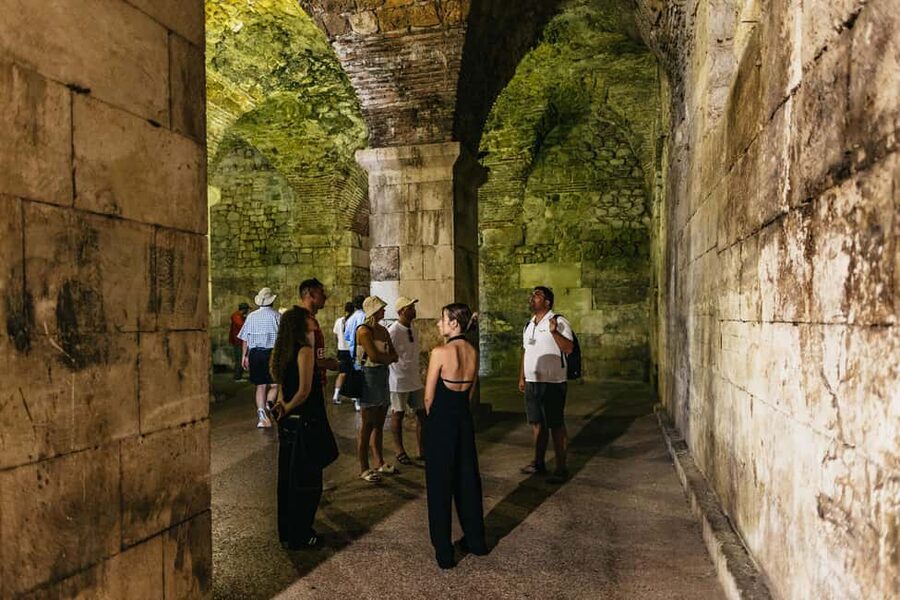
- Four palace gates (Bronze, Silver, Golden, Iron) that still organize how you move through the Old Town
- Peristyle courtyard access, so you’re not just peeking from the street
- St. Domnius (Sv. Duje) story tied to Diocletian’s mausoleum role
- City-view bell tower time, when the harbor and rooftops finally click
- Old Town links like Fruit Square’s baroque monuments and the 15th-century Town Hall
A Short Tour That Gives You the Real Split Layout
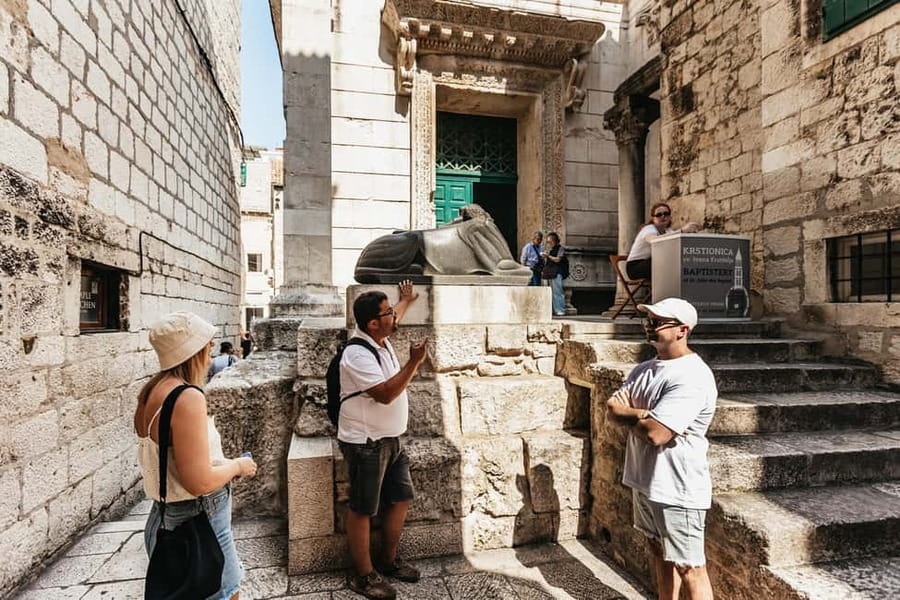
This is a quick, efficient tour built for orientation. At 50 minutes on the schedule (and paced like a brisk one-hour walk), it’s ideal when you’re arriving to Split for a day or you want history without eating your whole afternoon.
The payoff is not that you leave with trivia. You leave with a mental map: where the palace boundaries are, why certain streets feel like they follow older Roman lines, and why Split’s Old Town feels more like a living neighborhood than a museum. Once you understand that, every walk afterward gets easier.
You can also read our reviews of more walking tours in Split

Starting on the Riva Promenade: The Waterfront-to-Old Town Transition

Your morning (or afternoon) begins at Apodos Travel Agency, with clear instructions to find the open-top red bus team nearby and matching red or white shirts. That matters more than you’d think. Split is busy, and meeting smoothly keeps you from losing time when you’re already short on it.
From there, the tour flows toward the palace area, starting with the Riva promenade vibe. It’s a good warm-up. You get a sense of the setting—sun, cafés, palm trees, and the Adriatic air—before you step into the stone grid of Diocletian’s Palace. That contrast helps you understand something important: the palace isn’t a distant landmark. It’s the city’s core, and it’s surrounded by daily life.
Entering Diocletian’s Palace Through the Gates You Can Still Find Today

Inside Diocletian’s Palace, the pace is built around the gates and the main spaces that define the complex. You’ll walk through the Bronze, Silver, Golden, and Iron Gates, which were once the controlled entrances to an imperial world. Today they’re like signposts: each one helps you understand how the palace would have worked for movement, defense, and access.
This is one of the strongest parts of the experience, because it turns the palace from a set of impressive photos into a walkable system. Even if you’ve seen the term palace before, you’ll start to feel the logic of it—where you are, what it was designed to do, and why modern Split still follows that skeleton.
Peristyle Courtyard and the Palace Spaces People Miss
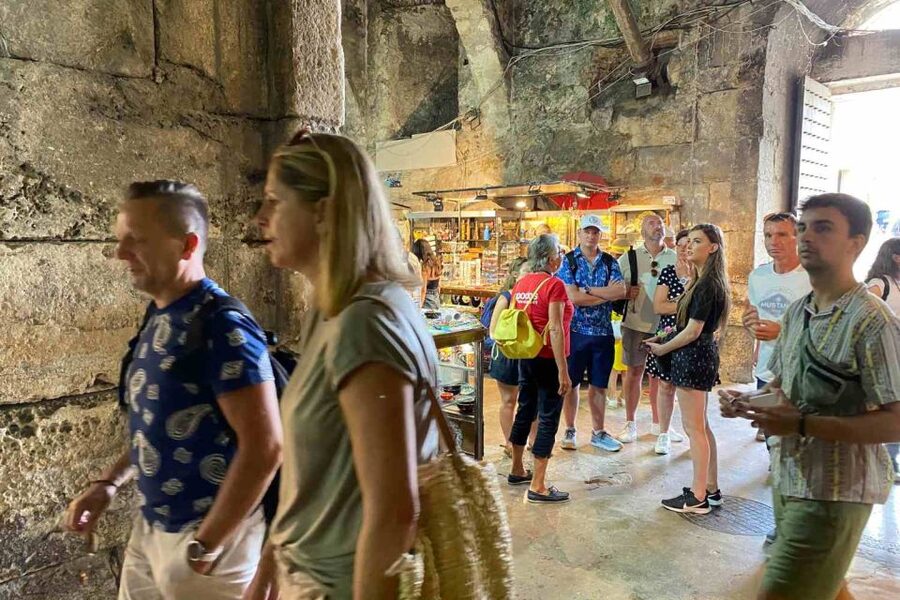
The tour’s included access to the Peristyle courtyard is a big deal. Many visitors pass by without stepping into the most iconic central space. Here, you get time inside the palace heart, which makes it easier to connect everything: the surrounding halls, the courtyard geometry, and why the palace’s internal layout matters even now.
You’ll also explore other palace elements, including the palace cellars and Diocletian’s former private chambers. If you like ruins but want more than “someone lived here,” you’ll appreciate how your guide connects these rooms to the emperor’s lifestyle and to what later centuries did with the structures.
One more included stop: the emperor’s private observatory. You might not picture it instantly, but it’s exactly the kind of detail that changes the way you look at a site. Instead of thinking only about monumental architecture, you start noticing how daily private functions were built into imperial power.
St. Domnius (Sv. Duje): When a Cathedral Replaces an Imperial Mausoleum
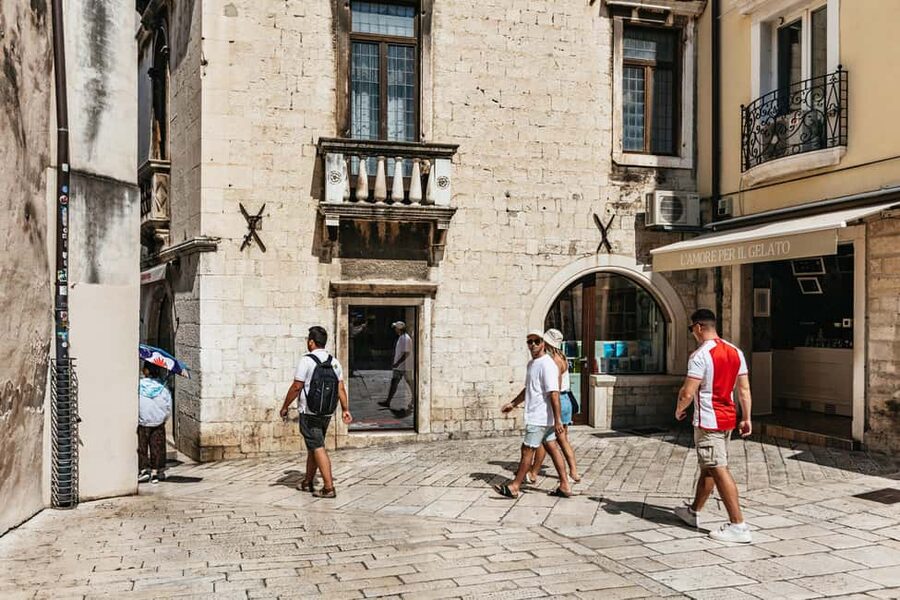
At some point you’ll reach St. Domnius (Sv. Duje), a stop that ties the whole story together. The cathedral is described as having once been the emperor’s mausoleum, and now it’s one of the oldest cathedrals in the world.
What I like about including this is simple: it gives you a tangible example of how Split keeps reusing and reworking earlier buildings. You’re not just watching history happen in the past. You’re watching it continue through layers of worship, architecture, and civic identity.
Then you get the bell tower viewpoint. Climbing the tower for panoramic views of the city and harbor is where the walk earns its keep. From up there, Split’s shape makes more sense. Streets, rooftops, and the coastline stop being random scenery and start looking like a continuation of the palace’s original logic.






Bronze-to-Golden Storytelling: What Your Guide Is Really Doing
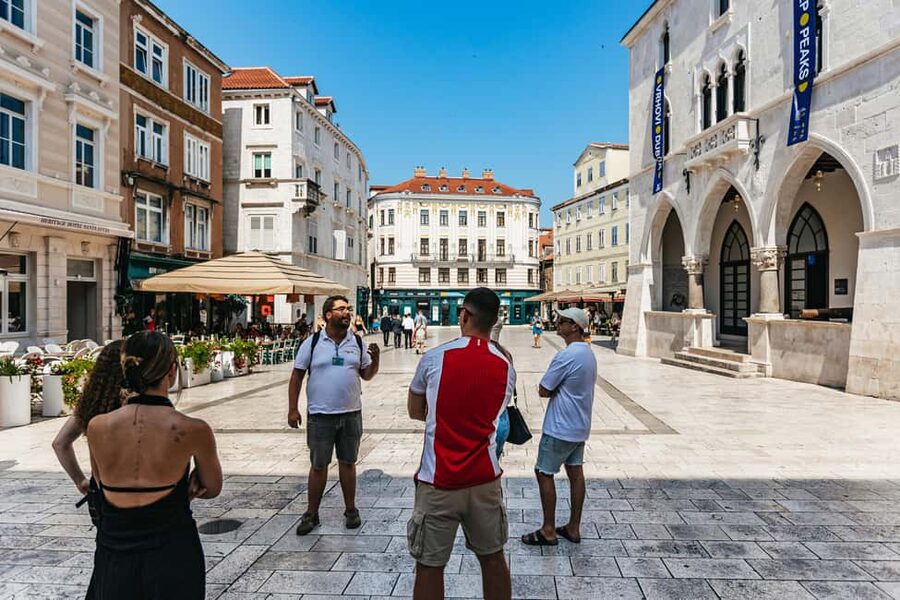
The tour lives or dies on the guide’s storytelling, and the pattern in the guide reviews is consistent: guides like Ina, Natasa, Darko, and Tin bring archaeology, art history, and sharp local context into a short time window.
In practical terms, the best part isn’t that you hear facts. It’s how the guide helps you place what you’re seeing. Some guides also lean into humor and interactive questions, which makes a short walk feel less like a lecture and more like walking with someone who actually cares about the stones under your feet.
I also like that you’re not stuck with one-style narration. You’ll hear how Roman foundations, medieval charm, and Venetian influence shaped Split into the modern city you’re looking at. It’s the kind of big-picture framing that makes your time in Old Town feel purposeful, not random wandering.
Old Town Stops That Show Split After the Romans

After the palace core, you’ll move through Old Town highlights that show how the area kept evolving. Fruit Square is one of those anchors. You’ll stroll past baroque monuments of Fruit Square, which helps shift you from Roman architecture into the later European layers that keep shaping Split’s look.
You’ll also learn about the 15th-century Town Hall. That kind of stop matters because it tells you Split wasn’t only an imperial site. It became a civic center, and civic life leaves a different kind of footprint than emperors do.
This Old Town portion is also where you understand why Split’s palace doesn’t feel isolated. It spills into streets, squares, and everyday routines. The tour uses these stops to help you see the city as a living overlay, not a single frozen era.
Practical Value: Does $17 Actually Make Sense?

At $17 per person for a guided walk (about 50 minutes), the value is mainly about time and clarity. Diocletian’s Palace is huge, confusing, and full of small details that are easy to overlook if you’re moving on your own.
This tour is designed to be a fast orientation tool:
- You get a guided route through major palace landmarks
- You get included access to key spaces like the Peristyle courtyard
- You get “why this matters” explanations, not just what it is
If you’re short on time in Split, paying for a focused guide is often cheaper than spending your limited hours getting less from self-guided wandering. If you love deep archaeology and want hours in a museum-like format, you might still want more time later. But for an intro and a mental map, $17 feels like a smart use of money rather than a tourist tax.
Getting the Most Out of a 50-Minute Walk
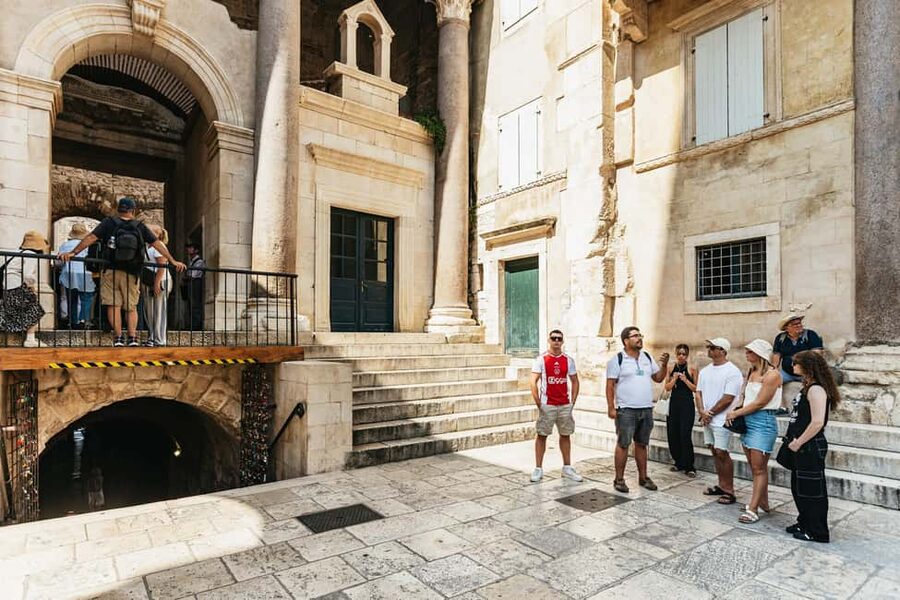
This is a walking tour, and Split’s Old Town isn’t flat. Wear comfortable shoes because you’ll be on cobblestones. Bring water and a camera, and if you’ll be there in wind, consider long sleeves. On sunny days, sunglasses and a hat help.
Sound and group flow can also matter on short tours. One practical note from participant feedback: a guest suggested that a microphone would help. That’s not a deal-breaker, but it’s a good reminder to stand where you can hear clearly, especially when the group moves through tight corridors and courtyards.
Who This Tour Suits Best (and Who Might Need a Backup Plan)
This tour fits best if you want:
- A quick, structured introduction to Split’s UNESCO-linked Old Town and Diocletian’s Palace
- Major highlights like the gates, Peristyle courtyard, and St. Domnius viewpoint
- A guide who can connect Roman, medieval, and later European influence into a walkable story
You might want a backup plan (or a different format) if you can’t handle uneven cobblestones and 15–30 steps. The tour is listed as wheelchair accessible, but the walking surface requirement is still important to understand before you commit.
Families can also do well if the stroller route works for your group, but you’ll want to plan around the physical route and where the tour can slow down for needs.
Should You Book This Guided Walk in Split?
Book it if you’re trying to make the most of limited time and you want the palace explained in a short, readable route. The included highlights—Peristyle access, the four gates, St. Domnius, and the Old Town civic stops—are exactly the kind of combination that turns a chaotic maze into a map you can reuse.
Skip it only if you’re after a long, slow archaeology session or you know you’ll struggle with cobblestones and steps. Otherwise, this is one of the cleanest ways to get oriented fast, learn what matters, and still have energy left for Split afterward.
FAQ
Where does the tour start?
The tour starts at Apodos Travel Agency. Your instructions say to look for the open top red bus with the team next to it, wearing red or white shirts, who will connect you with your guide.
What parts of Diocletian’s Palace are included?
You’ll get a guided walk through Diocletian’s Palace, including access to the Peristyle courtyard, plus exploration of areas like the palace cellars, Diocletian’s former private chambers, and the emperor’s private observatory. You’ll also visit the Bronze, Silver, Golden, and Iron Gates.
Will I go inside St. Domnius (Sv. Duje)?
Yes. The tour includes visiting St. Domnius (Sv. Duje), and it also includes climbing the bell tower for panoramic views of the city and harbor.
How long is the tour?
The duration is listed at 50 minutes.
What languages is the guide available in?
The live guide is available in English, Spanish, and Italian.
What should I bring, and is the walk hard?
Wear comfortable shoes and bring water and a camera. The route is on uneven cobblestone surfaces and involves 15–30 steps to take part, though the activity is listed as wheelchair accessible.