REVIEW · ATHENS
Acropolis, Parthenon & Athens Old City Heritage Walking Tour
Book on GetYourGuide →Operated by Key Tours · Bookable on GetYourGuide
Stone giants, first thing, before the crush. You’ll get early Acropolis access plus a licensed guide who connects each ruin to the stories that made Athens feel important in the first place. It’s a focused walk that also tacks on Plaka’s streets and several lesser-visited landmarks.
I especially love the way the tour keeps the big monuments clear without turning them into a textbook. Two things make it work: the guide’s story-led explanations (from guides like Panagiota, Michael, Kiki, and Tina) and the fact that you hear every detail through wireless audio devices, even when the crowd gets loud.
One consideration: the route is moderate difficulty, with a tough climb to the Acropolis, and summer heat can make it feel harder than it looks on a map. Also, the very start can be a bit chaotic since multiple groups assemble at once.
In This Review
- Key Highlights You’ll Actually Feel
- First Steps: Meeting at Key Tours and Why Early Access Matters
- Theatre of Dionysus: Warming Up with the Origins of Greek Drama
- Odeon of Herodes Atticus and Propylaea: Two Stops That Make the Acropolis Make Sense
- Temple of Athena Nike and the Parthenon: Best Views, Best Photo Timing
- Erechtheion: Where the Details Feel Rewarding
- Anafiotika and the Descent: The Athens Most People Walk Past
- Roman Forum, Tower of the Winds, and Hadrian’s Library: Athens Beyond One Century
- Plaka Cobblestones to Monastiraki: Bathhouse of the Winds and the Layer Cake of Old Athens
- How the Wireless Audio Keeps You From Missing the Good Parts
- $34 Value: What You’re Getting (and What to Watch for)
- Practical Tips for a Smooth Climb (Shoes, Sun, and Water)
- Should You Book This Acropolis and Old City Tour?
- FAQ
- How long is the Acropolis, Parthenon & Athens Old City Heritage Walking Tour?
- Where do I meet the tour group?
- Is the Acropolis entrance ticket included?
- What if I select the option without entrance tickets?
- Do I skip the ticket line?
- What languages are available?
- Are audio devices provided?
- What should I bring?
- Is the tour wheelchair accessible?
- Is free cancellation available?
Key Highlights You’ll Actually Feel
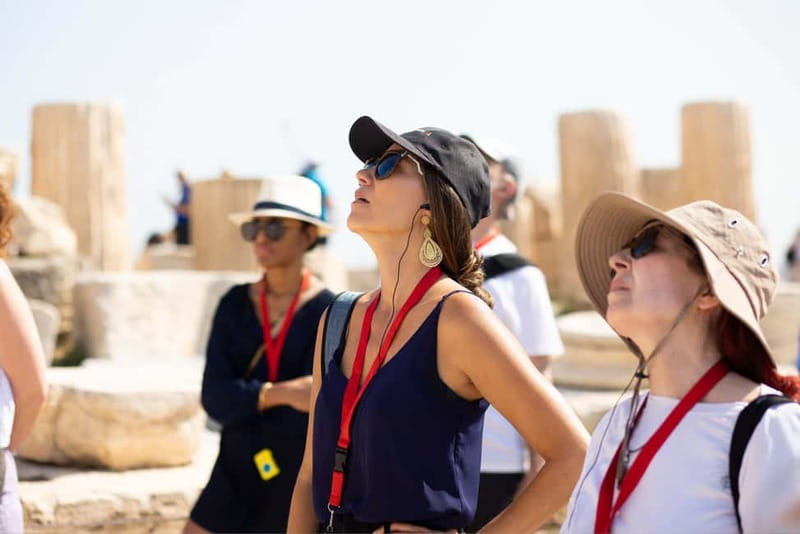
- The Theatre of Dionysus opener sets drama in context before you ever reach the Parthenon.
- Early access gives you a better chance to see the monuments before the densest crowd wave.
- Wireless audio for clear commentary means you can keep your eyes on the stones, not the guide’s voice.
- Temple-to-old-town flow links the Acropolis to Odeon of Herodes Atticus, Anafiotika, and Roman sites.
- The Plaka upgrade includes Athens’ Bathhouse of the Winds for a last-surviving-public-baths stop.
- Longer Parthenon photo time lets you slow down for pictures without feeling rushed.
First Steps: Meeting at Key Tours and Why Early Access Matters
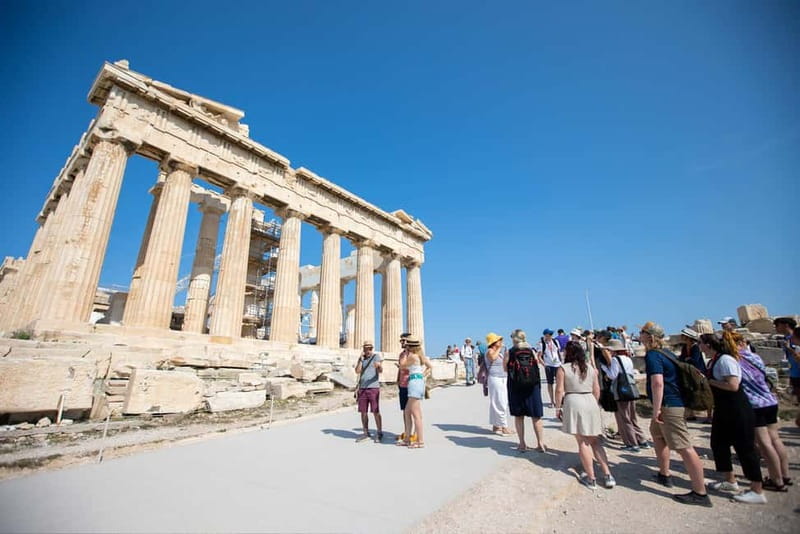
This is a meeting-and-go kind of tour. You’ll link up with the group at the Key Tours office (the check-in point is listed near Athens Gate Apt), then head straight toward the Acropolis area with a guide who knows the flow of timed entry.
The early access is not a luxury add-on. It changes your visit. The Acropolis is popular, and the difference between arriving early versus later is the difference between seeing shapes clearly and standing in a moving wall of people. In the guide stories, you’ll hear that the best time slots help you avoid the worst crush and heat, with early departures around 8:00–9:00 repeatedly called out as the smart move.
You also get skip-the-line handling for the entrance process when your option includes tickets. If you choose the version that doesn’t include entrance tickets, you’ll need to buy them for your departure time slot on your own, so you’ll want to be ready for that moment before the group starts walking.
You can also read our reviews of more walking tours in Athens



Theatre of Dionysus: Warming Up with the Origins of Greek Drama
Before you climb, the tour starts on the south slope area at the Theatre of Dionysus. This stop works because it gives your brain a hook. You’re not just looking at a platform of stone—you’re placing Greek tragedy and comedy into the landscape of where they began.
You’ll also have a quick guided walk here, which is a good pattern for the whole tour: short orientation bits, then motion, then a key monument stop. That keeps the energy up and helps you avoid the feeling that the guide is lecturing from one spot.
Practical note: this opening portion is less strenuous than the later climb, so it’s a useful time to settle in, put on your hat if you need it, and start thinking about water early—not after you’re already winded.
Odeon of Herodes Atticus and Propylaea: Two Stops That Make the Acropolis Make Sense
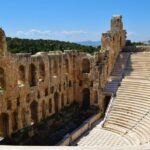
Next up is the Odeon of Herodes Atticus, a theater-like structure associated with music and performance. It’s a reminder that Athens wasn’t only about politics and temples. It was also about public life—shows, festivals, and the rhythm of civic culture.
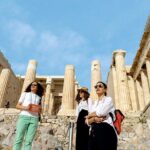
From there, you move toward Propylaea, the monumental gateway approach. Propylaea is one of those “you don’t know what you’re looking at until someone points it out” places. When you see it as a designed entrance and not just a fancy archway, it changes how you read the next views: you start understanding how the Acropolis was staged like a grand reveal.
This is also where a good guide matters. Several named guides in past groups—like Michael and Kostas—are praised for keeping people together and explaining what you’re seeing in a story order that feels logical.
Temple of Athena Nike and the Parthenon: Best Views, Best Photo Timing
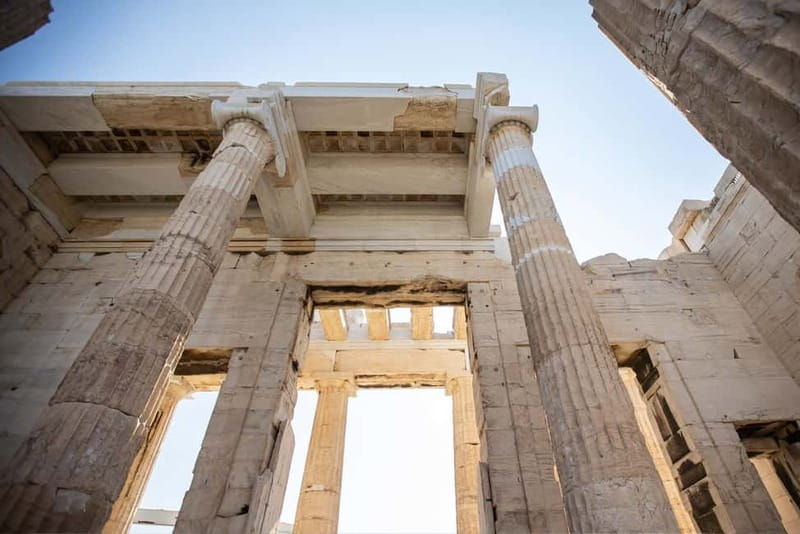
The Temple of Athena Nike is a quick, smart stop. It’s small compared to the Parthenon, but it’s useful. You’ll come away understanding that the Acropolis wasn’t one building—it was a set of sacred messages, each one part of a larger religious and political idea.
Then you hit the Parthenon. This is the moment most people came for, and the tour’s structure helps: you’ll get guided time with walking and explanation, plus a dedicated photo stop/free time. That free time is key. Crowds can make photos feel like a race. Here, you’re given enough breathing room to step back, frame your shot, and not lose the story thread.
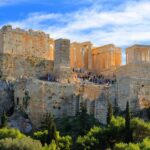
One more thing I like about how the tour is set up: it gives you panoramic views during the ascent and again around the monument area. Those views are not just for Instagram. They help you orient yourself in Athens. You start seeing how the Acropolis sits above the city and how the rest of what you’ll visit later fits into that larger picture.
If you’re aiming for the easiest experience, try for the earlier departure window. Multiple guides and group reports highlight that the earlier start helps you avoid heat and the thickest crowds around the Parthenon.
Erechtheion: Where the Details Feel Rewarding

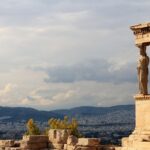
The Erechtheion is one of the spots that often gets rushed in fast tours. Here, it gets time. You’ll have a guided visit, and you’ll focus on what makes this building different in shape and symbolism.
Why it matters: the Erechtheion helps you see the Acropolis as complicated and human-scaled, not just an iconic silhouette. This is where myth, worship, and architecture start blending in a way that feels more real than a simple “major temple” label.
Expect the guide to point out features so you can actually notice them. Guides named like Evri and Joanna have been praised for pacing and storytelling, including keeping the group comfortable in hotter weather. That kind of attention makes the monument time feel less tiring and more satisfying.
You can also read our reviews of more city tours in Athens
Anafiotika and the Descent: The Athens Most People Walk Past
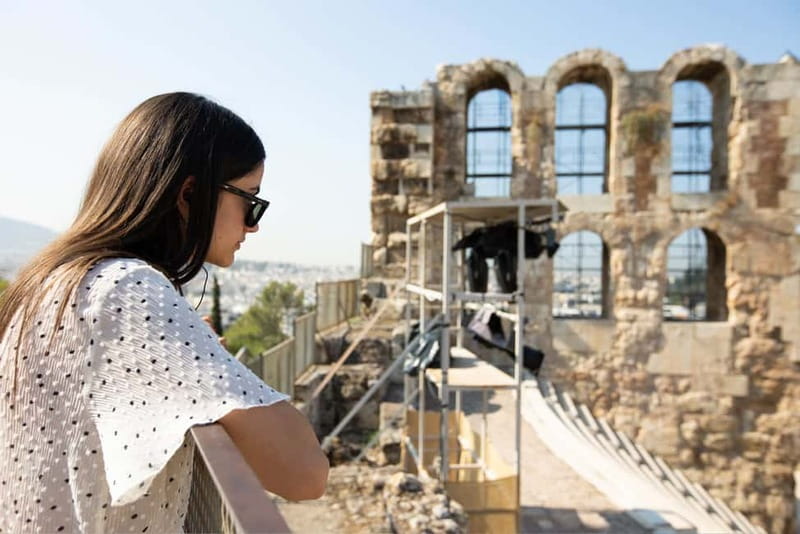
After the Acropolis monuments, the tour shifts gears toward the neighborhood layer of Athens, starting with Anafiotika. This is the kind of place where you feel the city’s human scale again—narrower lanes and a different vibe than the monumental heights you just left.
Then you descend into older city areas and the route keeps expanding the timeline. You’ll walk past and around major reference points that help you connect what you see on the street to what’s under the surface: performance spaces, civic sites, and later layers of Greek and Roman influence.
This part is also where you’ll feel the work of the day more than the earlier climb, because it’s constant movement. The upside: it’s not just “walk between ruins.” It’s a guided chain of locations that builds a map in your head.
Roman Forum, Tower of the Winds, and Hadrian’s Library: Athens Beyond One Century
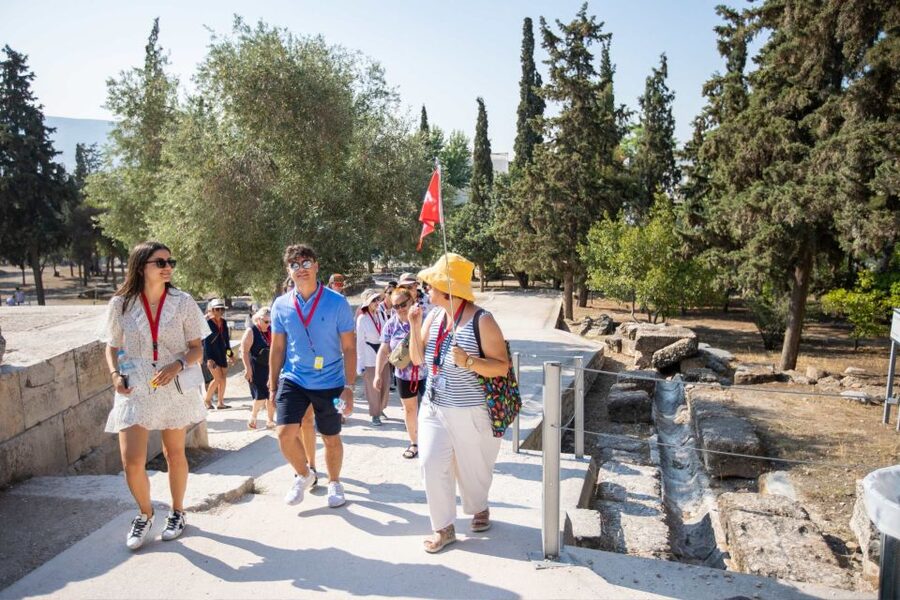
You’ll spend time at several stops that pull you out of the Acropolis bubble.
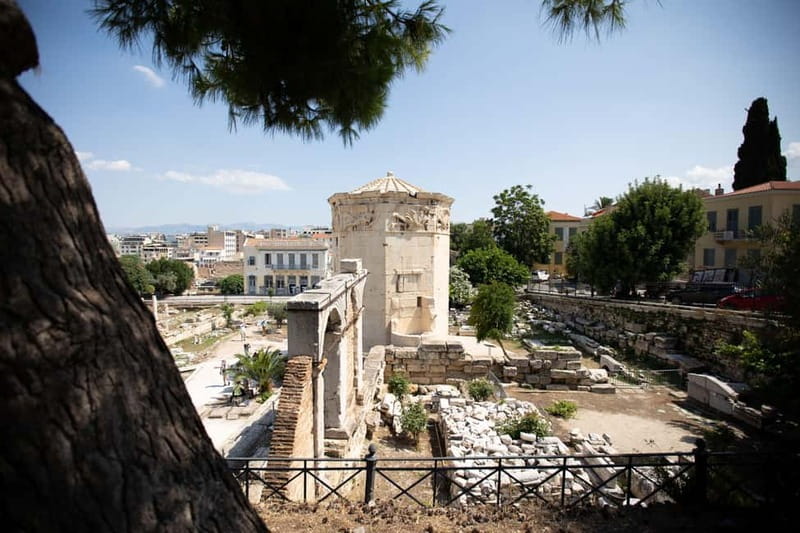
At the Roman Forum of Athens, you’re looking at civic structure and influence—Athens doesn’t stop being important after the classical peak. Then comes the Tower of the Winds, which is one of those sites that feels clever and specific. It’s the kind of landmark you’ll appreciate more when someone explains what made it useful in daily life.
Hadrian’s Library adds a later chapter: education, architecture, and how rulers tried to shape identity through public buildings. The tour is smart to include it because it widens your view from temples to institutions.
In terms of value, these stops matter because they make Athens feel like a lived-in city across eras, not only a museum on a hill.
Plaka Cobblestones to Monastiraki: Bathhouse of the Winds and the Layer Cake of Old Athens
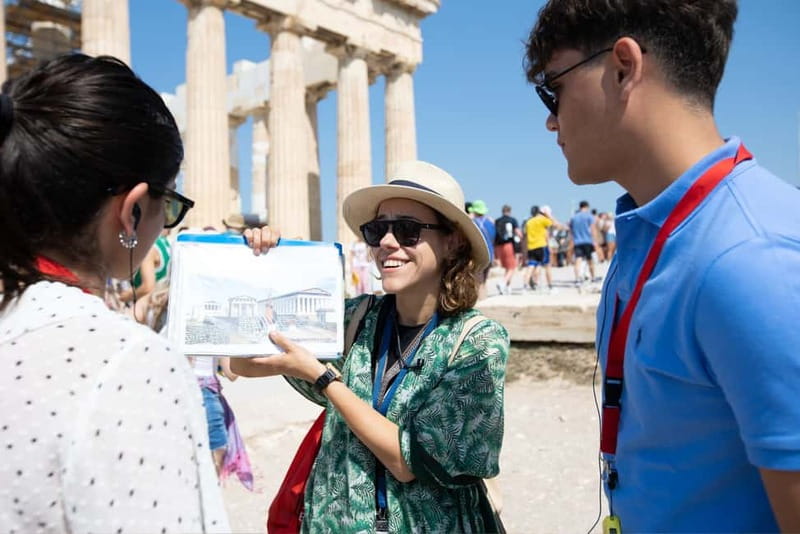
If you choose the option that includes the old town walking tour, you’ll go downhill into Plaka, Athens’ historic neighborhood. This is where the tour becomes more than ancient monuments. You’re on cobblestone streets, watching the city texture come through: small alleys, old facades, and quick views between buildings.
A standout included stop in the upgrade is the Bathhouse of the Winds. It’s a last surviving public baths site, and that alone gives you something different from the classic “temples and more temples” pattern. You’ll see how everyday life and public spaces sat alongside grand sacred architecture.
The route also includes several important waypoints that add time depth:
- Fethiye Mosque Museum
- Tzisdarakis Mosque
- Monastiraki Square as the tour ending point
- And as you walk, views over places like the Ancient Agora and the National Observatory area
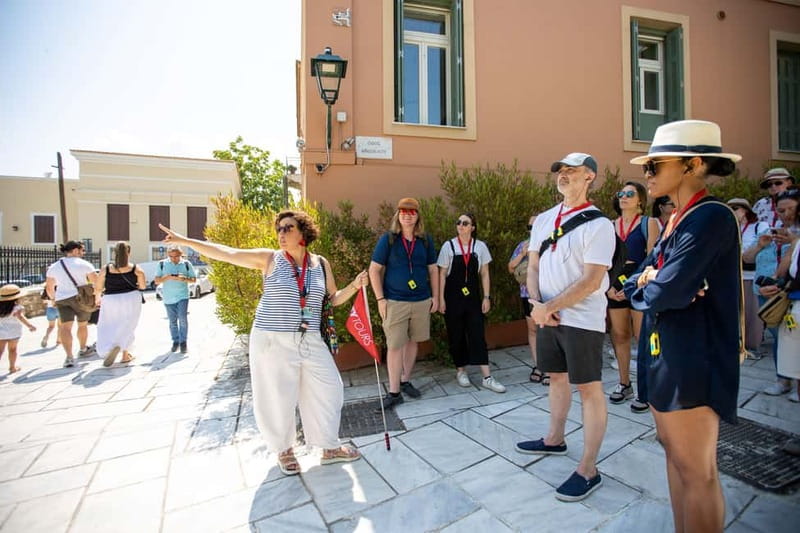
This is where you’ll also notice the guide’s real job: keeping the group together through narrow streets and crowded intersections while still giving you enough time to look up, not only forward. Guides like Maria and Dimitri have been praised for staying attentive and for tailoring the pace to keep people comfortable.
How the Wireless Audio Keeps You From Missing the Good Parts
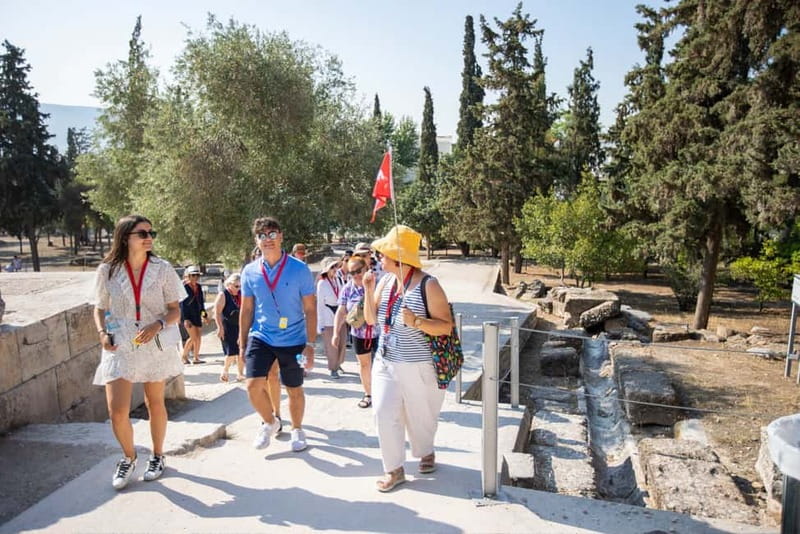
A lot of walking tours sound good until you’re standing ten steps back, with wind or crowd noise swallowing the guide’s voice. Here, you get audio devices for clear commentary. That matters because the tour is packed with stops.
In practice, it means you can:
- stay focused on the monument you’re looking at
- walk at a comfortable pace without constantly turning to find the speaker
- catch the context of why a specific feature matters
Even in tight spaces near major sights, the audio is what lets the tour feel continuous rather than fragmented.
If you’re the type who hates the idea of holding a phone above your head for photos while missing what the guide says, this is your setup.
$34 Value: What You’re Getting (and What to Watch for)
At $34 per person for about 210 minutes, the value is strongest if you use what’s included:
- a licensed guide
- early Acropolis access
- the guided route through Plaka (when you choose the old town option)
- wireless audio devices
- and an Acropolis entrance ticket when that option is selected
When you compare that to buying tickets and trying to do the Acropolis on your own, the big win isn’t just convenience. It’s time. A timed-entry site plus a steep, multi-stop route is exactly where a guide keeps you from wasting energy figuring out logistics.
The one “watch this” item: if you choose the option without entrance tickets, you must buy tickets yourself in the correct timed slot before you enter with your group. The tour info makes clear that you should plan ahead, especially for travelers with eligibility for free admission under certain age/region rules.
Practical Tips for a Smooth Climb (Shoes, Sun, and Water)
This tour is listed as moderate difficulty, and that’s honest. The ascendance to the Acropolis can be demanding, especially in summer.
Bring:
- passport or ID card
- comfortable shoes with grip
- sunglasses
- a sun hat
- water
Also remember what’s not allowed: pets, baby strollers, and luggage or large bags. If you’re traveling light, you’ll feel better on the walk and in crowd pinch points.
One more practical thing I recommend: plan for shade breaks when you can. In the past, multiple guides (including Michael and Kiki) have been praised for finding shade spots and keeping people comfortable during heat. That isn’t guaranteed minute-by-minute, but a good guide approach is clearly part of how this tour is run.
Should You Book This Acropolis and Old City Tour?
Book it if you want:
- a structured, guided route that connects the Acropolis to old Athens street life
- wireless audio so you don’t miss the story while walking
- value pricing for a licensed guide, early access, and (in many options) ticket handling
Skip it or consider a different style tour if:
- your mobility is limited (the tour is not suitable for wheelchair users)
- you hate steep climbs and hot-weather walking
- you want maximum free roaming time, because this route is structured and stop-based
If you can handle the moderate climb and you’d rather hear the “why” behind what you’re seeing than just collect photos, this is a very solid way to make Athens feel coherent in one afternoon.
FAQ
How long is the Acropolis, Parthenon & Athens Old City Heritage Walking Tour?
The tour duration is 210 minutes.
Where do I meet the tour group?
You meet at the Key Tours office.
Is the Acropolis entrance ticket included?
It depends on the option you select. An entrance ticket to the Acropolis is included if that option is chosen.
What if I select the option without entrance tickets?
If your option doesn’t include entrance tickets, you’ll need to purchase them before the activity at the tour’s departure time slot so you can enter with the group.
Do I skip the ticket line?
Yes, the tour includes skip-the-line entry.
What languages are available?
The live guide offers Spanish and English.
Are audio devices provided?
Yes. You’ll receive audio devices for clear commentary during the tour.
What should I bring?
Bring your passport or ID card, comfortable shoes, sunglasses, a sun hat, and water.
Is the tour wheelchair accessible?
No. It is not suitable for wheelchair users and people with mobility impairments.
Is free cancellation available?
Yes. You can cancel up to 24 hours in advance for a full refund.