REVIEW · SPLIT
90 Minute Walking Tour of Split
Book on Viator →Operated by Vegolas Tours · Bookable on Viator
Split can feel like a maze. This tour turns it into a map of stories.
It’s a small-group, English-language walk through the UNESCO center, with a smooth flow from parks and gates into the heart of Diocletian’s Palace. Best of all, the tour is only about 1.5 hours, so you can enjoy the rest of your day on your own.
What I like most is the pacing and focus. You hit major landmarks quickly (Golden Gate, Peristyle, and the gates), without getting stuck in one place. I also love how the guide mixes big-picture meaning with street-level detail, especially if you get Mijo, who’s repeatedly praised for clear storytelling and humor.
The main thing to consider: parts of the experience involve site entry that isn’t included, especially the time inside Diocletian’s Palace and visits to the Temple of Jupiter and St Domnius. So you’ll want to budget a bit extra for on-site entrances when you decide to go in.
In This Review
- Key highlights you’ll feel right away
- Why this 90-minute walking tour works in Split
- Meeting at Strossmayerova Fountain: the tour starts easy
- Strossmayer Park: setting the stage before the palace
- The Golden Gate: the entrance that tells you how power worked
- Peristyle of Diocletian’s Palace: the main square you’ll remember
- Eastern (Silver) Gate: not the main entrance, still important
- Temple of Jupiter: when the architecture is the story, not the ticket
- Cathedral of Saint Domnius: mausoleum or church?
- Old Split: medieval streets after the Roman core
- The big time inside Diocletian’s Palace (and what to expect)
- Price and value: $18.14 for a first-day orientation
- The guide’s style matters more than you think
- What’s included vs not included, in plain terms
- Weather and walking comfort: plan like a local
- Who should book this tour (and who might skip it)
- Should you book this 90-minute Walking Tour of Split?
- FAQ
- How long is the 90-minute walking tour of Split?
- How much does the tour cost?
- Where does the tour start and end?
- Is the tour offered in English?
- What group size is this tour?
- What is included in the tour price?
- Which major entrances are not included?
- Do I need pick-up or drop-off?
- What happens if the weather is bad?
- What is the cancellation policy?
Key highlights you’ll feel right away
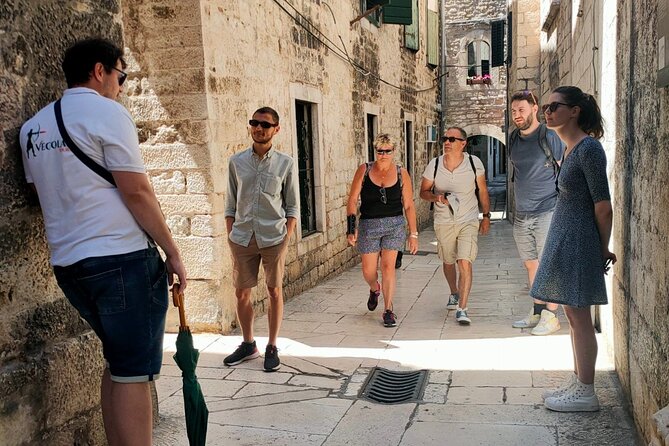
- Easy meeting point at Strossmayerova Fountain so you don’t waste tour time hunting
- A tight 90-minute route that gets you oriented without stealing your whole day
- Multiple Diocletian Palace stops including the Golden Gate and Peristyle square
- Gates with purpose (you’ll learn why the Eastern/Silver Gate mattered)
- Well-timed “Roman to medieval” contrast with Old Split at the end
Why this 90-minute walking tour works in Split
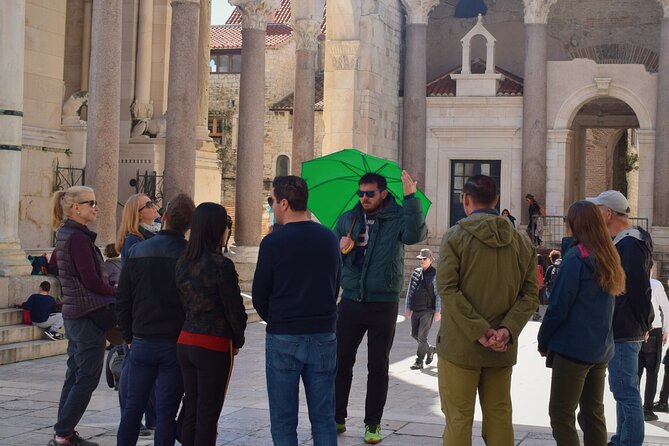
Split rewards people who arrive with a plan. Even if you love wandering, you’ll appreciate having the places put in order.
This walk is built like a primer. You start in a calmer area at Strossmayer Park, then move into the UNESCO-protected core and spend the bulk of the time in and around Diocletian’s Palace. It’s not a marathon. You’re done in about 1 hour 30 minutes, which is exactly what you want on a day when you still plan to eat, shop, swim, or just sit with coffee and watch the harbor.
The tour is also small-group friendly (up to 12 people). That matters in Split’s tight streets. With a smaller group, you’re not stuck behind a crowd every time the guide stops to explain something important.
You can also read our reviews of more walking tours in Split


Meeting at Strossmayerova Fountain: the tour starts easy
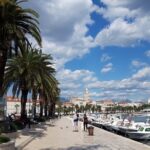
The meetup point is at Strossmayerova Fountain, address Ul. kralja Tomislava 12. It’s near the waterfront, which is helpful because Split’s streets can twist and turn fast. You end at Ul. kralja Tomislava 15, also near the waterfront.
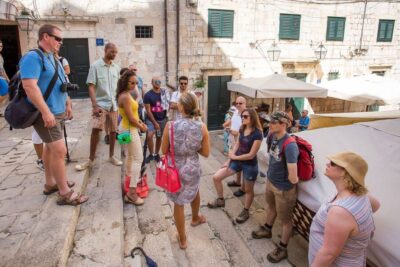
The start is simple: the guide meets you by the fountain, gives an introduction, and spends a few minutes getting to know the group. In practice, that “warm-up” does two things:
- It sets expectations for the route and how fast you’ll move.
- It creates room for questions early, before you get swallowed by the palace alleys.
If you’re arriving for day one in Split, this kind of start helps you get your bearings fast.
Strossmayer Park: setting the stage before the palace
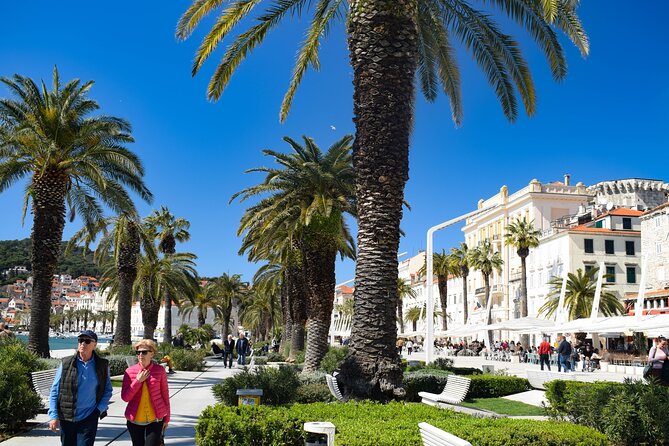
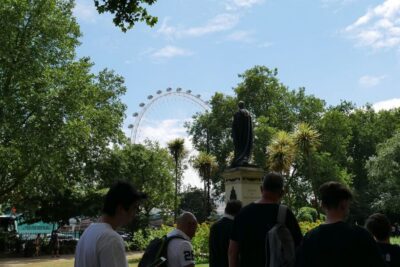
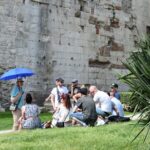
Your first stop is Strossmayer Park. The goal here isn’t to rush through pretty scenery. It’s to set the context so the medieval and Roman walls later make sense instead of looking like random stone.
From the fountain area, you’re primed for a story shift: this is where you learn the “why,” not just the “what.” The park segment is short (around five minutes), so you won’t feel like you’re waiting for the real stuff to start.
The Golden Gate: the entrance that tells you how power worked
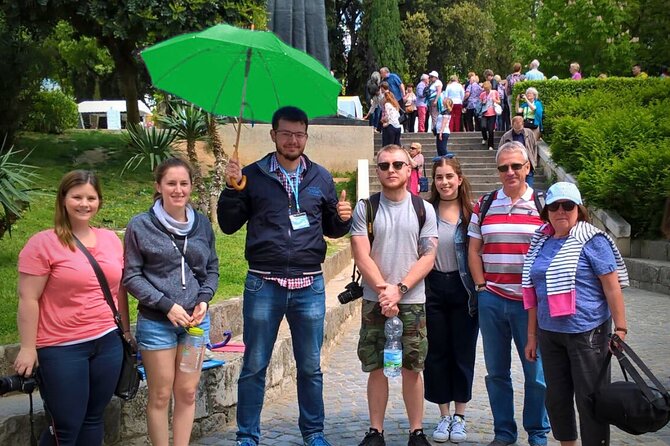
Next you hit the Golden Gate. This is where the ancient Diocletian Palace begins to feel real. You’re at the edge of the complex, but the guide uses the location to explain the origin story: when it started, why it was built, and how it was designed.
This stop is short, but it’s effective because you’re learning the function of a gateway. Gates aren’t just decorative in Diocletian’s world. They’re part of how authority moved people in and out.
Tip for you: if you’re the type who likes photos, take them here. The Golden Gate is one of the easiest spots to frame without fighting the crowd pressure that you’ll see deeper inside.
Peristyle of Diocletian’s Palace: the main square you’ll remember

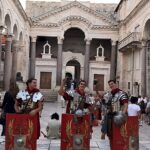
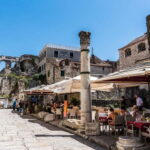
Then comes one of the star locations: the Peristyle, the main square of the palace. Think of it as the palace’s living room, where the scale of the setting becomes obvious.
You’ll focus on how the emperor used the space and what daily life looked like for people working in and around the palace. That angle is what makes this stop more than a quick look at ruins. You’re learning how the space shaped routines.
Even in a short time, this is where you’ll start noticing details you’d miss if you wandered alone—like the layout and how the open square connects surrounding structures.





Eastern (Silver) Gate: not the main entrance, still important
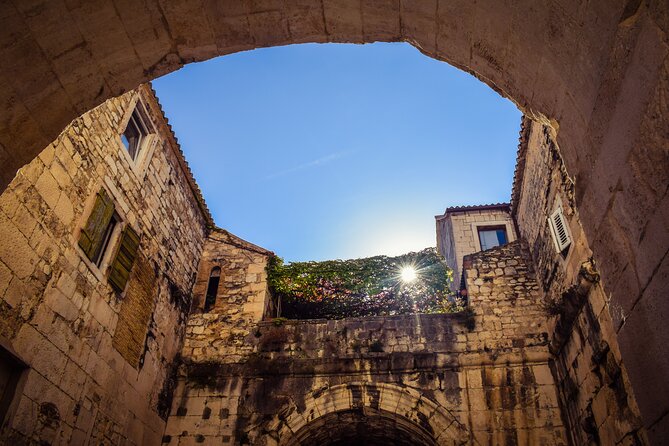
After the Peristyle, you move to the Eastern (Silver) Gate. Even if it doesn’t feel like the “main door,” the guide explains its key function and what still survives from the original structure.
This is one of the most interesting ideas in the whole tour: you learn that the palace wasn’t just one grand front. It had movement patterns, and not every gate existed for the same reason.
You’ll also appreciate how the tour places this stop after the Peristyle. It helps you mentally map where people likely entered, processed through, and accessed different areas.
Temple of Jupiter: when the architecture is the story, not the ticket
You’ll next reach the Temple of Jupiter. The tour frames it around Roman religious expression—especially how the emperor is tied to that religious power.
Important detail for planning: entrance here is not included. You’ll get tips and guidance, and you can decide afterward whether to visit. That’s a smart setup. You’re not forced into extra costs on the spot, but you still get enough context to make a good decision.
If you do return to it later, you’ll likely understand what you’re looking at more quickly, because you’ve already been given the “why” behind the structure.
Cathedral of Saint Domnius: mausoleum or church?
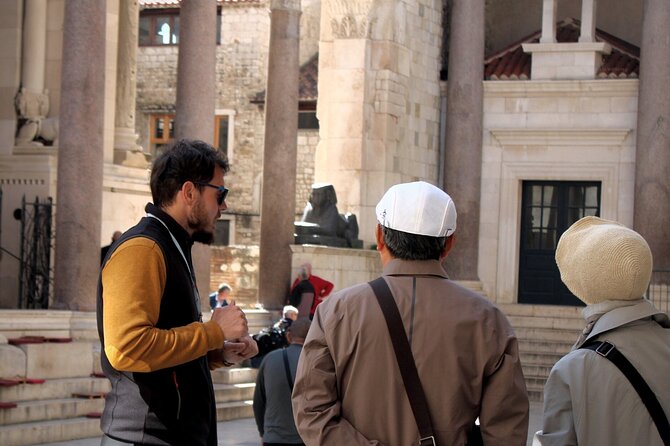
Then you reach Cathedral of Saint Domnius. This stop is built around a question: is it Roman mausoleum or church? The guide walks you through the reasoning and the transformation.
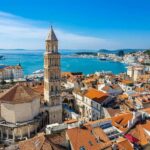
And yes, you’ll get the moment people point out in person—the gigantic cat statue associated with the area. It’s one of those local visual details that makes the whole place feel less like a museum and more like a living neighborhood.
Like the Temple of Jupiter, entrance is not included, but you get specific info and practical pointers so you can visit after the tour if you want.
Old Split: medieval streets after the Roman core
Finally, you shift into Old Split, which is described as contrasting with the ancient section while still being old and storied. This is where the tour changes gear.
Instead of focusing only on Roman power structures, you get a taste of the secrets and character of the middle-aged neighborhood layout—how the town grew around and through the palace-era landscape.
Old Split is also the part where the streets start to feel more “you can live here” than “you can only look at this.”
The big time inside Diocletian’s Palace (and what to expect)
Most of your time is spent at Palazzo di Diocleziano, with about 55 minutes allocated here. This is where the tour earns its name.
However, there’s a cost note you should plan for: the admission ticket for the palace area is not included. So the tour gives you guided orientation and key points, but you may need to pay entry if you want to go into specific sections tied to the palace experience.
In real terms, this means you’ll have two smart options:
- If you’re okay paying for the entrance, you’ll get the most out of this “inside” portion.
- If you’re trying to keep costs tight, you can still use the guide’s explanations to understand what you see from accessible points, and decide later what’s worth the extra ticket.
Price and value: $18.14 for a first-day orientation
The price is $18.14 per person, lasting about 1.5 hours. That can sound simple, but in Split, the real question is value for time and quality.
Here’s how I’d think about it:
- You’re paying for a licensed professional guide who helps you connect landmarks into a story you can remember.
- You’re also paying for the convenience of a route that hits major points without getting lost.
- With the small group size (max 12) you’re more likely to hear the guide clearly and ask questions.
If you’re doing Split for the first time, $18 for an organized orientation is often worth it. You can use what you learn to plan the rest of your day more confidently, which can save you time (and money) later.
Also, the tour is commonly booked about 25 days in advance on average. That’s a hint that the good slots go first. If you’re working around limited vacation time, book earlier rather than later.
The guide’s style matters more than you think
Across the reviews, one name shows up again and again: Mijo. People consistently describe him as funny, friendly, and able to explain the city without turning it into a lecture.
Two things that come up repeatedly:
- He connects historical facts to local perspective, which makes the stops feel practical, not academic.
- He shares useful follow-up ideas after the tour, like where to eat and where to take your next steps around Split.
You’ll probably notice this while you’re walking. When a guide can handle both humor and clear explanations, the group doesn’t just “hear facts.” You actually start seeing the city the same way your guide does.
What’s included vs not included, in plain terms
Included in the tour price:
- A licenced professional guide
- Exploration tied to UNESCO protected heritage
- The planned highlights across ancient and medieval areas
- Recommendations and tips from the guide
- Mobile ticket
- Conducted in English
Not included:
- Pick-up and drop-off (you meet at the fountain and return near the end address)
- Entrance for Temple of Jupiter (you get advice to visit if you choose)
- Entrance for Cathedral of Saint Domnius
- Admission ticket not included for the time inside Diocletian’s Palace
This “not included” pattern is common for tours like this. It helps keep the base price lower. But you should still plan for the possibility of extra on-site fees depending on what you decide to enter.
Weather and walking comfort: plan like a local
This experience requires good weather. If it’s canceled due to poor weather, you’ll be offered a different date or a full refund. That’s a big deal in Split because coastal weather can change.
On the walking side, it’s manageable: you’re covering a route that lasts about 90 minutes, with short stop times. Still, the Old Town can be uneven and crowded. Wear shoes you can trust and keep water with you if you’re out in warmer months.
Who should book this tour (and who might skip it)
You should book if:
- You want a first-day orientation to Split’s UNESCO core.
- You like explanations that connect Roman design to daily life, not just a quick list of monuments.
- You prefer a small-group format over joining a large, slow herd.
You might skip or pair it with other plans if:
- You dislike adding any paid site entry. Because the palace and some religious sites have entrances not included, your final cost could rise depending on what you choose to go inside.
- You already know Split’s major landmarks and you just want freedom to wander without a structured route.
Should you book this 90-minute Walking Tour of Split?
For most people doing Split for the first time, I think this is a smart buy. You get a fast, structured route through the palace gateway points, the Peristyle square, the two major church/temple stops, and then you end in Old Split where the town’s character shows up.
The biggest reason to book is time value: 1.5 hours gives you enough context to enjoy the rest of your day without constantly guessing what you’re looking at. The biggest reason to be cautious is the entrance not included piece, especially for Diocletian’s Palace time and optional visits at Temple of Jupiter and St Domnius.
If you’re okay planning a small extra budget for on-site entries, this tour is an efficient way to understand Split quickly and move through the city with confidence.
FAQ
How long is the 90-minute walking tour of Split?
It lasts about 1 hour 30 minutes.
How much does the tour cost?
The price is $18.14 per person.
Where does the tour start and end?
The tour starts at Strossmayerova Fountain, Ul. kralja Tomislava 12 and ends at Ul. kralja Tomislava 15, near the waterfront.
Is the tour offered in English?
Yes, the tour is offered in English.
What group size is this tour?
The group has a maximum of 12 travelers.
What is included in the tour price?
You get a licensed professional guide, exploration of UNESCO World Heritage areas, top inner-city highlights, local perspective, and recommendations. You also receive a mobile ticket.
Which major entrances are not included?
Entrance is not included for the Temple of Jupiter and Cathedral of Saint Domnius, and the admission ticket for Palazzo di Diocleziano is also not included.
Do I need pick-up or drop-off?
No. Pick-up and drop-off are not included.
What happens if the weather is bad?
This tour requires good weather. If it’s canceled due to poor weather, you’ll be offered a different date or a full refund.
What is the cancellation policy?
You can cancel for a full refund up to 24 hours in advance. If you cancel less than 24 hours before the start time, the amount paid isn’t refunded.