REVIEW · SARAJEVO
Sarajevo: Grand Walking Tour Through Time and Cultures
Book on GetYourGuide →Operated by Sarajevo Insider City Tours & Excursions · Bookable on GetYourGuide
Three hours, a dozen eras. This Grand Walking Tour stitches together Sarajevo’s past and present at street level, with Baščaršija market lanes and Latin Bridge at the center of the story. I especially like the route design: you’re walking the city’s timeline, not bouncing randomly.
I also really love how the stops cover Sarajevo’s mix of Ottoman and Austro-Hungarian influences without turning it into a lecture. With guides like Kenan, Elma, and Bojan, the tone stays human: serious events, then local context and plenty of room for questions. The main drawback to note is practical: you’ll be on your feet for about three hours, and there’s no food or drinks included, so plan comfortable shoes and budget time for breaks.
In This Review
- Key highlights before you go
- A 3-hour Sarajevo route that helps you see the city in order
- Latin Bridge to Emperor’s Mosque: where European history meets street life
- City Hall, a view point, and the House of Spite’s oddball legend
- Bravadžiluk and Kazandžiluk: seeing traditional crafts in context
- Sebilj Fountain and Morića Han: the old town’s meeting point
- Gazi Husrev-beg Mosque and the Sarajevo Meeting of Cultures
- Museum of the Jews of Bosnia and Herzegovina: one stop that adds depth
- Sacred Heart Cathedral, Nativity of the Theotokos, and City Market Hall
- Eternal Flame: the final stop that lands with weight
- What it costs and why $21 can be good value
- Guides and pacing: where the tour quality really lives
- Should you book this Sarajevo Grand Walking Tour?
- FAQ
- How long is the Sarajevo Grand Walking Tour?
- How much does it cost?
- What’s included in the price?
- Are food and drinks included?
- What languages are available for the live guide?
- Where does the tour start and where do you end?
- Is there free cancellation?
- Is the tour wheelchair accessible?
Key highlights before you go
- Latin Bridge photo stop plus guided context that connects local streets to a Europe-wide turning point
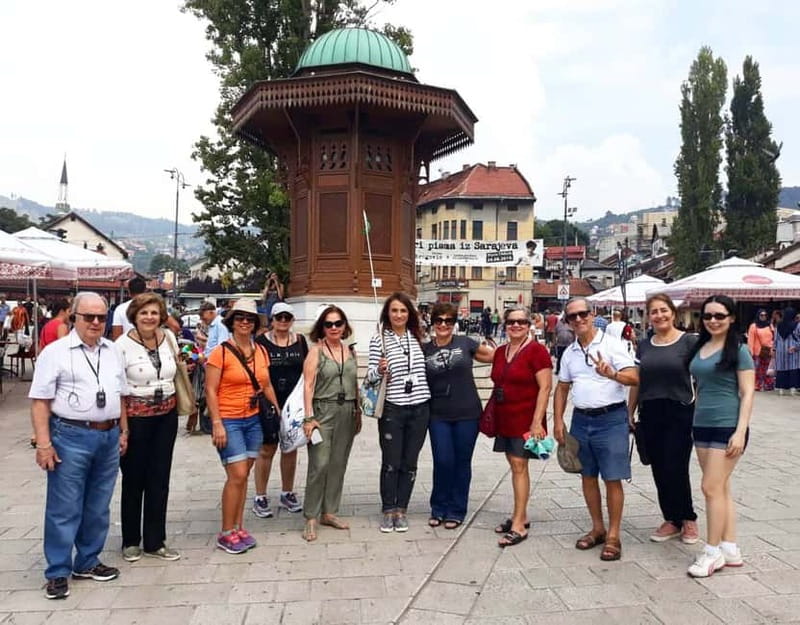
- Sebilj Fountain and Baščaršija give you the old-town heartbeat where stories naturally turn into everyday life
- City Hall and the House of Spite add architecture and urban legend-style anecdotes to the route
- Craft quarters like Bravadžiluk and Kazandžiluk help you understand how trades shaped the city
- A tight sequence of mosques, synagogues, and churches makes Sarajevo’s cultural mix feel real fast
A 3-hour Sarajevo route that helps you see the city in order
Sarajevo can feel like it has multiple cities layered on top of each other. The big win here is that the tour keeps moving forward through time and influence, so the landmarks don’t float in isolation. You get a guided walk that ties the map to the story, which is exactly what you want on a first visit.
The group experience is also set up for real interaction. People in the tour run often described how questions were welcomed and answered with care, including personal context from guides. When your guide is names like Kenan or Elma, you tend to get clear explanations and a pace that doesn’t bulldoze your curiosity.
One more reason this works: the itinerary focuses on central Sarajevo. That means you’ll spend most of your time sightseeing and very little time hunting for the next stop.
You can also read our reviews of more walking tours in Sarajevo
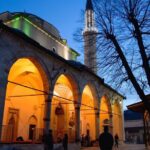
Latin Bridge to Emperor’s Mosque: where European history meets street life
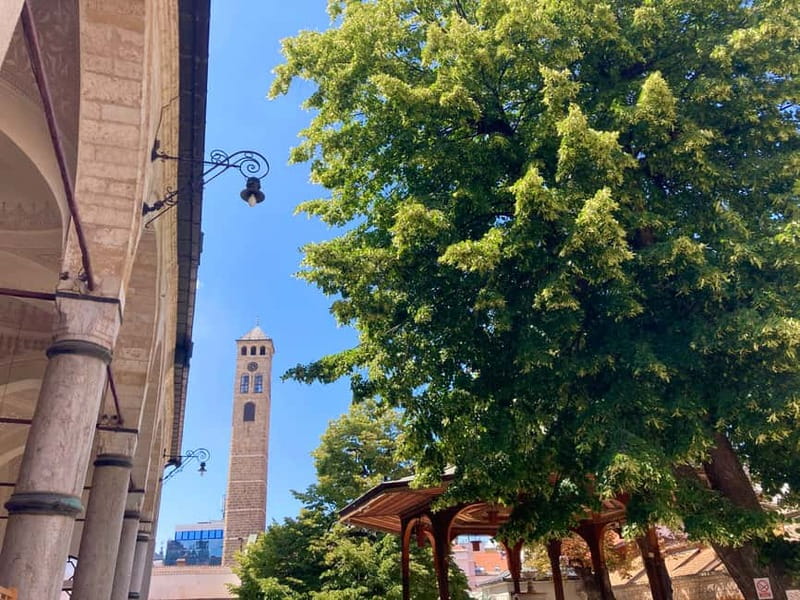
The route begins at a starting point that can vary by option (you may be joining near UPN BiH or the Insider City Tours and Excursions area). From there, you move toward the Latin Bridge for a guided stop and photo moments. Even if your interest starts with World War I, the tour’s framing helps you place why this spot matters beyond the textbook line.
Next comes the Emperor’s Mosque. A name like this signals that Sarajevo’s streets reflect shifting rulers and styles, and the guide’s job is to show you the connections. The tour then includes a quick pass by a Monastery, a short stop, and moving onward with minimal delay—good for anyone who hates long gaps between sights.
After that, there’s a brief Sarajevo Brewery stop. This is a small detour compared with the major landmarks, but it helps balance the heavy historical beats with the city’s everyday identity. You’re not just collecting monuments; you’re learning what Sarajevo feels like as a lived-in place.
Practical consideration: this section includes multiple photo stops and guided walks. If you’re visiting in very hot weather, the pace can still feel steady rather than slow, so bring water and use breaks when offered.
City Hall, a view point, and the House of Spite’s oddball legend
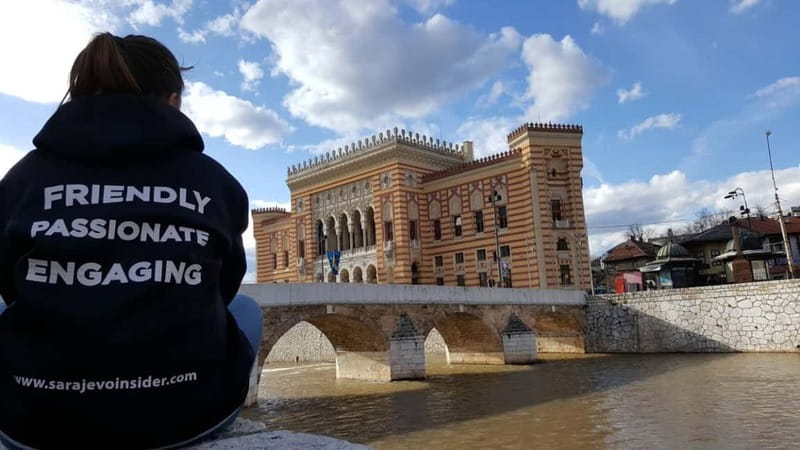
The walk continues to Sarajevo City Hall, with a stop that includes a visit and guided explanation. This is one of those buildings that turns architecture into a story you can read with your eyes. You’ll get the idea of how different eras left their mark, especially in style and urban design.
Then you’ll pass by the House of Spite. Even without turning this into a theme park stop, the name itself begs for context. Expect a guided explanation tied to local legend-style storytelling, with the sort of wink that keeps it memorable without losing the historical grounding.
After that, there’s time at a view point (about 15 minutes). That break matters. It gives you space to orient yourself after a dense string of landmarks. A well-timed overlook can make the rest of your walk click, because you start noticing how the city’s layout supports the cultural crossroads theme.
If you like your tours with some humor mixed into the serious topics, this part tends to deliver. People often highlight the guide’s ability to keep the tone balanced, not flat.
Bravadžiluk and Kazandžiluk: seeing traditional crafts in context
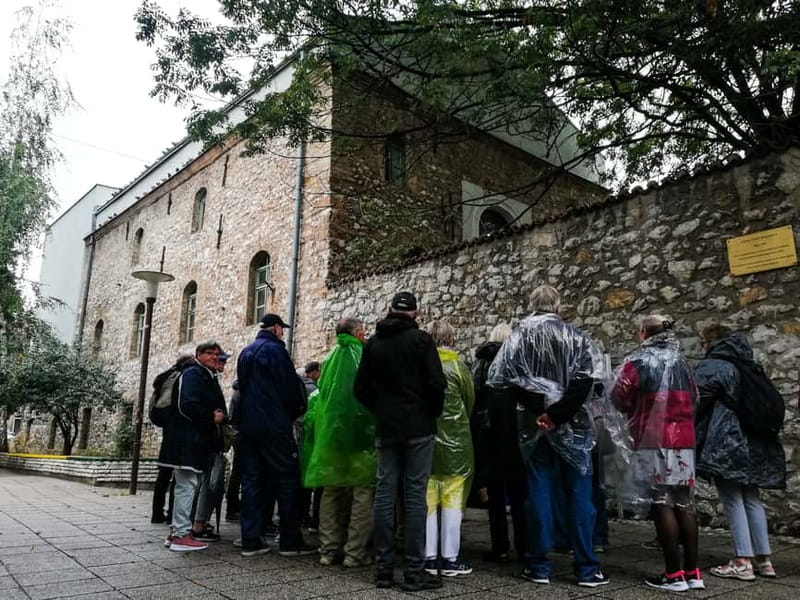
As you move from the grand landmarks toward the old-town streets, the itinerary shifts focus to neighborhoods shaped by work and trade. You’ll make stops around Bravadžiluk and Kazandžiluk, with photo and guided moments along the way.
These stops are valuable because they connect the city’s cultural mix to something practical: what people made, sold, and learned from each other over centuries. In Sarajevo, marketplaces weren’t just commerce. They were where different communities rubbed shoulders, exchanged goods, and built shared routines.
You’ll also feel the tour’s rhythm here. It’s not just stopping at a sign and moving on. You get guided context so the craft streets don’t look like a list of names. Instead, they start to feel like a system, with craft areas acting as living evidence of the city’s blending of influences.
If you’re someone who likes to buy small things on a trip, this segment can tempt you, though it’s not a shopping-only stop. The overall tone in the tour style stays focused on history and orientation first.
Sebilj Fountain and Morića Han: the old town’s meeting point
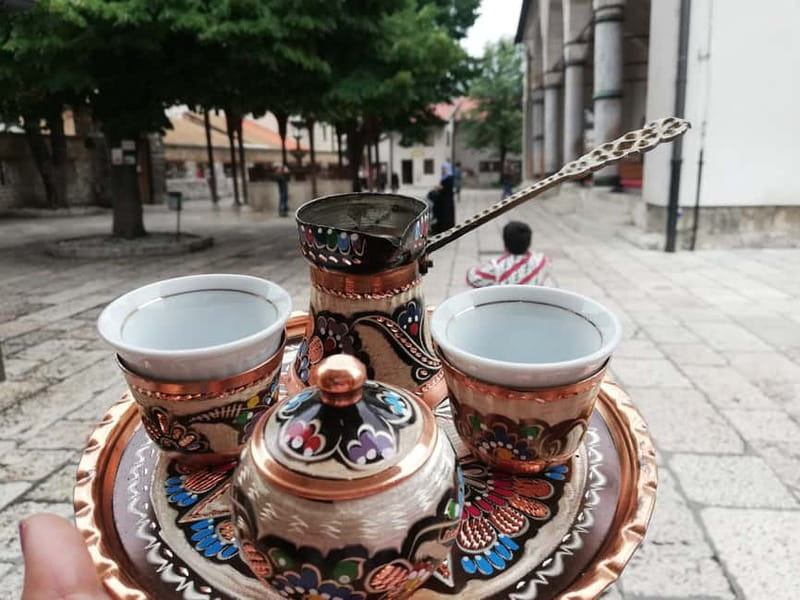
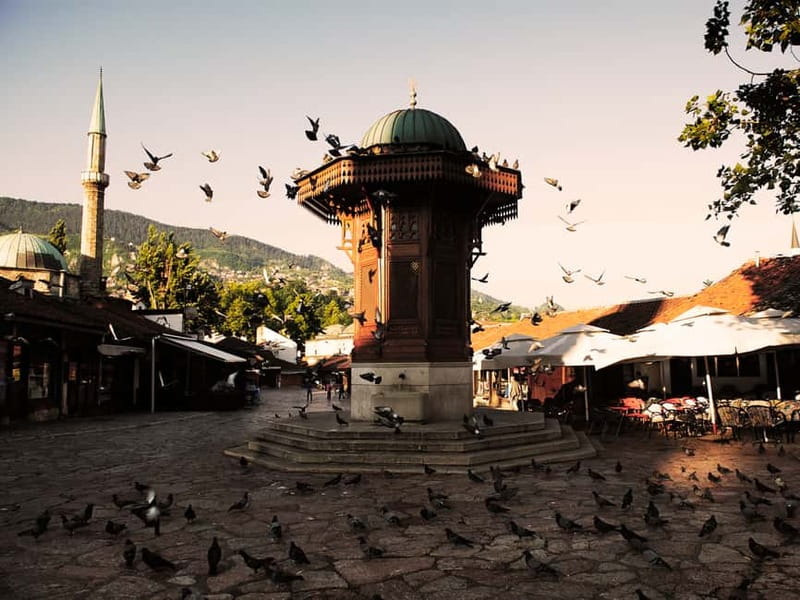
Next up is Sebilj, Sarajevo’s famous wooden landmark, with photo and guided walking time. This is one of those places where the guide’s explanation makes the scene more than just a postcard. You learn how landmarks like this become social meeting points, not just architectural objects.
Then you’ll head toward Morića Han. A han-style stop is useful because it adds texture. The tour doesn’t just throw churches and mosques at you in quick succession; it gives you a sense of older urban spaces where everyday life unfolded.
After that, there’s a Baklava ducan Sarajevo stop. Food doesn’t happen by accident on this tour. It ties to the learning goal about Bosnian cuisine and marketplace culture, and it’s a good place to take a break if your legs are getting tired.
One nice touch from the way guides run the day: at least one guide finished with Bosnian coffee and treats at a cafe called Dibek, which gives you a low-key taste of local hospitality right after the walking.
Gazi Husrev-beg Mosque and the Sarajevo Meeting of Cultures
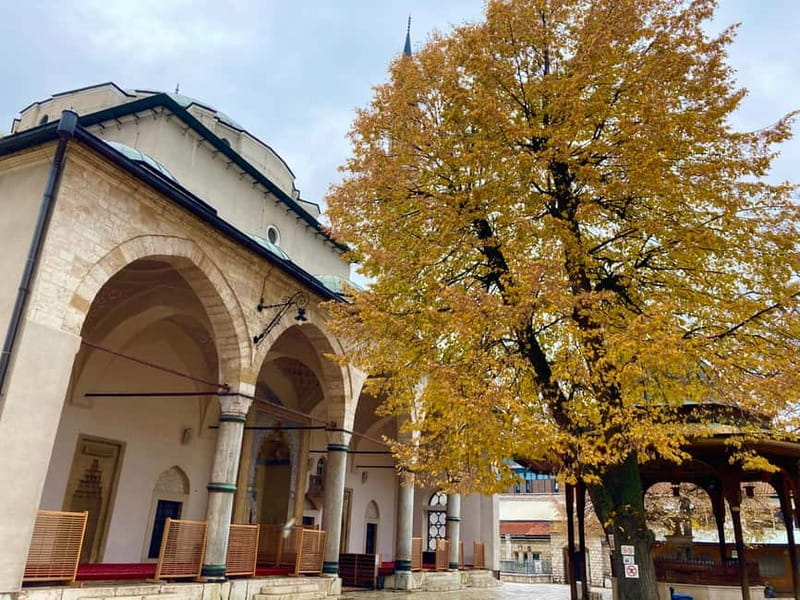
The tour then reaches Gazi Husrev-beg Mosque for a guided stop and walking segment. This is where the itinerary leans into Sarajevo’s religious and cultural coexistence theme in a very literal way: you’re moving between places of worship and learning how the city’s identity holds multiple faiths in the same urban frame.
From there you’ll stop at Sarajevo Meeting of Cultures. This part helps you connect the physical landmarks to the lesson of Sarajevo as a crossroads. The guide’s storytelling here is usually what makes the connection click, because you’re not just seeing sites—you’re learning the meaning behind the mix.
If you’re worried that this tour will be only about big events, this section is a reminder that cultural coexistence is also about daily life. It’s a strong fit if you like your history grounded in how people live, not only when kings and armies marched.
Also, keep an eye on your timing. Mosques and church interiors can involve quiet moments and rules. If you want photos, ask your guide when it’s a good time and respect the space.
Museum of the Jews of Bosnia and Herzegovina: one stop that adds depth
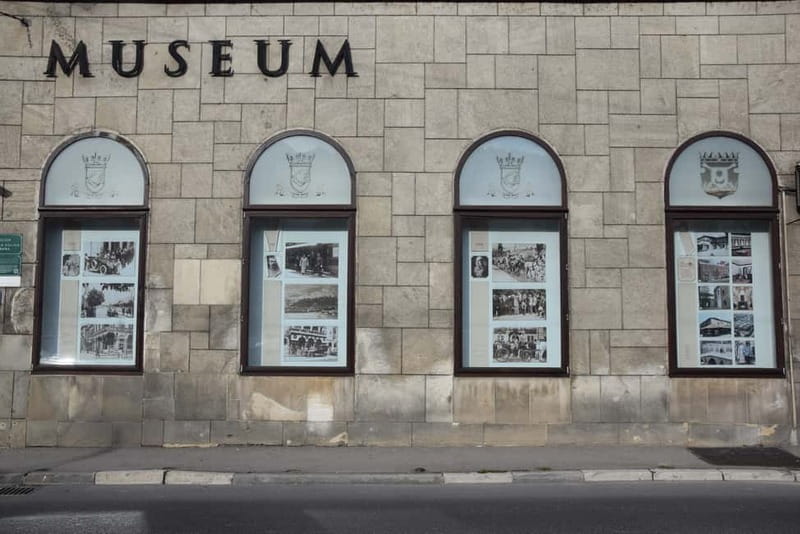
A dedicated visit to the Museum of the Jews of Bosnia and Herzegovina is a meaningful mid-to-late anchor in the tour. It gives you perspective on a community that is part of Sarajevo’s story, not an optional footnote.
This is especially helpful if you’re coming for the World War I connection through Latin Bridge. The tour’s structure tends to widen the lens afterward, showing how Sarajevo’s identity isn’t just about one headline event, but about many groups shaping the city over time.
You’ll move on after the museum, so this stop isn’t meant to drag. It adds depth, then the route continues with more places of worship and public landmarks.
Sacred Heart Cathedral, Nativity of the Theotokos, and City Market Hall
After the museum, the itinerary turns to Christian landmarks: you’ll visit Sacred Heart Cathedral, Sarajevo, and then Cathedral Church of the Nativity of the Theotokos. Having these side by side in the walk helps you see how faith diversity shows up in architecture and public presence.
Then you head to City Market Hall, Sarajevo. This is a practical turning point. Market halls are where the city’s culture becomes tangible fast, and they also make a good mental reset after heavier historical stops. Even without a formal food inclusion, you’ll likely feel ready to snack or at least grab a drink on your own.
The tour keeps returning to the same theme: Sarajevo is a city of intersections. The Catholic and Orthodox stops don’t just add variety. They reinforce the message of coexistence woven through the whole route.
Eternal Flame: the final stop that lands with weight
The closing segment brings you to the Eternal Flame, Sarajevo. Ending here gives the walk an emotional landing. It’s a reminder that Sarajevo’s story continues into modern times, not just the eras you can see in old buildings.
One reason this works well for first-timers: it gives your mental map a final anchor. After the museum, cathedrals, and market hall, you’ve gathered enough context to understand why a memorial like this matters in the city’s identity.
This is also a good moment to ask your guide for the next steps in your visit. People often praised the practical tips guides share, especially for food and what to do after the tour. If you want recommendations for your remaining hours in Sarajevo, this is the right time to ask.
What it costs and why $21 can be good value
The price is $21 per person for about 3 hours. That’s the kind of cost that feels reasonable when you compare it to what you get: a licensed tour guide plus a city map. For many visitors, the guide-led orientation alone is worth it, because Sarajevo’s landmarks are meaningful but not always obvious if you’re just walking through.
Food and drinks are not included, so you’ll likely spend extra if you want a proper Bosnian break. But that can also be a plus. You stay flexible: you can stop for coffee when you like, not when the schedule forces it.
The tour also offers private or small groups. Even when it’s not private, a smaller group tends to make questions easier and the pace less rigid. People often highlighted that the pace was comfortable, and the route avoided the kind of pushy sales feeling that ruins some city walks.
Guides and pacing: where the tour quality really lives
This tour’s star is the guide. Across the many successful experiences, a common thread is storytelling style: guides can handle serious topics while keeping the walk warm and readable. Names that show up with strong praise include Kenan, Elma, Bojan, Hamza, Maryam, and Tarek, among others.
You can also tell that guides are tuned to real travelers’ needs. People mention that the pace didn’t feel rushed and that it stayed structured without becoming monotonous. In one case, a guide even shared how the 1992 to 1995 war affected their family, which is a heavy detail, but it explains why Sarajevo’s layers aren’t just academic.
If you want a tour that gives you both history and a sense of how people talk about their city, this is a strong match. Just remember: you’ll be walking a lot, so bring the energy for it.
Should you book this Sarajevo Grand Walking Tour?
Book it if you’re in Sarajevo for a short time and want the city’s big symbols connected into one clear route. It’s also a good choice if you care about the East-West crossroads theme and want Sarajevo’s mix of mosques, cathedrals, crafts streets, and memorials handled in one afternoon.
Skip it (or consider a different style) if you’re not comfortable walking for around three hours, since it’s not designed for slower mobility needs. Also, if you hate history-heavy stops, you might prefer a shorter, more food-and-stroll focused option.
My take: for $21 and a licensed guide, this is a smart way to get your bearings fast and leave with a Sarajevo that feels human, not just scenic. If you book, wear comfortable shoes and plan on asking questions early, because that’s where the tour tends to become memorable.
FAQ
How long is the Sarajevo Grand Walking Tour?
It lasts 3 hours.
How much does it cost?
The price is $21 per person.
What’s included in the price?
You get a licensed tour guide and a city map.
Are food and drinks included?
No. Food and drinks are not included.
What languages are available for the live guide?
The tour offers live guiding in German, French, Italian, Spanish, English, Croatian, and Serbian.
Where does the tour start and where do you end?
The meeting point may vary depending on the option booked, and there are two drop-off locations listed: UPN BiH and Insider City Tours and Excursions.
Is there free cancellation?
Yes. You can cancel up to 24 hours in advance for a full refund.
Is the tour wheelchair accessible?
It’s listed as wheelchair accessible, but it is also marked as not suitable for people with mobility impairments. If you need accessibility support, it’s worth checking with the provider directly before booking.