REVIEW · SAVANNAH
Genteel and Bard’s Savannah History Walking Tour
Book on Viator →Operated by Genteel and Bard · Bookable on Viator
Savannah sounds better when someone points you in the right direction. This 2-hour walk in the Historic District pairs a live local guide with professionally recorded audio so you can hear the story clearly as you stroll.
I especially like the way the tour moves through the city’s turning points, from early Georgia through Civil War impacts and up to modern-day Savannah. It also keeps the group small, so the route feels manageable and the guide can answer questions.
One watch-out: it is a walking tour, and a couple of reviews noted you should plan on standing and walking more than you expect, especially in warm weather.
In This Review
- Key takeaways before you go
- Getting started on Bull Street: a clear, guided route with headsets
- Why the tour’s $39 price can feel like a bargain
- Stop by stop: what you’ll actually see and learn
- Stop 1: Genteel and Bard Savannah on the 1733-to-today storyline
- Stop 2: Chippewa Square and Forrest Gump’s Savannah connection
- Stop 3: Madison Square, Civil War history, and the Green-Meldrim House
- Stop 4: Mercer Williams House Museum and Monterrey Square details
- Stop 5: Savannah Historic District streets, squares, and Jones Street
- Stop 6: Lafayette Square and the stories behind Girl Scouts, electricity, Irish roots
- The headsets and audio format: helpful, but plan for comfort
- How long is it, and how hard is the walk?
- The guide makes the difference: David and Julianna stood out
- Weather and pacing: when this tour feels best
- Should you book the Genteel and Bard Savannah History Walking Tour?
- FAQ
- How long is the Genteel and Bard Savannah History Walking Tour?
- How much does the tour cost?
- What languages are offered?
- Is it a walking tour?
- Where does the tour start and end?
- Are headsets included?
- How big is the group?
- Are children allowed?
- Are service animals allowed?
- What is the cancellation policy?
- When should I book?
Key takeaways before you go
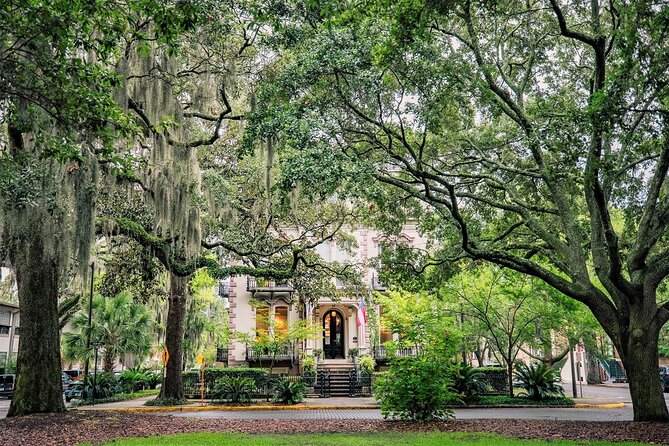
- Live guide + pro audio based on historic letters helps you catch details without turning your head every 30 seconds.
- Headsets are included, so you hear clearly without fighting the street noise.
- Small group size (max 20) keeps it personal enough for questions.
- Route hits the main squares and the “how it got that way” stops, not just photo spots.
- Wear good walking shoes; one reviewer called out the up-and-down walking as real effort.
- Ear comfort matters: some listeners found the ear-bud style less comfy (especially with tiny ear canals or hearing aids).
Getting started on Bull Street: a clear, guided route with headsets
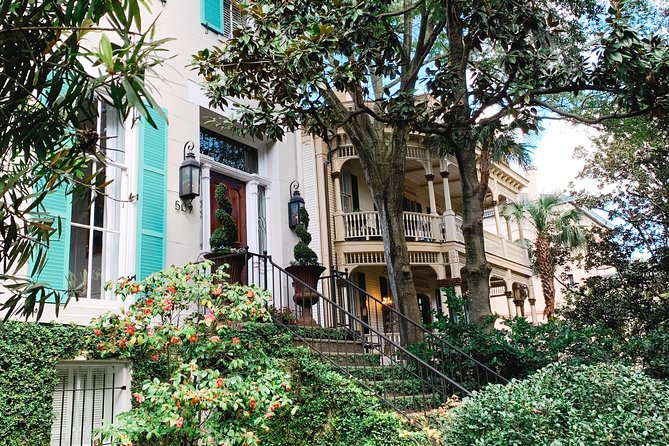
The meeting point is 151 Bull St, right in Savannah’s Historic District area. Expect a tour that starts strong and stays in motion, because you’re covering a chain of squares and landmark blocks on foot. The tour ends at 222 E Harris St, outside The Cathedral of St. John the Baptist near Lafayette Square.
What makes this format work is the sound setup. You get headsets to hear the live guide clearly while you also get professionally recorded narration. That combination matters in Savannah, where it is easy to lose a story when you’re sharing space with traffic, other tour groups, and street sounds.
Another nice detail: it’s offered in English, with morning or afternoon departures so you can match it to how you plan your day. Also, it’s a mobile ticket experience, which cuts down on last-minute check-in hassle.
You can also read our reviews of more walking tours in Savannah



Why the tour’s $39 price can feel like a bargain

At $39 per person for about two hours, you’re paying for two things at once: a live local guide and a prepared audio layer. In practice, that means you’re not only “hearing facts,” you’re getting a shaped story as you move between stops.
This also tends to be good value for first-time visitors. You’ll walk through the city’s planning logic, the squares’ purpose, and how specific families and events show up in the streets and buildings you see today. If you plan to spend more time in Savannah afterward, that context helps you look at the architecture, cemeteries, and museums with better questions in mind.
One more reason the price feels fair: the group cap is 20. Smaller groups usually translate to a smoother walk and more chances to ask questions.
Stop by stop: what you’ll actually see and learn
Stop 1: Genteel and Bard Savannah on the 1733-to-today storyline
The tour’s first stop is essentially your launchpad: Genteel & Bard Savannah. This is where you get the full immersion of Savannah’s storyline from 1733 to today, with the guide connecting themes like architecture, war times, culture, and even how movies have helped shape perceptions of Savannah.
I like this opener because it frames what you’re about to see. Savannah’s streets and squares can look orderly, but there’s a lot of backstory packed into the layout. When the guide sets the stage up front, later stops land with more meaning.
If you’re the kind of traveler who asks why things are arranged the way they are, this first segment is where your curiosity gets fuel. If you’re more of a “just show me the highlights” traveler, it still helps because it tells you what to look for as you move.
Stop 2: Chippewa Square and Forrest Gump’s Savannah connection
Chippewa Square is quick, but it packs a lot into those few minutes. Expect a focus on origins and the planned-city concept, plus the square’s significance in Savannah’s past and present.
This stop also brings in a pop-culture thread: the Forrest Gump connection and why it matters for Savannah’s storytelling today. That might sound like a novelty angle, but it’s actually practical. It teaches you how Savannah’s image travels, then you can connect it to why certain streets and scenes get attention.
You’ll also learn about key figures tied to early settlement, including James Oglethorpe (founder of Georgia), Mary Musgrove, and Chief Tomochichi, along with the Yamacraw Native Americans. The takeaway here is that Savannah’s story is not just European timelines. It’s also built from negotiations, leadership, and local realities that shaped what came next.
You can also read our reviews of more historical tours in Savannah






Stop 3: Madison Square, Civil War history, and the Green-Meldrim House
Madison Square is where the tour turns harder toward national impact. You’ll hear about Savannah’s role in the Civil War and how events here shaped what came after in the United States.
At this stop, the Green-Meldrim House is part of the view, and the narration aims to connect the square’s story to the buildings around it. These kinds of connections are the real value of a walking tour: you’re not staring at a single landmark in isolation. You’re seeing how events ripple through blocks and neighborhoods.
A practical note: this stop is short. If you want extra details, this is where the headsets and live guide format shine, because you can ask follow-up questions rather than waiting for a museum label.
Stop 4: Mercer Williams House Museum and Monterrey Square details
Next up is the Mercer Williams House Museum area. You’ll explore the beauty and elegance of Monterrey Square, with the tour pointing out landmarks in the neighborhood such as Casmir Pulaski’s monument and The Temple Mickve Israel.
What I like about this stop is the mix of themes you’re trained to notice. You’re looking at architecture and place names, but also at how heritage is represented on the ground. Savannah isn’t one story. It’s a stack of stories layered into the public streetscape.
Drawback to keep in mind: this is still mostly an outdoor walking stop. So if you want deep museum-level detail inside the Mercer Williams House Museum, you may need a separate ticket later. Think of this segment as the “what to notice” preview.
Stop 5: Savannah Historic District streets, squares, and Jones Street
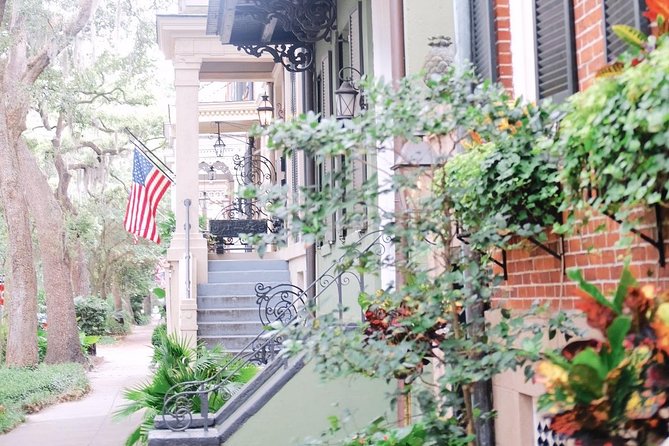
This is the segment designed for architectural awareness. You’ll take part in the architectural history of Savannah, including Jones Street—once called America’s most beautiful street—and you’ll connect that reputation to what you can still see today.
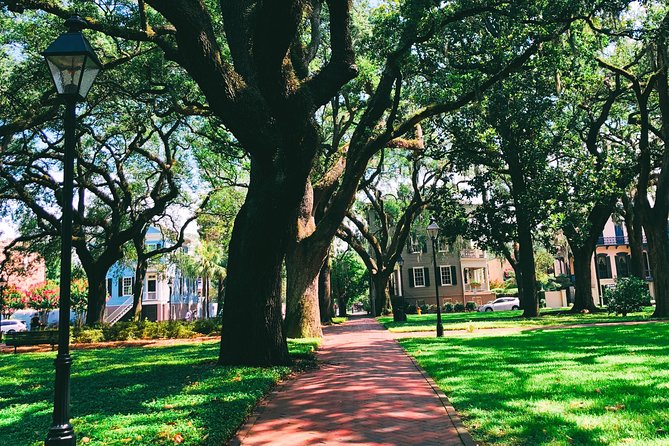
A key visual here is the live oak brick street, which serves as a center point for homes, architecture, and cultural history. If you’re the type who likes to photograph streets more than monuments, this is one of the best stops.
There’s also a practical upside: these lanes and street rhythms help you orient yourself. After this, many visitors find it easier to return to the areas later and keep track of which square is which.
One minor consideration from the tour experience feedback: a reviewer suggested the tour could include more architectural features from some of the historical buildings. If architecture is your main goal, go with a mindset of “this is a guided overview with pointers,” then follow up with longer museum or self-guided stops on your own time.
Stop 6: Lafayette Square and the stories behind Girl Scouts, electricity, Irish roots
The final stretch brings you to Lafayette Square and a set of place-based stories that feel very Savannah.
You’ll hear about Juliette Gordon Low and the Girl Scouts, Hamilton Turner Inn as the first house with electricity in Savannah, and the Cathedral of St. John the Baptist. Irish heritage is part of this stop too, tying community history to a recognizable landmark.
This is also where the tour ends, so it’s a good point to regroup and decide what you want to do next. If you’re thinking about eating, exploring nearby shops, or visiting a museum, Lafayette Square is a sensible place to land.
One of the best things about a good ending stop is it gives you closure. You’ve walked from early settlement to later community development, and now you’re at a square that links those eras to what’s still visible.
The headsets and audio format: helpful, but plan for comfort

Most tours tell you stories. This one uses technology to deliver them in layers. The headsets let you hear the guide clearly, and the tour is enhanced with an audio guide based on historic letters.
That means the guide can speak without constantly competing with the walking soundtrack of the street. It also helps when the group moves at a steady pace, because you’re not constantly trying to “catch up” to the next spoken detail.
Comfort matters, though. One review noted that the ear-bud style could be painful for people with tiny ear canals and for those using hearing aids. If that’s your situation, consider bringing something that helps your listening comfort (like any personal comfort aids you already use for audio). And if you know you’re sensitive to in-ear devices, arrive prepared.
How long is it, and how hard is the walk?
The tour is listed as about 2 hours, and the route is designed for a full Historic District loop with frequent short stops. Still, at least one review mentioned the experience ran a bit longer than expected, calling out over 2 hours.
That doesn’t automatically mean a bad thing. A longer guided walk can mean you got generous pacing or extra question time. But it does affect comfort and planning.
My practical take: plan on walking and standing through the whole experience. Bring water for warm days. Wear shoes you trust. One reviewer explicitly recommended gym shoes or good walking shoes, and I agree with that advice. Savannah sidewalks can be uneven, and you’ll want sure footing.
The guide makes the difference: David and Julianna stood out
Names that show up with high praise include David and Julianna (also seen as Juliana), plus TC. The common thread in the feedback is storytelling with local insight.
David is highlighted as a ninth-generation Savannan in one review, and the tone is personal rather than textbook. That kind of local perspective helps the facts feel connected to the city you’re seeing.
Julianna (and Juliana) is praised for passion, clear personality, and a good balance of walking and explanation. Another reviewer said this helped them plan the rest of their trip because the tour improved how they read the city.
Even if your guide differs, the overall format stays the same: you’ll be listening to a guided narrative while you walk between squares, monuments, and street scenes.
Weather and pacing: when this tour feels best
This experience requires good weather. Savannah can be hot and humid, and rainy conditions can make sidewalks slick and uncomfortable. If conditions aren’t ideal, the tour may be canceled and you’ll be offered a different date or a full refund.
Timing also affects how enjoyable it feels. If you’re visiting in colder months, the walking may feel easier. If it’s warm, take the “bring water” advice seriously.
Should you book the Genteel and Bard Savannah History Walking Tour?
Yes, if you want a guided route that turns Savannah’s layout into a story. This tour is strong for first-timers who want to understand how the city was planned, why the squares matter, and how major historical moments show up in the streets and landmarks.
I’d especially recommend it if you like:
- guided walking with audio support
- storytelling tied to specific places (not random facts)
- a format that helps you orient quickly for the rest of your trip
I’d think twice if:
- you need lots of time at one building indoors (this is mostly a walking-and-stop experience)
- you have strong sensitivities to in-ear audio
- you hate long standing/walking segments
If your goal is to leave Savannah feeling like you can read the city instead of just seeing it, this is a smart place to start.
FAQ
How long is the Genteel and Bard Savannah History Walking Tour?
It runs about 2 hours.
How much does the tour cost?
The price is $39.00 per person.
What languages are offered?
The tour is offered in English.
Is it a walking tour?
Yes. You’ll be walking and stopping at multiple locations throughout the Historic District.
Where does the tour start and end?
It starts at 151 Bull St, Savannah, GA 31401 and ends at 222 E Harris St, outside of The Cathedral of St. John the Baptist.
Are headsets included?
Yes. Headsets are provided so you can hear the guide clearly.
How big is the group?
The tour has a maximum of 20 travelers.
Are children allowed?
Children must be accompanied by an adult.
Are service animals allowed?
Yes, service animals are allowed.
What is the cancellation policy?
You can cancel for a full refund if you cancel at least 24 hours in advance. The experience requires good weather; if it’s canceled due to poor weather, you’ll be offered a different date or a full refund.
When should I book?
On average, this tour is booked about 20 days in advance. Booking ahead is a good idea.