REVIEW · SPLIT
SPLIT-PREMIUM Emperor’s Walking Tour for History Lovers + Museum
Book on Viator →Operated by Walking Tour of SPLIT · Bookable on Viator
Roman walls, living streets, and real stories. This tour connects Diocletian’s Palace (UNESCO) to the everyday streets of Old Split, with stops that make the city’s layers feel obvious instead of confusing. You’ll also start and finish right on the waterfront so you can get oriented fast.
I love the small-group feel—you don’t get herded. I also love the way guides like Joško and Daniela turn architecture into a timeline you can follow, with humor that keeps the facts from going stale.
One consideration: the group tour is adults only, so if you’re traveling with kids or teens, you’ll want the private option instead.
In This Review
- Key highlights to look for
- Why this Emperor walk works for history lovers in Split
- Starting at Riva: the easiest way to get your bearings
- Diocletian’s Palace: gates, emperor spaces, and the city that grew from them
- What about the substructures?
- Old Split streets: medieval life layered on top of Roman planning
- Roman gods and local heroes: the stories you’ll carry with you
- The Golden Gate, City Clock, and Temple of Jupiter: the landmarks that stick
- Museum add-ons and what costs extra
- Price and group size value: what $30 really buys you
- Who should book this tour, and who should choose differently
- Should you book this tour?
- FAQ
- How long is the Split Emperor’s Walking Tour?
- What’s the price per person?
- What’s included in the tour price?
- What costs extra during the tour?
- Is it really adults only?
- Where does the tour start and end?
- What if the weather is bad or I need to cancel?
Key highlights to look for
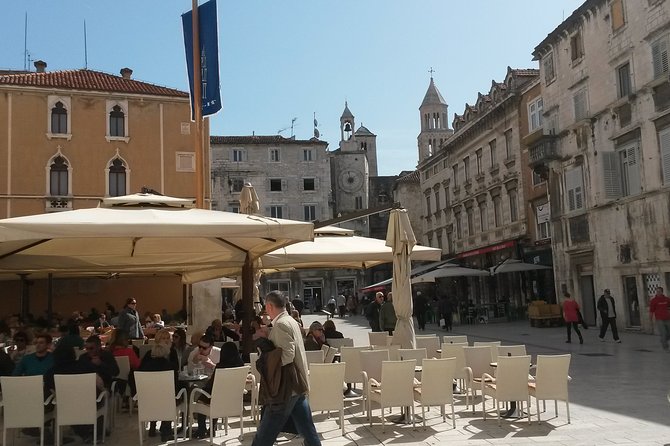
- UNESCO Diocletian’s Palace at street level: big-ticket Roman remains, explained in plain language.
- A licensed resident guide: local perspective, not a script.
- A compact route that hits the core landmarks: Peristyle, Golden Gate, Riva promenade, plus Old Split squares.
- Optional add-ons are truly optional: Diocletian’s Cellars (extra) and Temple of Jupiter interior (extra).
- Max 15 people: easier questions, better pacing than big bus-style tours.
Why this Emperor walk works for history lovers in Split
Split can feel like a puzzle at first: Roman stone mixed with medieval streets, all happening right where people live. This walking tour is built for that exact problem. Instead of jumping randomly between sights, it nudges you through a logical path from the palace heart to the surrounding old town.
At the center is Diocletian’s Palace—an emperor’s retirement complex from the early 300s—that later became a real neighborhood. You’ll learn how the Romans planned it, then how later generations reused it. That shift—from planned palace to living city—is the storyline that makes the whole walk click.
The best part is that you get more than photo stops. The guide keeps pointing out what you’re looking at: gates, squares, and key street lines. Once you understand those, Old Split stops looking like one long maze.
You can also read our reviews of more walking tours in Split


Starting at Riva: the easiest way to get your bearings
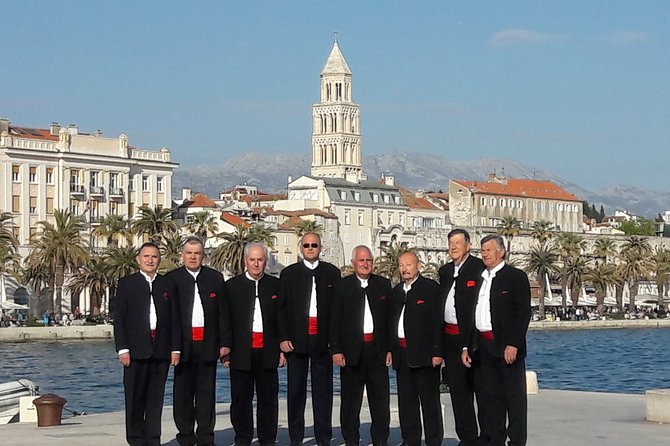
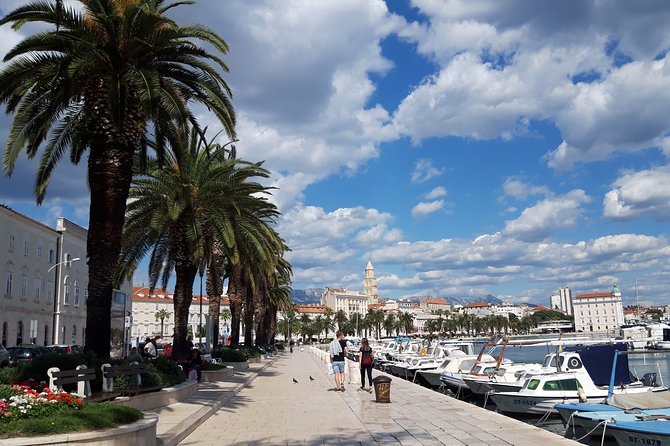
The tour starts at Obala Hrvatskog narodnog preporoda 22, near the waterfront, and finishes back at the same meeting point. That matters more than it sounds. You’re not starting deep in alleys with no context. You begin with the kind of waterfront reference point that helps you map the rest of the day.
Riva Harbor (on the Riva promenade) is also a good “volume knob” for Split. You’ll feel how this city works: ships and sea air in the background, then history tightening around you as you move inland. If you’re arriving by foot from a cruise ship port, this location is usually an easier starting point than the palace side streets.
Practical tip: plan for sun and heat. Even though the route is only about 2 hours, it’s still real walking on stone and uneven surfaces. If you’re visiting in high summer, an early start can make the difference between enjoying it and simply surviving it.
Diocletian’s Palace: gates, emperor spaces, and the city that grew from them
Most of the “wow” comes from how Diocletian’s Palace is still visible as a planned system. You’re not just looking at ruins—you’re walking inside a layout that once organized daily life for an emperor and his world.
You begin with the Palazzo di Diocleziano stop, with a guided tour focus on the UNESCO palace built around 305 AD. The guide’s goal here is simple: help you recognize the palace as a machine—walls, entrances, and interior squares that shaped movement.
Next you’ll transition into the palace’s famous spine through the The Golden Gate area. The Golden Gate is one of the main entrances, and it’s also a great place to understand how the Romans controlled access. You’ll see where you’d enter if you were part of the emperor’s sphere, then compare it to how people move through today.
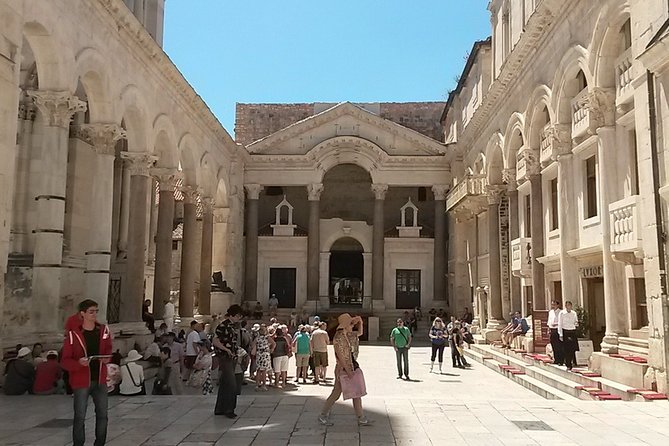
Then comes the Peristyle, the palace’s Emperor’s Square—often described as the heart of Split town. This is where the city’s old-to-new story becomes tangible. It’s the kind of space where you can stand back, look around, and realize: this was designed for power and ceremony, and now it’s a public living room.
From there, the tour continues to the Vestibulum of Diocletian’s Palace, the main entrance to the emperor’s private residence. This is a subtle but important stop. You’ll get a clearer sense that the palace wasn’t only walls and corridors. It separated public and private zones in a way you can still read on the ground.
What about the substructures?
The Diocletian Palace Substructures stop is described as a best-preserved part of the palace, but it is marked as not included. In practice, this is where you may decide whether to add the museum-type experience and pay the separate ticket that’s required.
Also, you may want to pause to notice how the tour balances outside views with the deeper palace story. If you’re only interested in the basics, stick to the included street-level segments. If you want the underground layer, plan for the extra cost (more on that later).
Old Split streets: medieval life layered on top of Roman planning

After you’ve got your palace bearings, the walk shifts to Old Split and the medieval town around it. This is where Split stops being “Roman only.” You start seeing how the city grew after the empire era, while still using Roman bones.
Old Split is the part that feels the most like walking through a working neighborhood. You’ll follow the guide through key outdoor stops that explain why certain corners mattered, and how older street patterns shaped later development. The goal isn’t to memorize names—it’s to understand why those names exist and what they refer to.
A quick highlight is the stop near the Cathedral of Saint Domnius, seen from the outside. Even without entering, it’s a useful point on your map. It helps you connect the palace-era world to later Christian-era Split, without forcing you into a ticket line for every stop.
You can also read our reviews of more historical tours in Split


Roman gods and local heroes: the stories you’ll carry with you
One of the most satisfying parts of this tour is the mix of Roman and Croatian references. It prevents history from feeling like a dead museum. You get the sense that cultures added to the same spaces over time.
You’ll see The Peristyle first, then move toward Grgur Ninski Statue. This stop is about one of Croatia’s important historical figures. It’s not just about a statue pose. The guide’s approach here is to explain why this person matters in Croatian cultural memory, and how that memory lives in public space.
Then you’ll reach Fruit’s Square (Trg Brace Radic), where you’ll see the statue of Marul, the father of Croatian literature. This is one of those stops that surprises people. You came for Rome, and you end up with a reminder that identity and language are just as much part of a city’s history as architecture.
After that, the tour moves through Narodni Trg, one of Old Town’s biggest public squares. The guide uses it to show how daily civic life works in a place packed with ancient walls.
The Golden Gate, City Clock, and Temple of Jupiter: the landmarks that stick
If you want a few “anchor points” to remember Split by, these stops deliver.
You’ll see the City Clock, described as about 500 years old, and notable as a 24-hour clock. This isn’t just a detail for history nerds. It tells you the city’s timekeeping culture changed over centuries, and yet the landmark stayed visible enough to become part of everyday reference.
Next is the Temple of Jupiter, mostly from the outside, with an optional look inside. The fact that the interior is optional keeps the tour flexible. If you’re museum-fatigued, you can enjoy the exterior context and keep the pace. If you want more, you can pay for the inside visit when offered.
All along, the guide connects these landmarks back to the palace layout and the way Split formed a new identity around old structures. That’s why your photos will look better later. When you know what you’re capturing, you don’t just collect images—you collect understanding.
Museum add-ons and what costs extra

Two parts can involve extra cost beyond the $30 tour price:
- Museum of Diocletian’s Cellars is not included, listed at €10 per person.
- Temple of Jupiter interior is marked as not included (the outside is included).
In addition, the Diocletian Palace Substructures segment is also marked not included. The tour still gives you the main story without those extras, but if you’re the type who wants the deeper physical layers, budget for at least one paid add-on.
My advice: choose based on what you like. If you enjoy outdoors architecture and quick context, stay with included stops. If you want the underground or more enclosed museum-type portions, add the cellars. That’s usually the best return for people who want to see how life continued beneath the palace walls.
Price and group size value: what $30 really buys you
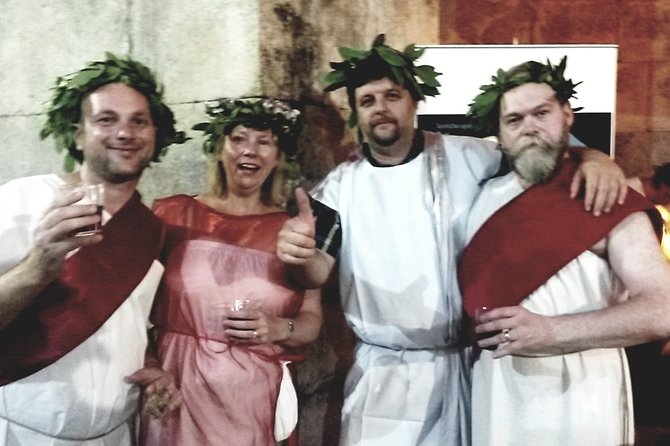
At $30 per person for about 2 hours, the value is strongest when you factor in the guide and the format. You’re paying for a licensed resident guide, a custom itinerary, and a route designed to connect the dots between palace and city.
The group size helps a lot. The tour caps at 15 and needs at least 4 travelers to run. In other words, you’re not competing for attention with a crowd. That makes a real difference at Diocletian’s Palace, where small details can get missed if you’re just moving fast with 20 other people.
Also, it’s offered in English and uses a mobile ticket. That’s the kind of practical detail that keeps you from wasting time at check-in points.
From the guide experience side, two names show up again and again in the kind of tours this one delivers: Joško and Daniela. People consistently highlight humor plus clear explanations, and they also mention the guide going out of the way to help with photos and even restaurant suggestions afterward. That kind of help isn’t required, but it’s a sign you’re getting a real local guide, not a timed script.
Who should book this tour, and who should choose differently
This is a strong fit if:
- You love history you can see—Roman planning, later reuse, and the way city life grew around it.
- You want a guided walk that stays focused on architecture and historical context.
- You prefer smaller groups where you can ask questions.
This is not the best fit if:
- You’re traveling with teens or kids and planned to join the group tour. The group tour is adults only, and the private tour is for all ages.
- You hate walking on stone and don’t do well with sun. The tour depends on good weather, and it’s an outdoor route.
One more note: this is a real history-focused route. If you’re expecting Game of Thrones style narration, you’ll likely have to spot those locations on your own. The architecture is still the point, and it will reward you either way if you’re looking with curiosity.
Should you book this tour?
If you want the fastest path to understanding Split’s most important site—Diocletian’s Palace—this is an easy “yes.” The route hits the key landmarks that make the rest of the city make sense, and the small-group setup keeps the experience human.
Book it if you value clear storytelling, local perspective, and a walk that doesn’t feel like a rushed checklist. Consider skipping or adding only what you want if you’re sensitive to heat, or if you want a more family-friendly schedule via a private option.
Either way, if you’re the kind of visitor who likes to come away with more than photos, this one fits.
FAQ
How long is the Split Emperor’s Walking Tour?
It runs for about 2 hours.
What’s the price per person?
The price is $30.00 per person.
What’s included in the tour price?
You get a licensed resident guide, a custom-designed itinerary and tour organization, and the tour is available as a group adults-only experience. A mobile ticket is also part of the offering.
What costs extra during the tour?
The Museum of Diocletian’s Cellars is not included and is €10.00 per person. The Temple of Jupiter interior is also listed as not included. Diocletian Palace Substructures are not included.
Is it really adults only?
Yes, the group tour is adults only and is not recommended for guests under age 18. A private tour option is available for all ages.
Where does the tour start and end?
The tour starts at Obala Hrvatskog narodnog preporoda 22, 21000, Split, and ends back at the same meeting point.
What if the weather is bad or I need to cancel?
The tour requires good weather. If it’s canceled due to poor weather, you’ll be offered a different date or a full refund. You can cancel for a full refund up to 24 hours in advance.