REVIEW · ROME
Rome: Moonlight Guided Walking Tour – Free for Kids
Book on GetYourGuide →Operated by Carpe Diem Tours · Bookable on GetYourGuide
Rome at night feels like Rome with the volume turned down. This Moonlight Guided Walking Tour takes you through the city’s biggest landmarks in a cooler, quieter rhythm, while a local guide connects the dots between what you see and how Ancient Rome actually worked.
I love the way the tour builds in photo moments and iconic stops, from Piazza Navona to a Colosseum overlook. I also like that it’s a small-group style experience with guides who know how to keep kids interested, including families who note they could still learn without everyone melting down.
The main thing to consider is that it’s still a walking tour. Two hours means comfortable shoes matter, and very young kids may need a calmer pace or a quick end if the little legs start waving the white flag.
In This Review
- Key highlights you’ll feel quickly
- Why Moonlight Changes Rome’s Biggest Sights
- Starting at Piazza Navona: The Launch Pad for Ancient Rome
- Pantheon Pass-By: Quick, Classic, and Worth Registering
- Sant’Ignazio di Loyola: The Night Surprise Church
- Galleria Sciarra to Trevi Fountain: Cobblestones, Legends, and Lighting
- Piazza Venezia and Trajan’s Column: Where Empire Gets Literal
- The Colosseum Finale: A Secret View Worth the Walk
- Price and Value: Is $29 for Two Hours a Fair Deal?
- Who This Tour Fits Best (And Who Might Skip It)
- How the Guide Keeps the Pace Working
- What to Bring for a Comfortable Night
- Should You Book This Moonlight Walking Tour?
- FAQ
- How long is the Rome moonlight guided walking tour?
- Where do I meet the guide?
- Is this tour free for kids?
- What language is the live guide?
- What major sights will we see during the walk?
- What is included in the ticket price?
- What should I bring?
Key highlights you’ll feel quickly
- Moonlit landmarks without daytime crowds squeezing your photos
- Piazza Navona’s Four Rivers fountain as the perfect first wow moment
- Trevi Fountain legends explained while you’re surrounded by the right atmosphere
- Imperial Rome viewpoints along Via dei Fori Imperiali and Trajan’s Column
- A final Colosseum panorama from a picture-perfect spot
Why Moonlight Changes Rome’s Biggest Sights
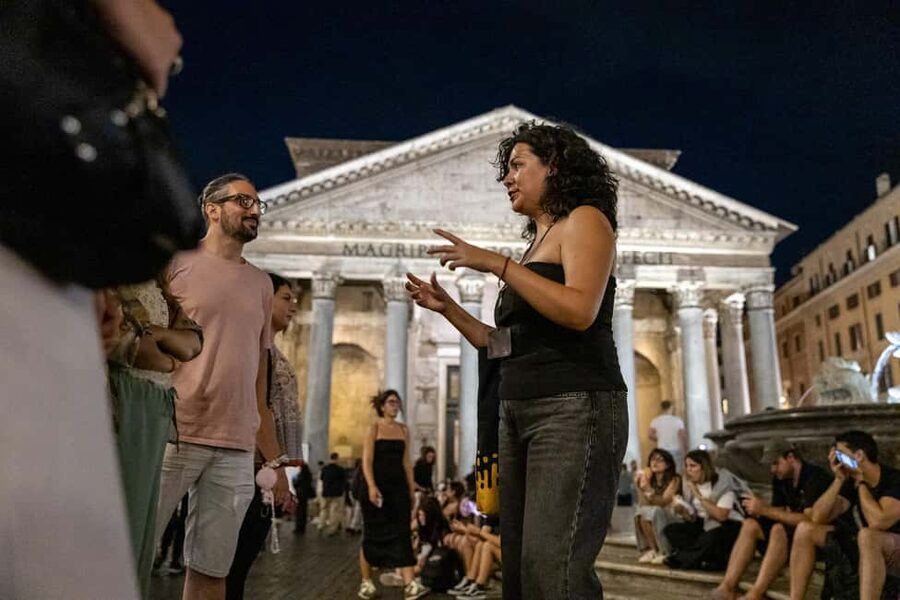
Daytime Rome is impressive. Nighttime Rome is slightly more secretive, and that matters. In the evening, you get soft lighting on stone, calmer streets, and that feeling that the city is watching you back.
The tour leans into that mood. You’re moving from landmark to landmark, but you’re also getting the story behind them, so the buildings aren’t just backdrops. You’ll start to see how Rome’s power, religion, and daily life all overlap in a tight walking loop.
You can also read our reviews of more walking tours in Rome


Starting at Piazza Navona: The Launch Pad for Ancient Rome
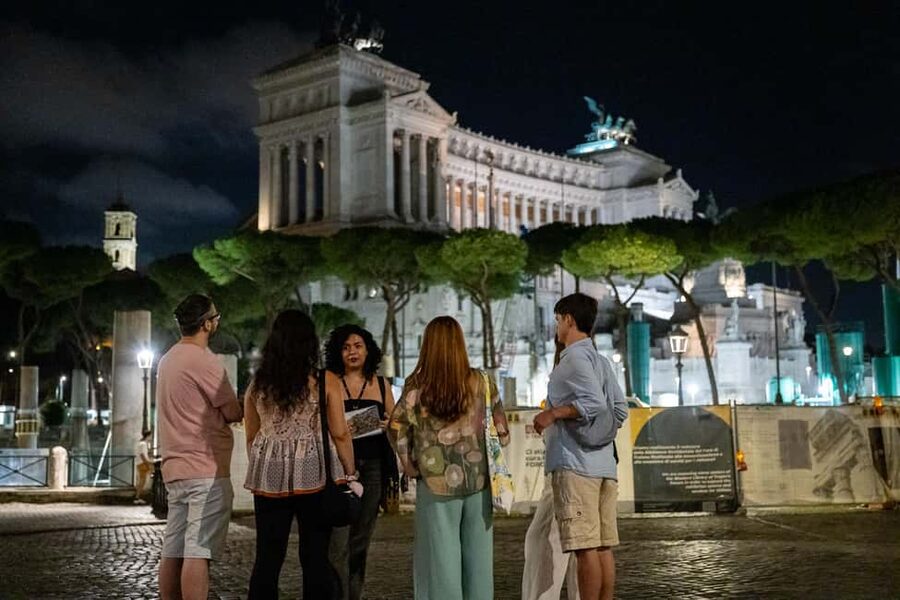
Meeting can vary based on which start option you pick, with common locations around Piazza di Pasquino and Piazza d’Aracoeli. Once you’re together, you’re guided into the action at Piazza Navona.
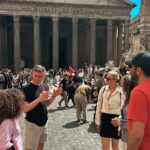
Piazza Navona is one of those squares that instantly explains Rome’s talent for spectacle. Your first guided stretch centers on the famous Fountain of the Four Rivers. The trick here is timing: at night, the fountain looks extra dramatic, and it’s easier to focus on details like the sculpture work without fighting daytime crowds.
You’ll also get a look that functions like a roadmap. From here, the guide points out what you’re seeing now and what it replaces from earlier eras, so the city feels less like a list and more like a timeline.
Pantheon Pass-By: Quick, Classic, and Worth Registering
Next comes a pass by the Pantheon area. You won’t be stopping to enter (based on the flow you’ll follow), but it’s still a smart move. The Pantheon is one of those sites you notice even at a distance, because it’s simply shaped to dominate the skyline.
A short stop like this works well on a night tour. You don’t lose too much time, but you still get the emotional beat of seeing it lit up. If you’re the type who likes architecture first and facts second, this is the perfect setup.
Sant’Ignazio di Loyola: The Night Surprise Church
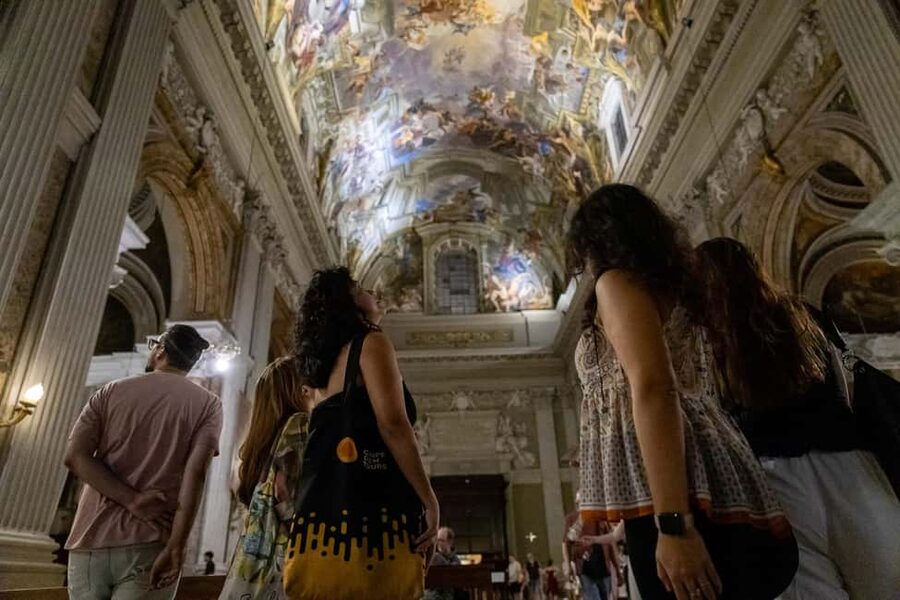
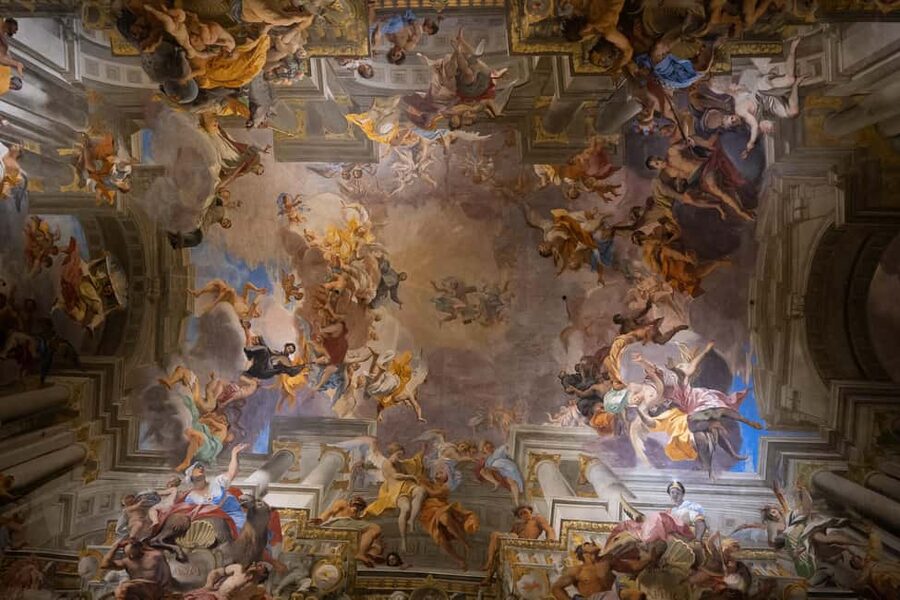
The tour then includes a guided visit at Church of Sant’Ignazio di Loyola. This stop earns its keep because it brings you from Ancient Rome’s public spaces into something later and very Roman: dramatic Catholic art that’s basically built for awe.
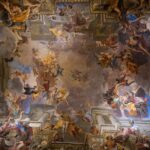
The highlight here is the church’s famous illusion-style ceiling effect, often described as a striking fake dome. On a night tour, that kind of visual trick feels even more playful because the lighting inside usually makes the effect pop.
Practical note: churches can get noisy outside, but once you’re inside, you’ll have a much better chance to hear the guide’s explanation and ask questions. It’s a good contrast against the open-air landmarks.
Galleria Sciarra to Trevi Fountain: Cobblestones, Legends, and Lighting

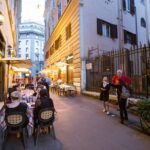
After the church, you pass through Galleria Sciarra, then move toward the evening’s big romance stop: Trevi Fountain.
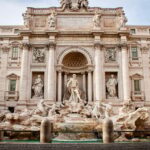
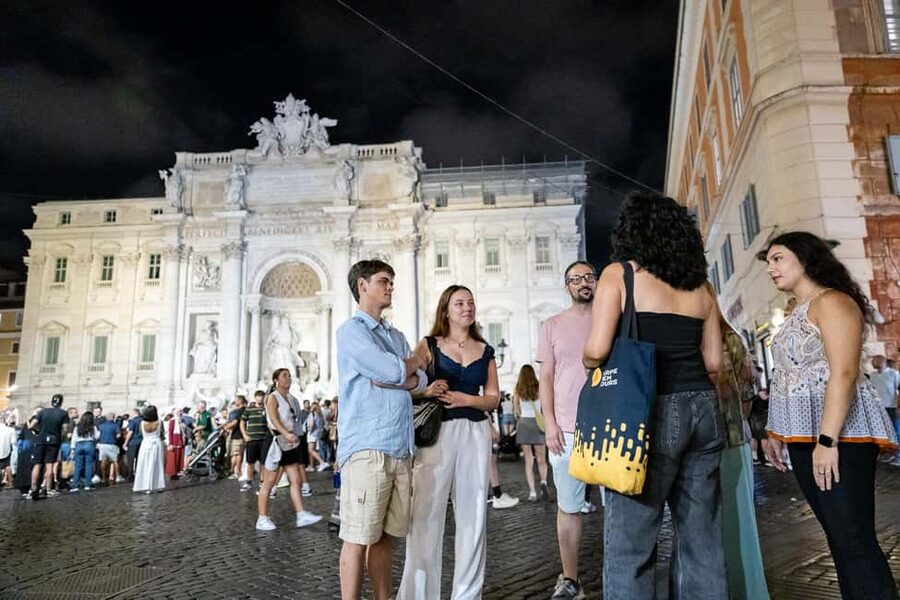
Trevi at night is a different beast. The streets leading in feel more intimate, the water looks brighter against the dark, and the whole area becomes a stage for stories. Your guide explains the fountain’s history and the legend tied to the coin toss, so you’re not just watching tourists toss change—you’re understanding what the ritual means in Rome’s storytelling tradition.
You’ll also have time for photos, and the tour includes a short break where you can pause for photos or grab a refreshment on your own. Since food and drink aren’t included, this is where you can keep it simple: water, a quick snack, or just a breather before the bigger walking push toward the Forums.
You can also read our reviews of more guided tours in Rome


Piazza Venezia and Trajan’s Column: Where Empire Gets Literal
Next up is Piazza Venezia, with a stop guided around the grand Vittorio Emanuele II monument. The guide’s focus shifts from ancient structures to modern Rome’s way of building over old layers—something you’ll feel throughout this tour.
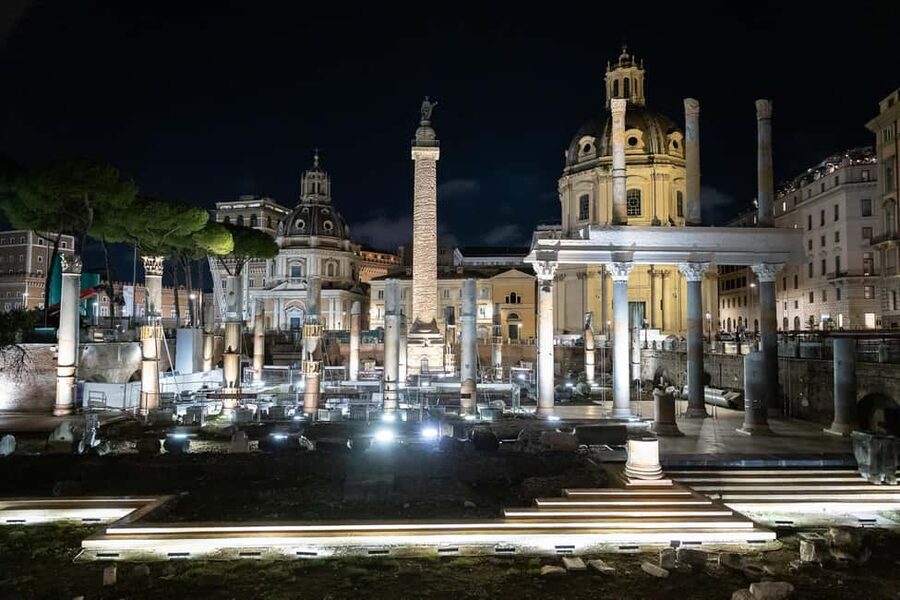
Then you move to Trajan’s Column for a guided segment. This stop matters because it’s not just another monument—it’s a storytelling object in stone. The column visually explains how Trajan presented power, wars, and identity.
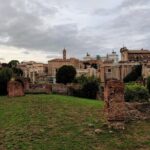
From there, you walk along Via dei Fori Imperiali, where you get that long visual corridor effect: illuminated statues of emperors, columns, temples, triumphal arches, and the sense of ancient streets extending out in front of you. It’s the part of the tour where your brain starts connecting the “left-over ruins” idea to the bigger reality of a working imperial landscape.
The Colosseum Finale: A Secret View Worth the Walk
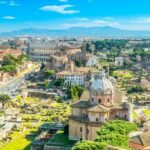
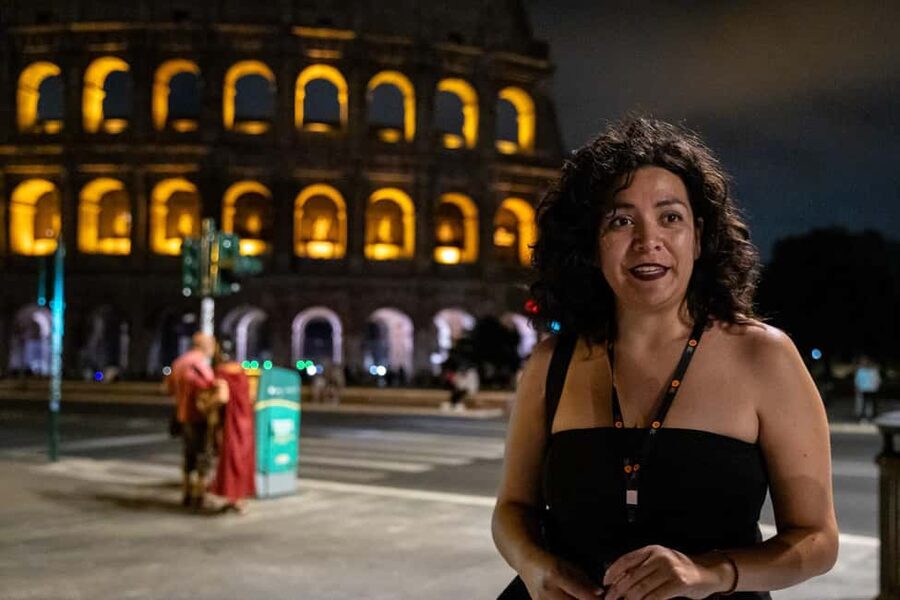
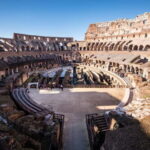
You finish with a picture-perfect viewpoint overlooking the Colosseum. You’ll know you’re close because the tour saves this for last, when the lighting is at its most dramatic.
Ending this way is smart. You’ve spent the night learning how Rome expressed authority through buildings, arches, and public spaces. Then you get the big symbol—lit and framed—so everything clicks into place without turning the tour into a sprint.
Drop-off can be Piazza Navona or at the Colosseum area, depending on your tour option. Either way, plan for a smooth exit: this is the point where your feet will want a taxi or a gelato run.
Price and Value: Is $29 for Two Hours a Fair Deal?

At $29 per person for about 2 hours, this is strong value if you want a guided hits-and-story route. You’re not paying for sit-down museum time here. You’re paying for someone to help you see what you’d miss on your own—especially at night, when the lighting changes how you interpret shapes and details.
You also get practical structure: a local, English-speaking guide, city highlights, and “hidden gems” woven between the famous stops. That matters on a first trip because Rome’s center can feel like chaos if you’re not given a path.
One thing to keep expectations right: food and drink aren’t included. Still, the tour has a built-in break for photos or a refreshment, so you’re not trapped on a nonstop march.
Who This Tour Fits Best (And Who Might Skip It)
This is a great fit if:
- You want a first-night orientation so you can plan the rest of your trip with confidence.
- You prefer night views over daytime heat and crush.
- You’re traveling with kids and want a guide who can keep them engaged (many families highlight how the pace works and how interactive stops can feel).
It might be less ideal if:
- You’re hoping for lots of long indoor time or ticketed entrances. This is a walking-and-looking tour, with passes and guided segments rather than a museum marathon.
- You or your group has mobility limits. Comfortable shoes are a must because you’re covering multiple areas in a tight evening window.
How the Guide Keeps the Pace Working
Guides play a huge role in whether a walking tour feels like fun or like homework. The strongest comments point to guides who keep things moving, tell stories with personality, and manage attention for mixed ages.
It’s also common to see mention of guides like Sharon, Dan, Alina, Csenge, Sila, and Mary—names that show up repeatedly with the same theme: good pacing, good explanations, and time for photos. You’ll feel that in the way the tour breaks up big landmarks with smaller guided moments and side streets.
If your group includes kids, you’ll likely appreciate that the tour doesn’t treat families as an afterthought. Still, if you have a very young child, bring a realistic plan for extra patience and the option to end early.
What to Bring for a Comfortable Night
You don’t need anything fancy. The essentials are:
- Comfortable shoes
- Comfortable clothes
You’ll also want to be ready to stop for photos at multiple points. The tour is designed around illuminated monuments, so part of the experience is seeing Rome in low light and capturing it as you go.
Should You Book This Moonlight Walking Tour?
I’d book it if you want an efficient way to see major Rome sights with context, and you’re excited by the idea of walking through the city when it feels calmer. For families, it also has an advantage: it’s built for a pace that can keep kids engaged longer than you’d expect.
Skip it only if your ideal Rome day involves long indoor visits or you’re trying to avoid walking entirely. Otherwise, this is a solid, straightforward way to experience the Eternal City at its most atmospheric—moonlight on stone, legends attached, and a Colosseum view at the end that makes the whole route feel worth it.
FAQ
How long is the Rome moonlight guided walking tour?
It lasts 2 hours.
Where do I meet the guide?
The meeting point may vary depending on the option booked, with starting locations that can include Piazza di Pasquino and Piazza d’Aracoeli.
Is this tour free for kids?
Yes, it’s listed as free for kids.
What language is the live guide?
The tour offers a live guide in Spanish and English.
What major sights will we see during the walk?
You’ll see stops and viewpoints around Piazza Navona, Pantheon (pass by), Sant’Ignazio di Loyola, Trevi Fountain, Piazza Venezia, Trajan’s Column, and Via dei Fori Imperiali, with a final viewpoint overlooking the Colosseum.
What is included in the ticket price?
Included are the guided walking tour, a local tour guide, city highlights, and hidden gems.
What should I bring?
Bring comfortable shoes and comfortable clothes.