REVIEW · ROME
Rome: Fountains and Squares Small-Group Walking Tour
Book on GetYourGuide →Operated by romanholiday.travel & tours · Bookable on GetYourGuide
Baroque Rome hits fast, and it keeps going. This small-group walking tour strings together the Spanish Steps area, Piazza Navona, the Pantheon inside, and ends at Trevi Fountain, with a licensed English guide guiding you through centuries of design.
I especially like how the route mixes big, classic landmarks with a couple of left-turn moments—like Bernini’s dramatic fountain and the trompe l’oeil illusion at Sant’Ignazio Church. You get a guide who can make the city’s visuals make sense, and the pace is built for actually seeing things, not just passing by.
One possible drawback: you’re on your feet for most of the 2.5 hours, with church dress rules (shoulders and knees covered) and no stroller or wheelchair options.
In This Review
- Why this tour works so well
- Key highlights you’ll remember
- From the Spanish Steps to Trinità dei Monti: start strong
- Piazza di Spagna and Bernini’s half-sunken ship
- Piazza Navona: Domitian’s stadium becomes Baroque set design
- Walking to the Pantheon: stepping into the Roman world
- Marcus Aurelius Column and the Gladiator connection
- Saint Ignatius Church and trompe l’oeil that fools your eyes
- Trevi Fountain: coin toss, crowds, and how to enjoy the finale
- Price, time, and value for money
- What to bring (and what to skip)
- Who should book this tour
- Quick booking advice before you commit
- Should you book the Rome Fountains and Squares Small-Group Walking Tour?
- FAQ
- How long is the tour?
- Where do I meet the guide?
- What major sights are included on the walk?
- Can I enter the Pantheon during the tour?
- What should I wear for this tour?
- Is this tour wheelchair or stroller friendly?
Why this tour works so well
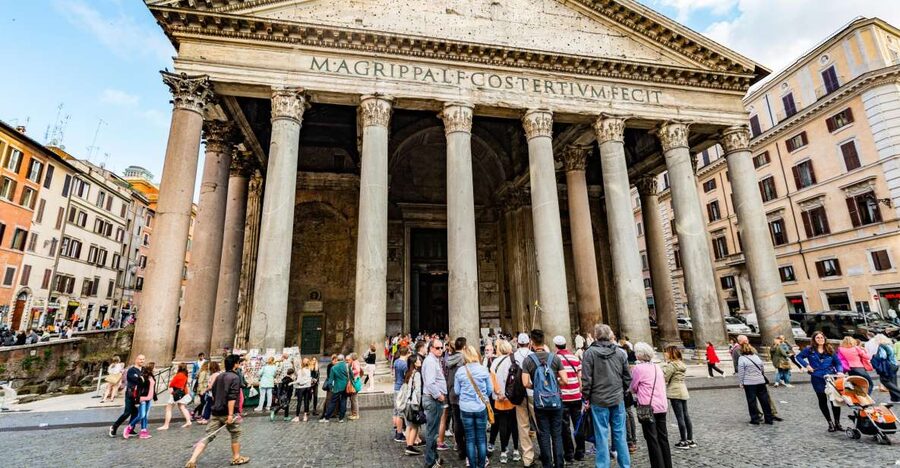
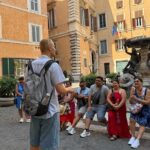
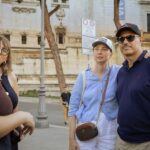
I love two things most: first, getting into the Pantheon so you can feel how the space still works; second, the small-group size that keeps you close enough to hear the guide at each stop.
I also like the personalities you might get along the way. Names like Stefano, Bruno, Matteo, and Andrea pop up, and the common thread is energy—good humor, a steady rhythm, and an effort to keep the group together.
If you’re expecting a sit-down, food-and-sip kind of outing, adjust your expectations. This is an outdoor, walking-heavy tour with no eating or drinking during the route, and the Trevi ending can feel a bit crowd-dependent.
Key highlights you’ll remember
- Spanish Steps meeting point: start at the Keats-Shelley Museum entrance area, right at the bottom of the staircase.
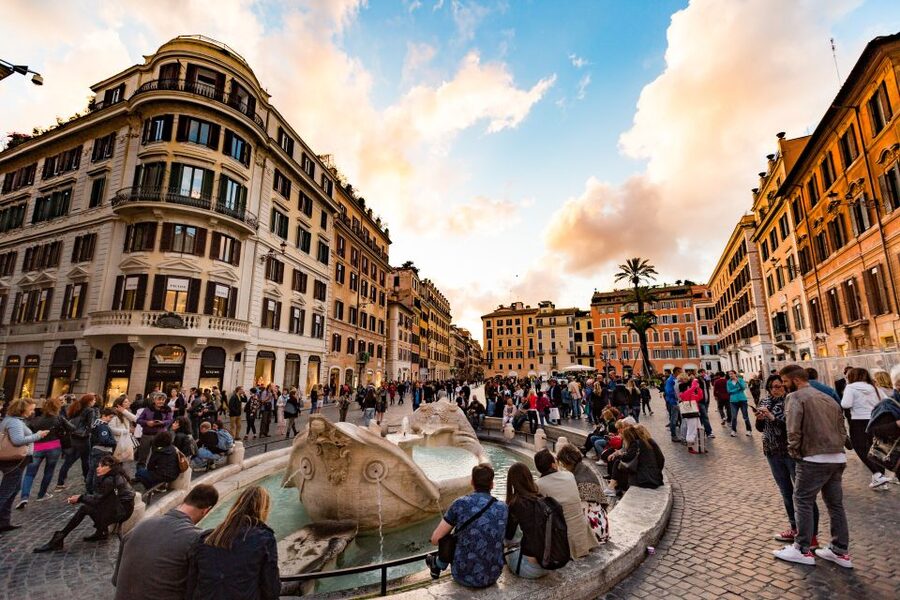
- Bernini at Piazza di Spagna: see the half-sunken ship fountain and how it frames the square’s drama.
- Pantheon interior access: walk in to a remarkably intact Roman temple—no “just photo from the curb” energy.
- Piazza Navona’s layered story: view Domitian’s old stadium footprint turned Baroque showpiece.
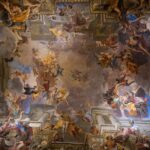
- Sant’Ignazio trompe l’oeil: one of the best optical illusion ceilings in Rome, done with a straight face and serious skill.
- Trevi Fountain finale: the classic coin toss moment, timed after the tour’s best visuals.
You can also read our reviews of more walking tours in Rome

From the Spanish Steps to Trinità dei Monti: start strong
The tour kicks off near the bottom of the Spanish Steps, by the Keats and Shelley Museum entrance. It’s a smart start point because the staircase gives you instant orientation: you can see how the city uses elevation, sightlines, and movement to pull you forward.
You’ll follow the steps up to Trinità dei Monti, a late Renaissance church that helps connect the tour’s Baroque vibe to what came before. This opening stretch sets the tone. You’re not just collecting statues and fountains; you’re learning how Rome “stages” public space—how a square or church is meant to guide your eyes.
Practical note: the tour is outdoors for long stretches. Wear shoes you trust on uneven stone, and if your trip timing is rainy, plan for wet sidewalks.
Piazza di Spagna and Bernini’s half-sunken ship
Piazza di Spagna is where you start seeing Baroque theatricality up close. You’ll get the fountain scene made famous by Bernini: the half-sunken ship, posed in a way that looks both playful and grand.
This stop matters because it teaches you a key Roman trick: Baroque art often feels like it’s doing something. It’s not static. It’s motion, tension, and illusion—like the fountain is part of a living scene.
In a small group, you also get a better chance to actually look. Around Rome’s top squares, crowds can turn sight-seeing into a moving shuffle. Here, the guide’s pointing and timing help you see details rather than just silhouettes.
Piazza Navona: Domitian’s stadium becomes Baroque set design
Next up is Piazza Navona, one of Rome’s most spectacular squares. The tour frames it as the Stadium of Domitian—built for athletic games in 85 A.D.—which explains why the oval shape feels so purposeful.
Then the Baroque layer takes over. You’ll spend time here because the square is essentially a history sandwich: ancient stadium bones under Baroque architecture and sculpture. Bernini’s influence is part of the experience too, including the famous Fountain of the Four Rivers that anchors Piazza Navona.
What you should do with this stop: slow down. Let your eyes move from the buildings to the fountains and then back across the square. With an organized guide, it becomes clearer why these artists chose angles, height, and spectacle. The square looks like a stage, because that’s the point.
Potential drawback: this area can be busy. If you get a guide who keeps the pace moving (a common pattern with guides like Stefano), you’ll get the best views without getting stuck in a long traffic jam of people.
Walking to the Pantheon: stepping into the Roman world
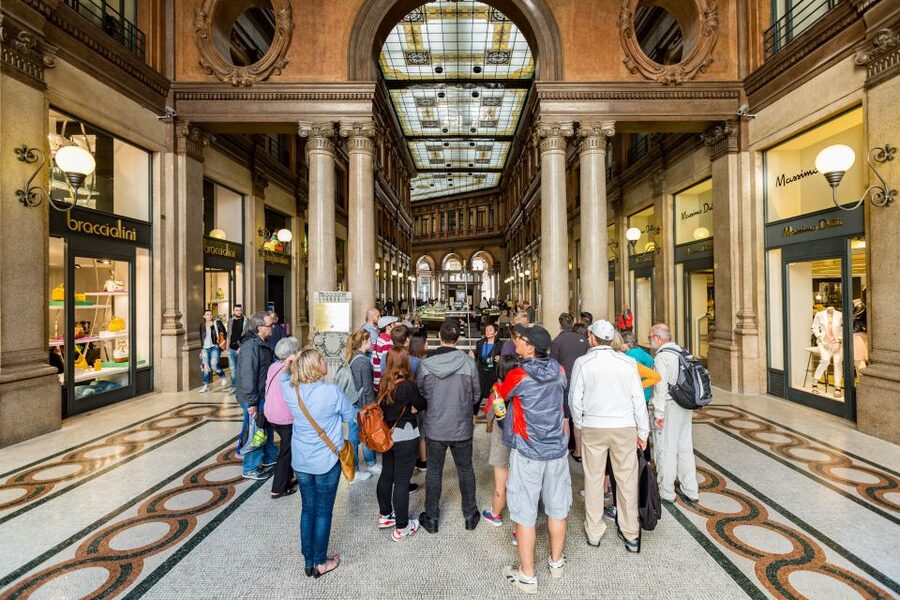
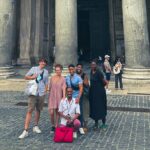
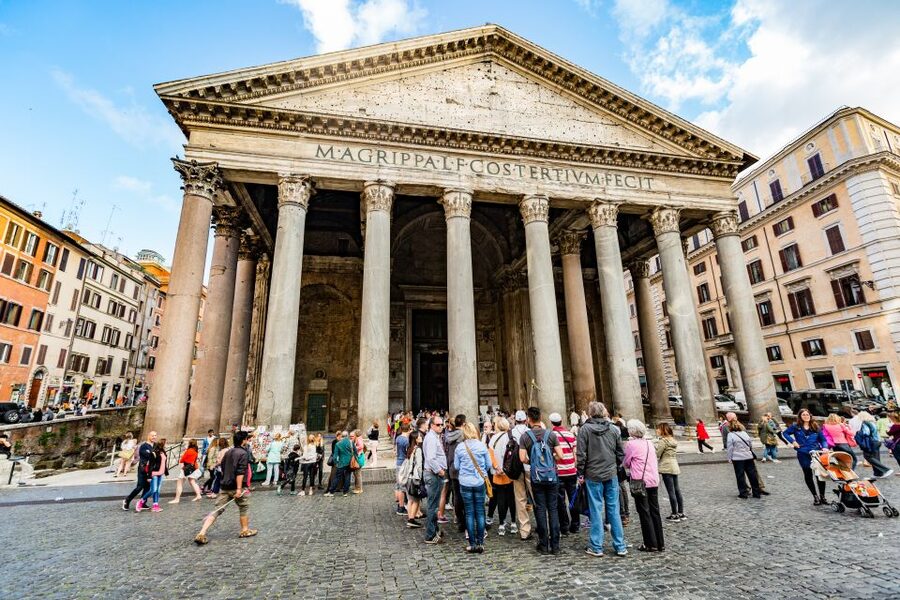
Then you walk to the Pantheon—one of those buildings where you can feel the age in your body. The big win here is simple: you go inside. That changes everything.
From the outside, the Pantheon is impressive. Inside, it’s something else: a remarkably intact Greek-Roman temple space that still feels engineered for human movement. The scale hits differently, and you get a chance to notice the way light behaves in the interior.
You don’t need to be a Roman history expert to appreciate this moment. It’s about space and proportion. The guide helps you connect what you’re seeing to what made it work in the first place—so it’s more than a checklist stop.
If you’re visiting Rome for the first time, this is the kind of stop that helps you calibrate the rest of your trip. After the Pantheon, everything else feels more meaningful, because you start recognizing design patterns across centuries.

Marcus Aurelius Column and the Gladiator connection
After the Pantheon, the tour keeps the momentum with another “Rome you recognize” kind of moment: the carved Column of Marcus Aurelius. You’ll see original scenes connected to the imagery used in popular culture—there’s even a specific nod to the movie Gladiator.
This stop is valuable because it turns a monument into a story you can picture. A column can be hard to appreciate if you don’t know what to look for. With the guide’s framing, you’re more likely to spot how the relief scenes unfold and what they’re trying to communicate.
It’s a quick but worthwhile pause before the tour heads to the church interiors again.
Saint Ignatius Church and trompe l’oeil that fools your eyes
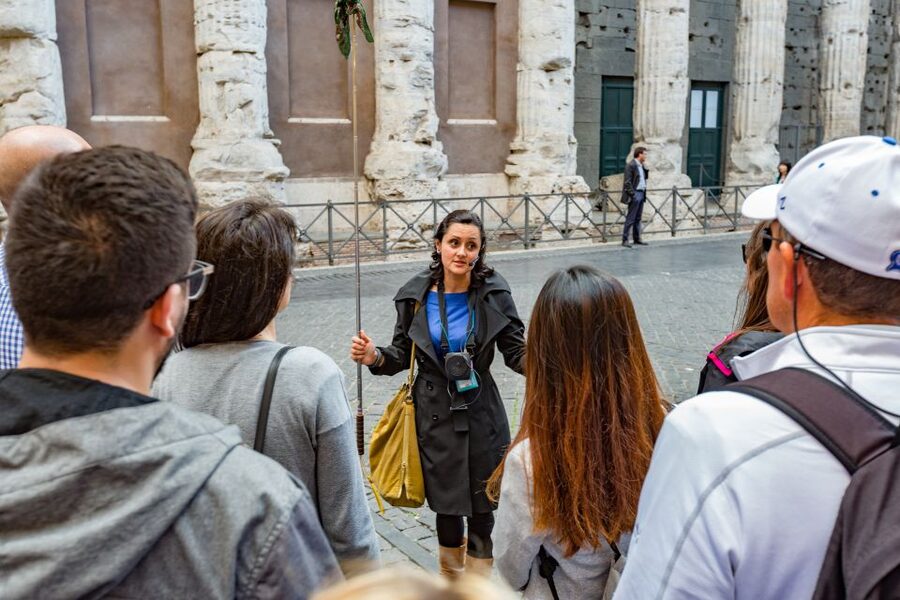
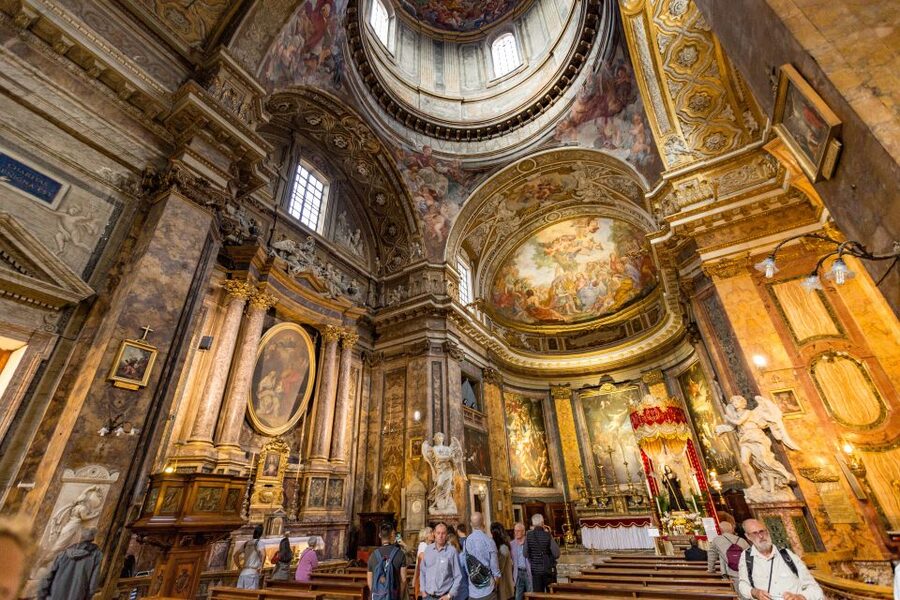
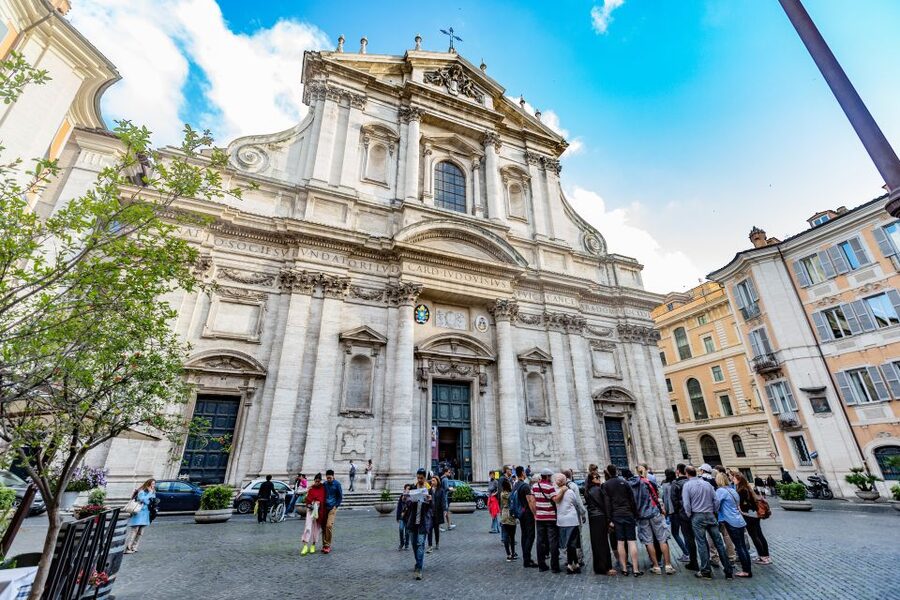
Sant’Ignazio Church is the big optical-illusion moment. Trompe l’oeil literally means trick the eye, and this is one of Rome’s finest examples—especially when you’re standing where the illusion is supposed to work.
Why it’s a standout: churches in Rome often amaze you with scale, ornament, and gold-and-stone effort. This one amazes you with perception. The illusion feels like architecture playing with you—like the ceiling is doing something beyond being a ceiling.
This stop is also where the tour’s pacing pays off. You’re not rushing through; you’re getting guided attention in a place where details can vanish if you just wander in.
Dress reminder: even for churches, you’ll be expected to cover up. Bring something suitable for shoulders and knees, because short shorts and sleeveless outfits can block your entry.
Trevi Fountain: coin toss, crowds, and how to enjoy the finale
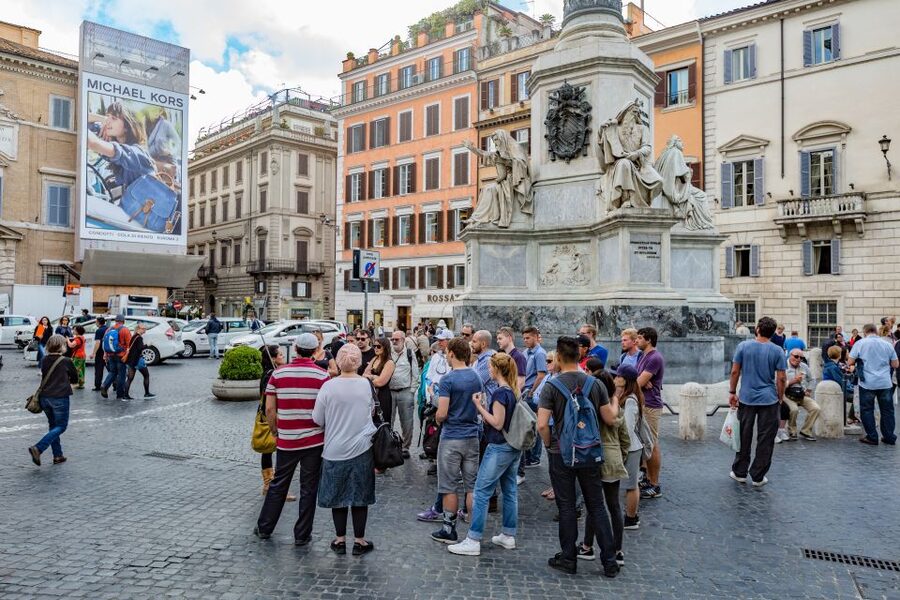
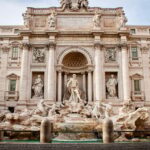
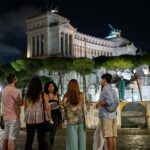
The tour ends at Trevi Fountain, with the classic tradition: throw a coin and make a wish to return to Rome. It’s the moment most people came for, but the guide-led build-up is what makes it land.
You’ll arrive with context, not just postcard expectations. By the time you reach Trevi, you’ve already seen how Rome layers styles—ancient engineering, Renaissance direction, and Baroque drama. Trevi reads differently when you know what kind of visual storytelling you’re looking at.
Now, the reality check: Trevi is crowded. Even with a group, people can press in. Plan to stay patient and keep your space. If you’re hoping for a slow, long linger at the fountain edge, go a little easy here—this tour has a schedule, and the crowd flow can slow down your perfect photo.
Price, time, and value for money
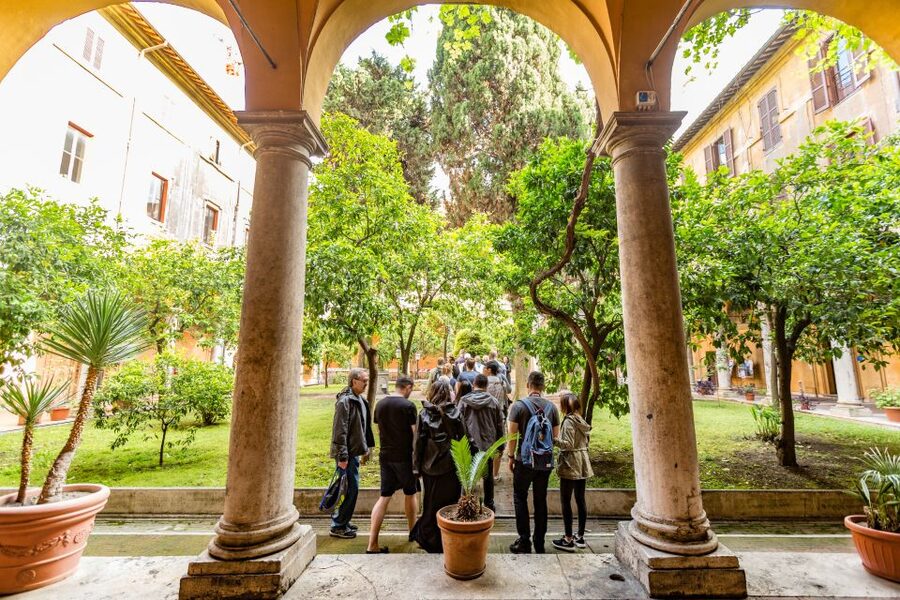
At about $45.55 per person and roughly 2.5 hours, this is priced like a classic “high-value highlights” tour: not cheap, but not trying to be a private guide price, either.
Here’s where the value shows up:
- A licensed English-speaking guide who helps you interpret what you’re seeing.
- Strategic stops: you’re not just circling the city; you’re hitting a set of monuments that connect visually and historically.
- A real interior moment at the Pantheon, plus church time where design choices matter.
- Small-group size (up to 20), which helps you hear and keep up.
You’re also paying for focus. With Rome on your own, you can end up with a pile of photos and a foggy sense of why they matter. On this route, the guide’s explanations help convert seeing into understanding.
What to bring (and what to skip)
You’ll want:
- Comfortable shoes for uneven stone.
- Comfortable clothes, plus something to cover shoulders and knees for churches.
Skip:
- Shorts, short skirts, sleeveless shirts (church entry can be an issue).
- Large bags, oversize luggage, and anything that doesn’t fit the tour’s movement needs.
- Food and drinks during the walk, and don’t plan on eating along the route.
- Pets and strollers.
- Smoking and anything that looks like alcohol or drugs are a hard no on the tour rules.
If you’re coming straight from a morning out, build in time for a bathroom stop before the meeting, because the whole route is structured around walking between sights.
Who should book this tour
This is a strong fit if you:
- Want Rome’s most famous fountain-and-square circuit in one efficient walk.
- Like explanations that tie art and architecture to what you’re seeing in real time.
- Prefer a guide-driven route over wandering and guessing.
It’s not a great fit if you:
- Need wheelchair access or stroller access (the tour setup won’t work for that).
- Want lots of sitting breaks.
- Are traveling with kids under 10, since it’s not suitable for younger children.
Quick booking advice before you commit
A small-group format works best when you arrive on time. The meeting point is clearly defined by the Keats and Shelley Museum entrance at the bottom of the Spanish Steps, so don’t treat it like a vague “somewhere on the street” rendezvous. Getting there about 10 minutes early is the safest move.
Also plan your day around an early, active walk. This tour is not a perfect match if you’re planning to hop into long museum stops right after, because your legs may not love the transfer.
Should you book the Rome Fountains and Squares Small-Group Walking Tour?
If you’re in Rome for a short time and want the big visual hits—Spanish Steps, Piazza Navona, Pantheon interior, Sant’Ignazio, and Trevi—this tour is a solid choice. It’s built for first-time orientation and for people who want their photos to come with context.
The only reason to skip is if you hate walking, can’t meet the church dress expectations, or need accessibility support the route can’t accommodate. If you’re good with comfortable shoes and a steady pace, it’s one of the more rewarding ways to see Rome’s Baroque side without losing hours to guesswork.
FAQ
How long is the tour?
It lasts about 2.5 hours.
Where do I meet the guide?
Meet your guide by the entrance of the Keats and Shelley Museum at the bottom of the Spanish Steps, in front of the Acqua di Parma store. The guide will be holding a GETYOURGUIDE sign or wearing a GETYOURGUIDE badge.
What major sights are included on the walk?
The highlights include the Spanish Steps area, Trinità dei Monti, Piazza Navona, the Pantheon (you go inside), Bernini’s fountain of a half-sunken ship at Piazza di Spagna, Sant’Ignazio Church for trompe l’oeil, and the Trevi Fountain.
Can I enter the Pantheon during the tour?
Yes. The tour includes going inside the Pantheon.
What should I wear for this tour?
Wear comfortable shoes and clothes. For church visits and some monuments, you should cover your shoulders and knees.
Is this tour wheelchair or stroller friendly?
No. Due to the itinerary, it is not possible to join with strollers or wheelchairs, and it is not suitable for wheelchair users.