REVIEW · BRUSSELS
Brussels: Guided Walking Tour
Book on GetYourGuide →Operated by Bravo Discovery · Bookable on GetYourGuide
Brussels rewards people who slow down and look up. This guided walking tour gives you an organized look at the city’s Upper City and Lower City—from medieval corners to royal views—plus a Belgian chocolate tasting that keeps the day sweet.
I especially like how it mixes landmark sightseeing with real-world help, like where to go next for food and drinks. I also like that you get pointed explanations at major stops, including the stories behind places like Manneken Pis and the Senne’s covering.
One consideration: it’s a walking tour with a lot of time on your feet, and the experience is best if you dress for the weather (Brussels can be cold and windy).
In This Review
- Key highlights you’ll actually feel during the walk
- Getting your bearings in Brussels: Upper City and Lower City on foot
- Grand Place start at City Hall: the perfect launch point
- Lower City route: Grand Palace, Manneken Pis, and the Senne’s covering
- Grand Palace and the surrounding streets
- Everard t’Serclaes on Charles Buls Street
- Manneken Pis on Grands Carmes street
- Marché au Charbon on the way through
- Covering of the Senne: where the city’s water story hides
- Riches Claires and Grande Île street
- Saint-Géry Island and the older urban core
- Upper City stops: merchant power, Galeries Royales Saint Hubert, and Mort Subite
- Grand Place’s Upper City perspective
- Galeries Royales Saint Hubert
- Mort Subite
- Cathedral time: St. Michael and St. Gudula inside the Chapel of the Blessed Sacrament
- Why this cathedral stop is worth your time
- Royal Brussels: Royal Park, Royal Palace, Royal Square, and Coudenberg
- Chocolate tasting: included, and surprisingly useful for shopping smart
- The guide factor: humor, storytelling, and real city advice
- Price and value: why $23 can work for your first day
- What to wear and what to plan around
- Should you book this Brussels walking tour?
- FAQ
- How long is the Brussels guided walking tour?
- Where is the meeting point?
- What is included in the price?
- What languages are the tours offered in?
- Is the tour wheelchair accessible?
- Are tram or bus tickets included?
- Are museum tickets included?
- What areas of Brussels do you cover?
- Is free cancellation available?
Key highlights you’ll actually feel during the walk
- Upper City vs. Lower City: two different Brussels, explained in plain language
- Grand Place to Manneken Pis: a tight loop of the city’s most photo-heavy streets
- Senne history on the streets: the Covering of the Senne gives context for the urban layout
- Inside St. Michael and St. Gudula: stained glass, the Chapel of the Blessed Sacrament, and the pulpit
- Belgian chocolate tasting included: a guided stop that helps you buy smart, not just buy souvenirs
- Guides who answer the practical stuff: restaurants, nightlife, and getting around on public transport
Getting your bearings in Brussels: Upper City and Lower City on foot
Brussels is one of those cities where your first day can go two ways: either you wander randomly and miss the connections, or you get an overview that makes everything click. This tour is built for that first-day clarity. You split time between the Lower City (older, denser layers) and the Upper City (merchant power and later developments), so you understand why Brussels looks the way it does.
The pace is designed to keep you moving, but not sprinting. You’ll stop often enough to absorb what you’re seeing, then walk on with a mental map that makes self-guided exploring easier after the tour.
You can also read our reviews of more walking tours in Brussels

Grand Place start at City Hall: the perfect launch point
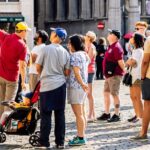
You meet at the Grand Place in front of City Hall, looking for the white umbrella for Bravo Discovery. It’s a smart meeting point because the Grand Place is basically Brussels’ headline. Start here and your brain immediately recognizes this as the center of gravity—historic, architectural, and emotional.
From the start, you’ll get context that helps you read the buildings rather than just photographing them. Even if you think you know the Grand Place from pictures, the guide’s explanation tends to bring out details most people overlook.
Lower City route: Grand Palace, Manneken Pis, and the Senne’s covering
Lower City walks can feel like they’re all highlights, and this one earns that label. You’ll spend time around streets and landmarks that show Brussels as a working city, not a museum piece.
Grand Palace and the surrounding streets
You begin with the kind of grand square that makes you look twice. The important part isn’t just the view—it’s what the guide helps you understand about how Brussels grew and why certain streets became important corridors.
Everard t’Serclaes on Charles Buls Street
Next comes the Everard t’Serclaes monument on Charles Buls street. It’s the kind of stop people often skim past, but a good guide turns it into a mini lesson: who the figure was, and why the name still matters locally. This is one of those moments where history becomes more than dates.


Manneken Pis on Grands Carmes street
Then you reach Manneken Pis. Yes, it’s small. Yes, it’s famous. But the point of seeing it on this tour is the explanation around what it represents and how Brussels uses humor and civic identity.
A bonus: the guide’s tone often makes the stop feel less like a checklist item and more like a window into the city’s personality.
Marché au Charbon on the way through
Marché au Charbon street is short, but it’s conceptually huge. The guide uses it to connect daily life and older trading patterns to what’s visible today. It’s a good reminder that Brussels’ center wasn’t built for strolling—it evolved for work.
Covering of the Senne: where the city’s water story hides
One of the most memorable parts is the Covering of the Senne. This is where the tour stops being only scenic and becomes practical. You’ll learn how the river changed and how that shaped the city above it.
When you understand that, you start noticing the logic in the streets and the way the city developed. It’s the kind of detail you can’t easily get from a standard postcard.
Riches Claires and Grande Île street
As you move through Riches Claires street and toward Grande Île street, you’ll get a clearer picture of how neighborhoods formed around commerce and proximity. These stretches are where the guide’s storytelling really matters—without it, the streets risk feeling like scenery.
Saint-Géry Island and the older urban core
You’ll also pass by Saint-Géry Island and other nearby areas. This is a good place to slow your walking pace for a minute and watch people. It helps you connect the past to the way the area feels now.
The practical benefit: after this portion, you’ll know which areas you can linger in later and which ones you just need a photo of.
Upper City stops: merchant power, Galeries Royales Saint Hubert, and Mort Subite
Upper City changes the mood fast. The buildings, the spacing, and the energy shift, and the guide makes that contrast easy to understand. You’ll see how Brussels became a stage for merchants and later for state power.
Grand Place’s Upper City perspective
Even though you already touched the Grand Place zone in the Lower City segment, the Upper City part gives it a different lens. The guide connects the architecture to merchant strength—so you’re not only seeing beauty, you’re seeing influence.
Galeries Royales Saint Hubert
Then comes the Galeries Royales Saint Hubert. This is one of those places where you stop without realizing you’re stopping. The guide helps you notice what makes it special—why this covered shopping space mattered and how it fits into the city’s social rhythm.
If you’re cold or wet, this is also a small mercy. It gives you a break from open-air walking without losing the historical thread.
Mort Subite
Mort Subite is next on the vibe list. It’s a name people recognize, but the value here is learning how it fits into Brussels’ beer culture and street-level traditions.
Even if you’re not planning to drink that moment, this stop helps you map where the city’s local flavor lives.
Cathedral time: St. Michael and St. Gudula inside the Chapel of the Blessed Sacrament
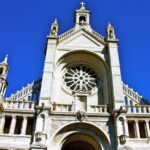
A highlight for me is that you don’t just look at the Cathedral of St. Michael and St. Gudula. You get to visit inside, and that changes everything. Outdoors, it’s impressive. Indoors, it’s detailed.
The guide points out the stained glass windows, and you’ll also see the Chapel of the Blessed Sacrament. There’s even mention of the pulpit, which gives you another anchor for what you’re seeing rather than a vague wow moment.
Why this cathedral stop is worth your time
This is not random “church sightseeing.” It’s one of the best ways to understand how Brussels expresses belief, art, and civic life in one place. If you only do one interior moment on your Brussels day, this is a strong candidate.
Royal Brussels: Royal Park, Royal Palace, Royal Square, and Coudenberg
Toward the end, you move into royal territory. The Royal Park and the Royal Palace area bring a calmer rhythm compared to the tighter Lower City streets. You’ll see the Royal Square and the Palace of Coudenberg among other landmarks.
The practical value here is orientation. After you’ve seen the medieval and commercial layers, these royal and state-focused stops help you understand what later rulers and institutions shaped.
It’s also a nice section for photos that aren’t just close-ups. You get space, perspective, and that feeling that Brussels is bigger than a single square.
Chocolate tasting: included, and surprisingly useful for shopping smart
Belgian chocolate can turn into a spending trap fast. The good news is this tour includes a Belgian chocolate tasting, and your guide also shares where to buy chocolate at a reasonable price.
You’re not just getting sugar. You’re getting a baseline for what quality tastes like. That makes it easier to judge chocolate later when you’re comparing shops with similar-looking packaging.
If you’re short on time and still want to take chocolate home, this is one of the most efficient ways to do it. Start with the tasting, then decide what you actually want instead of grabbing the first fancy box you see.
The guide factor: humor, storytelling, and real city advice
What gets people smiling on this tour is the guide style. Many guides—like Christophe, Ian, Liam, Kristof, Patrick, Carolina, Mafalfa, and Ariel—are praised for being fun without turning the walk into a joke marathon. You still get explanations, but they come with personality.
Just as important, the guide answers practical questions. You can ask about restaurants, local beers, nightlife, and even how to handle public transport. That’s where the walking tour becomes more than sightseeing. It becomes a planning tool for the rest of your trip.
If you like asking questions and getting direct guidance, you’ll feel like you’re getting value beyond the fixed stops.
Price and value: why $23 can work for your first day
At $23 per person for about 150 minutes, this tour is priced like a “do-this-once” intro that covers a lot. You’re paying for more than walking: you’re getting guided interpretation across the Upper/Lower City divide, plus an included chocolate tasting.
Also, the tour reduces guesswork. Instead of spending your first day bouncing between disconnected attractions, you build a framework in one go. That framework makes later self-guided exploring cheaper in time and energy, even if you never buy another ticket that day.
There’s also a small but real advantage: museum tickets aren’t included. That means you’re not forced into spending extra just to make the walk feel complete. If you want museums later, you choose them.
What to wear and what to plan around
This is a walking tour, so comfortable shoes matter more than you think. Brussels weather can shift quickly, so bring a layer you can adjust mid-walk.
Also plan that museum entries are not part of the package. The cathedral visit is built in, but if you want additional museums beyond what’s covered, you’ll need to decide and purchase separately.
Finally, bring your appetite. Even without a formal meal stop, the guide’s restaurant and beer suggestions are the kind of info that helps you eat well without wasting time.
Should you book this Brussels walking tour?
Yes—if you want a fast, organized introduction to Brussels that helps you explore on your own afterward. The combination of Upper City/Lower City structure, major landmarks like Grand Place, Manneken Pis, the Senne’s covering, and an inside cathedral visit makes it a strong first-day anchor.
Book it especially if you like learning facts with humor and you care about practical next steps like where to eat, where to drink, and how to move around efficiently.
Skip it only if you already know Brussels well and hate being on a timed walking route. Otherwise, this one is a smart use of a morning or afternoon.
FAQ
How long is the Brussels guided walking tour?
The tour lasts 150 minutes.
Where is the meeting point?
Meet at the Grand Place in front of the City Hall. Look for the white umbrella from Bravo Discovery.
What is included in the price?
The guided tour and a Belgian chocolate tasting are included.
What languages are the tours offered in?
The live guide is available in Spanish, English, and French.
Is the tour wheelchair accessible?
Yes, the tour is wheelchair accessible.
Are tram or bus tickets included?
No. Tram or bus tickets are not included.
Are museum tickets included?
No. Tickets to museums are not included.
What areas of Brussels do you cover?
You walk through both the Upper City and Lower City, including major landmarks in each area.
Is free cancellation available?
Yes. You can cancel up to 24 hours in advance for a full refund.