REVIEW · BARCELONA
Barcelona: Jewish Quarter 2-Hour Walking Tour
Book on GetYourGuide →Operated by BARCELONA DREAMING · Bookable on GetYourGuide
Synagogues in Barcelona whisper stories you can follow. This 2-hour walk threads Jewish life through the Gothic Quarter, from ancient arrival stories to medieval corners that still feel “locked in time.” I especially like how the tour pairs street-level wandering with stops tied to major sites, so history doesn’t stay in a textbook.
Two things I like a lot: first, you get to see the Sinagoga Mayor Barcelona, described as the oldest synagogue in Europe, plus the medieval Mikve site. Second, the pacing works because it’s a small group capped at 6, led by English-speaking guides who keep you engaged with maps, photos, and clear answers (I’ve seen names like Ella, Alan, Edu, and Lilach stand out for exactly that).
One possible drawback: the tour skips the museum ticket, and the Synagogue Museum entrance fee isn’t included. Also, the Old Synagogue area can be closed on some days, so you may need to enjoy the surrounding ruins and context more than the interior experience.
In This Review
- Quick hits you’ll actually care about
- Finding the thread in Plaça Sant Jaume
- Sinagoga Mayor Barcelona: the oldest synagogue stop that hits fast
- The Mikve site: where medieval life gets real
- Chasing four synagogues through the Gothic Quarter
- Ruins of the Old Synagogue (Shlomo Ben Adret) and the power of fragments
- From the 3rd century to 1391: the story that explains the streets
- The guides: small group energy with names you’ll remember
- Price and value: is $76 for 2 hours fair?
- Who should book this walking tour?
- Should you book it?
- FAQ
- How long is the Barcelona Jewish Quarter walking tour?
- Where do we meet for the tour?
- What’s included in the price?
- Is the synagogue museum ticket included?
- Is the tour wheelchair accessible?
- How many people are in the group?
- Can I cancel or pay later?
Quick hits you’ll actually care about
- Sinagoga Mayor Barcelona: why this stop is a big deal for Jewish heritage in Europe
- Medieval Mikve: the water-related ritual setting you can picture as you walk the alleys
- Four synagogues in the city center: you’ll learn where they sat and how that shaped the neighborhood
- Ruins of the Old Synagogue (Shlomo Ben Adret): Roman-wall proximity adds a layered feel to the walk
- Small group size (max 6): better questions, better pace, easier route adjustments in real life
- Guides who handle Q and A well: expect clear explanations and help when conditions get messy (rain included)
Finding the thread in Plaça Sant Jaume
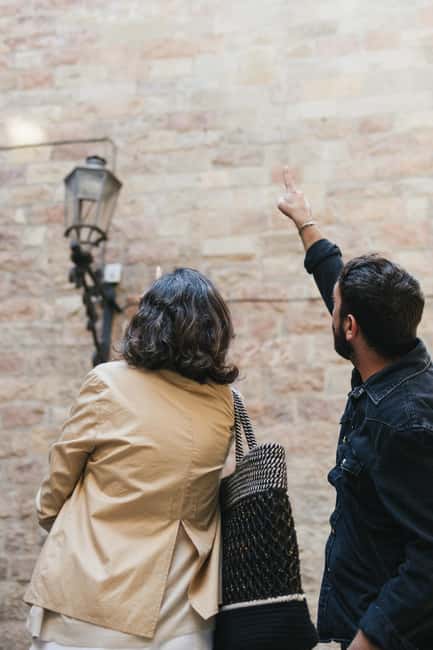
I like tours that start somewhere central and obvious, and this one does. You meet in Plaça Sant Jaume, right next to the Alcampo store, and the walk ends back at the same place. In practice, that’s nice because you can plan dinner afterward without backtracking across the Gothic Quarter like a lost extra in a medieval movie.
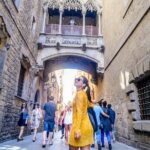
The first minutes matter here. The Gothic Quarter is a maze, and the value of this tour is that you don’t just “see buildings”—you follow connections between places. You’ll be guided through narrow lanes that date back to the Middle Ages, which is exactly where your brain starts making sense of why the Jewish community was both rooted and vulnerable.
This is also a walking tour, not a museum day. You’re trading long indoor time for street-level context: signs, corners, and remnant structures that help you understand how people actually moved through this part of Barcelona. If you prefer lots of seated time and audio guides, you might find the walking pace a bit more active than you want.
You can also read our reviews of more walking tours in Barcelona



Sinagoga Mayor Barcelona: the oldest synagogue stop that hits fast
The headline stop is the Sinagoga Mayor Barcelona, known here as Spain’s oldest synagogue and the oldest in Europe (as presented on the tour). This isn’t just a “look and leave” kind of stop. It gives you an anchor point for everything else you’ll hear—because once you’ve stood where the tradition is grounded, the later stories of community growth and eventual catastrophe land harder.
What I think makes this stop valuable is that it sets scale. The Jewish presence in Iberia begins spreading centuries ago, and the tour connects that to physical places in the city. You’re not only hearing about religion; you’re hearing about community life—political and spiritual importance, not just dates.
One practical note: the tour says it skips the ticket line, which usually helps you avoid that awkward standing-around wait. Still, the Synagogue Museum entrance fee is not included, so if you want the extra museum materials, you’ll need to budget for that separately.
The Mikve site: where medieval life gets real
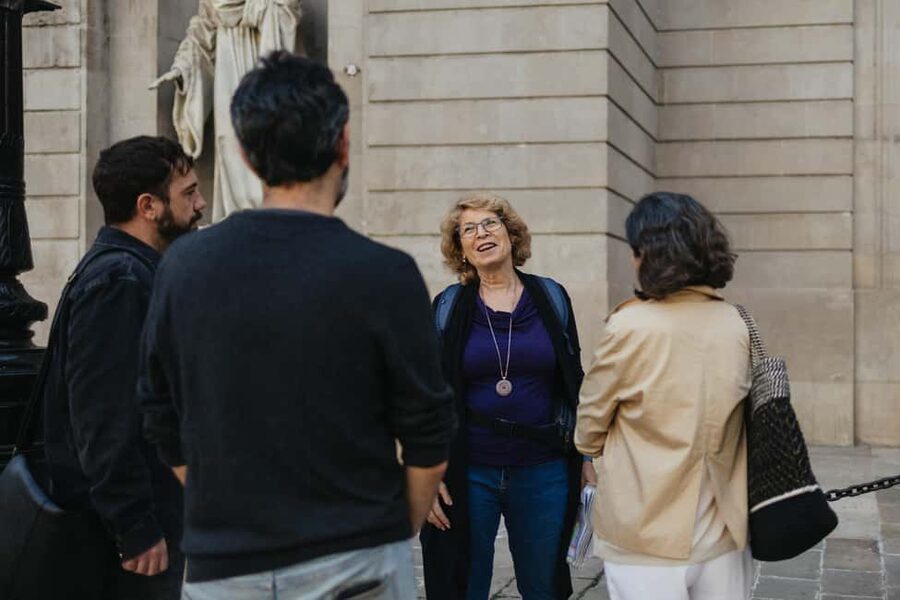
After you’ve got the synagogue anchor in your head, the next step—the medieval Mikve site—makes daily life feel tangible. A mikve isn’t abstract. It’s about ritual and routine, about how people prepared themselves for important moments. Seeing a site connected to that practice helps you understand the community as more than a historical footnote.
I like that this tour points out the “where” instead of only telling the “what.” When you’re walking through medieval alleys, you start to picture how someone might move from home to communal space. You’ll hear the story of how the Jewish population grew steadily over time and became more important politically and spiritually. That context helps the mikve stop make sense in the bigger picture.
Also, because this is a walking format, you’re absorbing the feel of the neighborhood while the explanation is still fresh. It’s the difference between reading about a place and actually being next to the kind of streets where those lives played out.
Chasing four synagogues through the Gothic Quarter
One of the most interesting parts of this tour is the idea that you’re not relying on a single building. You learn the location of four historic synagogues in the city center, and that changes the way you look at the Gothic Quarter. Instead of “pretty streets and old stones,” it becomes “a map of a community.”
This matters for your understanding. Communities cluster for reasons—safety, shared institutions, proximity to worship and civic life. When your guide shows you where multiple synagogues were, you start to grasp how the Jewish neighborhood shaped the area’s identity and how that identity was squeezed and broken over time.
You’ll also walk through the smaller Jewish Quarter around the Roman walls. Roman infrastructure is one of those “how is this still here?” realities in Barcelona. Pair that with medieval Jewish history, and the layering feels obvious in a good way. You’re literally walking between eras.
Ruins of the Old Synagogue (Shlomo Ben Adret) and the power of fragments
The tour includes a visit to the ruins of the Old Synagogue (Shlomo Ben Adret). Ruins can be tricky. Sometimes they’re hard to visualize, and sometimes the story feels distant. Here, the guide’s job is to bridge that gap: what the site meant, what it replaced, and how the neighborhood changed.
If the Old Synagogue area is closed, you might miss an interior view. One thing I appreciate about this kind of tour is that even when access is limited, you’re still learning how to read the remains. You’ll get the context to understand what you’re seeing rather than just standing next to a closed door.
I’d frame this stop as emotional and historical, not “perfect-photo” sightseeing. The ruins do their job when you let them. Think less about capturing angles and more about understanding the human story the stones can’t fully show.
A few more Barcelona tours and experiences worth a look
From the 3rd century to 1391: the story that explains the streets
The tour gives you a timeline you can carry while you walk. It notes that Jewish communities began arriving in Spain in the 3rd century, including a movement tied to the destruction of the Second Temple in Jerusalem in 70 CE. That’s a lot of history, but it’s not thrown at you as trivia. It’s placed in sequence so the growth in Barcelona feels connected, not random.
As the group walks, you’ll hear how the Jewish population in Barcelona grew steadily and became more and more important politically and spiritually. That’s a key contrast: this wasn’t only a tragic arc. The community had influence and stability for a long time.
Then comes 1391, described here as when brutal attacks brought a dramatic end to their presence in Spain. This is the pivot point where the tour turns from explanation to weight. In a city like Barcelona, it’s easy to move on to the next attraction. This walk asks you to pause and connect the architecture and alleys to the reality that the community was torn away.
One useful way to mentally prepare: don’t treat the story like it’s only about the distant past. Treat it like it’s about how cities change when communities are erased. That lens makes the Gothic Quarter stop-by-stop more meaningful.
The guides: small group energy with names you’ll remember
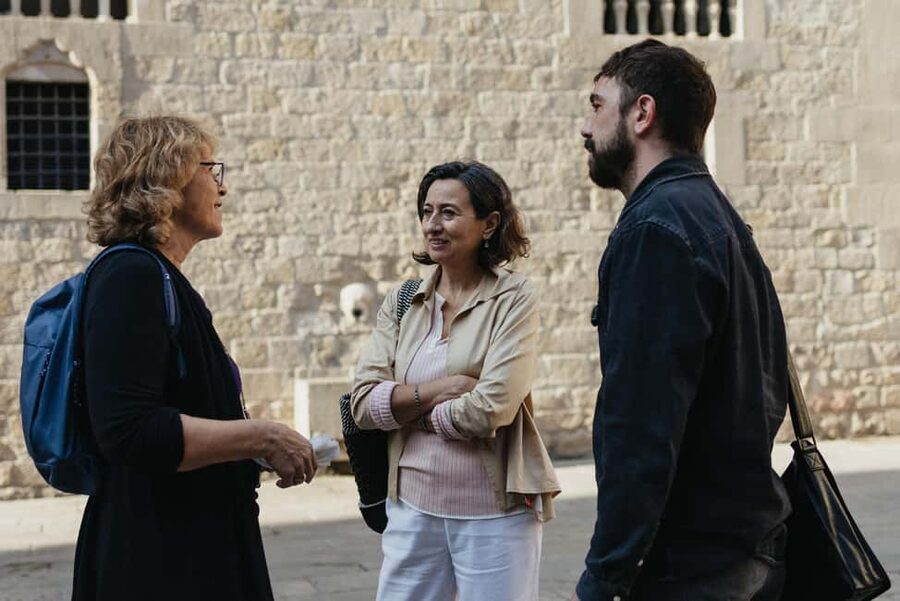
This tour is built around a live English guide and a small group, limited to 6 participants. That size is not a luxury detail—it’s what makes the walk work. You can ask questions without the guide raising their voice over ten other people, and the route feels responsive.
From the guide roster examples, I’ve seen strong emphasis on communication style. Guides like Ella and Lilach are described as thorough, kind, and able to answer questions clearly. Alan is noted for answering questions and using maps, photos, and mockups—useful when you’re trying to visualize ancient places that no longer look the way your brain expects. Edu stands out in comments for being personable, adjusting pace, and even watching safety when rain hits.
One practical win: if you’re walking with mobility concerns, having a guide who can slow down and take breaks makes a difference. Several comments emphasize guides being attentive to pacing, which is exactly what you want in a neighborhood with uneven streets and sudden turns.
Price and value: is $76 for 2 hours fair?
The price is $76 per person for a 2-hour walking tour. For central Barcelona, that’s not a bargain price, but it’s not overpriced either—especially because you’re paying for interpretation, not just access. The big value is a guide connecting many sites (synagogue, mikve, ruins, Roman-wall-adjacent corners) into one coherent story.
Also, ticket logistics are partly handled. The tour includes skipping the ticket line, which saves time and friction at the key synagogue stop. Still, the Synagogue Museum entrance fee is not included, so if you want the museum add-on, factor that into your total budget.
If you’re deciding between doing this tour and doing a “self-walk” through the Gothic Quarter, I’d choose the tour if your main goal is understanding. The area is rich in old streets, but the connections between multiple synagogues and the specific significance of places like the mikve and the Old Synagogue ruins are exactly what a good guide explains.
Who should book this walking tour?
This tour is a smart fit if you want Jewish heritage in Barcelona without turning your day into a museum marathon. You’ll get the key sites tied to the story, plus enough context to understand why the Gothic Quarter looks the way it does and what changed over time.
I’d also recommend it if you enjoy history that’s grounded in geography—people, institutions, and events tied to real corners. If you’re the type who likes to ask questions and wants clear answers in English, the small-group format will make you feel heard.
If you’re coming with zero interest in medieval Jewish history, you might find it heavy. But if you’re even mildly curious—especially about how communities shaped cities and what happens when they’re forcibly removed—this is the kind of walking tour that gives you a sharper lens for the rest of Barcelona.
Should you book it?
I’d book it if you want a focused 2-hour experience that brings Barcelona’s Jewish heritage into focus through real places: Sinagoga Mayor Barcelona, the Mikve site, and the Old Synagogue (Shlomo Ben Adret) ruins. The small group size, English live guide, and the emphasis on clear Q and A make it feel worth the money rather than like a rushed checklist.
I’d think twice only if you’re mainly after indoor museum content, or if you strongly need the museum itself. The tour already gives you the historical backbone, but the Synagogue Museum entrance fee is on you if you add it.
FAQ
How long is the Barcelona Jewish Quarter walking tour?
The tour lasts 2 hours.
Where do we meet for the tour?
You meet in Plaça Sant Jaume, just next to the Alcampo store. The tour ends back at the same meeting point.
What’s included in the price?
The walking tour is included. The tour guide is live and the tour is in English.
Is the synagogue museum ticket included?
No. Entrance fee to the Synagogue Museum is not included.
Is the tour wheelchair accessible?
Yes, it lists wheelchair accessible.
How many people are in the group?
It’s a small group limited to 6 participants.
Can I cancel or pay later?
Yes. It offers free cancellation up to 24 hours in advance and a reserve now & pay later option.