REVIEW · PARIS
Paris City Center w/ Notre Dame interior | Exclusive Walking Tour
Book on Viator →Operated by Babylon Tours Paris · Bookable on Viator
Notre-Dame sets the tone for a smart walk. I like that this tour keeps a private pace through the city center so you spend less time fighting bodies and more time listening to what you’re seeing. You also get a clear, guided path across the Île de la Cité and then onward to the Louvre-area sights, with a guide who can answer questions in real time.
My favorite part is how the route connects major landmarks to stories you can actually use, from Gothic Paris to revolution-era sites and the big visual landmarks along the Seine. One thing to plan for: not every major building is entered with a guided visit. Notre-Dame interior is included, but it’s unguided due to regulations, and other key spots on the walk list admission as not included.
In This Review
- Key things I’d circle before you book
- A 2.5-hour walk linking Île de la Cité to the Louvre
- Meeting on Île de la Cité: Paris’s oldest settlement first
- Notre-Dame interior entry: free access, unguided inside
- The Justice Island circuit: Palais de Justice, Sainte-Chapelle, Conciergerie
- Fontaine Saint-Michel and Place Dauphine: Paris gets human-scale
- Pont Neuf to Pont des Arts: bridges that tell time
- Louvre Museum area: Cour Carrée and the Pyramid from the outside
- Palais-Royal and Tuileries Gardens: a calmer pause in the same day
- Place de la Concorde: the end point with a loaded past
- Price and logistics: what $59.69 gets you, and what to add
- Who should book this Notre-Dame and Paris city-center walk
- Should you book this tour?
- FAQ
- How long is the Paris City Center w/ Notre Dame interior walking tour?
- Is the Notre-Dame Cathedral interior included and is it guided?
- Are tickets included for Sainte-Chapelle and the Louvre?
- Does the tour run in bad weather?
- Is this tour private?
- Where does the tour start and end?
Key things I’d circle before you book
- Private pacing that helps you avoid the worst crowd crush
- Notre-Dame interior entry included, but unguided once you’re inside
- A route that links Île de la Cité, Pont Neuf, and the Louvre area in one session
- Good mix of major monuments and lower-key squares and bridges
- Rain-or-shine format, so bring the basics and you’ll be fine
- Guides with strong energy and lots of Q and A, including Eden, Adrien, Jay, Maria, Hugo, and Francois in past tours
A 2.5-hour walk linking Île de la Cité to the Louvre
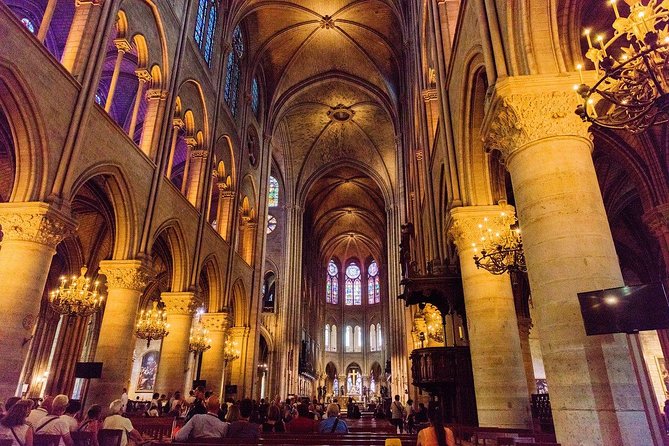
This is a compact, high-value way to see Paris’s “greatest hits” without turning it into an all-day marathon. The total time is about 2 hours 40 minutes, and the flow is designed for walking: you cover the oldest core of the city first, then move toward the grand monuments around the Louvre and Tuileries.
You’re not just collecting photos. You get context as you go: why these places matter, how they changed over time, and how the streets you walk through connect to bigger events in French history. And because it’s a private walking tour (unless you choose the semi-private option), the guide can adjust how fast you move and how much time you want at certain stops.
You can also read our reviews of more walking tours in Paris



Meeting on Île de la Cité: Paris’s oldest settlement first
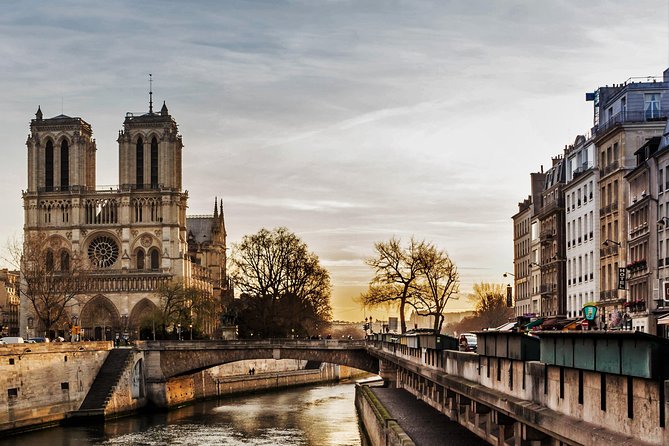
You start at Cité 75004, on Île de la Cité, the original settlement that grew from Roman roots as Lutetia. This is the right opening because it puts the rest of the city in perspective. You’re starting where Paris began, then moving outward like the city itself expanded.
From there, the pace is gentle enough for a “see a lot” tour, but it still adds up to a real walk. If you’re the type who gets tired standing, bring a bottle of water and expect to pause at landmarks rather than sit.
Notre-Dame interior entry: free access, unguided inside
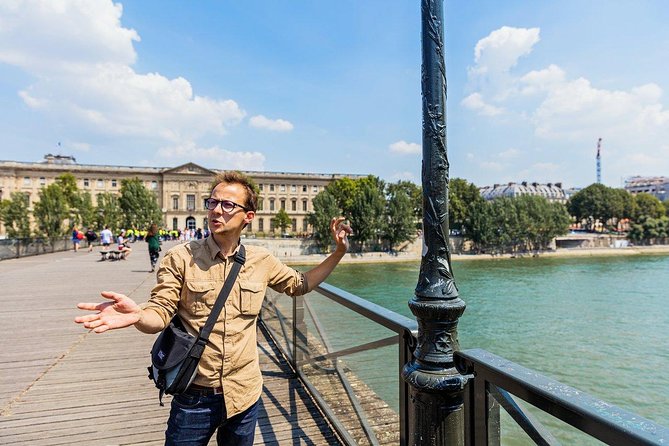
Your first major landmark is Cathedrale Notre-Dame de Paris. You’ll start outside for the big picture and history, then step inside for the interior. The good news: entry is free and included, and it’s open to all. The catch is that the interior visit is unguided because of regulations.
That unguided part matters. I’d treat it like you’re using the guide’s explanations to “read” what you’re seeing once you’re inside, not like you’ll have a continuous commentary from start to finish. If you like to wander and look closely—stonework, layout, and the restored areas—this setup works well.
After the devastating 2019 fire, Notre-Dame reopened with major restoration. The tour frames that restoration and ties it to why this cathedral remains one of the city’s strongest symbols. On busier days, lines can affect how much time you feel you get inside, so having the right expectations helps.
The Justice Island circuit: Palais de Justice, Sainte-Chapelle, Conciergerie
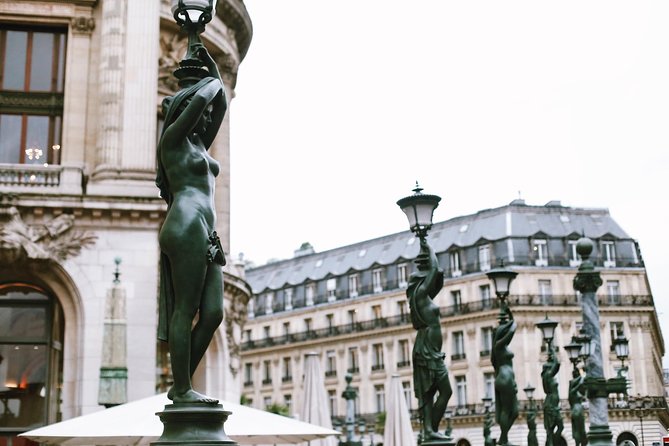
Once you’re back in the heart of Île de la Cité, you shift into the “how power worked here” part of Paris. You’ll pass by Palais de Justice de Paris, once known as the Palais de la Cité. This area includes some of the oldest surviving buildings on the island, and it’s where the city’s legal and political story began to feel very real very fast.
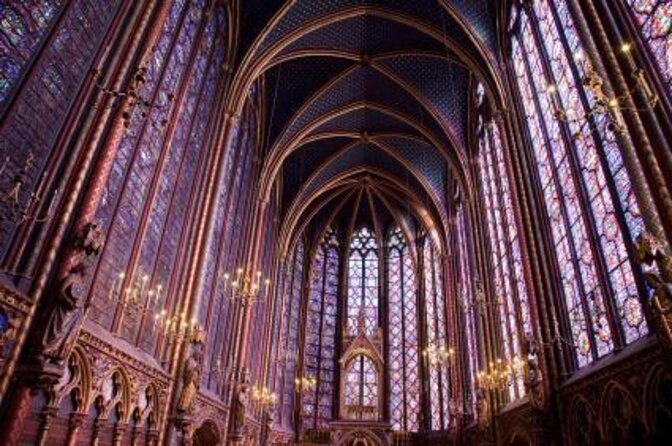
Then comes Sainte-Chapelle, a Gothic standout built in only seven years. It was designed to house precious Christian relics, including Christ’s crown of thorns, which Saint Louis acquired. Even if you’re not going in, the exterior and nearby context help you understand why this place is famous for its light and height.
Next is the Conciergerie, the oldest remaining part of the old Palais de la Cité. This is the part that hits hardest. It was once a prison, holding more than a thousand people labeled enemies of the Revolution, including Marie Antoinette. That’s dark material, but the guide can usually keep it grounded and clear, not sensational.
Practical note: admission for Sainte-Chapelle and Conciergerie is listed as not included. So plan for what you’ll see on foot. If you want fully guided interior time at either one, you’ll likely need separate tickets and extra scheduling.
Fontaine Saint-Michel and Place Dauphine: Paris gets human-scale
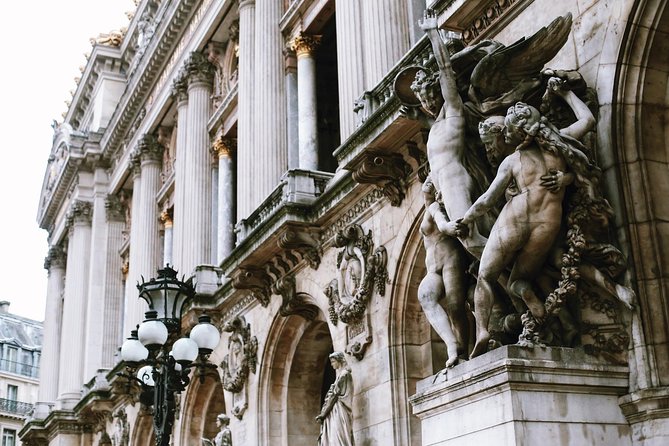
After the solemn history, the walk turns more cinematic and street-level. You pass by the Fontaine Saint-Michel, a monumental fountain commissioned by Haussmann under Napoleon III. The statue program shows the archangel Michael vanquishing the Devil, which is a fun reminder that Parisian art often carried moral messages, not just decoration.
Then you reach Place Dauphine, tucked on the west tip of Île de la Cité. It has that compact, “you can actually sit here” feel, and it was among the first projects commissioned by Henri IV. If you want a breather between big-name monuments, this stop does the job.
These two moments also help you catch your bearings. You’re not only moving between major sites; you’re getting comfortable with the shape of the island and the rhythm of streets around it.
You can also read our reviews of more city tours in Paris




Pont Neuf to Pont des Arts: bridges that tell time
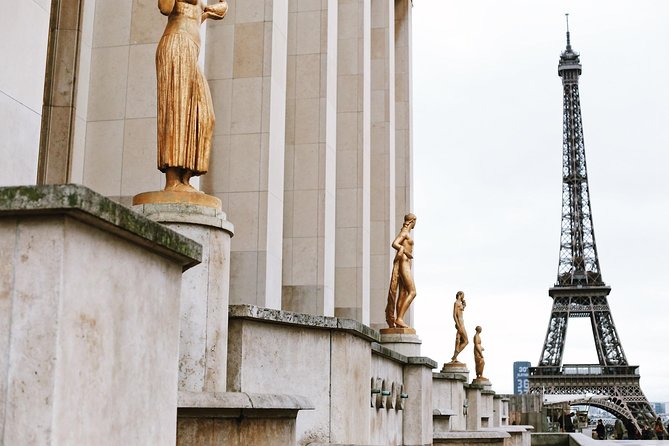
From the island, you cross into an iconic sequence of bridges. First up is Pont Neuf, considered the oldest stone bridge in Paris. It’s also part of the Seine’s UNESCO-listed banks today, so this isn’t just an old bridge. It’s an old bridge that still matters to how Paris presents itself.
In the middle you’ll see the equestrian statue of Henri IV. The one you see now is a replica; the original was destroyed during the French Revolution. That single detail is the tour in miniature: Paris keeps changing, and yet the city still points to the past.
Then you look at Pont des Arts, connecting the Institut de France area with the Louvre. It was built between 1801 and 1804, and it was the first iron bridge in Paris. If you like engineering and design history, these bridge moments are more interesting than they sound on paper.
As you walk, keep an eye on vantage points: on a short tour like this, the goal isn’t “see every view.” It’s “get enough views to understand where things line up,” especially if you’re planning to return later on your own.
Louvre Museum area: Cour Carrée and the Pyramid from the outside
The tour moves toward the Louvre next. You’ll pass through Cour Carrée, a main courtyard of the Louvre Palace, and you’ll get the signature look at the Louvre Pyramid, designed by I.M. Pei.
Admission for the Louvre is not included, so treat this segment as a “spot the landmarks and understand them” stop rather than a “see the collections” stop. That’s not a flaw. It’s actually a smart way to handle the Louvre’s scale. The museum is huge, and trying to cram it into a 2.5-hour walking tour can turn into frustration fast.
What you’ll get instead is the visual spine: the courtyard geometry and the Pyramid as the modern front door. If you later decide you want to go inside, you’ll already know where you are and what direction to walk when you arrive.
Palais-Royal and Tuileries Gardens: a calmer pause in the same day
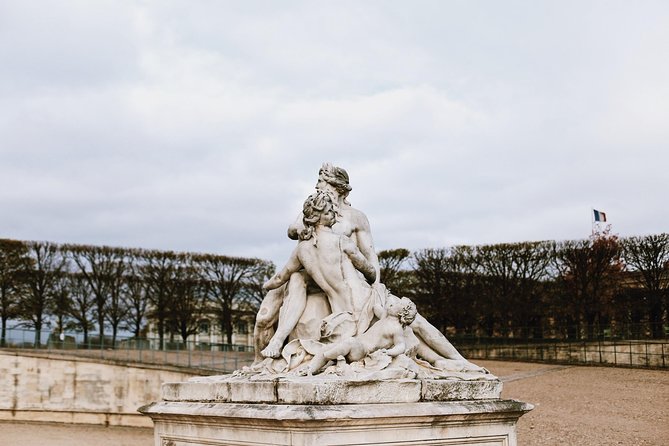
Once you leave the Louvre area, you head to the Palais-Royal zone. The palace and its gardens were created by Cardinal Richelieu in 1633, and the grounds were tied to royal life before Versailles took over as the main stage.
You’ll be able to enjoy the gardens and nearby contemporary sculpture elements, with a “slow down for a few minutes” feel. The listing notes a mix of peaceful garden time and futuristic-looking architecture details. Either way, this is a nice break from the heavy monument focus.
Then it’s into the Jardin des Tuileries, described as the oldest park in Paris with roots back to the 17th century. The tour keeps you moving, but this is still the part where you’ll appreciate why Parisians built outdoor public space right in the middle of power-and-art districts.
There’s even a stop for the Tuileries Gardens Bookstore, tucked away for a quick look at gardening and landscape design titles, plus garden-themed gifts and cards. You won’t go home with a new botany degree, but it’s the kind of human, local texture that makes the day feel less like a sightseeing checklist.
Place de la Concorde: the end point with a loaded past
You finish at Place de la Concorde, a major square that historically served as an execution site during the French Revolution. It also marks the start of the Champs-Élysées corridor, so it’s a smart ending if you’re continuing on your own.
This finale gives you two kinds of payoff. First, it ties back to the tour’s earlier revolution and justice themes. Second, it puts you at a practical location for onward travel—easy to find transport and easy to keep wandering.
If you want a flexible close, this ending works because you’re not trapped at a museum. You can pivot to shops, cafés, or just walk out your last energy.
Price and logistics: what $59.69 gets you, and what to add
At about $59.69 per person for the private-format tour, the value comes from three things: the guide time, the packed walking route, and the Notre-Dame interior access. Many “skip-the-line” style tours cost much more, and this one aims for smart efficiency instead.
Here’s what’s included and what often needs extra planning:
- Included: the private walking guide, about 2.5 hours, and the Notre-Dame interior entry (unguided inside).
- Not included: admission tickets for several major stops such as Palais de Justice, Sainte-Chapelle, Conciergerie, the Louvre, and Palais-Royal segments shown.
This doesn’t mean you lose everything. It means you’re seeing the key landmarks as you move through them, and you get historical context that makes outside views feel meaningful. If you want interior time for multiple buildings, you’ll probably need extra tickets and possibly a longer schedule.
Two other practical items matter for a smooth day. The tour says it runs rain or shine, so pack a small umbrella and comfortable shoes. And you’ll need to provide a mobile phone number with country code (for coordination and mobile ticket use).
Also note: no large bags or suitcases are allowed on the tour. If you’re traveling light, this won’t bother you. If you’re hauling luggage, plan to change how you carry it.
Who should book this Notre-Dame and Paris city-center walk
This tour fits best if you want:
- A high-impact first visit to Paris center with a guided story thread
- A route that avoids the “I’m standing in lines all morning” problem
- A comfortable pace for a moderate fitness level
- A plan for history that moves from Gothic architecture to revolution-era sites, then into art-and-monument Paris
It also works well for mixed ages. In past experiences tied to this tour, I saw mention of groups ranging from kids to older adults who still enjoyed the day. That doesn’t remove the walking factor, but it suggests the pace is often manageable.
If you’re the type who wants deep, timed entry into multiple interiors—especially Sainte-Chapelle and the Louvre—this may feel a bit short. The tour is built to connect places, not to replace those big museum days.
Should you book this tour?
Yes, I’d book it if you want a smart way to get oriented in Paris center and you care about understanding what you’re seeing at Notre-Dame and around Île de la Cité. The private format and the guide-focused pacing are the big wins, and the Notre-Dame interior entry at no added cost is a strong reason on its own.
I’d think twice if your dream Paris day is “mostly inside, lots of museum time.” This tour is a walking, landmark, and storytelling experience. It gives you the framework so you can return later for deeper interior exploration—especially for the Louvre, Sainte-Chapelle, and other sites where extra admission may be needed.
FAQ
How long is the Paris City Center w/ Notre Dame interior walking tour?
It runs about 2 hours 40 minutes (approximately), and the duration is listed as 2.5 hours.
Is the Notre-Dame Cathedral interior included and is it guided?
Yes, the tour includes access to the Notre-Dame Cathedral interior, and it’s described as free and open to all. The interior visit is unguided due to regulations.
Are tickets included for Sainte-Chapelle and the Louvre?
Admission tickets are listed as not included for several stops, including Sainte-Chapelle and the Louvre. You would need to plan for separate tickets if you want to enter those places.
Does the tour run in bad weather?
Yes. The tour runs rain or shine.
Is this tour private?
It’s described as a private walking tour, and only your group will participate. There is also a semi-private option mentioned, which would change the guide exclusivity.
Where does the tour start and end?
The tour starts at Cité 75004 Paris, France (Île de la Cité area) and ends at Place de la Concorde, Pl. de la Concorde, 75008 Paris.